
In the decade and a half since the genesis block was mined by the pseudonymous Satoshi Nakamoto, Bitcoin has evolved from a niche cryptographic experiment into a global macro-asset. Central to its value proposition is its absolute scarcity: there will only ever be 21 million Bitcoins. Because the ledger is public (the blockchain), we can see which addresses hold the most coins, but connecting those addresses to real-world identities is a complex puzzle of forensic accounting and corporate disclosures.
For investors, understanding the distribution of Bitcoin is not merely a matter of curiosity; it is a critical component of market analysis. When large quantities of supply are concentrated in a few hands—often referred to as “whales”—their trading behavior can dictate market volatility, liquidity, and long-term price action. This article explores the primary holders of Bitcoin, categorizing them into individual pioneers, corporate treasuries, institutional financial tools, and sovereign nations.
1. The Architect and the Early Believers: Individual Wealth
The foundation of Bitcoin’s ownership begins with its creator and the small group of cypherpunks who supported the network when its value was zero. These early adopters hold a significant portion of the supply, though much of it remains untouched.
Satoshi Nakamoto: The Million-BTC Mystery
The largest single holder of Bitcoin is undoubtedly its creator, Satoshi Nakamoto. Research by blockchain analysts suggests that Nakamoto mined approximately 1.1 million BTC during the network’s first year. These coins are distributed across thousands of different wallets.
From a financial perspective, this represents a unique “overhang.” At a price of $60,000 per BTC, Satoshi’s fortune would exceed $66 billion. However, these coins have not moved in over a decade. Most market participants view Satoshi’s holdings as “burned” or permanently out of circulation, effectively reducing the total supply to roughly 20 million. Should these coins ever move, the psychological impact on the market would be profound.
The Rise of the Bitcoin Billionaires
Beyond the creator, several high-profile individuals have made massive bets on the asset. Cameron and Tyler Winklevoss, famously known for their legal battle over the origins of Facebook, reportedly used a portion of their settlement to buy roughly 1% of the total Bitcoin supply in 2013 (approximately 70,000 to 100,000 BTC).
Other notable individual holders include venture capitalists like Tim Draper, who purchased 30,000 BTC seized by the U.S. Marshals from the Silk Road marketplace, and Michael Saylor, who, despite his company’s massive holdings, personally owns over 17,000 BTC. These individuals represent the “conviction” class of investors who viewed Bitcoin as digital gold long before Wall Street.
2. The Institutional Shift: Corporate Treasuries and Business Finance
A pivotal moment in Bitcoin’s history occurred in 2020 when corporations began adding Bitcoin to their balance sheets as a reserve asset. This transformed Bitcoin from a speculative retail instrument into a component of corporate finance.
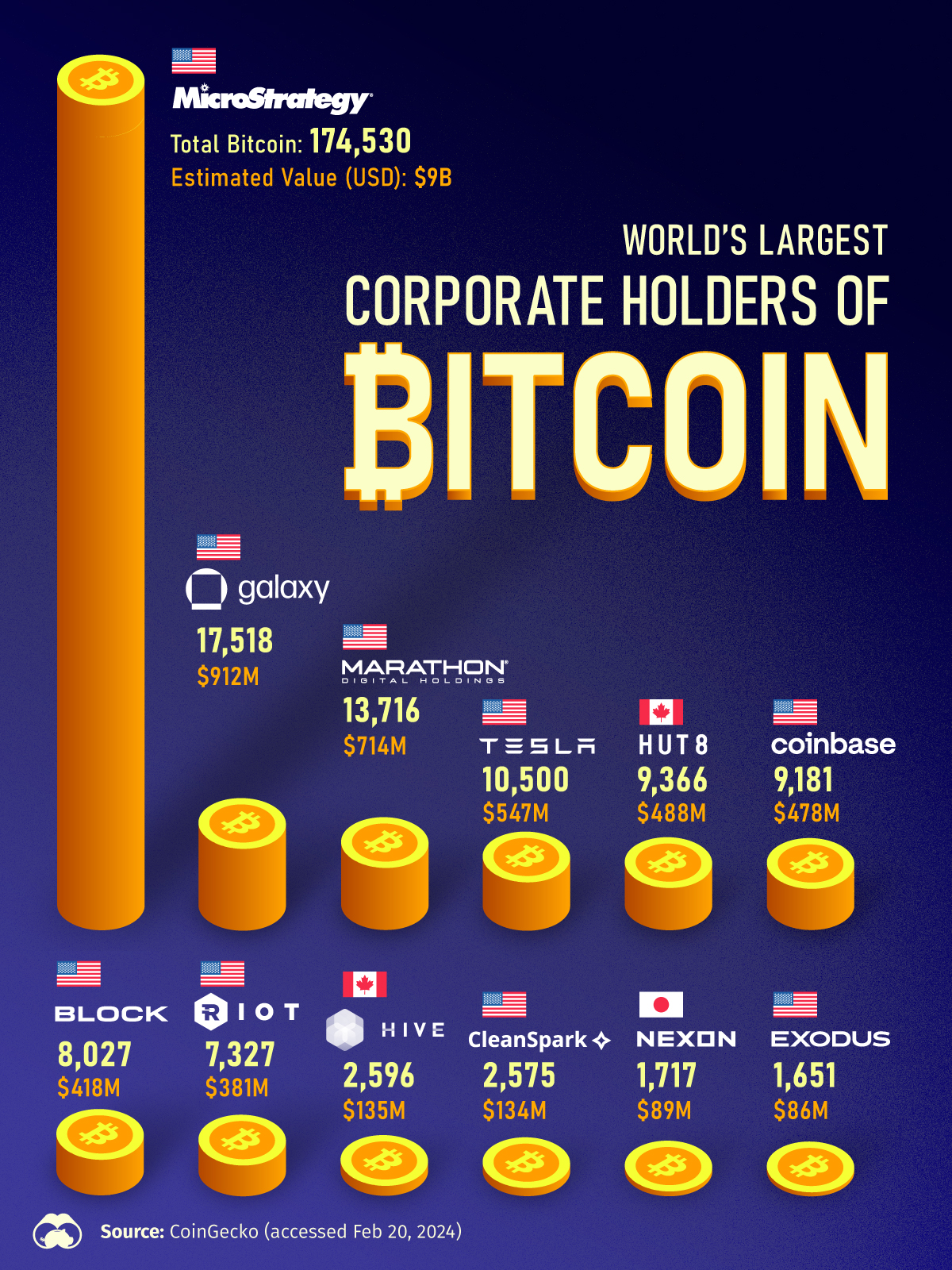
MicroStrategy: The Saylor Strategy
MicroStrategy, a business intelligence firm, has become synonymous with corporate Bitcoin adoption. Under the leadership of Michael Saylor, the company has pivoted its entire financial strategy toward Bitcoin. As of early 2024, MicroStrategy holds upwards of 214,000 BTC—more than 1% of the total supply.
What makes MicroStrategy unique is its use of leverage. The company has issued billions of dollars in convertible debt to fund its Bitcoin purchases, essentially creating a Bitcoin-backed security. For investors in the “Money” niche, MicroStrategy serves as a case study in using corporate credit to acquire a deflationary asset, a move that has vastly outperformed traditional treasury management strategies like holding cash or short-term bonds.
Tesla, Block, and the Tech Vanguard
While MicroStrategy is the most aggressive, other tech giants have followed suit. Elon Musk’s Tesla made headlines by purchasing $1.5 billion worth of Bitcoin in early 2021. While they have since sold a portion of their holdings for liquidity purposes, they remain a top-ten corporate holder.
Similarly, Jack Dorsey’s Block (formerly Square) has integrated Bitcoin into its business model, holding approximately 8,000 BTC. These corporate holdings signify a shift in “Business Finance” where Bitcoin is treated as a hedge against the debasement of fiat currency, providing a diversification layer that traditional equities often lack.
3. The Rise of the Bitcoin ETFs: Financial Tools and Managed Investing
For years, the “Big Money” in the form of pension funds, endowments, and retirement accounts sat on the sidelines because they lacked a regulated vehicle to buy Bitcoin. The approval of Spot Bitcoin ETFs (Exchange-Traded Funds) in the United States in January 2024 changed everything, leading to a massive consolidation of coins within institutional financial tools.
BlackRock and the iShares Bitcoin Trust (IBIT)
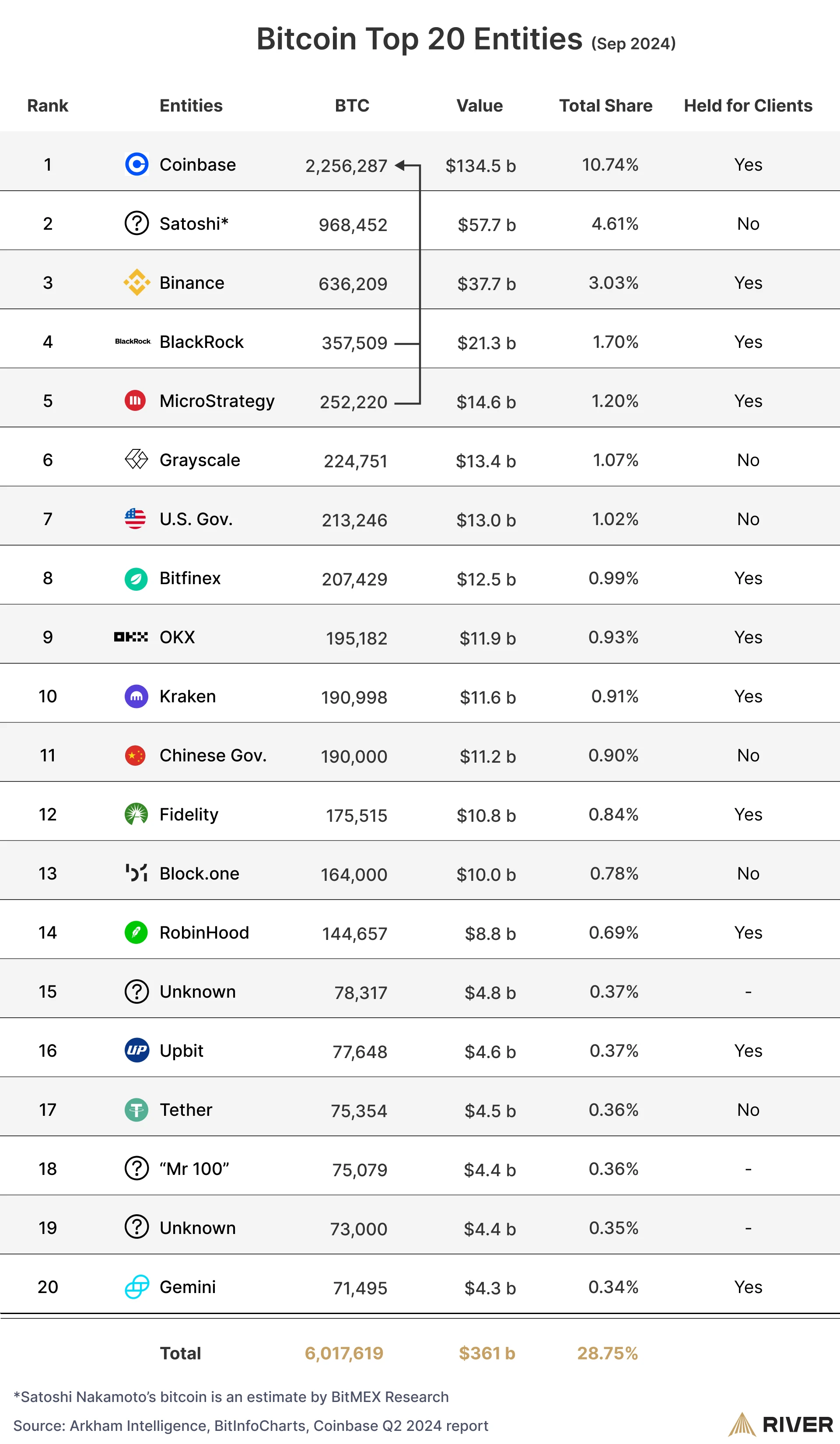
BlackRock, the world’s largest asset manager, has seen its iShares Bitcoin Trust (IBIT) become the fastest-growing ETF in history. Within months of its launch, BlackRock accumulated hundreds of thousands of Bitcoins, acting as a custodian for millions of retail and institutional investors.
This shift is significant because it moves Bitcoin from “self-custody” (private wallets) to “institutional custody.” When we ask who holds the most Bitcoin, the answer is increasingly becoming “BlackRock’s clients.” This provides the market with massive liquidity but also centralizes a portion of the supply within the traditional financial system.
Fidelity and Grayscale: Reshaping Asset Management
Fidelity Investments is another titan in this space, holding over 150,000 BTC for its FBTC fund. Meanwhile, the Grayscale Bitcoin Trust (GBTC), which existed for years as a closed-end fund before converting to an ETF, still holds a massive—though declining—percentage of the supply. These entities do not “own” the Bitcoin in the traditional sense; they hold it in trust. However, their management of these assets dictates the flow of billions of dollars in the global financial markets.
4. Sovereignty and Seizure: Governments and Public Wealth
Perhaps the most surprising category of Bitcoin holders is national governments. While some nations have embraced Bitcoin as a policy tool, others have become holders through law enforcement actions.
The United States: The Accidental Whale
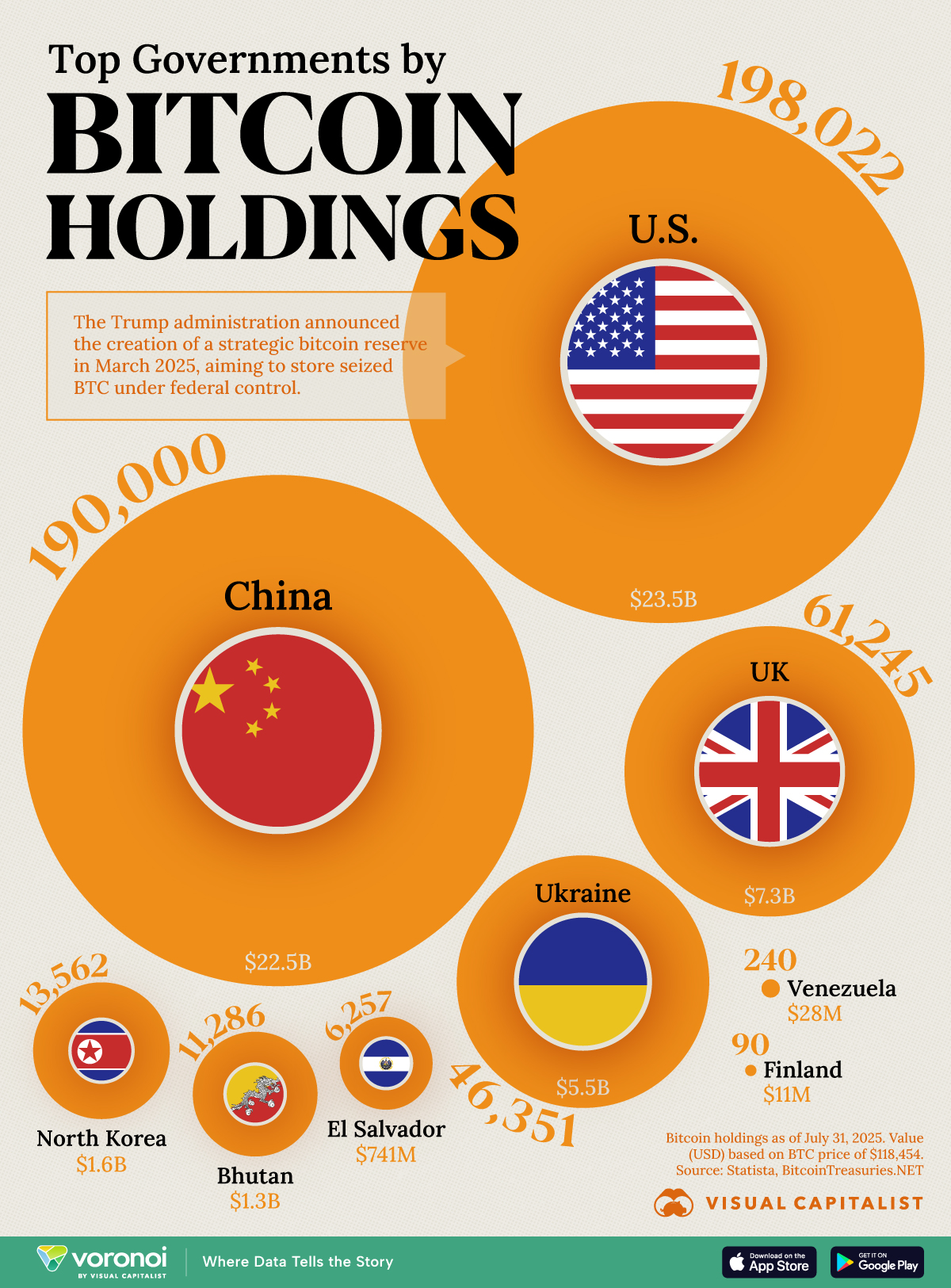
The United States government is one of the world’s largest Bitcoin holders, typically possessing over 200,000 BTC. Interestingly, the U.S. government has never “bought” Bitcoin as a strategic reserve. Instead, these holdings are the result of legal seizures from cybercriminals, darknet markets (like Silk Road), and hackers (such as the Bitfinex hack).
The U.S. periodically auctions these coins, but for long stretches, the Department of Justice remains one of the most influential entities in the market. Traders watch government-labeled wallets closely, as a large transfer to an exchange often signals a potential sell-off that could depress prices.
El Salvador: The Sovereign Experiment
In 2021, El Salvador became the first country to adopt Bitcoin as legal tender. Under President Nayib Bukele, the nation has implemented a “1 BTC per day” purchase program. El Salvador currently holds over 5,700 BTC. While this is a small fraction compared to BlackRock or MicroStrategy, it represents a fundamental shift in “Sovereign Finance.” By holding Bitcoin, El Salvador aims to reduce its dependence on the U.S. dollar and attract foreign investment in the tech and energy sectors.
5. The Retail Landscape and Market Implications
When we look at the “rich list” of Bitcoin addresses, it is easy to assume the market is controlled by a few elites. However, the reality is more nuanced when we analyze the broader retail landscape.
Does “Whale” Concentration Matter for the Average Investor?
Approximately 70% of Bitcoin’s supply has not moved in over a year. This “HODL” behavior is shared by both whales and retail investors. While whales (wallets with >1,000 BTC) hold a significant percentage of the supply, their influence is being diluted by the millions of small investors who hold fractional amounts of Bitcoin in personal wallets.
For the personal finance enthusiast, the concentration of Bitcoin among institutions like BlackRock or MicroStrategy provides a “floor” for the price. These holders are generally long-term “diamond hands” who are unlikely to panic sell during minor market corrections. This institutionalization reduces the “wild west” volatility of the early days, making Bitcoin a more viable asset for a balanced investment portfolio.
Supply Scarcity and the Long-Term Outlook
As more Bitcoins are locked away in ETFs, corporate treasuries, and long-term private storage, the “liquid supply”—the amount of Bitcoin actually available for purchase on exchanges—is shrinking. This is a fundamental concept in business finance: when demand increases (via ETFs) and supply remains fixed or decreases (via the Halving and long-term holding), the pressure on price is upwards.
In conclusion, the answer to “who holds the most Bitcoins” is a shifting mosaic. It began with a single anonymous programmer, moved to a group of visionary individuals, was adopted by aggressive corporations, and is now being swallowed by the largest asset managers on the planet. For the modern investor, Bitcoin is no longer just a digital currency; it is a global reserve asset held by the most powerful financial entities in the world. Understanding these power players is essential for anyone looking to navigate the future of money.
aViewFromTheCave is a participant in the Amazon Services LLC Associates Program, an affiliate advertising program designed to provide a means for sites to earn advertising fees by advertising and linking to Amazon.com. Amazon, the Amazon logo, AmazonSupply, and the AmazonSupply logo are trademarks of Amazon.com, Inc. or its affiliates. As an Amazon Associate we earn affiliate commissions from qualifying purchases.