
Bitcoin, the pioneering cryptocurrency, has journeyed from an obscure digital experiment to a global financial phenomenon, sparking both unprecedented wealth creation and intense market speculation. Its finite supply of 21 million coins and decentralized nature inherently create a landscape where scarcity drives value and ownership distribution becomes a critical topic for financial analysis. The question of “who holds most bitcoins” is not merely one of curiosity; it delves into the very core of market dynamics, potential volatility, investment strategy, and the ongoing debate around financial centralization within a supposedly decentralized system. Understanding the major holders – from its mysterious creator to powerful institutional players and even nation-states – provides crucial insights into Bitcoin’s present stability and future trajectory as a store of value and an investment asset. For investors, financial analysts, and market observers, deciphering the patterns of Bitcoin ownership is essential for comprehending its market behavior and making informed financial decisions in this rapidly evolving digital economy.
The Elusive Trail of Bitcoin’s Genesis Whales
The earliest days of Bitcoin were characterized by a small, dedicated community of cypherpunks, developers, and enthusiasts who mined and acquired substantial amounts of the digital currency when its value was negligible. These early participants, often referred to as “whales” due to their disproportionately large holdings, represent a significant, albeit often dormant, portion of Bitcoin’s total supply. Their accumulation, often occurring with little financial foresight into Bitcoin’s future meteoric rise, now represents unimaginable wealth, presenting a unique financial dynamic within the crypto ecosystem.
Satoshi Nakamoto’s Undisturbed Fortune
At the apex of Bitcoin’s early wealth concentration lies its pseudonymous creator, Satoshi Nakamoto. Through analysis of early blockchain data and mining patterns, it’s widely estimated that Satoshi mined approximately one million bitcoins in the nascent stages of the network, primarily within the first year of its operation. These coins, often residing in specific wallet addresses that have remained untouched for over a decade, represent the single largest, verifiable holding by a known (though anonymous) entity. The perpetual dormancy of Satoshi’s fortune is a fascinating financial riddle, posing questions about the potential market impact should these coins ever move. Their untouched status has, to an extent, provided a psychological anchor of stability, as their sale would undoubtedly unleash a seismic shockwave across the market. Financially, this massive, inactive holding acts as a form of “dead weight” supply, reducing the actual circulating supply available for trading and potentially contributing to its scarcity premium. From an investment perspective, the potential for Satoshi’s coins to move remains a perennial “black swan” event, albeit one that has not materialized in over a decade.
The Early Adopters and Miners: Accidental Billionaires
Beyond Satoshi, a cohort of early adopters and miners played a pivotal role in securing the network and accumulating significant Bitcoin stashes. These individuals and small groups, operating powerful mining rigs in the early 2010s when difficulty was low and rewards were high, earned thousands of bitcoins for relatively little cost. Many of them participated out of intellectual curiosity or ideological alignment rather than explicit financial gain, selling small amounts to cover electricity bills or acquire everyday items, famously exemplified by the “Bitcoin Pizza” transaction. However, a substantial number held onto their digital assets through multiple market cycles, witnessing their holdings balloon from pennies to millions, and in some cases, billions of dollars. These “accidental billionaires” form a crucial part of the concentrated wealth pool. Their financial strategies vary: some have diversified into traditional assets, others continue to hold, and a few have become active participants in the crypto industry, investing in new projects or supporting infrastructure. Their historical accumulation underscores the power of early belief and patience in a nascent asset class, offering a compelling case study for long-term investment philosophy in disruptive technologies, highlighting the immense leverage of foresight and early positioning in a rapidly appreciating asset.
The Institutionalization of Bitcoin: A New Class of Holders
The past few years have witnessed a significant shift in Bitcoin’s ownership landscape, moving beyond individual “whales” to include a growing number of institutional players. This trend, often referred to as the “institutionalization of Bitcoin,” signifies a maturing asset class and a broader acceptance within traditional financial circles. The entry of corporations, investment funds, and even sovereign entities represents a profound validation of Bitcoin as a legitimate financial asset, fundamentally altering its market structure and investment narrative.
Publicly Traded Companies: Corporate Treasury Strategy
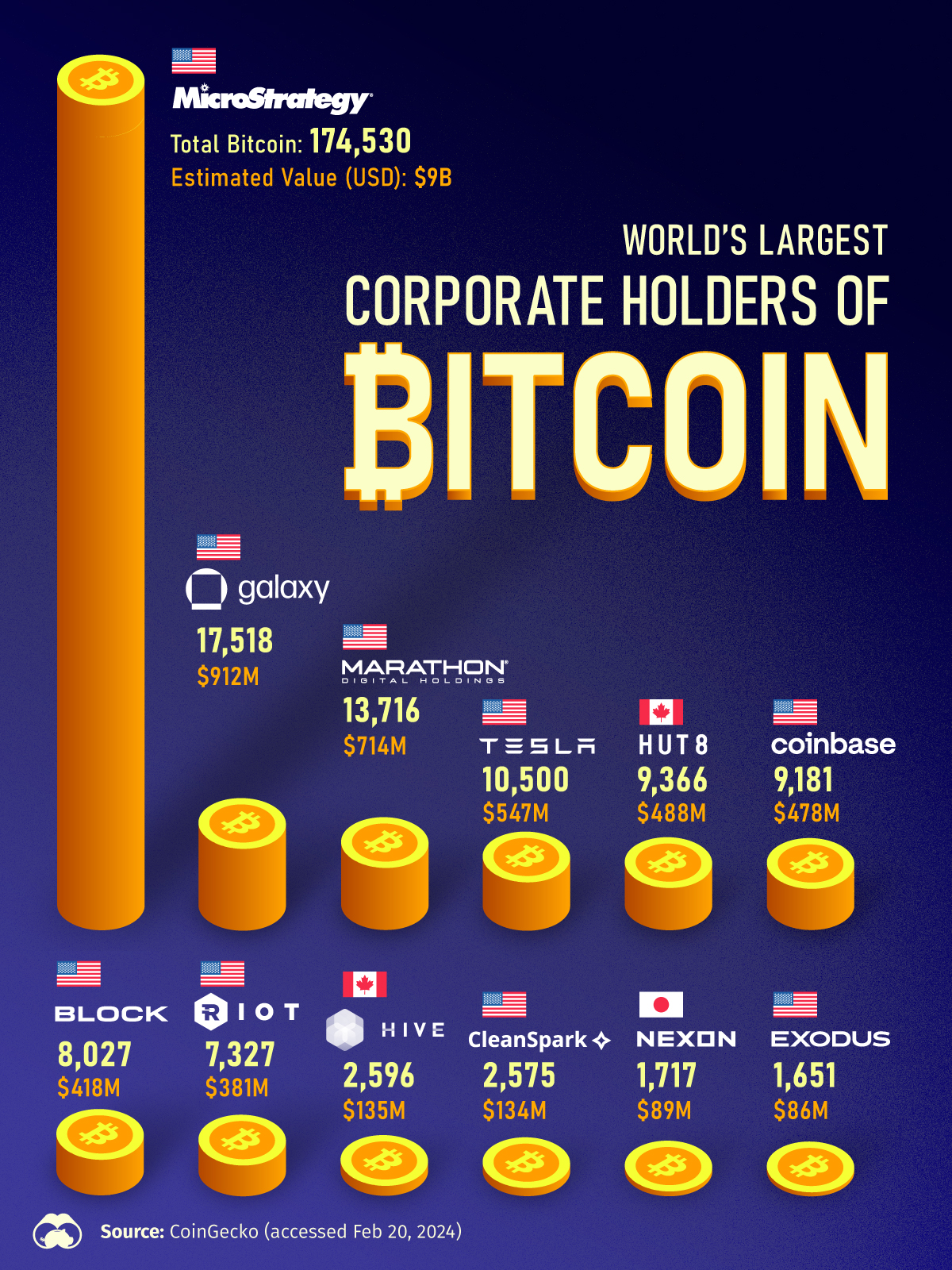
A groundbreaking development in Bitcoin ownership has been its adoption by publicly traded companies as part of their corporate treasury strategies. Pioneered by MicroStrategy, led by CEO Michael Saylor, the rationale for these corporate buys often centers on protecting against fiat currency debasement, seeking higher returns than traditional cash holdings, and capitalizing on Bitcoin’s long-term growth potential. Companies like MicroStrategy, Tesla, and Square (Block) have publicly disclosed multi-billion-dollar Bitcoin holdings, effectively treating Bitcoin as a primary treasury reserve asset. This strategy involves converting portions of their cash reserves, typically held in low-yielding traditional instruments, into Bitcoin, viewing it as a superior store of value. The financial implications are multi-faceted: it provides a corporate stamp of approval, introduces a new demand vector independent of retail speculation, and ties Bitcoin’s performance to the balance sheets of established companies. For investors, tracking these corporate holdings has become an important metric, as it indicates a growing integration of Bitcoin into mainstream corporate finance and serves as a bellwether for its broader acceptance as a legitimate corporate asset. This shift also opens new avenues for traditional equity investors to gain indirect exposure to Bitcoin.
Investment Funds and ETFs: Diversification Vehicles
The growth of Bitcoin-focused investment funds and Exchange Traded Funds (ETFs) represents another significant channel for institutional accumulation. These vehicles allow a broader range of institutional and accredited investors to gain exposure to Bitcoin without the complexities of direct ownership, such as self-custody or navigating crypto exchanges. Grayscale Bitcoin Trust (GBTC) was an early leader, providing publicly traded shares that represent ownership in a large pool of Bitcoin. More recently, the approval of spot Bitcoin ETFs in various jurisdictions, particularly in the United States, marked a monumental step. These ETFs, managed by traditional financial giants like BlackRock, Fidelity, and VanEck, actively acquire and hold physical Bitcoin to back their shares. Their offerings attract pension funds, endowments, wealth managers, and institutional clients seeking diversification and inflation hedging within regulated financial products. The massive inflows into these ETFs since their inception underscore the latent institutional demand for Bitcoin. Financially, these funds significantly contribute to Bitcoin’s scarcity, as they remove large quantities from the circulating supply and hold them in long-term, institutional-grade custody solutions. This trend normalizes Bitcoin as a portfolio component, potentially reducing its idiosyncratic risk and increasing its correlation with other traditional assets, thereby solidifying its position within the broader financial ecosystem.
Governments and Sovereign Wealth: Unconventional Assets
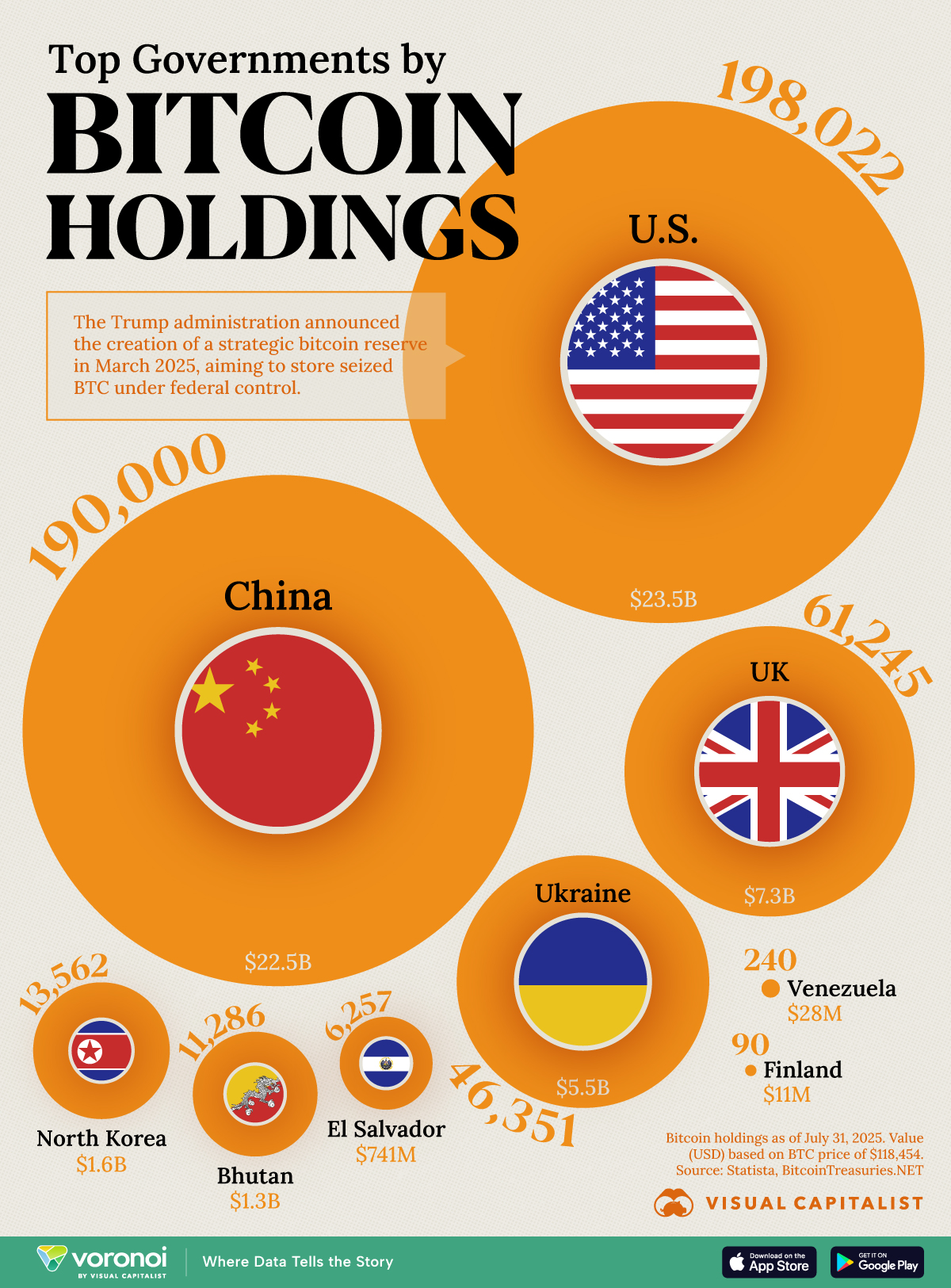
While less transparent and more politically charged, governments and sovereign wealth funds are also emerging as significant, albeit often involuntary or indirect, holders of Bitcoin. This category primarily includes bitcoins seized from criminal activities (e.g., darknet markets, ransomware operations) by law enforcement agencies worldwide. Countries like the United States have accumulated substantial amounts through these confiscations, which are then often held in government wallets before being auctioned off. Additionally, some nation-states have begun to explore Bitcoin as a national reserve asset or even legal tender, with El Salvador being the most prominent example. While not sovereign wealth funds in the traditional sense, these national holdings, driven by diverse geopolitical and economic motives, represent an intriguing, albeit nascent, form of institutional accumulation. The financial implications are immense: government recognition and adoption can confer a powerful layer of legitimacy, potentially attracting further investment and accelerating mainstream integration. However, the unpredictability of government actions, such as large-scale auctions of seized bitcoins, also introduces potential volatility. The involvement of nation-states adds a new dimension to the debate on Bitcoin’s role in global finance, positioning it not just as a private asset but potentially as a tool for national economic strategy or even geopolitical leverage.
The Crypto Ecosystem’s Giants: Exchanges and Custodians
Within the cryptocurrency landscape itself, a distinct category of major Bitcoin holders emerges: the centralized entities that facilitate trading, storage, and other financial services for millions of users. These platforms, by their very nature, aggregate vast amounts of Bitcoin on behalf of their clientele, making them some of the largest single wallet holders in the entire ecosystem. Understanding their role is crucial for comprehending the true distribution of Bitcoin, as their holdings are largely custodial rather than proprietary, yet they exert significant influence over market liquidity and security.
Centralized Exchanges: Custodial Powerhouses
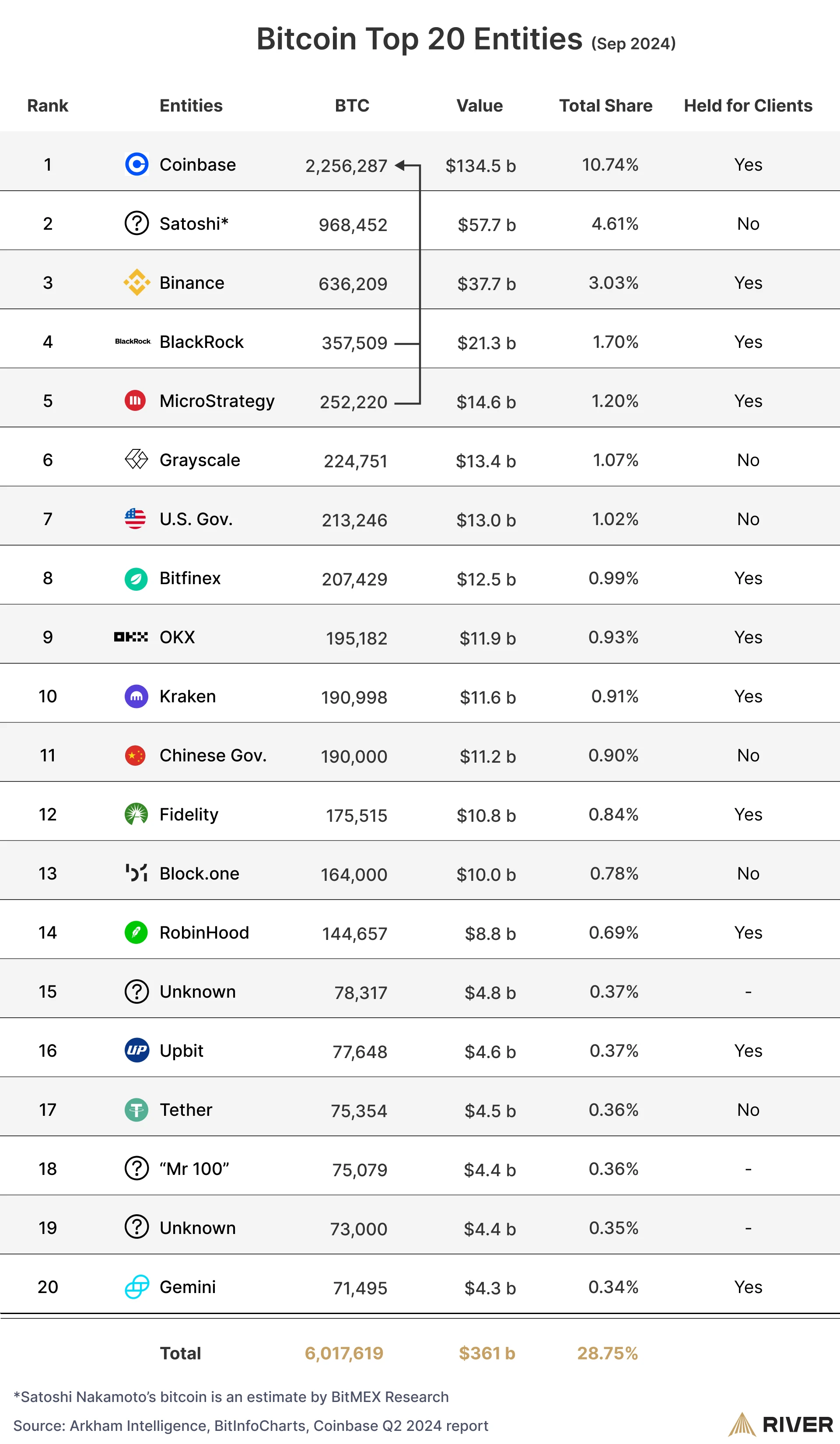
Cryptocurrency exchanges like Binance, Coinbase, Kraken, and others act as central hubs where users can buy, sell, and trade Bitcoin. To facilitate these transactions efficiently, these exchanges hold massive quantities of Bitcoin in their “hot” (online, liquid) and “cold” (offline, secure) wallets. While these bitcoins ultimately belong to their users, the exchanges effectively control the private keys and thus, the movement of these funds. This makes them some of the largest identifiable Bitcoin holders. Their holdings are dynamic, constantly fluctuating with user deposits, withdrawals, and trading activity, but their aggregated balance often amounts to millions of bitcoins. From a financial perspective, exchanges are critical for market liquidity and price discovery. However, their concentration of user funds also presents significant risks, primarily security vulnerabilities (they are prime targets for hackers) and counterparty risk. The financial health and security practices of these exchanges are therefore paramount for the broader Bitcoin market. For investors, understanding the flow of Bitcoin onto and off exchanges is often a key on-chain metric used to gauge market sentiment and potential price movements, with large outflows often signaling accumulation and large inflows suggesting potential selling pressure.
OTC Desks and Prime Brokers: Facilitating Large Trades
Beyond the retail-focused exchanges, Over-The-Counter (OTC) trading desks and emerging crypto prime brokers play a vital role in facilitating large-volume Bitcoin transactions, particularly for institutional clients. These desks allow high-net-worth individuals, corporations, and funds to buy or sell significant amounts of Bitcoin without moving the market price on public exchanges. To perform this function effectively, OTC desks and prime brokers often maintain substantial Bitcoin inventories. They act as intermediaries, sourcing liquidity from large holders or directly from miners and matching it with institutional buyers, often executing trades in blocks far exceeding what public order books can absorb without significant slippage. The financial significance of these entities cannot be overstated. They provide crucial infrastructure for institutional adoption, enabling large capital allocations into Bitcoin without disrupting market equilibrium. Their holdings, while often temporary and transactional, represent a significant pool of Bitcoin under professional management. They also offer more discreet and personalized services, including access to credit and advanced trading strategies, further cementing Bitcoin’s place in sophisticated financial portfolios. Their existence highlights the growing maturity of the Bitcoin market, moving beyond retail-dominated trading to cater to the complex needs of institutional finance.
The Market Impact of Concentrated Bitcoin Holdings
The concentration of Bitcoin ownership, whether in the hands of early adopters, institutions, or custodians, has profound implications for the broader market. This structure directly influences price volatility, raises questions about market manipulation, and impacts the philosophical underpinnings of decentralization. For any investor or participant in the Bitcoin ecosystem, understanding these dynamics is paramount for risk assessment and strategic planning.
Price Volatility and Market Manipulation Concerns
One of the most immediate and tangible impacts of concentrated Bitcoin holdings is their potential influence on market price volatility. When a small number of entities control a large percentage of an asset’s supply, their buying or selling actions can disproportionately move the market. “Whales” — whether individual, institutional, or even governmental — have the capacity to execute trades large enough to trigger significant price swings, potentially liquidating smaller traders or creating cascading effects across exchanges. This raises legitimate concerns about market manipulation, even if unintentional. A large sell-off by a major holder could create panic and a sharp decline, while a coordinated buying spree could artificially inflate prices. While Bitcoin’s market capitalization has grown substantially, making it more resilient to single-entity actions than in its early days, the potential for significant market impact from large holders remains. For retail investors, this means navigating a market where large players can dictate short-to-medium term trends, emphasizing the importance of long-term conviction and risk management rather than attempting to outmaneuver whales. Regulators often cite this concentration as a key concern, driving calls for stricter oversight and transparency in the crypto markets.
Implications for Decentralization and Network Security
Beyond price, concentrated Bitcoin ownership also has significant philosophical and practical implications for its core tenet of decentralization. Bitcoin was designed to be a peer-to-peer electronic cash system, free from central control. However, if a few entities hold the vast majority of the circulating supply, it raises questions about the practical decentralization of economic power. While their holdings don’t directly control the network’s technical infrastructure (which is secured by miners and node operators), their economic influence is undeniable. Large holders could, theoretically, sway governance decisions if voting power were ever tied to coin ownership in a direct way that affected Bitcoin’s core protocol. Furthermore, large institutional custodians, by aggregating user funds, become central points of failure or attack, contradicting the self-custody ethos of decentralization. While the technical decentralization of the blockchain remains robust, the economic power wielded by a concentrated few is a continuous point of debate within the community. For the long-term viability and philosophical integrity of Bitcoin, a more diffused distribution of wealth is often seen as a desirable outcome, fostering greater resilience against single points of control or influence.
Investment Considerations for the Retail Trader
For the individual retail trader or long-term investor, the landscape of concentrated Bitcoin ownership presents a unique set of considerations. Firstly, it underscores the importance of a long-term investment horizon. Attempting to profit from short-term price fluctuations in a market influenced by large entities can be highly risky. Secondly, it highlights the need for robust risk management strategies, including diversification and appropriate position sizing, to mitigate the impact of sudden market moves. Understanding who the major holders are and their potential motivations (e.g., corporate treasury vs. speculative fund) can offer valuable context, but ultimately, retail investors should focus on Bitcoin’s fundamental value proposition rather than trying to front-run institutional movements. The existence of large holders also provides a form of validation; their substantial capital commitment signals a strong belief in Bitcoin’s future, which can be reassuring. However, it also means that the market is becoming increasingly sophisticated, requiring retail investors to educate themselves thoroughly about market structure, on-chain analytics, and the financial forces at play. Ultimately, while concentrated ownership can introduce volatility, it also reflects the asset’s growing financial gravity and integration into the broader global economy.
The Future of Bitcoin Distribution: Towards Greater Diffusion?
The narrative of Bitcoin ownership is not static; it is continually evolving. While significant concentration exists today, various forces are at play that could lead to a more diffused distribution over time. Understanding these trends is critical for projecting Bitcoin’s long-term financial stability, market maturity, and its role as a global store of value.
The Role of MicroStrategy and Other Corporate Buys
The pioneering corporate treasury strategies exemplified by MicroStrategy and adopted by other publicly traded companies represent a fascinating dynamic in Bitcoin’s distribution. While these companies initially concentrate large amounts of Bitcoin, their public ownership structure means that the underlying exposure to Bitcoin is diffused among their millions of shareholders. When an individual invests in MicroStrategy stock, they are indirectly gaining exposure to Bitcoin without directly holding the asset. This effectively fractionalizes a corporate whale’s holdings across a broad investor base. As more companies potentially integrate Bitcoin into their balance sheets, this mechanism could contribute to a broader distribution of Bitcoin’s economic benefits, even if the direct custody remains centralized at the corporate level. This trend also introduces Bitcoin to a new segment of investors who might not otherwise engage with cryptocurrencies directly, broadening its financial reach and embedding it further into traditional financial markets. The success and adoption of these corporate strategies will be a key determinant in how Bitcoin’s wealth is indirectly spread across millions of traditional equity portfolios.
Increasing Retail Adoption and Fractional Ownership
Despite the focus on whales and institutions, increasing retail adoption globally also plays a significant role in diffusing Bitcoin ownership. As more individuals worldwide acquire even small amounts of Bitcoin, whether through traditional exchanges, payment apps, or micro-investing platforms, the overall number of unique Bitcoin holders steadily grows. The ability to buy fractional amounts of Bitcoin (e.g., 0.001 BTC) ensures that participation is accessible to virtually any budget, democratizing access to this new asset class. This widespread acquisition, even in small increments, cumulatively contributes to a more decentralized economic distribution over time. Furthermore, innovations like Bitcoin-backed lending platforms, DeFi protocols, and various savings products allow for smaller amounts of Bitcoin to be put to work, creating new avenues for financial utility and interaction beyond simple holding. This continuous “trickle-down” effect from larger holders (through sales or market activity) to millions of smaller holders is a fundamental aspect of Bitcoin’s long-term diffusion. As the network matures and its global reach expands, the sheer volume of new participants could gradually dilute the relative influence of any single large holder, ultimately leading to a more equitable and robust distribution of its finite supply. This ongoing process is vital for Bitcoin to fulfill its promise as a truly decentralized, global reserve asset, making its economic impact more widespread and resilient.
aViewFromTheCave is a participant in the Amazon Services LLC Associates Program, an affiliate advertising program designed to provide a means for sites to earn advertising fees by advertising and linking to Amazon.com. Amazon, the Amazon logo, AmazonSupply, and the AmazonSupply logo are trademarks of Amazon.com, Inc. or its affiliates. As an Amazon Associate we earn affiliate commissions from qualifying purchases.