
In the modern economic landscape, purchasing a vehicle is often the second-largest financial commitment a household will make, surpassed only by the purchase of a home. While the sticker price of a car gets the most attention, the cost of financing—the interest rate—is the silent factor that determines the true total cost of ownership. Finding the lowest auto loan rates is not merely a matter of luck; it is a strategic endeavor that requires understanding the market, your own financial profile, and the various institutional players in the lending space.
Securing a low interest rate can save a borrower thousands of dollars over the life of a loan. In a climate of fluctuating central bank policies and varying inflation rates, the “best” rate is a moving target. To navigate this, one must look beyond the flashy advertisements and delve into the mechanics of personal finance and institutional lending.
Understanding the Landscape of Auto Loan Providers
The lending market is diverse, consisting of traditional banks, member-owned credit unions, online-only fintech companies, and captive finance arms of car manufacturers. Each of these entities has a different risk appetite and cost of capital, which directly influences the rates they offer.
Traditional Banks vs. Credit Unions
Traditional national and regional banks offer convenience and integrated financial services. However, because they are profit-driven entities answerable to shareholders, their interest rates on auto loans may be slightly higher than other options. They typically reserve their most competitive rates for “Premier” clients who already hold significant assets with the institution.
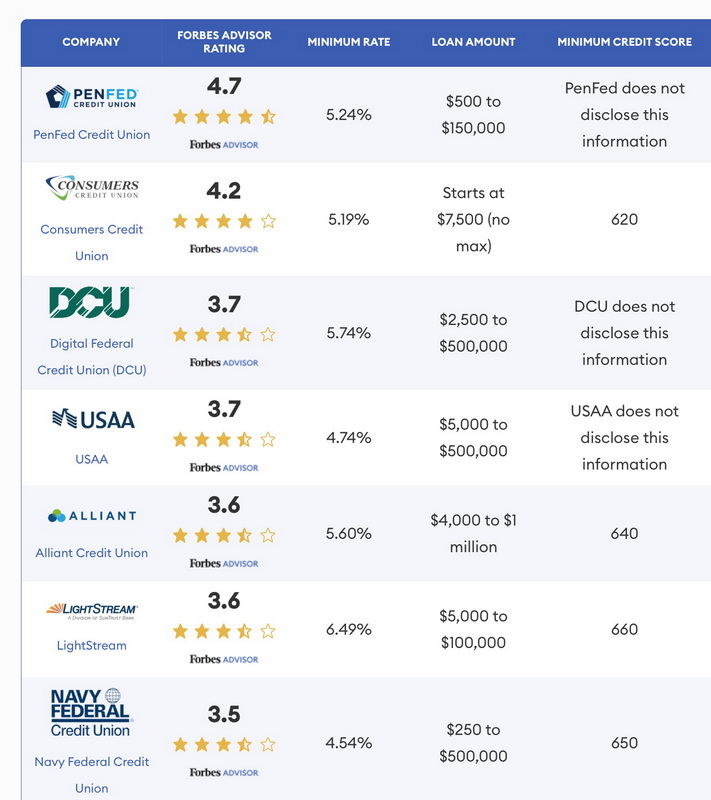
In contrast, credit unions are not-for-profit cooperatives owned by their members. Because they do not have to return profits to external shareholders, they frequently offer the lowest auto loan rates in the industry. Organizations like Navy Federal Credit Union or PenFed are renowned for consistently undercutting national bank averages by 1% to 2%. The caveat is that you must meet membership eligibility requirements, though many credit unions have broadened these criteria significantly in recent years.
Online Lenders and FinTech Platforms
The rise of financial technology has introduced a wave of online lenders such as LightStream, SoFi, and AutoPay. These platforms often have lower overhead costs than brick-and-mortar banks, allowing them to pass savings on to consumers. Online lenders excel in speed and transparency, often providing instant pre-approval and competitive rates for borrowers with good to excellent credit. They are particularly effective for “unsecured” auto loans, where the title remains with the borrower rather than the lender, provided the borrower’s credit profile is exceptionally strong.
Captive Finance Companies
Captive lenders are the financing arms of the automakers themselves—think Ford Credit, Toyota Financial Services, or GM Financial. These entities aren’t necessarily looking to make a massive profit on the interest rate alone; their primary goal is to help the parent company sell cars. Consequently, they often offer “subvented” rates, such as 0% or 0.9% APR (Annual Percentage Rate) on new models. These are often the lowest rates available in the entire market, but they are usually restricted to buyers with “Tier 1” credit (typically a score of 740 or higher) and apply only to specific, new vehicle inventory.
Factors That Dictate Your Personal Interest Rate
Knowing who has the lowest rates is only half the battle; the other half is understanding why a lender might offer you a specific rate. Interest rates are essentially a price on risk. The more “risky” you appear to a lender, the higher the price you will pay to borrow their money.
Credit Score and Financial History
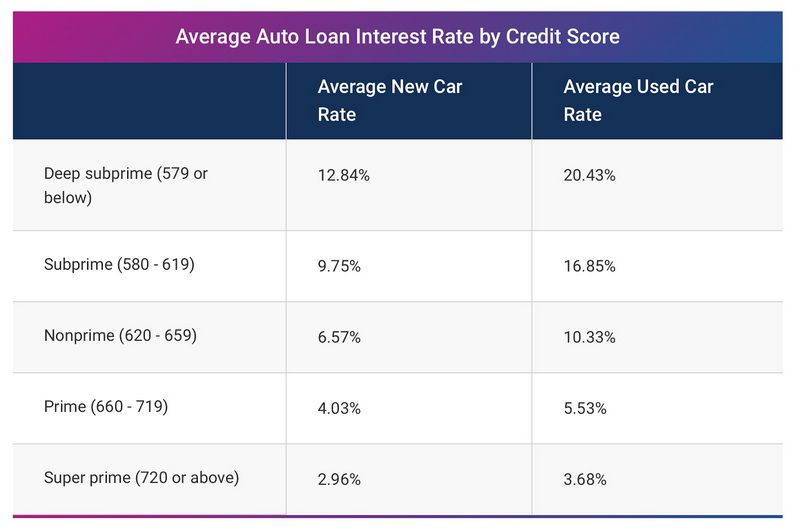
Your FICO score is the single most influential factor in determining your auto loan rate. Lenders categorize borrowers into tiers:
- Super-Prime (781–850): These borrowers receive the absolute lowest rates available.
- Prime (661–780): These borrowers still receive very competitive rates, often just a point or two above the lowest market offering.
- Non-Prime and Subprime (Below 660): Rates jump significantly here, as lenders price in the higher statistical likelihood of default.
Beyond just the score, lenders look at your “depth” of credit. A 750 score with only one year of history may be viewed less favorably than a 720 score with fifteen years of flawless payment history.
The Impact of the Loan Term and Down Payment
The duration of the loan significantly impacts the interest rate. Generally, shorter loan terms (36 to 48 months) carry lower interest rates than longer terms (72 to 84 months). While a longer term lowers the monthly payment, it increases the lender’s risk over time, resulting in a higher APR and more interest paid over the life of the loan.
Furthermore, the “Loan-to-Value” (LTV) ratio plays a critical role. If you provide a substantial down payment—typically 20% or more—you reduce the lender’s risk. If the vehicle is repossessed, the lender is more likely to recoup their money. Consequently, a lower LTV often translates to a lower interest rate.
New vs. Used Vehicle Considerations
Historically, new cars have enjoyed lower interest rates than used cars. This is because new cars have a more predictable resale value and are easier for a lender to value as collateral. However, the gap has narrowed in recent years. When searching for the lowest rates, it is vital to check if a lender differentiates between a “certified pre-owned” (CPO) vehicle and a standard used car, as CPO vehicles sometimes qualify for “new car” rates.
Strategies to Secure the Absolute Lowest Rate
Securing the best financing is an active process that begins long before you set foot on a dealership lot. By following a structured financial approach, you can ensure you are not leaving money on the table.
The Power of Pre-Approval
The most common mistake car buyers make is negotiating the car price first and the financing second. This gives the dealership’s “F&I” (Finance and Insurance) department the upper hand. Instead, you should seek pre-approval from at least two or three external sources—ideally a credit union and an online lender—before shopping.
A pre-approval letter functions like cash. It tells the dealer exactly what rate you have already secured. If the dealer wants you to use their financing, they must beat your pre-approved rate. This creates a competitive environment where the lenders are fighting for your business, rather than you begging for theirs.
Monitoring Your Debt-to-Income (DTI) Ratio
Before applying for a loan, take a snapshot of your current monthly obligations versus your gross monthly income. Lenders prefer a DTI ratio below 36%. If your DTI is high, a lender may view an auto loan as an over-extension of your finances, leading them to either deny the loan or offer a higher rate to mitigate the risk. Paying down small credit card balances a few months before applying can lower your DTI and potentially boost your credit score enough to move you into a better pricing tier.
Avoiding “Rate Markup” at the Dealership
It is important to understand that dealerships often act as middle-men for lenders. If a bank approves you for a 5% rate, the dealership might present you with a 7% rate and pocket the 2% difference as “reserve” profit. This is perfectly legal in many jurisdictions. By having your own pre-approval in hand, you effectively eliminate the dealer’s ability to mark up the rate, ensuring you pay the “buy rate” (the actual rate the bank offered) rather than the “contract rate.”
The Long-Term Impact of Interest Rates on Wealth
In the context of personal finance, an auto loan should not be viewed in isolation. It is a component of your broader wealth-building strategy. Every dollar spent on excess interest is a dollar that isn’t being invested in the stock market, a retirement account, or a high-yield savings account.
Total Cost of Borrowing
Consider a $35,000 car loan over 60 months. At a “low” rate of 4%, you would pay approximately $3,648 in total interest. At a “standard” rate of 8%, that interest jump to $7,624. The difference of nearly $4,000 is significant. If that $4,000 were invested in an index fund with an average 7% annual return, it could grow to over $15,000 over 20 years. This highlights why the quest for the lowest auto loan rate is a fundamental pillar of savvy financial management.
The Opportunity for Refinancing
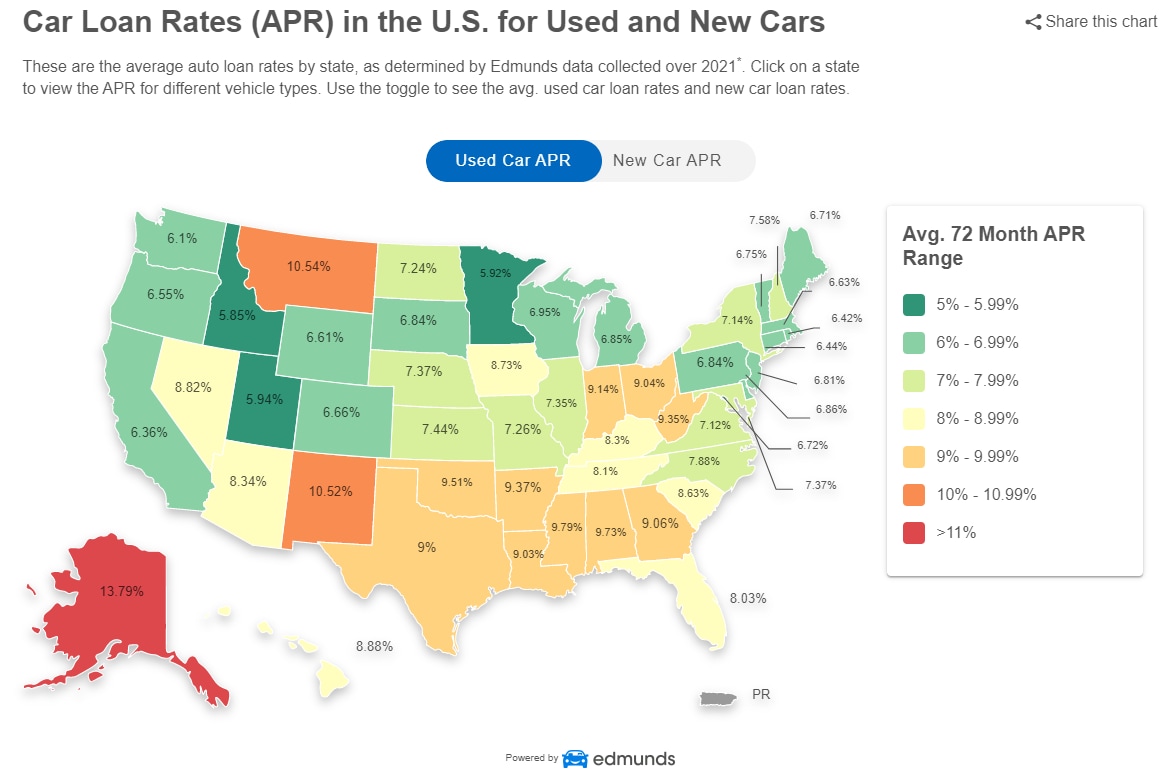
If you currently have an auto loan with a high interest rate, you are not necessarily stuck with it. Just as homeowners refinance mortgages, vehicle owners can refinance auto loans. If your credit score has improved since you bought the car, or if market rates have dropped, you can apply for a refinance loan with a different lender. Many online lenders specialize in this niche, allowing you to lower your monthly payment and total interest costs with minimal paperwork.
Final Thoughts on Market Timing
While you cannot control the Federal Reserve’s decisions or global economic shifts, you can control your readiness. The “lowest” rate is a combination of market availability and personal financial health. By maintaining a high credit score, keeping a low debt-to-income ratio, and shopping aggressively across credit unions and online platforms, you position yourself to capture the best possible terms available at any given moment. In the realm of personal finance, the goal is always to minimize the cost of liabilities so that you can maximize the growth of assets. Securing a low auto loan rate is a vital step in that journey.
aViewFromTheCave is a participant in the Amazon Services LLC Associates Program, an affiliate advertising program designed to provide a means for sites to earn advertising fees by advertising and linking to Amazon.com. Amazon, the Amazon logo, AmazonSupply, and the AmazonSupply logo are trademarks of Amazon.com, Inc. or its affiliates. As an Amazon Associate we earn affiliate commissions from qualifying purchases.