
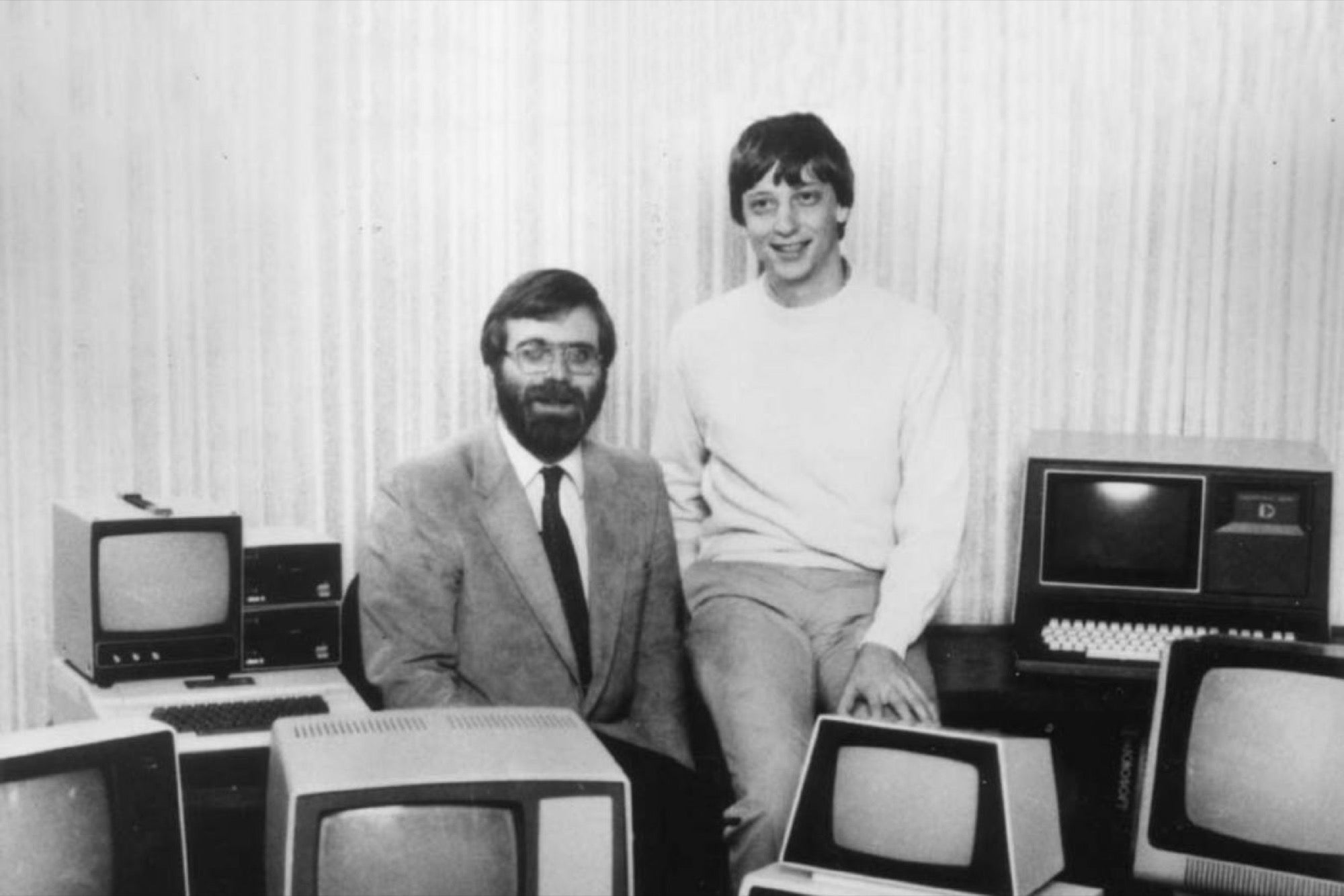
The history of the modern world cannot be written without a significant chapter dedicated to the garage-born ambitions of two childhood friends. While today we take for granted the seamless integration of software into every facet of our lives, there was a time when the very concept of a “personal computer” was viewed as an eccentric fantasy. To understand who founded Microsoft is to understand the technical curiosity and strategic foresight of Bill Gates and Paul Allen—two figures whose partnership catalyzed the software revolution and established the blueprint for the global technology industry.

The Partnership of Bill Gates and Paul Allen: The Visionary and the Architect
The story of Microsoft begins long before its official incorporation in 1975. The foundation was laid at Lakeside School in Seattle, where a young Bill Gates and Paul Allen first discovered their shared obsession with teletype machines and mainframe computers. In an era when computer time was expensive and access was limited, these two spent their nights debugging systems and exploring the limits of early programming languages.
Early Days at Lakeside School
At Lakeside, Gates and Allen weren’t just hobbyists; they were rigorous students of logic. They famously spent hours analyzing the PDP-10, a mainframe computer, finding vulnerabilities and optimizing code. This period was crucial because it allowed them to develop a deep understanding of hardware-software synergy. While many early tech pioneers were focused on building the “boxes” (the hardware), Gates and Allen were among the first to realize that the true power of the digital age would lie in the instructions that told those boxes what to do.
The Altair 8800 and the Birth of “Micro-Soft”
The pivotal moment occurred in January 1975, when Paul Allen showed Bill Gates a copy of Popular Electronics magazine featuring the MITS Altair 8800. The Altair was the world’s first successful microcomputer kit, but it lacked one essential component: software that would allow users to actually program it.
Allen and Gates contacted MITS, claiming they had a BASIC (Beginner’s All-purpose Symbolic Instruction Code) interpreter ready for the Altair. In reality, they hadn’t written a single line of code for that specific machine. Working feverishly over eight weeks, they developed the software using a simulator Allen had written. When Allen flew to Albuquerque to demonstrate it, the code worked perfectly. This success led to the formation of “Micro-soft” (a portmanteau of microcomputer and software), a company dedicated solely to the development of software tools for the nascent PC market.
From BASIC to MS-DOS: Revolutionizing the Software Ecosystem
In the late 1970s and early 1980s, the tech industry was a fragmented landscape of proprietary hardware. Microsoft’s primary technical contribution during this era was the democratization of programming. By creating versions of BASIC for various hardware platforms, they ensured that developers could write software that worked across different machines.
The Pivot to Operating Systems
While Microsoft initially focused on programming languages, their trajectory changed forever when IBM decided to enter the personal computer market. IBM needed an operating system for their upcoming PC, and after a series of missed connections with other developers, they turned to Microsoft.
Because Microsoft did not yet have an operating system of its own, they made a high-stakes technical gamble. They purchased the rights to QDOS (Quick and Dirty Operating System) from Seattle Computer Products, refined it, and rebranded it as MS-DOS (Microsoft Disk Operating System). This move shifted the company’s focus from being a tool provider to becoming the gatekeeper of the computer’s core functionality.
The IBM Deal: A Masterclass in Tech Licensing
The deal between Microsoft and IBM is perhaps the most significant moment in software history. Gates and Allen insisted on a non-exclusive license. This meant that while IBM could use MS-DOS, Microsoft retained the right to license it to other manufacturers.
As “IBM-compatible” PCs began to flood the market from companies like Compaq and Dell, MS-DOS became the universal standard. This established the “Wintel” (Windows + Intel) duopoly that would dominate the tech world for decades. By focusing on the software layer rather than the physical machine, Microsoft ensured that their technology would be present on nearly every desk in the world, regardless of who manufactured the hardware.
The Graphical Interface War and the Windows Era
As the 1980s progressed, the limitations of text-based command lines became apparent. The future of tech lay in the Graphical User Interface (GUI)—a visual environment where users could interact with icons and windows using a mouse.
Transitioning from Command Lines to Visual Computing
Inspired by research at Xerox PARC and the launch of the Apple Macintosh, Microsoft began developing Windows. This wasn’t just a cosmetic upgrade; it was a massive technical undertaking. Windows was initially a graphical shell that ran on top of MS-DOS, but it eventually evolved into a standalone operating system.
The launch of Windows 3.0 and subsequently Windows 95 represented a paradigm shift in how humans interacted with machines. Features like the “Start” button and the taskbar became intuitive staples of the digital experience. From a technical standpoint, Microsoft succeeded in building an ecosystem that supported a vast array of third-party software and peripheral hardware, thanks to their robust Application Programming Interfaces (APIs) and driver support.
Establishing the Standard for Global Productivity
Parallel to the operating system, Microsoft developed the Office suite. By integrating Word, Excel, and PowerPoint, they created a software ecosystem that became the backbone of global business. The technical innovation here was the interoperability between these programs—the ability to embed an Excel chart into a Word document revolutionized digital workflows. Microsoft transformed the computer from a specialized calculation tool into a versatile workstation for creative and administrative tasks.
Sustaining Innovation: Microsoft’s Evolution Beyond the Desktop
The legacy of Gates and Allen extends far beyond the 20th-century PC. Under subsequent leadership, but rooted in the foundational technical excellence established by its founders, Microsoft has navigated several seismic shifts in the tech landscape, most notably the transition to the cloud and the rise of artificial intelligence.
Embracing the Cloud with Azure
In the 2010s, the tech industry moved away from local storage toward distributed computing. Microsoft’s response was Azure, a cloud computing platform that provides a massive array of services, including virtual computing, analytics, and storage. Azure represents the modern evolution of Microsoft’s original mission: providing the essential infrastructure upon which other developers build their applications. Today, Microsoft’s data centers power a significant portion of the global internet, proving that their technical relevance has only expanded in the era of connectivity.
Leading the AI Frontier through Strategic Integration
Most recently, Microsoft has positioned itself at the forefront of the Artificial Intelligence revolution. By partnering with OpenAI and integrating Large Language Models (LLMs) into their “Copilot” ecosystem, Microsoft is once again redefining the user interface.
The technical shift here is profound. We are moving from a world where users give machines specific commands to a world where machines understand natural language intent. Whether it’s auto-generating code in GitHub or summarizing complex data in Excel, Microsoft is leveraging AI to automate cognitive tasks, much like they once leveraged BASIC to automate mathematical ones.

The Enduring Technical Legacy of the Founders
When we ask who founded Microsoft, the names Bill Gates and Paul Allen stand as symbols of a specific kind of technical courage. They were among the first to realize that software was not just an add-on to hardware, but the most valuable asset in the digital economy.
Paul Allen, who passed away in 2018, was often described as the “idea man”—the one who saw the potential of the hardware before it even existed. Bill Gates was the relentless engineer and strategist who turned those ideas into a global standard. Together, they built a company that didn’t just participate in the tech industry; it created the framework within which the tech industry operates.
Today, Microsoft remains a titan of software, cloud infrastructure, and AI. The vision of “a computer on every desk and in every home” has been realized and surpassed—now, Microsoft’s code resides in our pockets, in the clouds above us, and in the algorithms that shape our understanding of the world. The foundation laid in 1975 continues to support the weight of the modern digital age, proving that the technical insights of two friends in Albuquerque were enough to change the course of human history.
aViewFromTheCave is a participant in the Amazon Services LLC Associates Program, an affiliate advertising program designed to provide a means for sites to earn advertising fees by advertising and linking to Amazon.com. Amazon, the Amazon logo, AmazonSupply, and the AmazonSupply logo are trademarks of Amazon.com, Inc. or its affiliates. As an Amazon Associate we earn affiliate commissions from qualifying purchases.