
The identity of the founder of Bitcoin is perhaps the most enduring mystery of the digital age. Since the release of the Bitcoin whitepaper in October 2008, the name “Satoshi Nakamoto” has become synonymous with a radical shift in how we perceive value, currency, and financial sovereignty. While the world of technology focuses on the elegance of the blockchain code, the financial world remains obsessed with the founder’s identity for a far more pragmatic reason: the creator’s vision—and their dormant fortune—continues to shape the global economy.
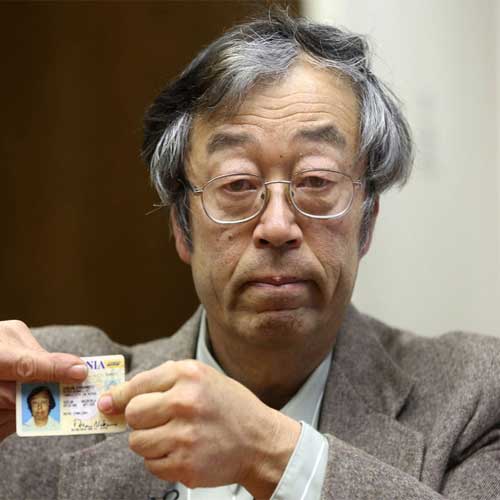
Understanding who founded Bitcoin is not merely a pursuit for historians or internet sleuths; it is a fundamental inquiry into the origins of decentralized finance (DeFi). To understand the founder is to understand the intent behind an asset class that has grown from a fringe experiment to a multi-trillion-dollar market.
The Genesis of Decentralized Money: Identifying the Visionary
In the wake of the 2008 global financial crisis, as major banking institutions crumbled and trust in centralized monetary systems evaporated, a pseudonymous figure named Satoshi Nakamoto published a document titled Bitcoin: A Peer-to-Peer Electronic Cash System. This whitepaper proposed a solution to a problem that had plagued digital finance for decades: the “double-spend” problem.
The Whitepaper that Challenged Wall Street
Nakamoto’s proposal was not just a technical breakthrough; it was a financial manifesto. By utilizing a decentralized ledger known as the blockchain, Satoshi created a system where transactions could be verified without the need for a trusted third party, such as a bank or government. For investors and financial strategists, this was the birth of “trustless” finance. The timing was no coincidence. The genesis block of Bitcoin, mined in January 2009, contained a hidden message: “The Times 03/Jan/2009 Chancellor on brink of second bailout for banks.” This firmly rooted the founding of Bitcoin in a desire to provide a financial alternative to the traditional banking system.
Satoshi Nakamoto: Person, Group, or Ghost?
Over the years, various individuals have been suspected of being the mastermind behind the protocol. The leading candidates often include figures from the “Cypherpunk” movement—activists advocating for the use of strong cryptography as a route to social and political change.
Hal Finney, a brilliant programmer and the first person to receive a Bitcoin transaction, is a primary suspect. His proximity to the project and his expertise in “reusable proofs of work” make him a logical candidate, though he denied being Satoshi until his passing in 2014. Other names like Nick Szabo, the creator of “Bit Gold,” and Adam Back, the inventor of Hashcash, are frequently cited due to the ideological and technical similarities between their work and Bitcoin. Despite various “reveals” and forensic linguistics studies, the true identity remains unconfirmed. This anonymity is a cornerstone of Bitcoin’s financial appeal; because there is no “CEO” to subpoena or “founder” to influence, the asset remains truly decentralized.
The Economic Philosophy Behind the Code
To understand the founder’s impact, one must look at the specific economic parameters Satoshi hard-coded into the Bitcoin protocol. Unlike fiat currencies, which can be printed at the whim of central banks, Bitcoin was designed with a fixed, immutable monetary policy.
Sound Money and Fixed Supply
Satoshi Nakamoto introduced a hard cap of 21 million coins. This scarcity is the bedrock of Bitcoin’s valuation as “digital gold.” In a world of quantitative easing and currency devaluation, Satoshi’s design offered a deflationary alternative. From a wealth management perspective, this fixed supply creates a predictable scarcity that has attracted institutional investors looking for a hedge against inflation. The founder’s decision to automate the issuance of new coins through “halving” events ensures that no single entity can manipulate the supply to serve political or corporate interests.
Eliminating the Middleman in Global Transactions
A key component of Satoshi’s financial vision was the reduction of transaction costs. In the traditional financial sector, cross-border payments are often bogged down by intermediary banks, high fees, and days of settlement time. By creating a peer-to-peer network, the founder enabled the near-instantaneous movement of value across the globe for a fraction of the cost. This functionality redefined the concept of “remittances” and opened the door for a more inclusive global financial system, where anyone with an internet connection could participate in the global economy without needing a bank account.
The Strategic Importance of Satoshi’s Disappearance
Perhaps the most brilliant strategic move made by Bitcoin’s founder was their eventual disappearance. In 2011, Satoshi Nakamoto sent a final email stating they had “moved on to other things,” leaving the project in the hands of a community of developers.
Trustlessness: Why Bitcoin Doesn’t Need a CEO
In the corporate world, the departure of a founder often leads to a drop in stock price and a crisis of leadership. In the case of Bitcoin, Satoshi’s exit was the ultimate catalyst for its success. By stepping away, the founder ensured that Bitcoin could not be shut down by targeting a single leader. This “headless” nature is a primary reason why Bitcoin is viewed as a “commodity” by many regulatory bodies rather than a “security.” For the financial markets, this provides a level of stability and resilience that no other digital asset possesses.
The Regulatory Shield of Anonymity
The founder’s anonymity serves as a protective layer against regulatory overreach. In the current landscape of global finance, regulators often struggle with how to categorize decentralized protocols. Because Satoshi is not a legal entity or a registered corporation, there is no central point of failure or legal liability. This has allowed Bitcoin to grow organically, driven by market demand rather than corporate marketing or venture capital influence. For the savvy investor, this represents a pure form of market discovery.
The Financial Legacy of a Pseudonymous Creator
The legacy of Satoshi Nakamoto is not just found in the code, but in the massive shift in how wealth is generated and stored in the 21st century. Bitcoin has paved the way for an entire ecosystem of digital assets, but it remains the gold standard of the industry.
The Impact on Institutional Investment
The founder’s vision has transitioned from the fringes of the internet to the boardrooms of Wall Street. With the approval of Bitcoin Spot ETFs and the entry of firms like BlackRock and Fidelity into the space, Bitcoin has been validated as a legitimate asset class. This institutional adoption is the realization of Satoshi’s goal: a parallel financial system that operates alongside traditional finance, providing an “exit ramp” for those concerned about the stability of fiat-based economies.
The “Satoshi Stash” and Market Stability
One of the most discussed aspects of the founder’s identity is the estimated 1 million BTC held in Satoshi’s original wallets. At current market prices, this makes Nakamoto one of the wealthiest individuals on the planet. However, these coins have remained untouched for over a decade. In financial circles, the “Satoshi stash” is viewed with both awe and caution. If these coins were ever moved, it could cause significant market volatility. Yet, their continued dormancy is seen by many as a sign of the founder’s commitment to the project’s success over personal gain—a rarity in the world of high finance.
Looking Forward: The Future of Digital Wealth and Sovereignty
The question of “who founded Bitcoin” may never be answered, but the answer is increasingly irrelevant compared to the financial infrastructure they left behind. As we move deeper into the digital age, the principles of decentralization, scarcity, and transparency continue to gain traction.
Lessons for Future Financial Systems
Satoshi Nakamoto provided a blueprint for how financial systems can operate without central authority. This has led to the rise of decentralized finance (DeFi), where lending, borrowing, and trading are conducted via smart contracts. The founder’s decision to prioritize security and decentralization over speed has taught the financial world that the integrity of the ledger is the most valuable asset a currency can have.

The Continued Search for the Founder
While the search for Satoshi continues, the financial world has largely accepted that the “idea” of Satoshi is more powerful than the person. By remaining a myth, Satoshi Nakamoto allowed Bitcoin to become a global public good. For investors, the founder’s anonymity is the ultimate guarantee that the rules of the game will not change. In an era of economic uncertainty, the founder of Bitcoin gave the world a predictable, transparent, and decentralized tool for the preservation of wealth.
Ultimately, Satoshi Nakamoto’s greatest contribution was not just the invention of a new technology, but the creation of a new category of money. Whether Satoshi was an individual or a collective, their work has fundamentally altered the trajectory of global finance, offering a vision of a future where financial power is returned to the hands of the individuals. As the digital economy continues to evolve, the legacy of Bitcoin’s founder will remain the cornerstone of the modern financial revolution.
aViewFromTheCave is a participant in the Amazon Services LLC Associates Program, an affiliate advertising program designed to provide a means for sites to earn advertising fees by advertising and linking to Amazon.com. Amazon, the Amazon logo, AmazonSupply, and the AmazonSupply logo are trademarks of Amazon.com, Inc. or its affiliates. As an Amazon Associate we earn affiliate commissions from qualifying purchases.