
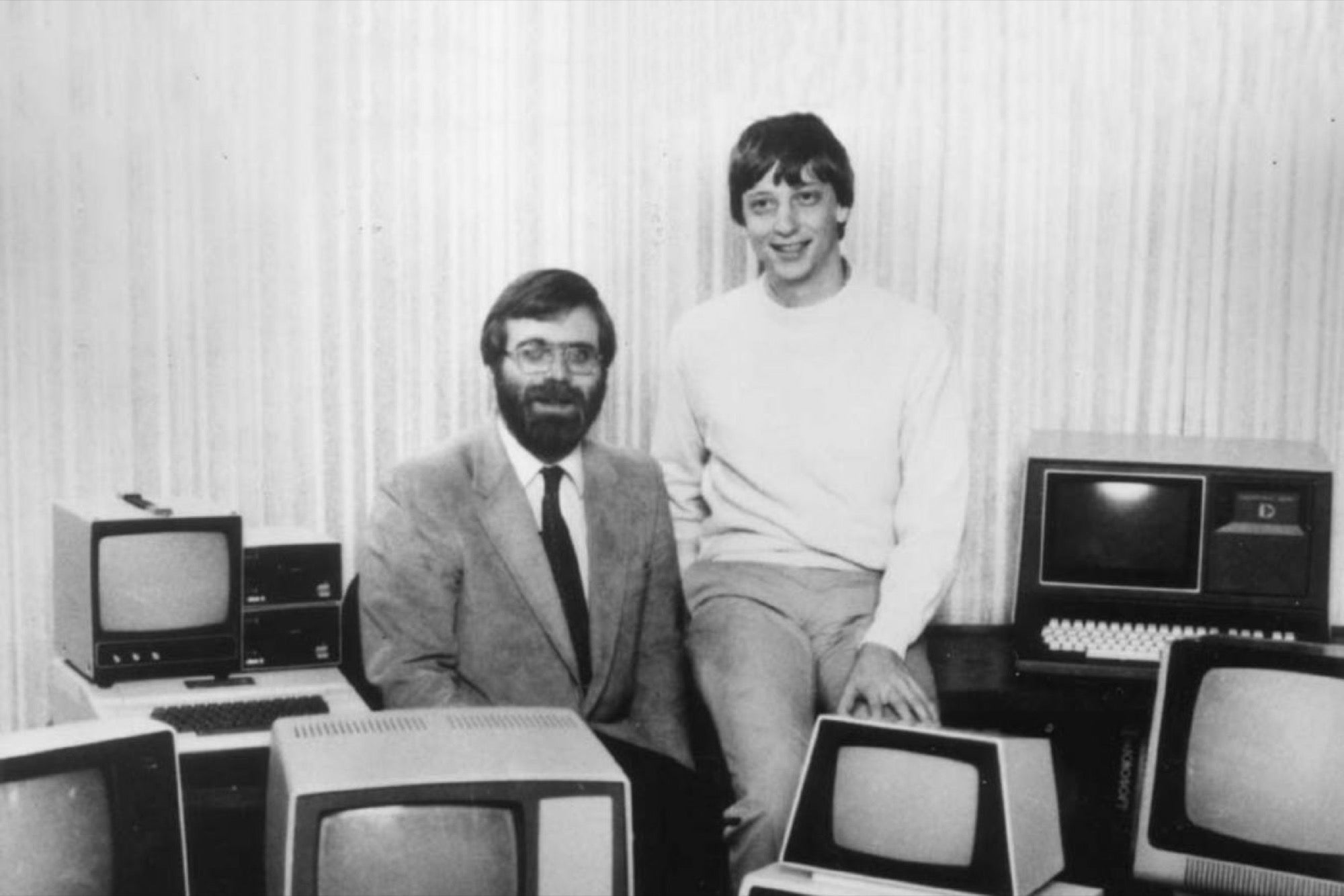
The story of who created Microsoft is not merely a chronicle of two men in a garage, but a seminal chapter in the history of computer science that redefined how humanity interacts with machines. While the names Bill Gates and Paul Allen are synonymous with the brand, their true contribution lies in a fundamental technological realization: that software, rather than hardware, would become the most valuable commodity in the digital age. In the mid-1970s, at the dawn of the microcomputer revolution, Gates and Allen synthesized existing programming concepts to build a foundation that would eventually power the vast majority of the world’s desktop computers.

To understand who created Microsoft is to understand the technical landscape of 1975. At the time, computers were largely massive mainframes owned by corporations or universities. The “creation” of Microsoft occurred at the precise moment that microprocessors became small and affordable enough for hobbyists, sparking a technological pivot that shifted the focus from massive iron machines to the code that could make them functional for the average user.
The Genesis of Microsoft: From Altair BASIC to the Software Revolution
Microsoft’s technical journey began long before its formal incorporation. Bill Gates and Paul Allen, friends from Lakeside School in Seattle, spent their formative years mastering the complexities of the PDP-10 and other early systems. This deep technical immersion allowed them to spot a vacuum in the market when the MITS Altair 8800, the first successful personal computer, was featured on the cover of Popular Electronics in 1975.
The Collaboration of Bill Gates and Paul Allen
The partnership between Gates and Allen was a synergy of visionary software architecture and pragmatic engineering. Allen was often the one who spotted the hardware trends, while Gates was the relentless coder who could optimize algorithms to fit into incredibly tight memory constraints. When they saw the Altair 8800, they realized that the hardware was useless without a high-level programming language. They didn’t just decide to “start a company”; they decided to write an interpreter that would allow programmers to use BASIC (Beginners’ All-purpose Symbolic Instruction Code) on the Altair’s Intel 8080 microprocessor.
Solving the Language Problem: The Role of BASIC
The technical feat achieved by Gates and Allen was extraordinary. They had no Altair 8800 to work on; instead, Allen wrote an emulator for the Intel 8080 that ran on their school’s PDP-10. This allowed Gates to write the BASIC code in an environment that simulated the microcomputer’s hardware. When Allen finally flew to Albuquerque to test the code on a real Altair, it worked on the first try. This success proved that software could be portable—a revolutionary concept at the time—and led to the official formation of “Micro-Soft” (later simplified to Microsoft). This software-first approach set the stage for every technological advancement that followed.
Building the Foundation: The MS-DOS Era and the Rise of Personal Computing
By the late 1970s and early 1980s, the focus of Microsoft shifted from programming languages to operating systems. The creation of the Microsoft we recognize today was cemented by the development of MS-DOS (Microsoft Disk Operating System), a project that demonstrated the company’s ability to navigate complex hardware-software ecosystems.
The IBM Partnership: A Pivotal Tech Milestone
In 1980, IBM approached Microsoft to provide an operating system for their upcoming IBM PC. Interestingly, Microsoft did not actually “create” the original code for what became MS-DOS from scratch. Instead, they acquired “86-DOS” (also known as QDOS, or Quick and Dirty Operating System) from Seattle Computer Products, which had been written by Tim Paterson. Microsoft then refined and adapted the code to meet IBM’s rigorous standards. The genius of the “creation” here was not just the code itself, but the technical foresight to retain the right to license the software to other manufacturers. This created a standardized software environment across diverse hardware clones, effectively creating the “PC compatible” market.
Shifting from Hardware-Centric to Software-Centric Models
The development of MS-DOS marked a shift toward an abstraction layer between the user and the hardware. Before MS-DOS, software was often custom-written for specific machine architectures. Microsoft’s operating system provided a set of standardized BIOS (Basic Input/Output System) calls and a command-line interface that allowed developers to write applications that would run on any IBM-compatible machine. This technical standardization catalyzed the software industry, allowing for the rise of early productivity tools like spreadsheets and word processors.
The Windows Paradigm: Redefining the Graphical User Interface (GUI)
As computing power increased, the limitations of text-based interfaces became apparent. The next phase of Microsoft’s evolution involved moving beyond the “C:>” prompt and into a visual environment. This transition was technically arduous, as it required the operating system to manage complex graphics and multitasking capabilities that the original DOS architecture was never designed to handle.
The Transition from Command Lines to Visual Computing
Windows 1.0, released in 1985, was not a standalone operating system but rather a graphical shell that ran on top of MS-DOS. The technical challenge was managing system resources—specifically memory—while providing a “What You See Is What You Get” (WYSIWYG) interface. Developers had to move away from direct hardware manipulation and instead learn to use Microsoft’s Application Programming Interfaces (APIs) to draw windows, buttons, and menus. This move essentially “created” the modern user experience, prioritizing accessibility and visual logic over technical syntax.
Versioning Success: From Windows 3.1 to the NT Kernel
The true technological breakthrough for Microsoft came with Windows 3.1 and, subsequently, the development of the NT (New Technology) kernel. While early versions of Windows were prone to crashes because they relied on the aging DOS architecture, the NT kernel was built from the ground up as a 32-bit, multi-user, and multi-processing system. Led by lead architect Dave Cutler, the NT project transformed Windows into a robust enterprise-grade platform. This architectural shift ensured that Microsoft could support more powerful hardware and more complex software applications, solidifying its dominance in both the home and corporate sectors.
Modern Microsoft: Cloud Infrastructure and the AI Frontier
The Microsoft of the 21st century is vastly different from the company Gates and Allen founded in 1975, yet it remains rooted in the same philosophy: providing the essential software layers for the latest hardware. Under the leadership of Satya Nadella, the company has pivoted from a “Windows-first” mentality to a “Cloud-first, AI-first” technical strategy.
Azure and the Pivot to Distributed Computing
If the 1990s were about the desktop, the 2010s were about the data center. The creation of Microsoft Azure represented a massive shift in software engineering. Microsoft transitioned from selling “boxed” software to providing “Software as a Service” (SaaS) and “Infrastructure as a Service” (IaaS). This required a complete overhaul of their technical stack, moving toward virtualization, containerization (using tools like Docker and Kubernetes), and a massive global network of servers. Azure allowed Microsoft to extend its reach beyond the PC, powering everything from mobile apps to global financial systems.
Integrating Generative AI and the Future of Productivity Software
Today, Microsoft is at the forefront of the Artificial Intelligence revolution. By integrating Large Language Models (LLMs) into their core products—branded as Microsoft 365 Copilot—the company is once again redefining the user interface. This is not just a cosmetic change; it is a fundamental shift in how software processes information. Instead of users navigating menus to perform tasks, the software now uses natural language processing to understand intent and generate code, text, or data analysis autonomously. This integration of OpenAI’s GPT models with Microsoft’s massive graph of enterprise data represents the next logical step in the technical lineage started by Gates and Allen: making machines more capable and more intuitive for the human end-user.

Conclusion: A Legacy of Iterative Innovation
When we ask “who created Microsoft,” we often look for a single name or a specific date. However, from a technical perspective, Microsoft is an ongoing creation—a series of layered innovations that began with a 4-kilobyte BASIC interpreter and has evolved into a global cloud and AI infrastructure. Bill Gates and Paul Allen provided the initial spark by recognizing the primacy of software. Subsequent generations of engineers and architects have built upon that foundation, navigating the shifts from 16-bit to 64-bit computing, from command lines to touchscreens, and from local desktops to the distributed cloud. Microsoft’s history is a testament to the power of software as the ultimate tool for human productivity, a tool that continues to be rewritten and reimagined with every new technological frontier.
aViewFromTheCave is a participant in the Amazon Services LLC Associates Program, an affiliate advertising program designed to provide a means for sites to earn advertising fees by advertising and linking to Amazon.com. Amazon, the Amazon logo, AmazonSupply, and the AmazonSupply logo are trademarks of Amazon.com, Inc. or its affiliates. As an Amazon Associate we earn affiliate commissions from qualifying purchases.