
The cryptocurrency market has transitioned from a fringe experiment into a foundational pillar of the modern financial landscape. Once characterized solely by extreme volatility and speculative fervor, the digital asset space now offers a sophisticated array of investment vehicles that cater to diverse risk appetites and long-term financial goals. For the modern investor, the question is no longer whether to enter the market, but rather where to allocate capital to maximize risk-adjusted returns.
Navigating this ecosystem requires a move away from “get-rich-quick” mentalities and toward a disciplined, research-driven approach. As institutional adoption accelerates and regulatory frameworks solidify, understanding the specific sectors of the crypto economy is essential for building a resilient portfolio. This guide explores the primary categories, platforms, and strategies that define professional crypto investing today.
1. Diversification Across Core Crypto Asset Classes
Successful investing begins with understanding that not all digital assets serve the same purpose. In a well-balanced portfolio, investors must distinguish between “Store of Value” assets, “Utility” tokens, and “Infrastructure” plays. By diversifying across these categories, an investor can capture the growth of the entire ecosystem while mitigating the failure of any single project.
Layer 1 Blockchains: The Blue Chips
Layer 1 (L1) blockchains are the foundational networks upon which the entire crypto economy is built. Investing in L1s is akin to investing in the internet’s base protocols or the power grid of a city. Bitcoin (BTC) remains the undisputed “digital gold,” serving as a hedge against fiat currency debasement and a premier store of value. Its scarcity and decentralization make it the cornerstone of any crypto portfolio.
Ethereum (ETH), on the other hand, represents the “digital oil” of the ecosystem. As a programmable blockchain, it facilitates decentralized applications (dApps) and smart contracts. Beyond these two, other L1s like Solana and Avalanche compete on speed and cost. For the investor, holding a basket of these core protocols provides exposure to the underlying security and transaction layers of the decentralized web.
Layer 2 Scaling Solutions: The Efficiency Play
As Layer 1 networks grow, they often face congestion and high fees. Layer 2 (L2) solutions are protocols built on top of L1s to improve scalability. Investing in L2s—such as Arbitrum, Optimism, or Polygon—is a bet on the mass adoption of blockchain technology. These networks make transactions affordable for the average user, making them essential for retail commerce and gaming. From a financial perspective, L2 tokens often gain value as their specific ecosystems grow in Total Value Locked (TVL) and daily active users.
Decentralized Finance (DeFi) and Yield Generation
DeFi represents the shift of traditional financial services—lending, borrowing, and trading—onto the blockchain. This sector allows investors to put their capital to work rather than letting it sit idle. By investing in governance tokens of established protocols like Aave or Uniswap, or by participating in liquidity provision, investors can earn yields that often outpace traditional savings accounts. However, this “Money” niche requires a deep understanding of smart contract risk and liquidity dynamics.
2. Evaluating Investment Vehicles: Exchanges, Custody, and Accessibility
Deciding where to invest also involves choosing the right infrastructure for purchasing and securing assets. The trade-off between convenience and security is a central theme in personal finance, and nowhere is this more prevalent than in the crypto space.
Centralized Exchanges (CEXs) for Traditional Entry
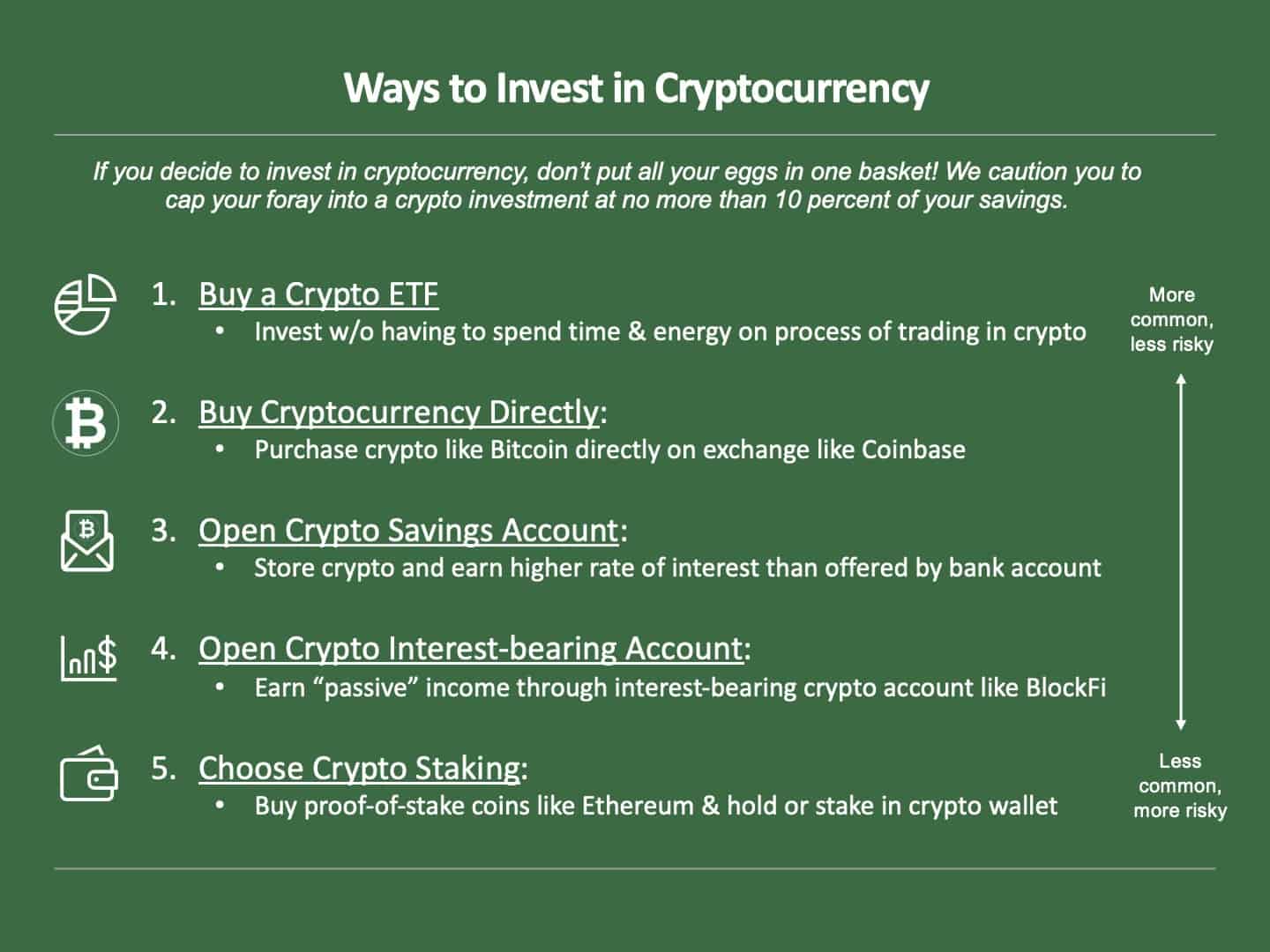
For most investors, the journey begins on Centralized Exchanges like Coinbase, Kraken, or Binance. These platforms offer a user-friendly interface similar to traditional brokerage accounts. They provide deep liquidity, which is crucial for entering and exiting positions without significant price slippage. From a strategic standpoint, CEXs are excellent for high-frequency trading and for those who prefer the platform to handle the technicalities of security and regulatory compliance.
The Rise of Spot ETFs and Managed Products
One of the most significant developments in the financial world has been the approval of Spot Bitcoin and Ethereum ETFs (Exchange-Traded Funds). For investors who want exposure to crypto price movements without the “tech hurdle” of managing digital keys, ETFs are a game-changer. These products allow crypto to be held within traditional IRAs and 401(k)s, offering tax advantages and professional oversight. This is often the preferred route for institutional-grade portfolios and conservative long-term investors.
Decentralized Exchanges (DEXs) and Self-Custody
As investors become more sophisticated, they often move toward Decentralized Exchanges (DEXs) and self-custody solutions. Using a DEX allows for “permissionless” trading directly from a private wallet, reducing the risk of exchange insolvency. However, this comes with the responsibility of self-custody. Utilizing hardware wallets (cold storage) is the gold standard for securing significant capital. In the world of crypto finance, “not your keys, not your coins” is a mantra that emphasizes the importance of personal sovereignty over one’s wealth.
3. Emerging Sectors: High-Growth Opportunities in the New Economy
Beyond the established giants, several emerging sectors represent the next frontier of crypto investing. These areas often carry higher risk but offer the potential for asymmetric returns as they disrupt traditional industries.
The Intersection of AI and Blockchain
Artificial Intelligence (AI) and blockchain are two of the most transformative technologies of our era. The convergence of these fields—often referred to as “AI Crypto”—is a burgeoning investment sector. Projects in this space focus on decentralized computing power, AI model marketplaces, and data privacy. For the investor, this represents a play on the infrastructure needed to power the next generation of automated intelligence, ensuring that AI development remains transparent and decentralized.
Real-World Asset (RWA) Tokenization
Perhaps the most significant “Money” trend in crypto is the tokenization of Real-World Assets (RWAs). This involves bringing traditional assets like real estate, US Treasuries, and commodities onto the blockchain. Tokenization provides fractional ownership, 24/7 liquidity, and lower entry barriers for high-value assets. Investing in platforms that facilitate RWA tokenization is a strategic way to bridge the gap between legacy finance and the digital future, capturing value from the trillions of dollars currently locked in illiquid traditional markets.
The Evolution of the Metaverse and Gaming
The gaming industry is larger than the film and music industries combined. Blockchain technology is introducing “Play-to-Earn” models and true ownership of in-game assets through NFTs (Non-Fungible Tokens). While this sector experienced significant hype in previous cycles, the current focus has shifted toward high-quality game development and sustainable economic models. Investing in the underlying tokens of these gaming ecosystems allows investors to participate in the growth of digital entertainment and virtual economies.
4. Risk Management and Strategic Capital Allocation
Investing in crypto is not merely about picking the right tokens; it is about managing a portfolio through extreme market cycles. Professional investors utilize specific financial frameworks to protect their capital and ensure long-term growth.
Dollar-Cost Averaging (DCA) and Market Cycles
Volatility is a double-edged sword. To combat the psychological stress of price swings, seasoned investors employ Dollar-Cost Averaging (DCA). By investing a fixed amount of money at regular intervals, regardless of price, you lower your average cost basis over time. This strategy removes emotion from the equation and is particularly effective in the crypto market, where “timing the bottom” is notoriously difficult.
Portfolio Rebalancing and Profit Taking
A common mistake in crypto investing is failing to realize gains. Because digital assets can appreciate by hundreds of percent in a short period, they can quickly over-allocate your portfolio, increasing your risk profile. A disciplined investor sets “take-profit” targets and regularly rebalances their portfolio back to their target allocations. For example, if your goal is a 10% crypto allocation and it grows to 20%, selling the excess and moving it into stablecoins or traditional bonds preserves wealth and provides “dry powder” for future market corrections.
Assessing Liquidity and Sentiment
In the “Money” niche, liquidity is king. Before investing in a project, it is vital to analyze the volume and the “depth” of the market. High-market-cap coins are generally safer because they can be sold quickly without crashing the price. Furthermore, monitoring market sentiment—often measured by the Fear & Greed Index—can provide contrarian signals. Generally, the best time to invest is when the market is in a state of “Extreme Fear,” and the best time to hedge is during periods of “Extreme Greed.”
5. The Future of Crypto Finance: Regulation and Institutional Adoption
The final piece of the “where to invest” puzzle is the external environment. The regulatory landscape is shifting from opposition to integration, which has profound implications for asset prices.
The Impact of Regulatory Clarity
As jurisdictions like the EU (with MiCA) and the US develop clearer frameworks for digital assets, the “risk premium” associated with legal uncertainty begins to fade. Regulatory clarity attracts institutional capital—pension funds, insurance companies, and sovereign wealth funds. For the retail investor, this transition usually leads to lower volatility and more sustainable, upward price action. Investing in projects that prioritize compliance and transparency is a prudent long-term strategy.

Institutional Integration and the “Web3” Economy
We are moving toward an era where the distinction between “crypto” and “finance” will blur. Major banks are already using blockchain for cross-border settlements, and central banks are exploring Digital Currencies (CBDCs). The “Web3” economy represents a shift toward a user-owned internet where value flows as freely as information. By positioning a portfolio in assets that facilitate this transition, investors are not just speculating on a trend; they are investing in the upgrade of the global financial operating system.
In conclusion, knowing where to invest in crypto requires a multifaceted approach that balances the stability of core assets like Bitcoin with the high-growth potential of emerging sectors like RWA tokenization and AI. By utilizing professional custody solutions, employing disciplined risk management strategies like DCA, and staying informed on regulatory shifts, investors can navigate the complexities of this digital frontier. Crypto is no longer a gamble; it is a strategic asset class for those who understand how to manage it.
aViewFromTheCave is a participant in the Amazon Services LLC Associates Program, an affiliate advertising program designed to provide a means for sites to earn advertising fees by advertising and linking to Amazon.com. Amazon, the Amazon logo, AmazonSupply, and the AmazonSupply logo are trademarks of Amazon.com, Inc. or its affiliates. As an Amazon Associate we earn affiliate commissions from qualifying purchases.