
In the landscape of personal finance, a vehicle is often the second-largest purchase a consumer will make, surpassed only by a home. However, unlike real estate, which generally appreciates over time, a vehicle is a depreciating asset. For the financially savvy individual, the quest for a vehicle is not merely about finding a mode of transportation; it is an exercise in capital preservation and strategic spending. Deciding where to find used cars is a critical pivot point that determines the total cost of ownership, the financing terms available, and the long-term impact on one’s net worth.
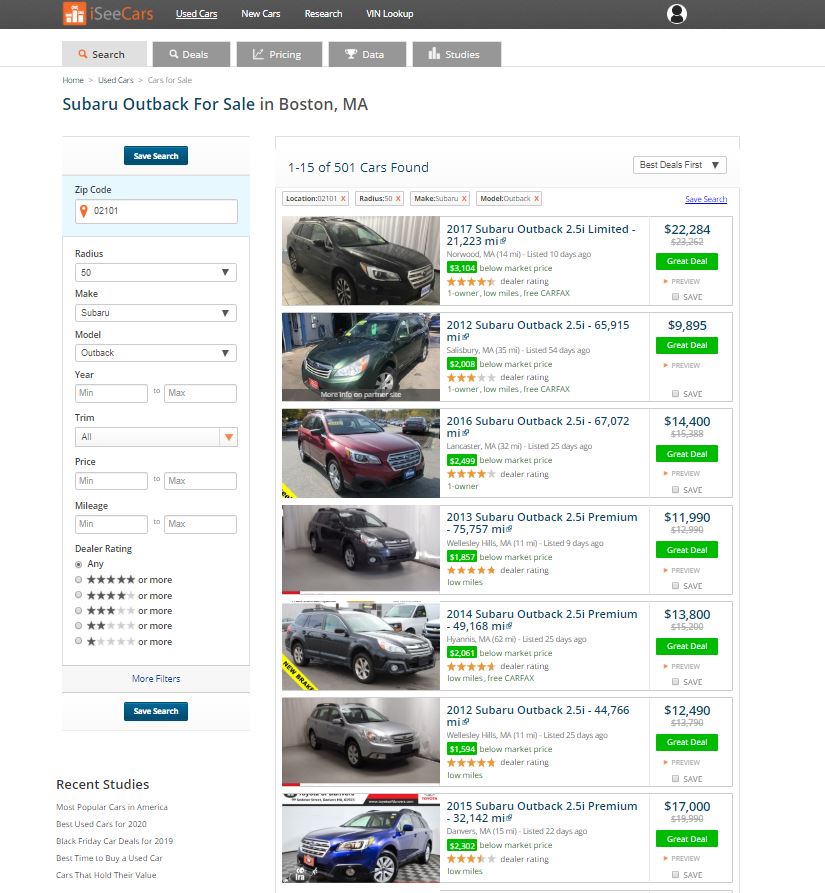
By shifting the perspective from “shopping” to “investing in a utility,” you can navigate the used car market to find value that others overlook. This guide explores the most effective avenues for finding used cars through the lens of personal finance, ensuring that every dollar spent is an optimization of your financial health.
The Economics of the Used Car Market: Why “Where” Matters
To understand where to find used cars, one must first understand the financial logic underpinning the secondary market. The primary motivation for buying used is the avoidance of “off-the-lot” depreciation. A new car can lose up to 20% of its value in the first twelve months and roughly 60% of its value within the first five years. By targeting the used market, you are essentially letting the first owner pay the “premium” for the newness, while you reap the benefits of a functional asset at a fraction of the cost.
Understanding the Depreciation Curve and Market Arbitrage
Strategic buyers look for cars that have already survived the steepest part of their depreciation curve—typically vehicles between three and five years old. Finding these cars requires knowing where they congregate. When you look at off-lease vehicles or corporate fleet returns, you are looking at assets that have been maintained according to strict schedules, often sold at wholesale-adjacent prices. Understanding this “sweet spot” in the depreciation curve allows for a form of market arbitrage where you acquire high utility for low capital outlay.
The Impact of Location on Transaction Costs
Where you find a car also dictates the associated “soft costs.” For instance, buying from a high-end dealership in an affluent zip code might result in a higher sticker price due to the dealer’s overhead, but it may also yield a vehicle that was serviced exclusively at the manufacturer’s intervals. Conversely, purchasing in a more competitive, high-volume market can drive down the base price. From a money management perspective, you must weigh the purchase price against the “hidden” costs of travel, registration fees, and potential immediate maintenance.
High-Value Sources: Identifying the Best Financial Channels
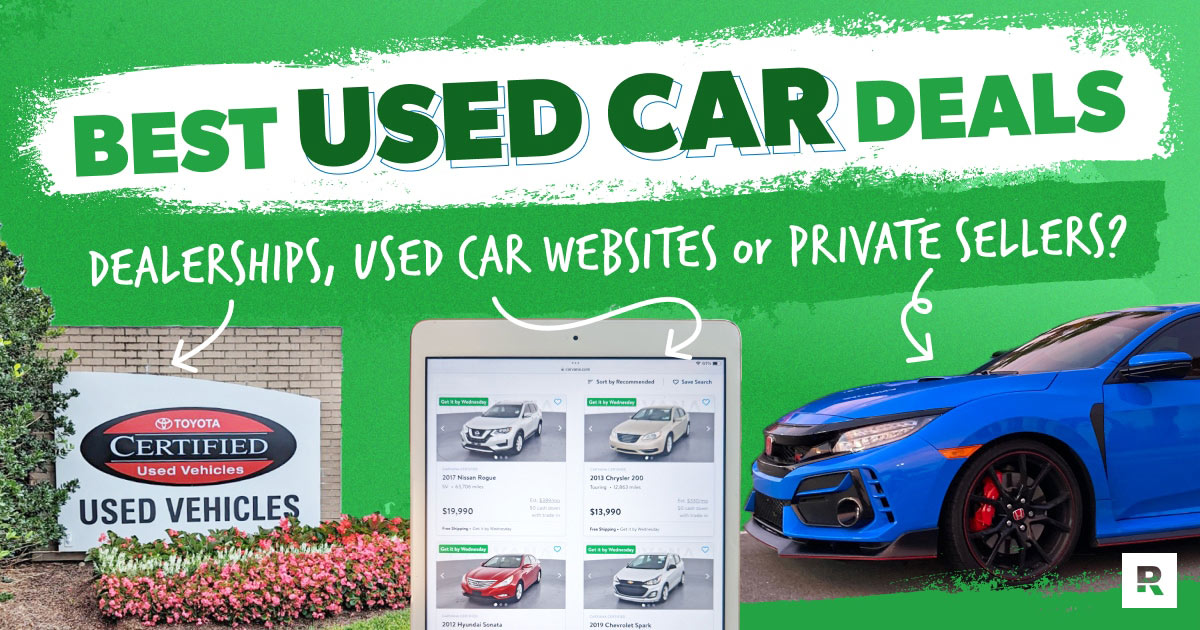
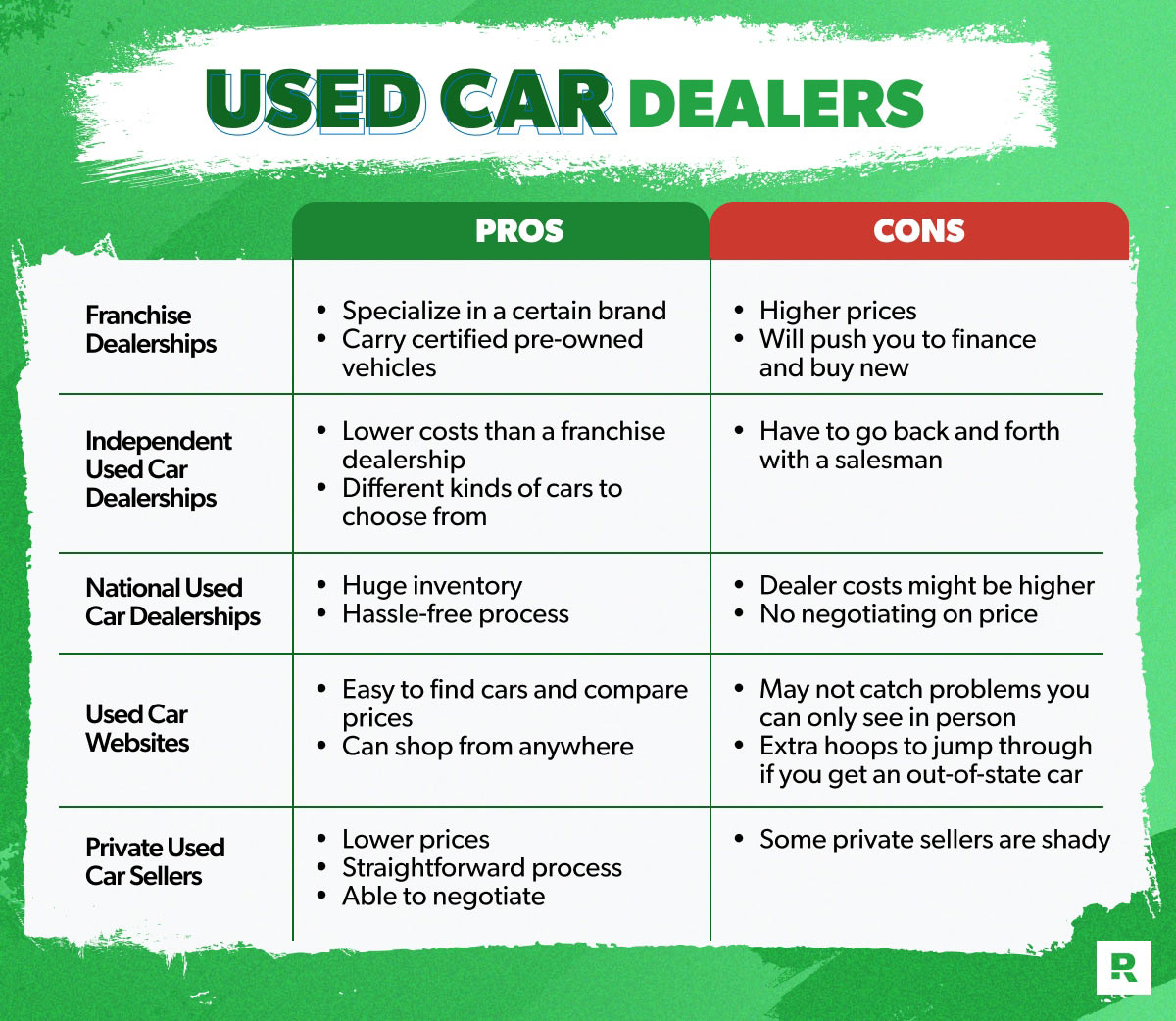
The “where” of your search will largely fall into three categories: private parties, traditional dealerships, and the emerging world of online direct-to-consumer platforms. Each carries a different risk-to-reward ratio for your bank account.
The Private Party Advantage: Eliminating the Middleman
For the pure value seeker, the private party market (found via platforms like Facebook Marketplace, Craigslist, or specialized forums) offers the highest potential for savings. In a private sale, there is no “dealer spread”—the margin between what a dealer pays for a car and what they sell it for.
By buying directly from an individual, you eliminate the overhead of sales commissions, facility maintenance, and marketing budgets. This often results in a purchase price 10% to 15% below retail. However, this requires a higher degree of financial due diligence, as there are no warranties or legal protections typical of a commercial transaction.
Certified Pre-Owned (CPO): Paying for Financial Security
On the opposite end of the spectrum is the Certified Pre-Owned (CPO) market, usually found at branded dealerships. Financially, a CPO vehicle is a hedge against risk. While you will pay a premium over a standard used car, this premium covers a multi-point inspection and an extended manufacturer warranty.
For a buyer with low risk tolerance or someone who cannot afford a sudden $3,000 repair bill, the “insurance” built into the CPO price can be a sound financial decision. It stabilizes your monthly cash flow by reducing the likelihood of unexpected out-of-pocket expenses.
Online Marketplaces and the Transparency Premium
Platforms like Carvana, Vroom, or Shift have revolutionized the used car search by providing massive inventories with transparent, no-haggle pricing. From a personal finance standpoint, these platforms are excellent for “price discovery.” Even if you don’t buy from them, they provide a benchmark for what a fair market price looks like. The financial benefit here is the reduction of “search friction”—the time and money spent driving from lot to lot—though you often pay a slightly higher price for the convenience and the delivery logistics.
Financing and Budgeting: The “How” Affects the “Where”
Finding the right car is only half the battle; how you fund the acquisition can either save you thousands or lock you into a wealth-draining cycle of high-interest debt. Your choice of where to find the car often dictates your financing options.
Credit Unions vs. Dealership Financing
If you find a car at a dealership, you will inevitably be ushered into the “F&I” (Finance and Insurance) office. This is a profit center for the business. Dealers often add a “markup” to the interest rate provided by the lender.
To protect your personal finance interests, it is vital to secure pre-approval from a credit union or a private bank before you even begin your search. Credit unions, being member-owned, frequently offer interest rates 1% to 3% lower than those at a dealership. Over a 60-month loan on a $25,000 car, this difference can amount to significant savings in interest payments.
The 20/4/10 Rule of Vehicle Budgeting
To maintain a healthy financial profile, many advisors suggest the 20/4/10 rule when deciding where and what to buy:
- 20% Down Payment: This ensures you have immediate equity in the car and aren’t “underwater” (owing more than the car is worth) the moment you drive away.
- 4-Year Loan Term: Longer loans (60 or 72 months) are traps that lead to higher interest costs and long-term negative equity.
- 10% of Income: Your total transportation costs (loan payment, insurance, fuel, and maintenance) should not exceed 10% of your gross monthly income.
Applying these constraints will naturally filter “where” you look for a car, steering you toward reliable, value-oriented models rather than luxury assets that strain your liquidity.
Risk Mitigation: Protecting Your Capital
A used car is a financial commitment that carries the risk of “lemon” status. To protect your investment, you must employ specific tools to verify the asset’s value.
The ROI of the Pre-Purchase Inspection (PPI)
Spending $150 to $200 on an independent mechanic to perform a Pre-Purchase Inspection is perhaps the best return on investment you can achieve during the buying process. This small expenditure can save you from a $5,000 engine failure six months down the line. In the context of “where” to find cars, a seller’s willingness to allow a PPI is a major indicator of the car’s financial viability. If a seller or dealer refuses an independent inspection, it is a signal to walk away and protect your capital.
Leveraging Vehicle History Reports as a Negotiation Lever
Services like CARFAX or AutoCheck are not just for peace of mind; they are financial documents. A history of accidents, multiple owners in a short period, or “title washing” can drastically reduce a car’s resale value. Conversely, a documented service history at a reputable shop increases the asset’s value. When you find a car, use the history report to negotiate the price downward if there are any discrepancies, ensuring the price you pay aligns with the actual market value of the vehicle’s specific history.
The Long Game: Resale Value and Asset Preservation
The final stage of finding a used car is considering the “exit strategy.” From a wealth-building perspective, the most affordable car is the one that retains the highest percentage of its value when you eventually sell it.
Choosing Brands with Low Depreciation
Where you look for a car should be influenced by the brand’s reputation for longevity. Vehicles from manufacturers like Toyota, Honda, and Subaru often command a higher entry price in the used market, but they also have much shallower depreciation curves. When it comes time to sell or trade-in the vehicle in five years, the “cost of ownership” (Purchase Price minus Resale Price) will likely be lower for these brands than for a “bargain” luxury vehicle that loses value rapidly due to high maintenance costs.
The Financial Benefits of Maintenance
Once you have found and purchased your used car, it transitions from a “find” to a “managed asset.” Keeping meticulous records of oil changes, tire rotations, and major services is not just about car care; it’s about preserving equity. A used car with a fully documented service folder can often be sold for a 10% premium over an identical car with no records. In the world of money, documentation equals trust, and trust has a clear monetary value.
In conclusion, knowing where to find used cars is a sophisticated blend of market research, risk management, and disciplined budgeting. By focusing on the underlying financial mechanics—depreciation, interest rates, and total cost of ownership—you transform a routine purchase into a strategic move that supports your broader financial goals. Whether you are navigating private sales for maximum savings or CPO lots for risk mitigation, the goal remains the same: acquiring a reliable asset that serves your life without sabotaging your net worth.
aViewFromTheCave is a participant in the Amazon Services LLC Associates Program, an affiliate advertising program designed to provide a means for sites to earn advertising fees by advertising and linking to Amazon.com. Amazon, the Amazon logo, AmazonSupply, and the AmazonSupply logo are trademarks of Amazon.com, Inc. or its affiliates. As an Amazon Associate we earn affiliate commissions from qualifying purchases.