
In an era dominated by contactless payments, mobile wallets, and instant peer-to-peer transfers, the humble paper check can feel like a relic of a bygone financial age. However, despite the digital revolution, checks remain a fundamental tool in the world of personal and business finance. Whether you are setting up direct deposit for a new job, authorizing an automated clearing house (ACH) payment for your mortgage, or simply paying a vendor who doesn’t accept credit cards, you will eventually need to identify the specific strings of numbers printed on your check.
Understanding the anatomy of a check is a core component of financial literacy. Misidentifying your account number or routing number can lead to failed transactions, late fees, and significant administrative headaches. This guide provides a comprehensive breakdown of where to find your account number on a check, how to distinguish it from other numerical codes, and how to use this information to manage your finances more effectively.
The Anatomy of a Check: Locating the Essential Numbers
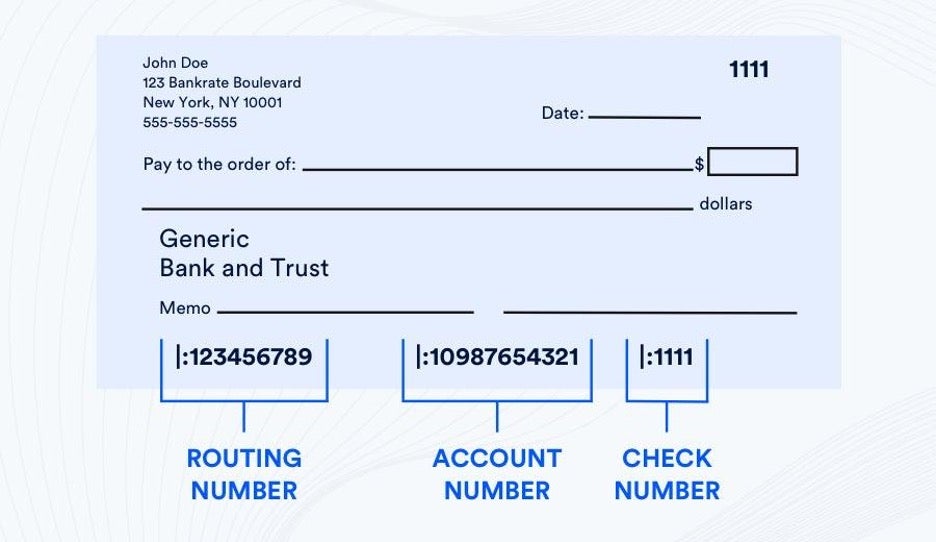
When you look at a standard personal or business check, your eyes are likely drawn to the “Pay to the Order of” line or the signature block. However, the most critical data for processing the payment is located at the very bottom. This string of numbers is printed in a specialized font using Magnetic Ink Character Recognition (MICR) technology.
The Routing Number: The Nine-Digit Code
On a standard check, the first set of numbers on the bottom left is the American Bankers Association (ABA) routing transit number. This is always a nine-digit code. Think of the routing number as the “address” for your financial institution. It tells the clearinghouse exactly which bank in the United States holds your funds.
The routing number is generally bracketed by a specific symbol (an opening and closing transit symbol). While your account number is unique to you, the routing number is shared by everyone who holds an account at that specific branch or regional division of your bank.
The Account Number: Your Unique Identifier
Directly following the routing number is your account number. This is the most vital piece of information for personal finance management. Unlike the routing number, the account number identifies your specific stash of money within the bank’s massive database.
The account number is typically located in the middle of the MICR line at the bottom of the check. It can vary in length, usually ranging from 8 to 12 digits, depending on the bank’s internal systems. On some modern check designs, the account number may be followed by a special symbol that looks like a colon or a dash to separate it from the check number.
The Check Number: Tracking Your Transactions
The final set of numbers on the MICR line (usually on the far right) is the check number. This number matches the one printed in the upper right-hand corner of the check. Its primary purpose is internal record-keeping. It allows you to track which checks have cleared and helps the bank prevent duplicate payments. If you are ever asked for your account information for a direct deposit form, ensure you do not accidentally include these final digits, as they are not part of your permanent account identity.
Understanding the MICR Line and Magnetic Ink Technology
To truly master the “Money” niche of financial management, one must understand the technology that allows the global banking system to process trillions of dollars in paper checks annually. The bottom row of numbers is not just printed in a unique font; it is printed with magnetic ink.
How Banks Process Physical Checks
When you deposit a check, it goes through a high-speed reader-sorter machine. These machines use Magnetic Ink Character Recognition (MICR) to “read” the routing and account numbers. The magnetic particles in the ink allow the machine to capture the data even if there are stamps, signatures, or cancelation marks covering the numbers. This is why it is crucial never to fold or staple a check through the bottom numerical line, as physical damage can interfere with the machine’s ability to decode your account information.
The Importance of the MICR Symbols
If you look closely at the numbers at the bottom of your check, you will see strange, non-numeric characters. These are specialized “delimiting” symbols. They act as “start” and “stop” commands for the bank’s computers.
- The Transit Symbol: Brackets the routing number.
- The On-Us Symbol: Usually precedes the account number, signaling to the machine that the next string of digits belongs to the specific customer account.
- The Dash Symbol: Occasionally used to separate sequences within the account number.
Understanding these symbols ensures that when you are manually typing your account number into a financial tool or online portal, you know exactly where the account number starts and ends.

Digital Transitions: Finding Your Account Number Without a Paper Check
In the modern financial landscape, many consumers opt for “checkless” checking accounts or simply run out of physical checks and choose not to reorder them. If you don’t have a physical check in front of you, there are several professional ways to retrieve your account and routing numbers securely.
Checking Your E-Statements
The most reliable way to find your account number is by logging into your online banking portal and downloading your most recent electronic statement (e-statement). For security reasons, many banks “mask” the account number on the main dashboard (e.g., showing only the last four digits). However, the full, unmasked account number is almost always printed at the top of the official PDF statement.
Using Mobile Apps to Identify Account Details
Most modern banking apps have a “Details” or “Account Info” tab. Within this section, there is often a “Show Account and Routing Number” toggle. This is the fastest way to access your information when you are on the go. Additionally, many apps now feature a “Direct Deposit” tool that generates a pre-filled PDF with your account and routing numbers already formatted for your employer, eliminating the risk of manual entry errors.
Protecting Your Financial Identity: Security Best Practices
Your bank account number and routing number are the keys to your financial kingdom. With these two pieces of information, an unauthorized individual could potentially initiate an ACH withdrawal from your account. Therefore, managing the physical and digital security of these numbers is paramount.
The Risks of “Check Washing”
In the realm of financial fraud, “check washing” remains a significant threat. Criminals use chemicals to erase the “Payee” and “Amount” fields on a stolen check while leaving your signature and the MICR line (the routing and account numbers) intact. They then rewrite the check to themselves for a much larger sum. To prevent this, always use a gel pen with ink that permeates the paper fibers, making it much harder to wash.
Safely Disposing of Old or Voided Checks
Never throw an old or mistake-laden check into the trash. Even a “voided” check contains your full account and routing numbers. If you need to provide a voided check for a business transaction (like setting up a gym membership or a utility auto-pay), write “VOID” in large, bold letters across the center of the check, ensuring you don’t obscure the MICR line at the bottom. If you are disposing of checks from a closed account, use a cross-cut shredder to ensure the account information cannot be reconstructed.
Common Scenarios for Using Routing and Account Numbers
Knowing where to find these numbers is only half the battle; knowing when and how to use them is what defines successful financial management. There are three primary scenarios where your account and routing numbers are required.
Setting Up Direct Deposit
When you start a new job, the HR department will request your banking information. Providing the correct account and routing numbers ensures that your paycheck is deposited directly into your account on payday. Using the numbers from a check is the most accurate way to provide this data, as it bypasses the potential for errors that occur when looking up routing numbers via a general web search (since large banks often have different routing numbers for different states).
Automating Bill Payments via ACH
Many service providers—such as mortgage lenders, insurance companies, and utility providers—offer a discount if you pay via ACH (direct pull from your bank) rather than a credit card. To set this up, you will need to enter your account number and routing number into their secure portal. This is a powerful way to manage cash flow and ensure you never miss a payment, but it requires absolute accuracy when entering the digits.

Personal Finance Software Integration
If you use wealth-tracking tools or budgeting apps, you may be asked to link your accounts. While many of these tools use secure third-party aggregators like Plaid to link accounts via your login credentials, some still require manual “micro-deposit” verification. This involves providing your account and routing numbers; the service then sends two small deposits (pennies) to your account, which you must verify to prove ownership.
By understanding exactly where the account number is on your check and the mechanics of how it functions within the broader financial system, you empower yourself to navigate the world of personal finance with confidence and precision. Whether you are writing a physical check or setting up a complex digital payment ecosystem, these numbers are the foundation of your financial identity.
aViewFromTheCave is a participant in the Amazon Services LLC Associates Program, an affiliate advertising program designed to provide a means for sites to earn advertising fees by advertising and linking to Amazon.com. Amazon, the Amazon logo, AmazonSupply, and the AmazonSupply logo are trademarks of Amazon.com, Inc. or its affiliates. As an Amazon Associate we earn affiliate commissions from qualifying purchases.