
In the modern financial landscape, where digital transactions occur at the speed of a click, certain foundational elements of the banking system remain constant. One of the most critical, yet often misunderstood, pieces of information is the routing number. Whether you are setting up a new payroll direct deposit, paying your taxes online, or transferring funds to a brokerage account, you will eventually encounter the request for this nine-digit code.
The question “where is my routing number?” is one of the most common inquiries received by bank customer service departments. While it may seem like a simple string of numbers, it serves as the essential “address” for your financial institution within the vast network of the global economy. Understanding how to locate this number and, more importantly, understanding its function is a vital component of personal financial literacy.

Locating Your Routing Number: The Physical and Digital Roadmap
Finding your routing number is generally a straightforward process, provided you know where to look. Depending on your preference for physical documents or digital interfaces, there are several reliable places to find this information.
The Bottom of a Paper Check
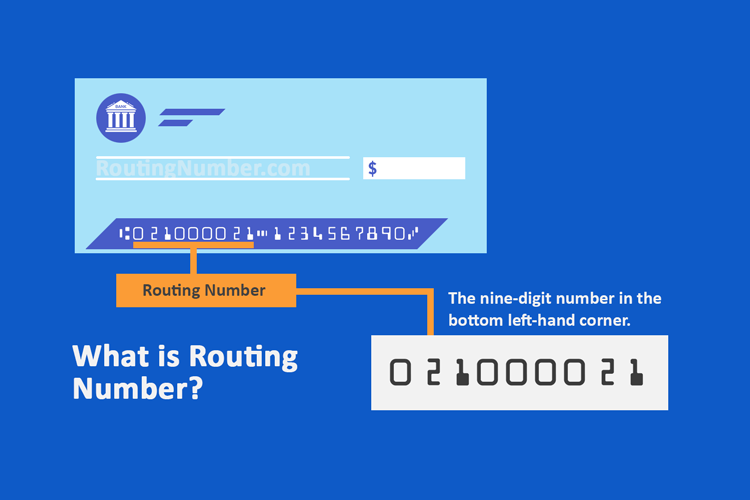
The most traditional and reliable place to find your routing number is on a personal or business check. If you look at the very bottom of a check, you will see three distinct groups of numbers printed in a specialized computer-readable font (known as MICR).
- The First Group: This is your nine-digit routing number. It is always nine digits long and is typically flanked by a specific symbol that resembles a colon with a dash.
- The Second Group: This is your unique account number.
- The Third Group: This corresponds to the check number.
It is important to note that on deposit slips, the routing number might be in a different position, or it may be a different number entirely from the one used for outgoing payments. Always verify with a standard check if possible.
Mobile Banking Apps and Online Portals
In an era of paperless banking, many consumers no longer carry checkbooks. In this case, your bank’s digital platform is your best resource. Most major financial institutions place the routing number in a section labeled “Account Details,” “Account Information,” or “Settings.”
Once you log in, navigate to the specific checking or savings account you wish to use. Look for a link or tab that says “Show Account/Routing Number.” For security purposes, many apps will require a secondary biometric scan (like FaceID) or a password re-entry before displaying these sensitive digits.
Monthly Statements and Bank Websites
If you have access to a PDF or paper copy of your monthly bank statement, the routing number is usually listed near the top of the document, often alongside the bank’s logo and your account summary.
Additionally, if you simply need the general routing number for your bank (and not necessarily your specific branch’s localized number), most banks have a dedicated page on their public website. You can often find this by searching for “[Bank Name] + Routing Number” in a search engine. However, be cautious: large national banks may use different routing numbers based on the state where you opened your account.
Understanding the Anatomy of an ABA Routing Number
The routing number is not a random sequence of digits. Officially known as an ABA Routing Transit Number (RTN), it was developed by the American Bankers Association in 1910 to improve the efficiency of check processing. Each digit carries specific geographic and institutional meaning.
The Nine-Digit Sequence
To understand why this number is so important for your money, you must understand how the Federal Reserve uses it to direct traffic.
- Digits 1–2: These represent the Federal Reserve district where the bank is located. There are 12 districts in the United States (e.g., 02 is New York, 12 is San Francisco).
- Digit 3: This indicates the Federal Reserve check processing center initially assigned to the bank.
- Digit 4: This identifies the state where the bank is headquartered.
- Digits 5–8: This is the unique identifier for the specific financial institution.
- Digit 9: Known as the “Check Digit,” this is used in a mathematical formula to verify that the previous eight digits are valid, helping to prevent manual entry errors.
Why Some Banks Have Multiple Routing Numbers
It is a common point of confusion for consumers to discover their bank uses more than one routing number. This typically happens for two reasons: mergers and transaction types.
When a large bank acquires a smaller regional bank, they often inherit the smaller bank’s routing numbers. Over time, these may be consolidated, but many institutions maintain multiple numbers to avoid disrupting existing automatic payments for their customers. Furthermore, some banks use one routing number for electronic ACH (Automated Clearing House) transfers and a completely different routing number for domestic wire transfers. Using the “paper” routing number for a wire transfer is a frequent mistake that can lead to delayed or rejected funds.

Routing vs. Account Numbers: Key Differences in Financial Management
In the world of personal finance, your routing number and account number work in tandem, but they serve very different roles. Mixing them up can result in failed transactions, late fees, or money being sent to the wrong destination.
The Digital Address vs. The Specific Mailbox
The easiest way to conceptualize the difference is through a postal analogy. The routing number is like the ZIP code and the street name; it tells the financial system exactly which building (bank) the money needs to go to. The account number is like the specific apartment or suite number; it tells the bank which specific person within that building should receive the funds.
Without a routing number, the financial system doesn’t know which bank to contact. Without an account number, the bank doesn’t know whose balance to update.
When Each Number is Used
For most personal finance tasks, you will need both.
- Direct Deposit: You provide both numbers to your employer so they can “push” your salary into your specific account.
- Online Bill Pay: When you authorize a utility company to withdraw funds, you provide both to allow them to “pull” the money.
- Peer-to-Peer (P2P) Apps: While apps like Venmo or Zelle often hide these details for convenience, the underlying architecture still relies on the routing and account number linked to your debit card or bank account.
Specialized Routing Numbers: International vs. Domestic Transfers
As your financial life grows more complex, you may find that a standard nine-digit routing number is insufficient. This is particularly true when moving money across international borders or dealing with high-value business transactions.
SWIFT and BIC Codes
If you are receiving money from an individual or business outside of the United States, a standard ABA routing number will not work. Instead, you will need a SWIFT (Society for Worldwide Interbank Financial Telecommunication) code or a BIC (Business Identifier Code).
Unlike the nine-digit American routing number, a SWIFT code is 8 to 11 characters long and consists of both letters and numbers. It identifies the bank, the country, the city, and sometimes the specific branch. If you are involved in international investing or freelance work for overseas clients, knowing where to find your bank’s SWIFT code—usually located in the “International Transfers” section of your bank’s website—is essential.
Wire Routing vs. ACH Routing
Many consumers do not realize that “Electronic Transfers” is a broad category. There is a significant difference between an ACH transfer (like a standard paycheck or a utility bill payment) and a Wire transfer (a real-time, guaranteed transfer of funds).
ACH transfers are processed in batches and can take 1–3 business days. Wire transfers are processed individually and are often near-instantaneous. Because they use different “lanes” of the financial highway, many banks require a specific “Wire Routing Number” that is distinct from the one found on your checks. Always confirm which one is required before initiating a large transaction, such as a down payment on a home.
Managing Your Financial Security Around Sensitive Data
Because a routing number and an account number are the only two things someone needs to initiate an ACH withdrawal from your account, they must be treated with a high level of security.
Is Sharing Your Routing Number Safe?
By itself, a routing number is public information. You can find the routing number for any major bank with a simple Google search. It is the combination of the routing number and your private account number that creates a security risk.
In the wrong hands, this combination can be used to create fraudulent checks or unauthorized electronic debits. While banks have fraud protection measures in place, the burden of proof often lies with the consumer to identify and report these transactions within a specific timeframe (usually 60 days for consumer accounts).
Best Practices for Financial Hygiene
To keep your money safe while using these numbers, follow these professional guidelines:
- Never send banking details via unencrypted email. If you must send them to an accountant or HR department, use a secure file-sharing portal or provide them over the phone.
- Regularly audit your transaction history. Look for small “micro-deposits” or withdrawals you don’t recognize, as these are often “test” transactions used by hackers.
- Use “Voided” checks cautiously. When an employer asks for a voided check to set up direct deposit, ensure you write “VOID” in large letters across the front in permanent ink so the check cannot be cashed if it falls into the wrong hands.
- Leverage modern fintech tools. Many digital banks now offer “virtual” account numbers or one-time use numbers for specific transactions, adding a layer of insulation between your main savings and the outside world.
In conclusion, while the routing number is a relic of a 100-year-old system, it remains the backbone of the American financial grid. Knowing where to find it—whether on a check, an app, or a statement—is more than just a convenience; it is a fundamental part of managing your money with precision and security. By understanding the nuances between ACH and wire numbers, and the critical distinction between routing and account identifiers, you empower yourself to navigate the modern economy with professional confidence.
aViewFromTheCave is a participant in the Amazon Services LLC Associates Program, an affiliate advertising program designed to provide a means for sites to earn advertising fees by advertising and linking to Amazon.com. Amazon, the Amazon logo, AmazonSupply, and the AmazonSupply logo are trademarks of Amazon.com, Inc. or its affiliates. As an Amazon Associate we earn affiliate commissions from qualifying purchases.