
The daily closing bell of the New York Stock Exchange (NYSE) and the Nasdaq represents more than just the end of a trading session; it serves as a collective heartbeat for the global economy. For millions of investors, from institutional hedge fund managers to individual retail traders using mobile apps, the question “Where did the stock market close today?” is the starting point for evaluating financial health, retirement security, and future investment strategies.
Understanding the closing price requires looking beyond the raw numbers. While a green or red percentage on a screen tells you the direction, the context behind that movement—the “why” and the “how”—is what defines professional investing. In this deep dive, we explore the mechanics of the market close, the indicators that drive performance, and how you can use this information to build a more resilient portfolio.

Decoding the Daily Close: Why the Final Bell Matters
The closing price of a stock or an index is considered the most accurate valuation of that security for the day. Unlike the “noise” of mid-day fluctuations, the close represents the price at which the highest number of buyers and sellers were willing to agree after absorbing all the day’s news, economic data, and corporate announcements.
The Psychology of the Closing Auction
In the final minutes of the trading day, the market undergoes a process known as the “closing auction” or “closing cross.” This is a period of intense liquidity where buy and sell orders are matched to find a single price that maximizes the volume of shares traded. For institutional investors, the close is critical because many mutual funds and ETFs are mandated to value their holdings based on these final prints. The psychology here is one of finality; it reflects the market’s “final word” on the value of a company before the uncertainty of the overnight hours begins.
Institutional vs. Retail Influence at Market Close
Historically, the first and last hours of the trading day are the most volatile. This is often where “smart money”—large institutions like pension funds and insurance companies—executes significant trades. Retail investors often react to news during the day, but institutions use the liquidity of the close to move large blocks of shares without drastically moving the price against themselves. When you see a massive spike in volume at 4:00 PM EST, you are witnessing the machinery of global finance rebalancing its positions.
Key Indicators to Watch: Indices, Sectors, and Volatility
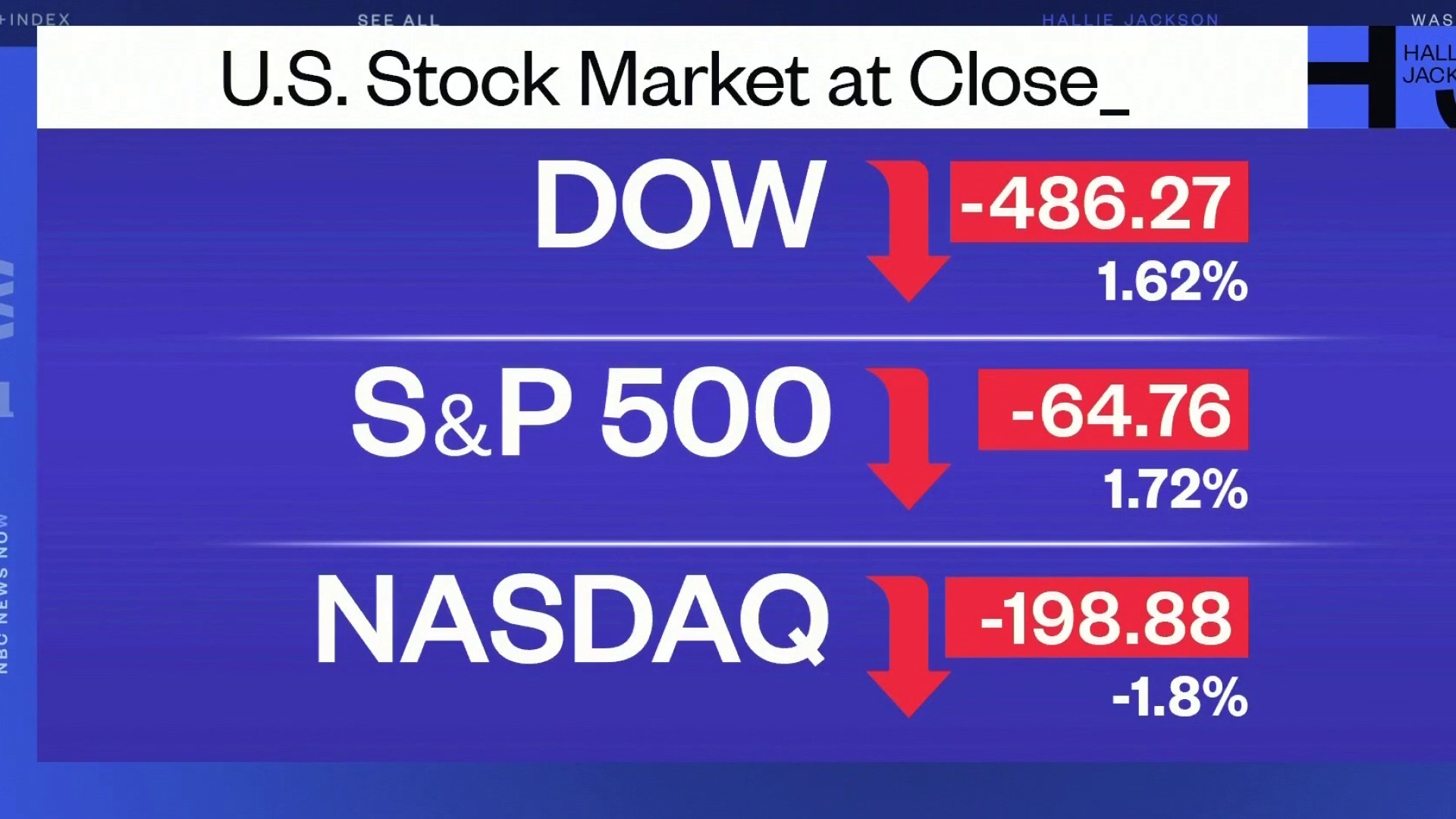
To answer where the market closed, one must look at the “Big Three” indices. Each tells a different story about the economy, and rarely do they move in perfect unison.
The S&P 500, Dow Jones, and Nasdaq Composite
The S&P 500 is widely regarded as the best single gauge of large-cap U.S. equities, representing 500 of the largest companies across all sectors. If the S&P 500 closes higher, it generally suggests a healthy appetite for risk among broad-market investors.
The Dow Jones Industrial Average (DJIA), a price-weighted index of 30 “blue-chip” companies, offers a narrower look at industrial and consumer-heavy giants. Because it is price-weighted, a large move in a high-priced stock like UnitedHealth can sway the entire index, sometimes making it less representative than the S&P 500.
The Nasdaq Composite is the home of technology and growth. When the Nasdaq outperforms the other indices at the close, it usually indicates that investors are optimistic about future earnings and are willing to pay a premium for tech-driven innovation. Conversely, a sharp drop in the Nasdaq often signals concerns over rising interest rates, which can devalue the future cash flows of growth stocks.
Reading the VIX: The “Fear Gauge” at Closing
While indices track price, the CBOE Volatility Index (VIX) tracks sentiment. Known as the “fear gauge,” the VIX measures the market’s expectation of 30-day volatility based on S&P 500 index options. A closing VIX level above 20 often suggests heightened anxiety and potential turbulence, while a close below 15 indicates a period of complacency or stability. Monitoring where the VIX closes relative to the major indices provides a “3D view” of the market’s internal confidence.

Factors Influencing Today’s Market Performance
The closing numbers are never an accident; they are the result of complex macroeconomic and microeconomic forces. To understand today’s close, we must analyze the catalysts that moved the needle.
Macroeconomic Data and Interest Rate Expectations
The modern market is hyper-focused on the Federal Reserve. Any data point—be it Consumer Price Index (CPI) inflation numbers, Non-Farm Payroll (NFP) jobs reports, or retail sales—is immediately filtered through the lens of “What will the Fed do?”
If the market closes lower following a strong jobs report, it might seem counterintuitive. However, in a “good news is bad news” environment, investors fear that a strong economy will force the Fed to keep interest rates higher for longer to combat inflation. Higher rates increase the cost of borrowing for companies and consumers, often leading to a downward trend in stock prices.
Corporate Earnings and Forward Guidance
During “earnings season,” the closing price is heavily dictated by individual company reports. However, the market is forward-looking. A company might report record-breaking profits for the previous quarter, but if their “guidance” (their forecast for the next six months) is weak, the stock—and potentially its entire sector—will close in the red. Investors trade on the future, not the past. A successful close often hinges on whether corporate leaders express confidence in their ability to navigate upcoming economic challenges.
Beyond the Number: How to Use Closing Data for Your Portfolio
Knowing where the market closed is only the first step. The second step is applying that knowledge to your personal financial strategy.
Technical Analysis: Moving Averages and Support Levels
Professional traders look at the closing price in relation to historical averages. For example, is the S&P 500 closing above its 200-day moving average? If the market closes above this “support level,” it is often seen as a bullish signal that the long-term trend remains intact. If the market closes below a key technical level, it can trigger automated sell orders, leading to further declines the following day. By tracking these levels, you can avoid “buying the top” or “selling the bottom” in moments of emotional volatility.
Setting the Stage for After-Hours and Pre-Market Trading
The 4:00 PM bell is the end of regular trading, but “after-hours” trading continues until 8:00 PM EST. Significant news, such as a late-afternoon tech earnings release, can cause a stock to jump 5% or 10% after the official close. By observing how the market reacts in the after-hours session, you can get a head start on understanding the likely “open” for the next morning. However, retail investors should be cautious, as lower trading volumes after-hours can lead to erratic and deceptive price swings.
Strategies for Managing Volatility in a Shifting Market
In an era of high-frequency trading and 24-hour news cycles, the daily close can sometimes feel overwhelming. Developing a disciplined approach to these fluctuations is the hallmark of a sophisticated investor.
The Importance of Long-Term Perspective
It is easy to get caught up in the “daily drama” of a 1% drop or a 2% gain. However, for those building wealth through 401(k)s or long-term brokerage accounts, the most important closing price is the one that occurs years from now. Daily volatility is the “tax” investors pay for the long-term returns that equities provide. Diversification across sectors—balancing tech growth with defensive staples like healthcare and utilities—can help dampen the impact of a bad day in any single index.
Utilizing Modern Financial Tools and Dashboards
To stay informed without becoming obsessed, leverage financial tools that provide “summary” data rather than just tick-by-tick updates. High-quality financial dashboards allow you to track your “Personal Rate of Return” relative to the S&P 500 close. This shifts the focus from “What did the market do?” to “How is my specific financial plan performing?”
In conclusion, where the stock market closes today is a snapshot of global consensus. It reflects the intersection of government policy, corporate health, and human emotion. By understanding the mechanisms behind the closing bell—from the influence of the Fed to the technical support levels of the S&P 500—you can move from being a passive observer to an informed participant in your own financial future. Whether the day ends in green or red, the closing price is simply one data point in a much larger journey toward financial independence.
aViewFromTheCave is a participant in the Amazon Services LLC Associates Program, an affiliate advertising program designed to provide a means for sites to earn advertising fees by advertising and linking to Amazon.com. Amazon, the Amazon logo, AmazonSupply, and the AmazonSupply logo are trademarks of Amazon.com, Inc. or its affiliates. As an Amazon Associate we earn affiliate commissions from qualifying purchases.