
The annual ritual of filing taxes is a cornerstone of responsible financial management, yet for many, the question of “where” to file remains a significant source of confusion and sometimes, dread. In today’s diverse financial landscape, taxpayers are no longer limited to a single, archaic method. Instead, a myriad of options, from traditional professional services to cutting-edge digital platforms, are available, each offering unique advantages tailored to different needs and complexities.
Understanding these avenues is the first step towards transforming tax season from a daunting obligation into a manageable task. This comprehensive guide will demystify the various places and methods you can use to file your taxes, helping you identify the best fit for your individual financial situation, ensuring accuracy, efficiency, and ultimately, peace of mind.

Traditional Avenues: The Enduring Appeal of Professional Assistance
For decades, the bedrock of tax filing for many has been the expertise of tax professionals. These traditional avenues offer a human touch and specialized knowledge that can be invaluable, especially for complex financial situations or those who prefer to delegate the task entirely.
In-Person Tax Professionals
Engaging with a human tax professional remains a popular choice for many. This category includes Certified Public Accountants (CPAs), enrolled agents, and tax preparers affiliated with national chains.
- Description: CPAs and enrolled agents are highly qualified professionals trained in tax law, accounting, and financial planning. They offer comprehensive services, from preparing and submitting your return to providing tax planning advice and representing you in case of an audit. National chains like H&R Block or Jackson Hewitt offer readily accessible storefronts with trained preparers who can handle a wide range of returns.
- Pros:
- Expertise: Professionals stay abreast of the latest tax laws, deductions, and credits, ensuring your return is accurate and optimized.
- Personalized Advice: They can offer tailored financial and tax planning strategies for future years.
- Complex Situations: Ideal for individuals with self-employment income, investments, rental properties, foreign income, or those navigating significant life changes like marriage, divorce, or a new business.
- Audit Support: Many services offer audit assistance or representation, reducing your stress if the IRS has questions about your return.
- Peace of Mind: The assurance that a qualified expert has handled your taxes can be priceless.
- Cons:
- Cost: Professional services come with a fee, which can range from a few hundred to several thousand dollars depending on the complexity of your return and the professional’s reputation.
- Time Commitment: Requires scheduling appointments, gathering documents, and potentially follow-up communications.
Volunteer Income Tax Assistance (VITA) & Tax Counseling for the Elderly (TCE)
For those with specific income criteria or age requirements, the IRS offers free, reliable tax preparation services through community-based programs.
- Description: The VITA program offers free tax help to people who generally make $64,000 or less, persons with disabilities, and limited English-speaking taxpayers who need assistance in preparing their own tax returns. The TCE program provides free tax help for all taxpayers, particularly those who are 60 years of age and older, specializing in pensions and retirement-related issues. Both programs are staffed by IRS-certified volunteers.
- Pros:
- Completely Free: No cost for preparing and filing federal and often state returns.
- Reliable: Volunteers are trained and certified by the IRS, ensuring accuracy.
- Community-Based: Conveniently located in community centers, libraries, and other local venues.
- Cons:
- Eligibility Requirements: Services are restricted to individuals meeting specific income or age criteria.
- Limited Scope: While comprehensive for eligible taxpayers, they may not handle extremely complex returns.
- Appointment-Based: Often requires scheduling in advance, especially during peak tax season.
Digital Solutions: The Rise of Online Tax Filing Platforms
The digital age has revolutionized tax preparation, offering convenient, often cost-effective, and user-friendly online solutions. These platforms empower taxpayers to file their returns from the comfort of their homes, often with significant guidance.
Commercial Tax Software
A dominant force in online tax filing, commercial software allows individuals to prepare and e-file their taxes with guided, step-by-step instructions.
- Description: Companies like TurboTax, H&R Block Online, TaxAct, and TaxSlayer offer online platforms that walk you through the tax preparation process. They ask questions about your income, deductions, and credits, then populate the relevant forms. Most offer different tiers of service, from basic free versions for simple returns to premium versions designed for self-employed individuals, investors, or homeowners.
- Pros:
- Convenience: Accessible 24/7 from any device with internet access, allowing you to work at your own pace.
- Cost-Effective: Often significantly cheaper than professional preparers, with many offering free federal filing for simple returns.
- Step-by-Step Guidance: User-friendly interfaces with explanations for each section, making it manageable even for first-time filers.
- Accuracy Checks: Built-in error checks and calculators help minimize mistakes.
- Direct Deposit: Facilitates quick refunds directly to your bank account.
- Cons:
- Can Be Overwhelming: For very complex returns, understanding certain deductions or nuances without professional advice can still be challenging.
- Upselling: Free versions often prompt upgrades to paid tiers as your tax situation becomes slightly more complex.
- Limited Personal Support: While many offer chat or phone support, it’s not the same as having a dedicated professional.
IRS Free File Program
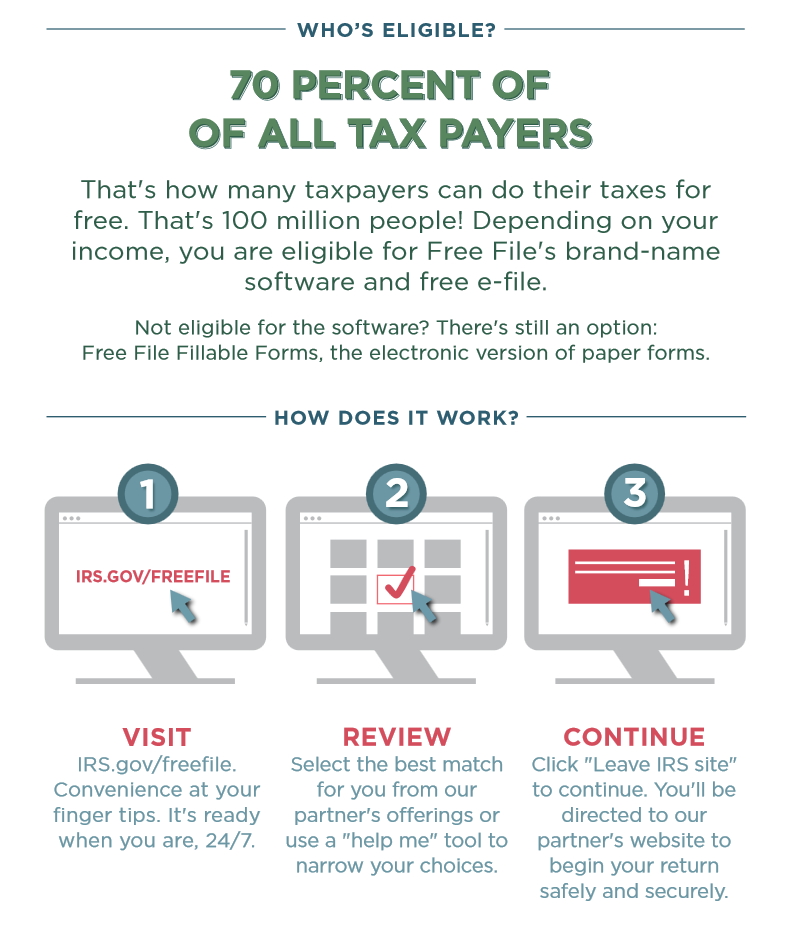
The IRS, in partnership with various tax software companies, provides a valuable resource for eligible taxpayers to file their federal taxes for free.
- Description: The IRS Free File Program is a collaborative effort with leading tax software providers that offer their commercial products for free to taxpayers whose adjusted gross income (AGI) falls below a certain threshold (which changes annually, e.g., typically around $79,000 for 2023 tax year returns). Each participating company sets its own eligibility criteria, often based on age, state residency, or military status, in addition to the income limit.
- Pros:
- Absolutely Free: Offers no-cost federal tax preparation and e-filing. Some providers also offer free state filing for qualifying users.
- Secure & Reliable: Utilizes the same secure technology as paid commercial software, ensuring data protection.
- Direct from IRS-Approved Providers: Ensures compliance and accuracy.
- Cons:
- Income Limitations: Not all taxpayers qualify, as it’s specifically designed for low-to-moderate-income individuals.
- Navigation: Requires going through the IRS Free File website to access the partner offers, as accessing the software directly might lead to a paid version.
- State Filing Varies: While some providers include free state filing, others charge a fee.
Direct Filing via IRS (Pilot Program/Future)
The landscape of tax filing is continually evolving, with the IRS exploring even more direct ways for taxpayers to submit their returns.
- Description: The IRS has recently introduced and expanded a pilot Direct File program, allowing a limited number of taxpayers in certain states with simple tax situations to file their federal tax returns directly with the IRS for free, using a mobile-friendly, step-by-step online tool. This represents a significant shift towards potential government-provided tax software.
- Pros:
- Direct & Free: Eliminates intermediaries, offering a straightforward, no-cost option for eligible users.
- Simplicity: Designed to be intuitive for basic returns, potentially reducing complexity.
- Cons:
- Limited Scope: Currently, it’s a pilot program available only to a small segment of taxpayers with very specific and simple tax situations in select states.
- No State Filing Integration: In most cases, it does not handle state tax filing, requiring a separate process.
- Still Developing: As a new initiative, its features and availability are subject to change and expansion.
Understanding Your Filing Requirements and Deadlines
Regardless of where you choose to file, understanding the fundamental requirements and deadlines is crucial for a compliant and stress-free tax season.
Who Needs to File?
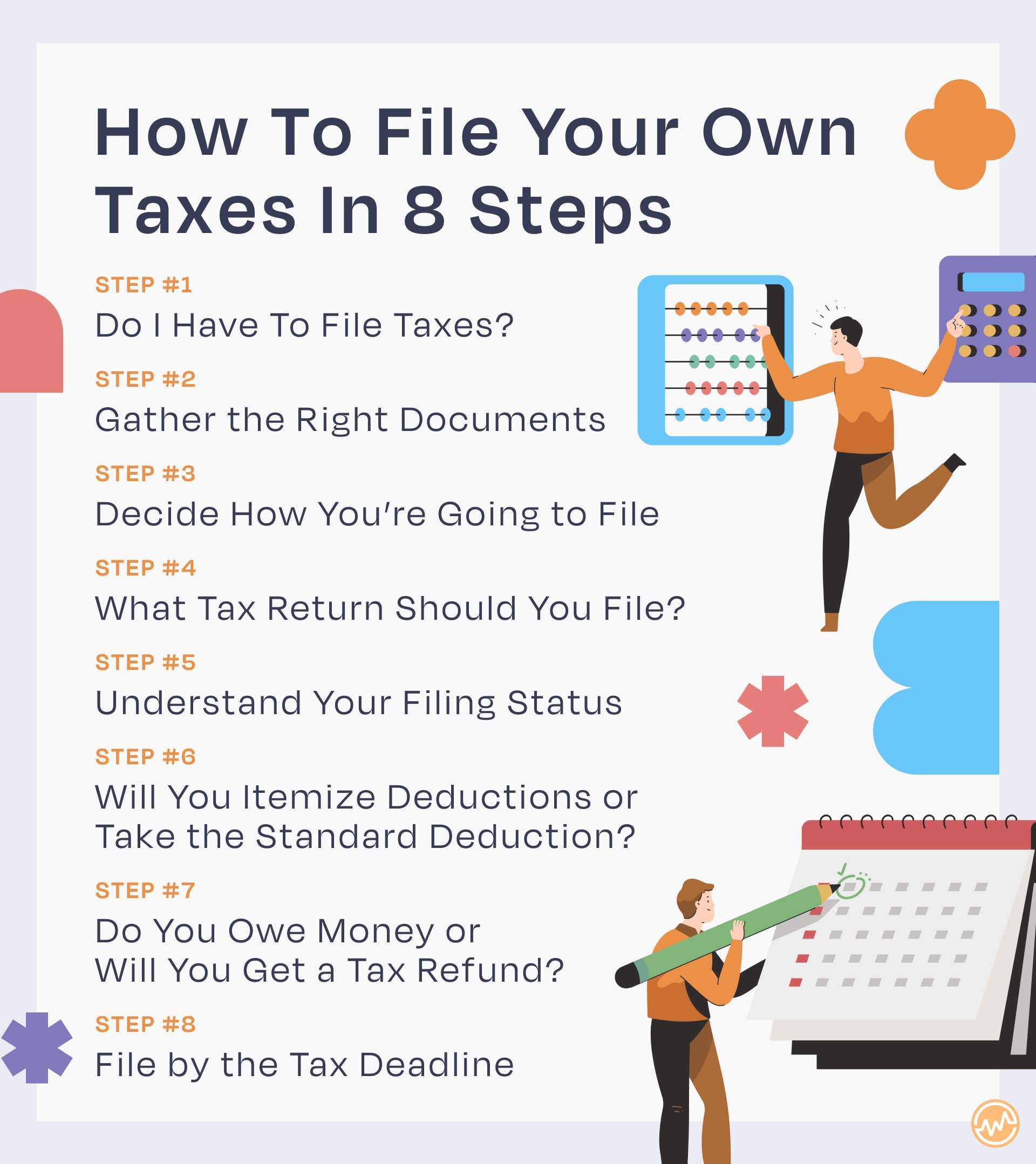
Generally, if your gross income exceeds certain thresholds determined by your filing status and age, you must file a federal income tax return. However, even if your income is below the filing threshold, you might still need to file to claim a refund of withheld income tax or certain refundable tax credits (like the Earned Income Tax Credit). Self-employed individuals with net earnings above a small threshold, or those who received certain types of income (e.g., from an HSA, or claiming premium tax credits), typically also need to file. Always check the IRS guidelines or consult a professional if unsure.
Key Deadlines
The most well-known deadline is April 15th (or the next business day if April 15th falls on a weekend or holiday) for most individual federal income tax returns. This is also the deadline for paying any taxes you owe to avoid penalties and interest, even if you file an extension. If you need more time to prepare your return, you can file Form 4868 for an automatic six-month extension, pushing your filing deadline to October 15th. This only extends the time to file, not the time to pay. Self-employed individuals or those with significant income not subject to withholding also need to make estimated tax payments quarterly throughout the year.
Required Documentation
Gathering your documents proactively is key to a smooth filing process. Essential documents include:
- W-2s: From employers, showing wages and taxes withheld.
- 1099 Forms: Various types for independent contractor income (1099-NEC), interest (1099-INT), dividends (1099-DIV), distributions from retirement accounts (1099-R), and others.
- Form 1095-A, B, or C: Related to health insurance coverage.
- Form 1098: Mortgage interest statement.
- Education Forms: Like 1098-T for tuition statements or 1098-E for student loan interest.
- Records of Charitable Contributions: Receipts or acknowledgment letters.
- Other Income/Deduction Records: Such as business expenses, property taxes, or medical expenses.
Maintaining meticulous records throughout the year, whether in a physical folder or digitally, will significantly simplify your tax preparation.
Choosing the Right Filing Method for You
With so many options, selecting the ideal method for your unique situation requires careful consideration of several factors.
Factors to Consider
- Complexity of Your Return: A simple W-2 income return might be perfectly suited for free online software, while a return involving multiple businesses, investments, and international income warrants professional expertise.
- Budget: Assess how much you’re willing or able to spend. Free online options are excellent for basic returns, while complex situations might justify the investment in a professional.
- Time Commitment & Comfort Level: Are you comfortable navigating tax forms and financial data yourself, or would you prefer to hand it off entirely? Do you have the time to dedicate to the process?
- Need for Advice: Do you have questions about tax planning, potential deductions, or future financial decisions? A professional can offer invaluable consultation beyond just filing.
- State Taxes: Does your chosen method seamlessly handle state tax filing, or will you need a separate solution? Many online software packages offer integrated state filing for an additional fee.
Self-Assessment Questions
Ask yourself these questions to guide your decision:
- Do I have only W-2 income, or do I have self-employment income, investments, or rental properties?
- Am I comfortable entering my financial data into software, or do I prefer human guidance?
- Do I need help understanding potential deductions or credits?
- Did I experience any major life changes this year (e.g., marriage, birth of a child, home purchase)?
- Am I looking for proactive tax planning advice for future years?
Your answers will help illuminate the path best suited for you, whether it’s a DIY online approach or the support of a seasoned professional.
Best Practices for a Stress-Free Tax Season
Regardless of your chosen filing method, adopting a few best practices can significantly reduce stress and enhance accuracy.
Start Early
Procrastination is the enemy of a smooth tax season. Begin gathering your documents as soon as they become available. Starting early gives you ample time to collect missing information, ask questions, and address any unexpected complexities without the pressure of a looming deadline.
Maintain Meticulous Records
Throughout the year, develop a system for organizing all your financial documents. This could be a physical folder for receipts, a digital folder for electronic statements, or cloud-based accounting software for business owners. Good record-keeping not only simplifies tax preparation but also serves as crucial support in case of an IRS inquiry.
Review Carefully
Before submitting your return, always take the time to review it thoroughly. Check for any transposed numbers, misspelled names, incorrect Social Security numbers, or forgotten income/deductions. Many errors are easily caught with a careful review and can save you headaches later. If using software, let its error check run multiple times. If using a professional, ask them to walk you through the summary.
Understand Your Tax Situation
While professionals and software can guide you, having a basic understanding of your own tax situation is empowering. Stay informed about significant changes in tax law, especially those that might affect your income or deductions. This knowledge allows you to ask better questions and make more informed financial decisions throughout the year.
Plan for Next Year
Tax season is not just about the past; it’s also about the future. Use the insights gained from preparing your current return to inform your tax planning for the upcoming year. This might involve adjusting withholdings, making estimated tax payments, contributing more to retirement accounts, or strategizing charitable donations.
Conclusion
Filing your taxes doesn’t have to be a bewildering annual chore. From the personalized expertise of a CPA to the user-friendly convenience of online tax software and the vital assistance of free community programs, the options for where to file your taxes are more varied and accessible than ever before. There is no single “best” place to file; rather, the optimal choice depends entirely on your individual income level, the complexity of your financial life, your comfort with technology, and your budget.
By understanding the landscape of available services, assessing your personal needs, and adopting proactive best practices, you can confidently navigate tax season. Take control of your financial obligations, choose the method that aligns best with your circumstances, and ensure that your tax filing is accurate, efficient, and ultimately, a source of financial peace rather than stress.
aViewFromTheCave is a participant in the Amazon Services LLC Associates Program, an affiliate advertising program designed to provide a means for sites to earn advertising fees by advertising and linking to Amazon.com. Amazon, the Amazon logo, AmazonSupply, and the AmazonSupply logo are trademarks of Amazon.com, Inc. or its affiliates. As an Amazon Associate we earn affiliate commissions from qualifying purchases.