
For most global enterprises, a headquarters is simply a physical address—a centralized location for administrative functions. For Amazon, however, its headquarters represent a multi-billion-dollar strategy in urban economics, real estate investment, and corporate leverage. To understand where Amazon’s headquarters are is to understand the company’s broader financial philosophy: a relentless pursuit of scale, a sophisticated approach to tax incentives, and a transformative impact on local economies.
Today, Amazon’s executive operations are split primarily between two massive hubs: the primary headquarters (HQ1) in Seattle, Washington, and the second headquarters (HQ2) in Arlington, Virginia. Beyond these two pillars, the company maintains significant corporate “Tech Hubs” in cities like Nashville, London, and Berlin. This article examines the financial implications of these locations, the strategic “bidding wars” that defined their selection, and the long-term ROI of Amazon’s massive physical footprint.

The Seattle Foundation: Building a Corporate Empire and Real Estate Powerhouse
Amazon’s primary headquarters is situated in the heart of Seattle’s South Lake Union neighborhood. Unlike many of its contemporaries in the tech industry—such as Google or Apple, which built suburban “spaceship” campuses isolated from the city—Amazon chose to integrate itself into the urban core. This decision was not merely an aesthetic choice; it was a calculated financial and talent acquisition strategy.
The Impact on Local GDP and Property Values
Since moving to the South Lake Union area in 2010, Amazon has acted as a primary engine for the regional economy. From a financial perspective, the “Amazon Effect” on Seattle is staggering. The company has invested over $50 billion in Seattle’s local economy, and for every dollar invested by Amazon, it is estimated that an additional $1.40 is generated for the city’s overall economy.
This concentration of wealth has led to a massive appreciation in real estate value. For investors and property owners, Amazon’s presence transformed a formerly industrial neighborhood into some of the most expensive commercial real estate in the world. However, this financial success comes with a high price for the city’s infrastructure. The rapid influx of high-earning employees drove housing costs up by more than 80% within a decade, illustrating the complex trade-off between corporate growth and local affordability.
Urban Integration as a Cost-Saving and Talent Acquisition Strategy
From a business finance perspective, Amazon’s urban campus serves as a massive recruitment tool. By situating its headquarters in a walkable, vibrant city center, Amazon effectively offloaded the “amenity cost” to the city itself. While suburban campuses must build and maintain private gyms, cafeterias, and transit systems, Amazon employees utilize public parks, local restaurants, and municipal transit.
This integration allows Amazon to maintain a leaner operational budget regarding facility management compared to the massive overhead of a self-contained campus. Furthermore, the proximity to other tech firms creates a “knowledge spillover,” where the density of talent increases innovation and reduces the cost of specialized labor recruitment.
The HQ2 Bidding War: A Masterclass in Corporate Leverage and Tax Incentives
In 2017, Amazon announced its search for a second headquarters, sparking one of the most publicized corporate competitions in history. By inviting cities across North America to submit proposals, Amazon created a “race to the bottom” regarding tax incentives and subsidies, effectively turning its expansion into a high-stakes financial negotiation.
The Virginia Deal: Analyzing the Financial Incentives
The winner of the HQ2 search, Arlington, Virginia (Metropolitan Park and PenPlace), secured the deal by offering a package of incentives that were fiscally conservative yet strategically significant. The financial agreement included $573 million in direct performance-based incentives, contingent on Amazon creating 25,000 high-paying jobs and occupying millions of square feet of office space.
For Amazon, the financial logic was clear: diversify its geographical risk. By establishing a second major hub near the United States capital, Amazon gained better proximity to federal regulators and a massive pool of technical talent in the Northern Virginia “data center alley.” The $2.5 billion initial investment in the Arlington site is projected to generate billions more in incremental tax revenue for the state over the next two decades, making it a high-yield investment for both the corporation and the local government.
Lessons in Municipal Finance and Public-Private Partnerships
The HQ2 process revealed how large-scale corporations use their balance sheets to influence municipal policy. Cities like Chicago, Atlanta, and Toronto offered billions in potential tax breaks. However, Amazon’s eventual choice showed that “Money” isn’t just about direct subsidies; it’s about long-term infrastructure.
Amazon prioritized cities with existing transit investments and high-quality education systems over those that simply offered the highest cash rebates. This demonstrates a sophisticated understanding of capital: direct cash incentives are one-time gains, but a city’s infrastructure is a permanent subsidy to the company’s operational efficiency.
Amazon’s Real Estate Portfolio: Asset Management on a Global Scale
Beyond the primary headquarters, Amazon’s physical presence is a cornerstone of its corporate valuation. The company’s real estate strategy has shifted significantly over the last decade, moving from a tenant-based model to an owner-occupier model that strengthens its balance sheet.
Ownership vs. Leasing: The Shift in Amazon’s Capital Expenditure
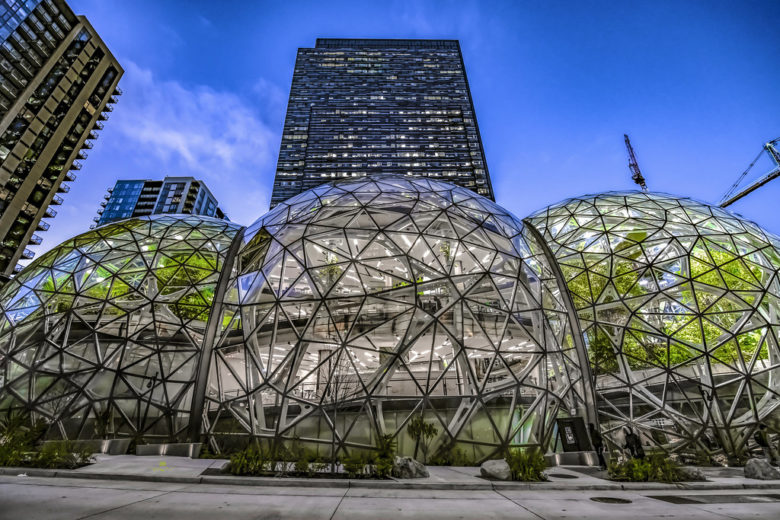
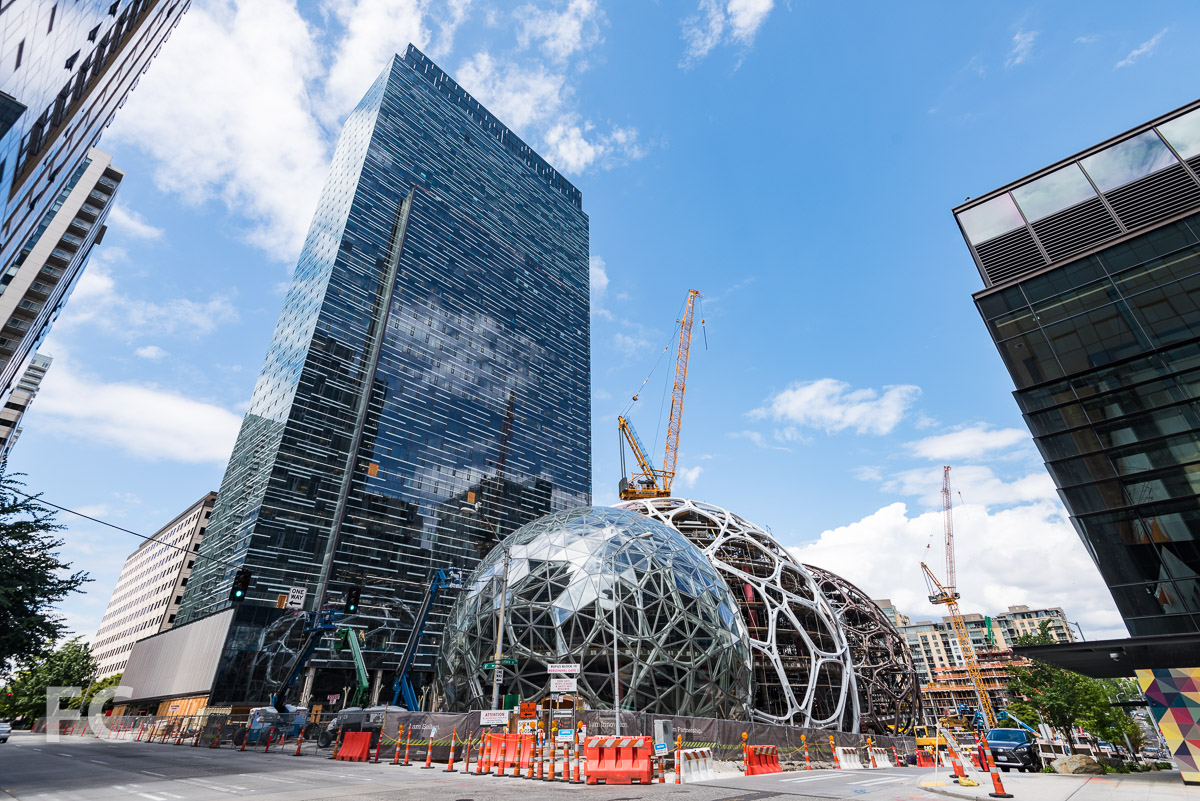
In the early stages of its growth, Amazon primarily leased its office space to maintain liquidity. However, as the company matured and its cash reserves grew, it began acquiring its own buildings. In Seattle alone, Amazon owns several of its flagship towers, including the iconic “Spheres.”
From a financial reporting standpoint, owning these assets allows Amazon to claim depreciation benefits and protects the company from the volatility of the commercial rental market. This transition reflects a broader trend among “Big Tech” firms to act as institutional real estate investors, using their immense capital to lock in low-cost space for decades to come.
Logistics Hubs vs. Administrative HQ: Where the Money Flows
While the corporate headquarters in Seattle and Arlington are the “brain” of the company, the financial muscle is distributed through its fulfillment centers and delivery stations. It is important to distinguish between the administrative headquarters and the operational hubs.
Amazon has invested billions in its “Global Logistics” network, which consists of over 1,000 facilities worldwide. While these are not “headquarters” in the traditional sense, they represent a larger portion of Amazon’s capital expenditure (CapEx) than its office buildings. For an investor, the real value of Amazon’s physical footprint lies in this synergy: the headquarters manage the high-margin AWS (Amazon Web Services) and advertising businesses, which in turn fund the capital-intensive logistics network that dominates global e-commerce.
The Future of the Corporate Office: ROI in a Remote-Work Era
The post-pandemic shift toward hybrid work has forced every major corporation to re-evaluate the ROI of their headquarters. Amazon is no exception. With billions tied up in physical assets, the financial stakes of the “Return to Office” (RTO) policy are incredibly high.
Rationalizing Physical Assets Post-Pandemic
In 2023 and 2024, Amazon paused construction on several phases of its HQ2 project in Arlington. This was not a sign of financial distress, but rather a tactical pause to reassess the necessary square footage per employee in a hybrid environment. For a company that prides itself on “frugality” (one of its core leadership principles), overbuilding office space is a capital inefficiency that must be avoided.
By slowing down expansion, Amazon can optimize its occupancy costs and ensure that its real estate investments align with actual headcount needs. This flexibility is a hallmark of Amazon’s financial agility—the ability to pivot massive capital projects in response to changing labor market dynamics.
Long-term Investment and the “Helix” Project
Despite the pause, Amazon remains committed to the “Helix”—the centerpiece of its HQ2 campus. This architectural marvel is designed not just as an office, but as a long-term brand asset and an anchor for the region’s economy.
From a business finance perspective, such landmark buildings serve as a form of “cultural capital.” They attract top-tier talent who are increasingly looking for more than just a paycheck; they want to work in environments that reflect the prestige and innovation of the brand. As long as Amazon continues to generate significant cash flow from its AWS and retail segments, it will likely continue to invest in these high-profile physical headquarters as a means of securing its status as a global economic superpower.
In conclusion, Amazon’s headquarters are far more than just geographic locations. They are strategic financial instruments located primarily in Seattle and Arlington, designed to maximize tax efficiency, attract the world’s most expensive talent, and provide a stable foundation for the company’s diverse business interests. Whether through the direct “Amazon Effect” on local economies or the strategic use of municipal bidding wars, Amazon’s approach to its headquarters remains a masterclass in corporate finance and real estate strategy.
aViewFromTheCave is a participant in the Amazon Services LLC Associates Program, an affiliate advertising program designed to provide a means for sites to earn advertising fees by advertising and linking to Amazon.com. Amazon, the Amazon logo, AmazonSupply, and the AmazonSupply logo are trademarks of Amazon.com, Inc. or its affiliates. As an Amazon Associate we earn affiliate commissions from qualifying purchases.