
In the modern financial landscape, few events carry as much weight as the quarterly earnings release of NVIDIA Corporation (NVDA). Once known primarily by gamers and niche computer builders, NVIDIA has evolved into the gravitational center of the global stock market. For investors, the question of “when will NVDA report earnings” is not merely a matter of checking a calendar; it is a strategic inquiry into the health of the broader economy, the trajectory of the artificial intelligence boom, and the potential for significant portfolio volatility.

As a trillion-dollar titan, NVIDIA’s financial disclosures have the power to lift or sink entire indices, including the S&P 500 and the Nasdaq-100. Understanding the timing, the expectations, and the underlying financial mechanics of these reports is essential for any serious investor looking to navigate the complexities of today’s equity markets.
The Financial Calendar: Navigating NVIDIA’s Fiscal Cycles
For most corporations, the fiscal year aligns with the calendar year. However, NVIDIA operates on a slightly different cadence, typically ending its fiscal year in late January. This shift means that while most companies are reporting Q4 results in January, NVIDIA is often concluding its fiscal year and providing comprehensive annual guidance.
Understanding the Typical Reporting Schedule
NVIDIA generally reports its quarterly earnings approximately three to four weeks after the close of its fiscal quarter. Historically, this lands in late May (Q1), late August (Q2), late November (Q3), and late February (Q4/Year-End). Because NVIDIA is a “bellwether” stock, its placement at the tail end of the traditional earnings season often makes it the “final word” on market sentiment for the quarter.
Investors should monitor official investor relations channels roughly two weeks before the expected date for the formal announcement. The “confirmed” date is a signal to the options market to begin pricing in the “implied move”—the percentage the stock is expected to swing in either direction following the news.
The Significance of the “Earnings Whisper”
In the lead-up to the official date, the financial community engages in what is known as the “earnings whisper.” This represents the unofficial expectations of analysts and institutional traders, which often sit higher than the company’s official guidance. From a money-management perspective, knowing the reporting date is only half the battle; one must also understand the “whisper number.” If NVIDIA reports record-breaking profits but misses the whisper number, the stock may actually decline—a phenomenon every retail investor must prepare for to avoid “buying the top.”
Key Financial Metrics: What Investors Are Really Looking For
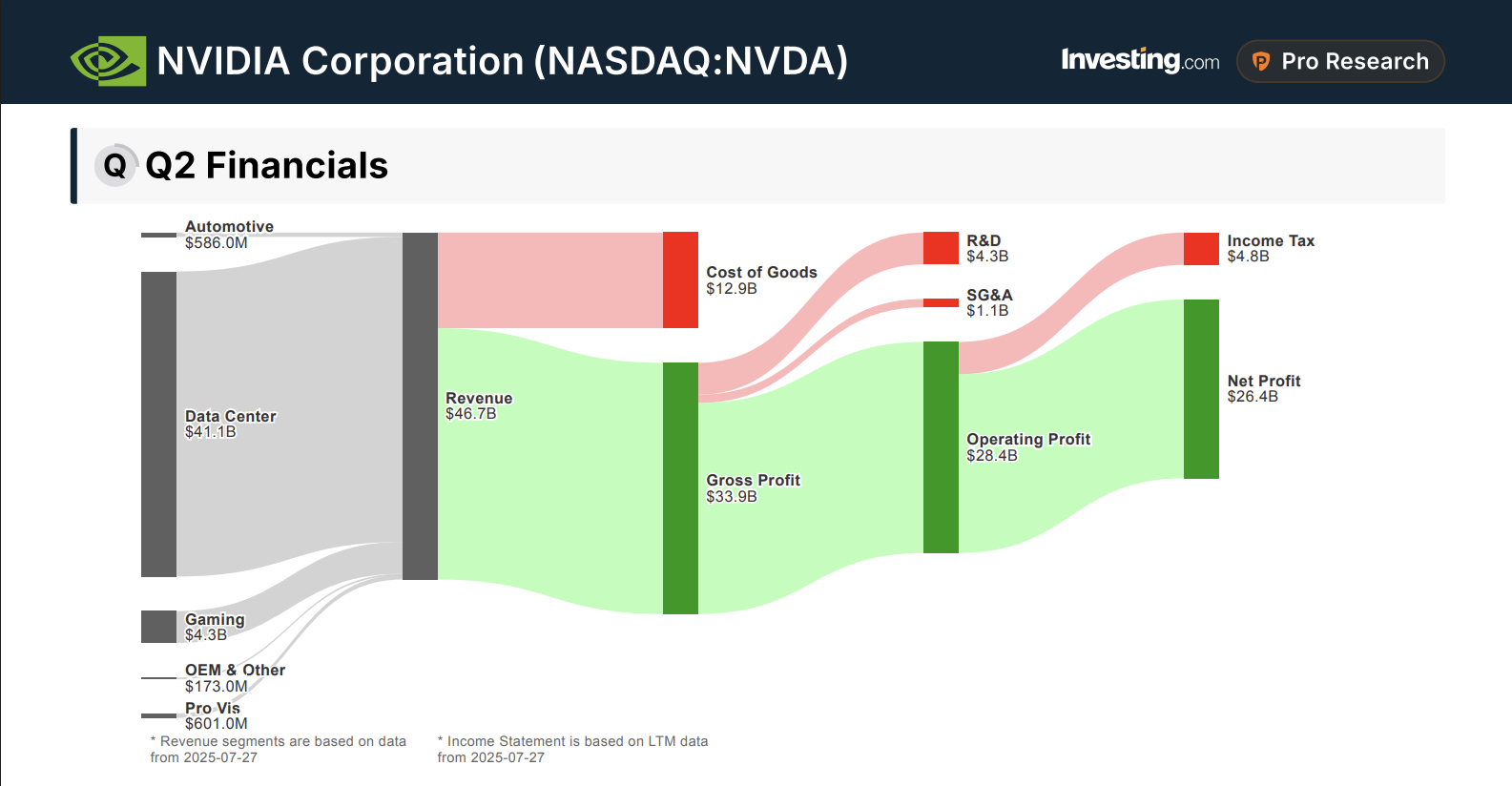
When the clock strikes 4:00 PM ET on reporting day, the “top-line” (revenue) and “bottom-line” (earnings per share, or EPS) numbers hit the wires first. However, for those focused on deep financial analysis, the devil is in the details of the specific business segments and margin health.
Data Center Revenue and Enterprise Spending
The primary engine of NVIDIA’s stock price is its Data Center segment. This is where the sales of H100 and B200 Blackwell chips are recorded. Investors look for “sequential growth”—how much revenue grew compared to the previous three-month period, rather than just year-over-year. In a high-growth environment, a stagnation in sequential growth can signal that the “AI gold rush” is cooling, which would prompt a revaluation of the stock’s price-to-earnings (P/E) multiple.
Gross Margins and Pricing Power
One of the most impressive aspects of NVIDIA’s financial profile is its gross margin, which has recently hovered in the 70% to 75% range. For a hardware company, these are extraordinary figures, more akin to a software-as-a-service (SaaS) provider than a chipmaker. During an earnings call, investors scrutinize these margins. If margins contract, it suggests that competition from rivals or increased manufacturing costs from suppliers like TSMC are beginning to eat into profitability. Sustained high margins are the “moat” that protects NVIDIA’s premium valuation.
Forward Guidance: The Market’s North Star
While historical data is important, the stock market is a forward-looking mechanism. The most critical part of NVIDIA’s report is the guidance for the next quarter and the full fiscal year. Because NVIDIA sits at the start of the AI supply chain, its guidance serves as a proxy for the capital expenditure (CapEx) plans of tech giants like Microsoft, Alphabet, and Meta. If NVIDIA forecasts a slowdown, it implies that the biggest spenders in the world are tightening their belts, which can trigger a sell-off across the entire tech sector.
Investment Strategies: Trading vs. Holding Through Earnings
The volatility surrounding an NVDA earnings print offers both immense opportunity and significant risk. Deciding whether to hold through the report or adjust your position requires a clear understanding of your personal financial goals and risk tolerance.
Managing Volatility with Hedging
For long-term investors who have significant unrealized gains in NVDA, the earnings date represents a “gap risk”—the possibility that the stock opens significantly lower the next morning. Professional money managers often use protective puts or “covered calls” to hedge their downside. By purchasing a put option, an investor pays a premium for the right to sell their shares at a predetermined price, effectively putting a floor under their potential losses during a post-earnings crash.
The “Buy the Rumor, Sell the News” Phenomenon
It is common for NVIDIA’s stock to rally 10% or 20% in the weeks leading up to the earnings report as excitement builds. This often leads to a “priced-to-perfection” scenario. In such cases, even a stellar report can lead to a “sell the news” event where institutional investors take profits, causing the price to dip. Savvy investors often look for these post-earnings dips as entry points for long-term positions, rather than chasing the stock during the pre-earnings hype.
Valuation and the P/E Ratio
NVIDIA often looks “expensive” on a trailing P/E basis, sometimes trading at 40x, 60x, or even 100x past earnings. However, the money-focused investor looks at the forward P/E. If earnings are growing faster than the stock price is rising, the stock can actually become “cheaper” even as the price goes up. Analyzing the earnings report allows investors to recalculate the PEG ratio (Price/Earnings to Growth). If the PEG ratio remains near 1.0, the stock may still be undervalued despite its trillion-dollar market cap.
Macro-Economic Factors and the Global Financial Ecosystem
NVIDIA does not operate in a vacuum. Its earnings report is a reflection of broader global economic trends, including interest rate environments and geopolitical shifts.
The Impact of Interest Rates on Growth Stocks
As a high-growth stock, NVIDIA’s valuation is sensitive to the Federal Reserve’s interest rate policy. High rates increase the “discount rate” applied to future cash flows, making future earnings worth less in today’s dollars. When NVIDIA reports, investors listen closely to the CFO’s commentary on interest expenses and the cost of capital. A hawkish Fed can mute the positive impact of an earnings beat, while a pivot toward lower rates can act as a tailwind for the stock’s valuation.
Supply Chain Economics and Capital Expenditures
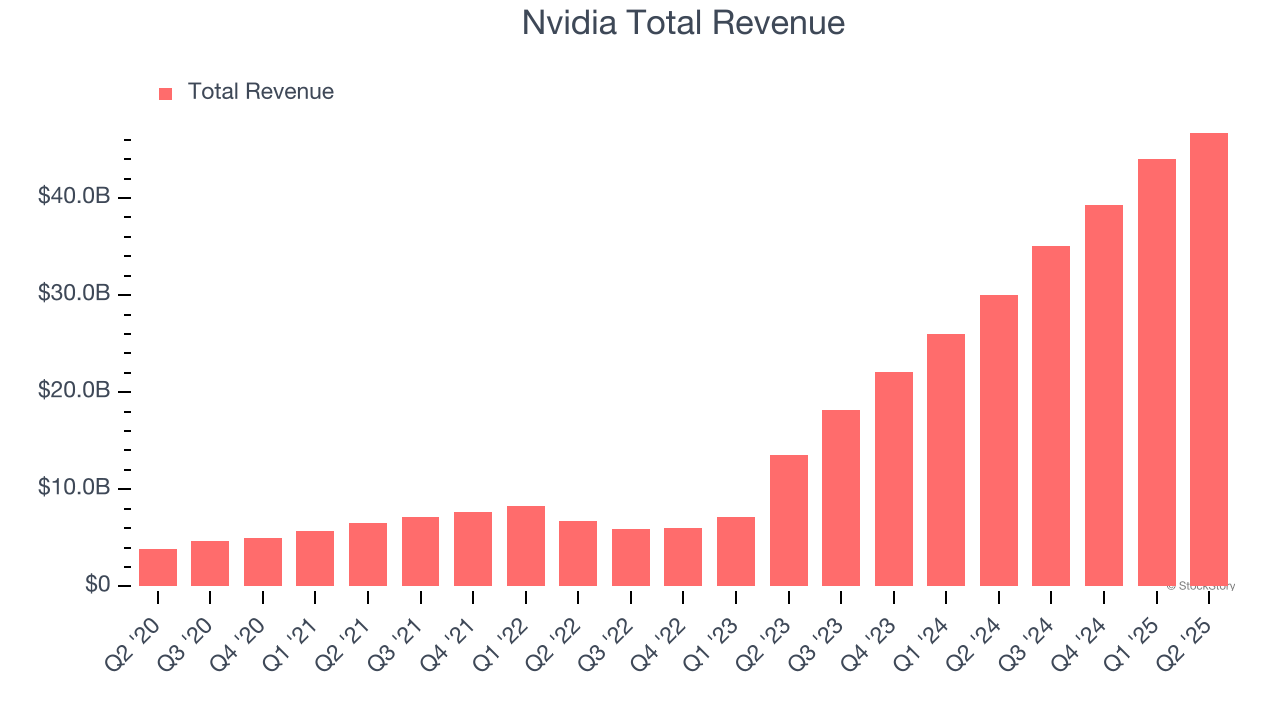
The “Money” story of NVIDIA is also a story of the global supply chain. NVIDIA’s ability to report high earnings depends on its ability to secure “CoWoS” (Chip on Wafer on Substrate) packaging capacity. During the earnings call, analysts often ask about “supply constraints.” If demand outstrips supply, NVIDIA maintains pricing power. However, if supply catches up to demand, the era of triple-digit growth may come to an end. Monitoring the CapEx of NVIDIA’s customers provides a “canary in the coal mine” for the stock’s future performance.
Conclusion: The Strategic Importance of the Earnings Date
When you ask “when will NVDA report earnings,” you are identifying the most important date on the modern financial calendar. For the individual investor, this date is a reminder to review portfolio allocations, assess risk, and look beyond the headlines into the core financial health of the world’s most influential company.
NVIDIA’s earnings are more than just numbers on a balance sheet; they are a litmus test for the digital economy. By understanding the fiscal calendar, focusing on margins and guidance, and employing sound risk-management strategies, investors can transform the volatility of earnings season into a structured opportunity for long-term wealth creation. Whether the result is a massive beat or a cautionary miss, the financial data revealed on that day will set the tone for the markets for months to come. Stay informed, stay disciplined, and always look at the numbers behind the hype.
aViewFromTheCave is a participant in the Amazon Services LLC Associates Program, an affiliate advertising program designed to provide a means for sites to earn advertising fees by advertising and linking to Amazon.com. Amazon, the Amazon logo, AmazonSupply, and the AmazonSupply logo are trademarks of Amazon.com, Inc. or its affiliates. As an Amazon Associate we earn affiliate commissions from qualifying purchases.