
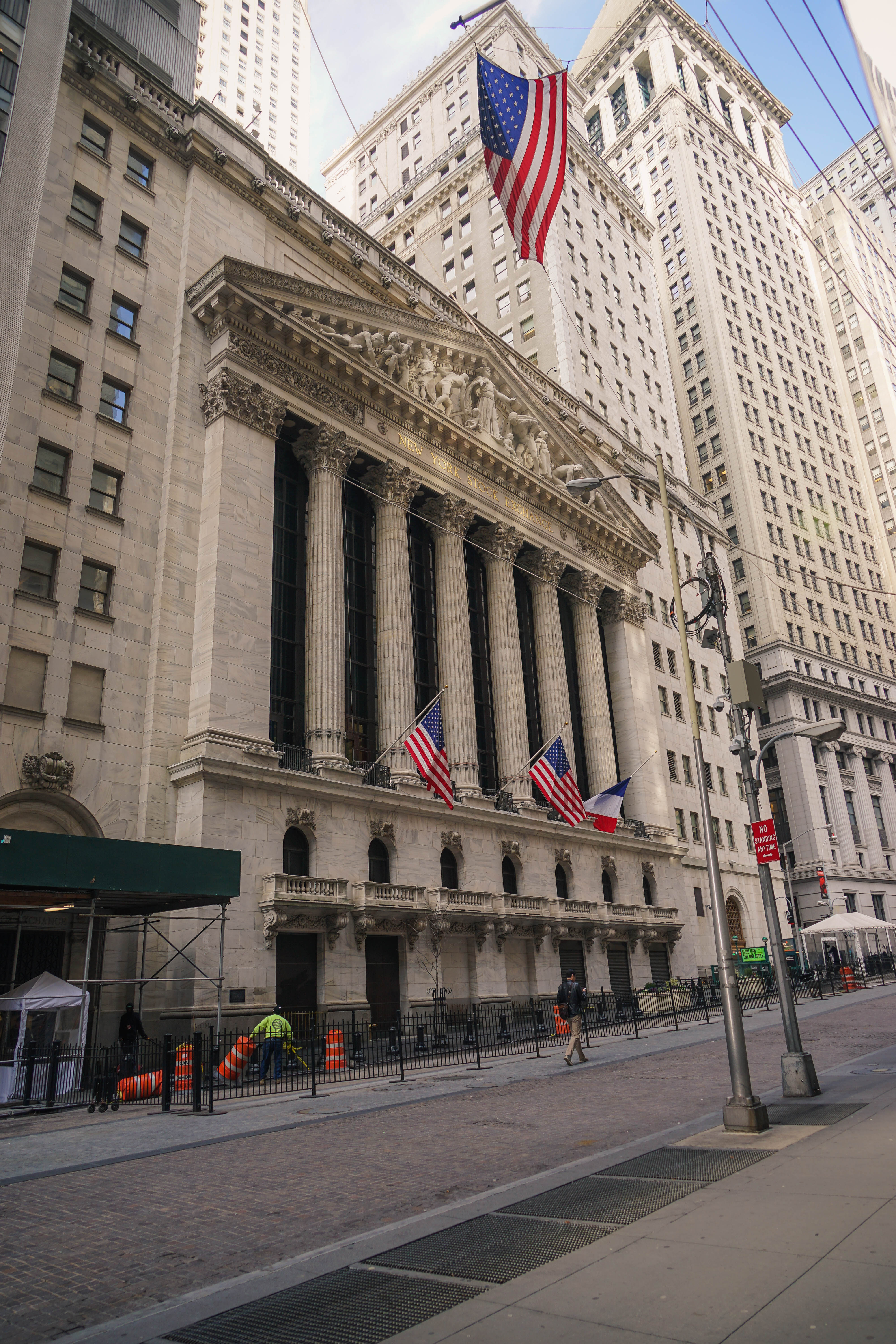
In the world of global finance, timing is not just a logistical detail; it is the fundamental framework upon which fortunes are built and lost. For investors, traders, and financial analysts, the question “When will the New York Stock Exchange open?” serves as the starting gun for the daily race of capital allocation. Located at 11 Wall Street in Lower Manhattan, the New York Stock Exchange (NYSE) is the world’s largest stock exchange by market capitalization. Its opening and closing bells are more than just traditions—they are critical markers for liquidity, volatility, and price discovery.

Understanding the operational hours of the NYSE is the first step in mastering the art of the trade. This guide explores the standard operating hours, the nuances of extended-hours trading, and the strategic implications of the market calendar for the modern investor.
The Standard Trading Session: The Pulse of Wall Street
The most critical window for any investor is the core trading session. This is the period when the vast majority of trading volume occurs and when institutional “big money” moves the needle on global indices.
Core Trading Hours and the Opening Auction
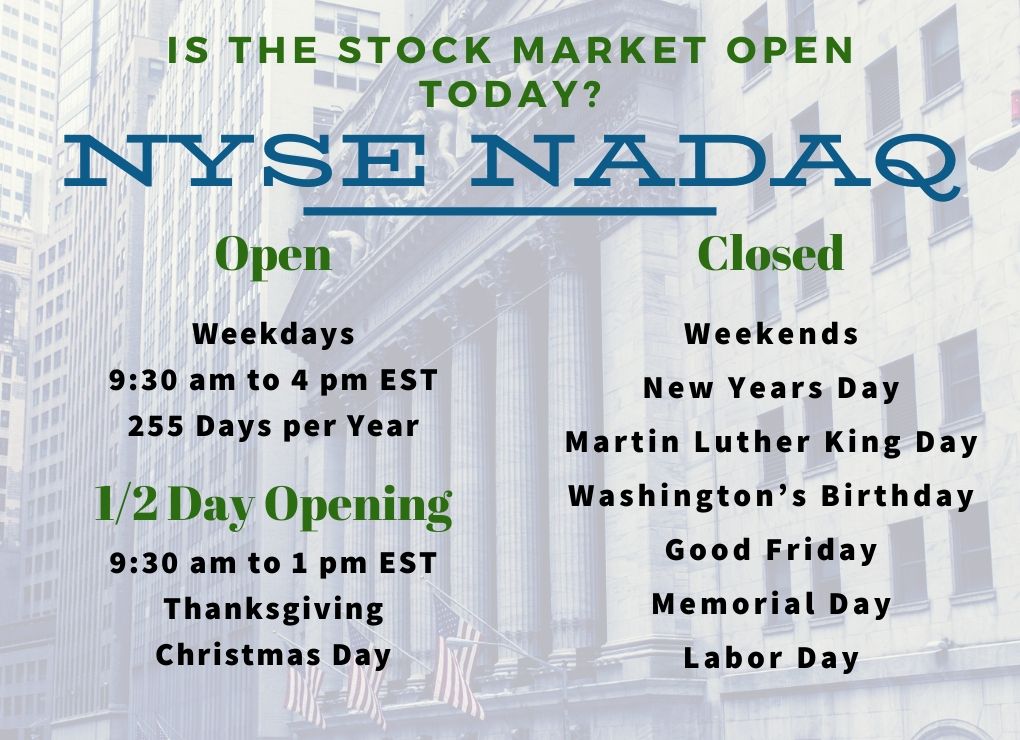
The New York Stock Exchange officially opens its doors for core trading at 9:30 AM Eastern Time (ET) and closes at 4:00 PM ET, Monday through Friday. Unlike some international markets that may take a mid-day break for lunch, the NYSE remains open continuously throughout these six and a half hours.
The 9:30 AM open is preceded by an “opening auction.” This is a highly sophisticated process where the exchange’s systems aggregate all buy and sell orders that have accumulated overnight to determine a single opening price for each security. For investors, this is often the most volatile time of the day. Prices can swing wildly in the first thirty minutes as the market reacts to news that broke after the previous day’s close.
The Closing Bell and Price Discovery
The 4:00 PM ET closing bell signifies the end of the standard session. Similar to the opening, the “Closing Auction” is a vital mechanism. It ensures that the closing price of a stock—which is the price used by mutual funds to calculate their Net Asset Value (NAV) and by analysts to chart performance—is determined by a concentrated pool of liquidity. For the disciplined investor, understanding that the final minutes of the trading day often see a surge in volume is crucial for executing large orders without significantly impacting the stock’s price.
Beyond the Bell: Navigating Extended-Hours Trading
While the core hours are the most active, the modern financial landscape does not truly sleep. Through electronic communication networks (ECNs), investors can trade outside the standard 9:30 AM to 4:00 PM window.
The Mechanics of Pre-Market Trading
The NYSE Arca, the exchange’s fully electronic platform, allows for pre-market trading beginning as early as 4:00 AM ET. However, many retail brokerages do not grant access to their clients until 7:00 AM or 8:00 AM ET. Pre-market trading is the primary arena where investors react to early-morning economic reports, such as the Consumer Price Index (CPI) or monthly jobs data, which are typically released at 8:30 AM ET.
Trading during these hours requires a high level of sophistication. Because there are fewer participants, the “bid-ask spread”—the difference between the highest price a buyer will pay and the lowest price a seller will accept—tends to be much wider. This can lead to significant slippage, where an investor ends up buying a stock for more than they intended.
After-Hours Trading and Earnings Reports
After the 4:00 PM closing bell, the market enters the “After-Hours” session, which typically runs until 8:00 PM ET. This is perhaps the most dramatic period for individual stocks, as the majority of publicly traded companies release their quarterly earnings reports immediately after the market closes.
For the value investor or the swing trader, the after-hours session provides an opportunity to trade on new information before the general public reacts the following morning. However, the same risks of low liquidity and high volatility found in the pre-market session are amplified here. It is a time for precision, often requiring the use of “limit orders” rather than “market orders” to ensure price protection.
The Market Calendar: Holidays and Early Closures
To manage a portfolio effectively, one must look beyond the clock and toward the calendar. The NYSE follows a strict schedule of federal holidays and early closures that every participant in the money markets must memorize.
Standard Market Holidays
The NYSE is closed on several key holidays throughout the year. When a holiday falls on a Saturday, the market usually closes on the preceding Friday. If it falls on a Sunday, the market closes on the following Monday. The standard holiday list includes:
- New Year’s Day
- Martin Luther King, Jr. Day
- Washington’s Birthday (Presidents’ Day)
- Good Friday
- Memorial Day
- Juneteenth National Independence Day
- Independence Day
- Labor Day
- Thanksgiving Day
- Christmas Day
During these closures, liquidity disappears entirely on the exchange, and investors must wait for the next business day to execute trades. This “weekend risk” or “holiday risk” means that if significant global news breaks while the NYSE is closed, the market may “gap” significantly higher or lower when it finally reopens.
The Significance of Early Closures
There are specific days, typically around Thanksgiving and Christmas, when the NYSE operates on an abbreviated schedule. On these days, the market opens at its usual 9:30 AM ET but closes early at 1:00 PM ET.
These half-days are often characterized by “thin” trading. With many institutional traders away on vacation, the volume is low, which can lead to unusual price movements. For the savvy investor, these days are often better spent on research and strategy rather than active execution, as the lack of volume makes it difficult to gauge the true direction of a stock’s momentum.
Strategic Timing: Why the Clock Matters for Your Money
In finance, knowing when to buy is often as important as knowing what to buy. The opening and closing times of the NYSE dictate the ebb and flow of market psychology.
The “Monday Effect” and Opening Volatility
Academic studies have often pointed to the “Monday Effect,” where market returns on Mondays have historically trended differently than the rest of the week. This is largely due to the accumulation of news over the weekend. For a retail investor, jumping into the market at exactly 9:30 AM on a Monday can be a recipe for disaster. Professional traders often wait for the “initial balance”—the high and low of the first 30 to 60 minutes—to be established before committing capital. This allows the “noise” of the opening bell to settle and a clearer trend to emerge.
Using Time to Manage Risk
Financial tools and platforms now allow investors to automate their trading based on time. For example, “Time-Weighted Average Price” (TWAP) orders allow an investor to execute a large position slowly over the course of the day to avoid moving the market. Understanding that the most stable liquidity usually exists between 10:30 AM and 3:30 PM ET allows investors to choose the most cost-effective window for their transactions.
Furthermore, for those involved in options trading, the NYSE’s hours are the ultimate deadline. Options expire based on the closing prices of the exchange, making the final minutes of the Friday session a period of intense activity known as “triple witching” four times a year.
Conclusion: Mastering the NYSE Schedule
When you ask, “When will the New York Stock Exchange open?” you are asking for more than a time on a clock. You are asking for the start of a window of opportunity where global capital converges. By mastering the 9:30 AM to 4:00 PM standard session, respecting the hazards of extended-hours trading, and planning for the holiday calendar, you position yourself as a disciplined participant in the financial markets.
In the realm of money and investing, knowledge is the primary currency. Staying synchronized with the heartbeat of Wall Street ensures that you are never caught off guard by a market closure or a sudden spike in volatility. Whether you are a long-term value investor or a tactical day trader, the clock is your most consistent ally—provided you know how to read it. Keep your eyes on the ET timezone, your calendar marked for holidays, and your strategy aligned with the natural rhythms of the exchange. Success on the NYSE begins the moment the bell rings.