
Timing is often cited as the most critical element of a successful investment strategy. For the modern investor, the question “when will the market open?” is not merely a matter of checking a clock; it is an inquiry into liquidity, volatility, and global economic connectivity. Whether you are a day trader looking to capitalize on the opening bell’s volatility or a long-term investor monitoring your portfolio’s valuation, understanding the operational hours of the world’s financial hubs is essential.
In an era of 24/7 news cycles and digital connectivity, the traditional boundaries of the trading day have blurred. However, the official opening and closing times of major exchanges still dictate the flow of trillions of dollars. This guide provides a deep dive into the schedules of global markets, the nuances of extended-hours trading, and the strategic implications of timing in the world of finance.
Understanding Major Global Stock Market Hours
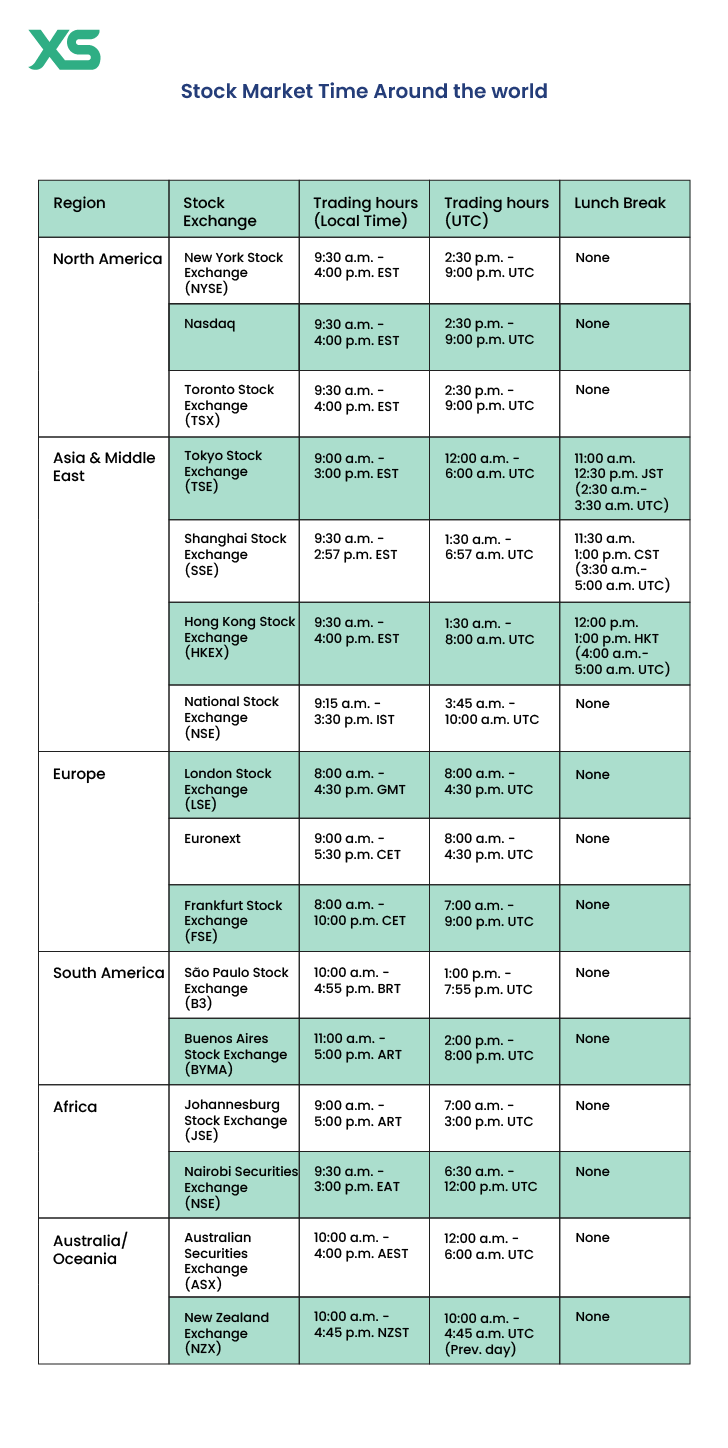
The global financial system operates like a relay race. As one market closes in the East, another opens in the West, ensuring that capital is almost always moving somewhere in the world. For those focused on equities, the primary exchanges have fixed hours that provide a structured environment for price discovery.
The New York Stock Exchange (NYSE) and NASDAQ
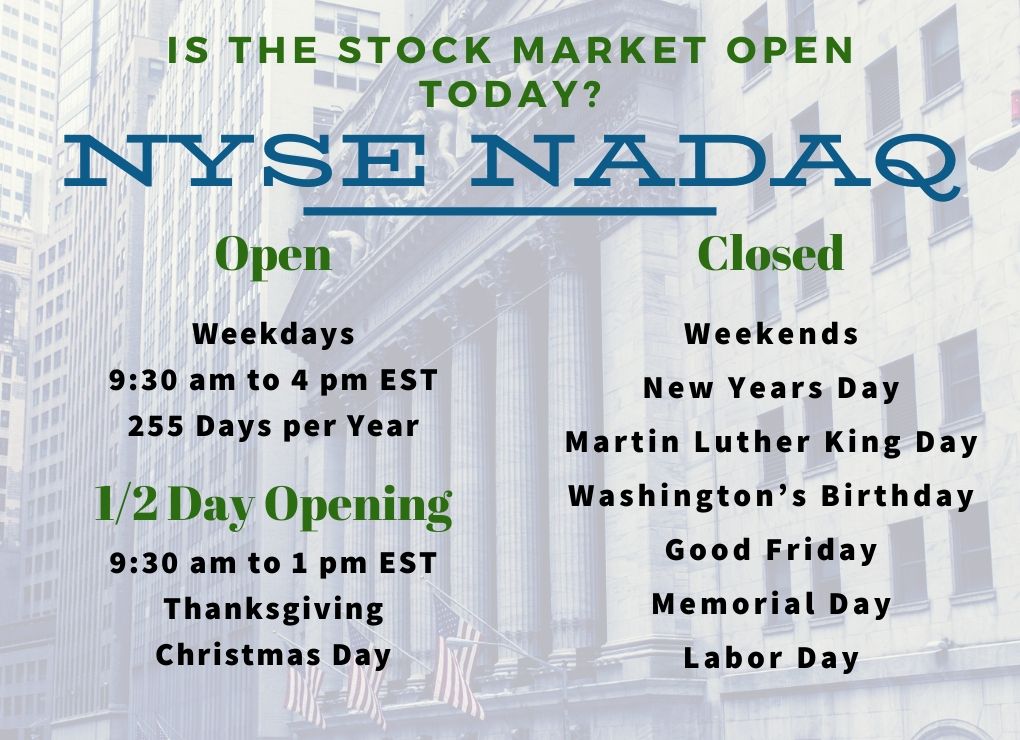
For the majority of retail investors in the West, the focus remains on the “Big Two” in the United States: the NYSE and the NASDAQ. Both exchanges operate on a standard schedule from Monday through Friday, opening at 9:30 AM Eastern Time (ET) and closing at 4:00 PM ET. These hours are the cornerstone of the American financial system. The “opening bell” at 9:30 AM represents the moment when the “Opening Cross” occurs—a process where buy and sell orders accumulated overnight are matched to set the initial price of a security.
The European Powerhouses: London, Frankfurt, and Euronext
As the sun moves west, the European markets take center stage. The London Stock Exchange (LSE), one of the oldest and most influential exchanges, operates from 8:00 AM to 4:30 PM Greenwich Mean Time (GMT). Because of the time difference, European markets often provide a “preview” for US traders, as news that breaks during the European morning frequently dictates how the US markets will open a few hours later. Other major hubs like the Deutsche Börse (Frankfurt) and Euronext (Paris/Amsterdam) follow similar schedules, generally staying open for 8.5 hours of active trading.
The Asian-Pacific Session: Tokyo, Hong Kong, and Sydney
The trading day technically begins in the Asia-Pacific region. The Tokyo Stock Exchange (TSE) and the Hong Kong Stock Exchange (HKEX) are vital indicators of global sentiment. Interestingly, many Asian markets, unlike their Western counterparts, include a lunch break. For example, the Tokyo Stock Exchange typically trades from 9:00 AM to 11:30 AM, takes a break, and then resumes from 12:30 PM to 3:00 PM local time. This pause in trading allows participants to recalibrate and digest morning news before the afternoon session.
Extended Hours Trading: Pre-Market and After-Hours Sessions
While the official opening bell rings at 9:30 AM ET in the US, the “market” is actually active much earlier. Electronic Communication Networks (ECNs) allow investors to trade outside of standard exchange hours, a practice known as extended-hours trading.
What Happens Before the Opening Bell?
Pre-market trading in the US can begin as early as 4:00 AM ET, though the bulk of the volume typically picks up after 8:00 AM ET. This session is primarily used by institutional investors and savvy retail traders to react to overnight news, such as international economic data or early-morning corporate earnings releases. If a major tech company releases a positive report at 7:30 AM, the stock price will often move significantly in the pre-market before the general public has a chance to trade at 9:30 AM.
The Risks and Rewards of After-Hours Trading
After-hours trading occurs after the 4:00 PM ET close and can run until 8:00 PM ET. This session is famously volatile. Because there are fewer participants, liquidity is lower, meaning that even a relatively small order can cause a significant swing in a stock’s price. For investors, the after-hours session is the primary venue for reacting to “after-the-bell” earnings reports. While it offers the opportunity to get ahead of the next day’s price action, the wider “bid-ask spreads” (the difference between what a buyer is willing to pay and a seller is willing to accept) make it a risky environment for the inexperienced.
How Electronic Communication Networks (ECNs) Facilitate Off-Hour Trades
Technological advancement is what makes these extended sessions possible. ECNs are automated systems that match buy and sell orders directly, bypassing the traditional floor of an exchange. This digital infrastructure allows for a more “democratized” market, where news can be priced in immediately rather than waiting for a physical bell to ring. However, many brokerage firms limit the types of orders (such as limit orders only) that can be placed during these times to protect clients from extreme price fluctuations.
The 24-Hour Markets: Forex and Cryptocurrencies
While the stock market adheres to a relatively rigid schedule, other financial sectors never truly sleep. For those involved in currency or digital assets, the question of “when will the market open” is almost irrelevant, as the “open” is a continuous state.
Foreign Exchange (Forex) Market Cycles
The Forex market is the largest and most liquid financial market in the world. It operates 24 hours a day, five days a week. It begins its week on Sunday evening (around 5:00 PM ET) when the Sydney and Tokyo sessions open, and it doesn’t close until Friday afternoon in New York. The beauty of Forex lies in the “overlaps”—periods when two major sessions are open at once, such as the London/New York overlap between 8:00 AM and 12:00 PM ET. These overlaps are the periods of highest liquidity and are often when the most significant currency moves occur.
The Non-Stop Nature of Digital Assets
Cryptocurrency markets have pioneered the 24/7/365 trading model. Unlike stocks or bonds, Bitcoin and Ethereum do not stop for weekends or holidays. This constant state of operation has fundamentally changed the psychology of investing. In the crypto world, “the market” is always open. This provides unparalleled access but also requires a different level of risk management, as major price crashes or surges can happen on a Sunday morning or on Christmas Day when traditional financial institutions are closed.
Liquidity Pockets and Overlapping Sessions
Even in a 24-hour market, not all hours are equal. Smart money tends to move during specific “liquidity pockets.” In Forex, if you are trading the EUR/USD pair, you want to be active when both European and American banks are operational. In the crypto market, while it is technically open 24/7, volume often spikes during US and Asian market hours. Understanding these rhythms helps traders avoid “slippage,” where the price of an asset changes between the time an order is placed and when it is executed.
Critical Factors Affecting Market Opening Times
Standard hours are the baseline, but the financial calendar is peppered with exceptions. Awareness of these outliers is crucial for managing margin requirements and avoiding unexpected volatility.
Public Holidays and Early Closures
Every exchange follows the holiday schedule of its host country. In the United States, markets are closed for holidays such as New Year’s Day, Martin Luther King Jr. Day, Presidents’ Day, Good Friday, Memorial Day, Juneteenth, Independence Day, Labor Day, Thanksgiving, and Christmas. Additionally, the market often has “early close” days (typically 1:00 PM ET), such as the day after Thanksgiving (Black Friday) or Christmas Eve. Trading on these days is often characterized by “thin” volume, which can lead to erratic price movements.
Daylight Savings Time Shifts
A common point of confusion for international investors is the shift in Daylight Savings Time (DST). Not all countries change their clocks on the same weekend, and some do not observe DST at all. For a few weeks in March and October/November, the time difference between New York and London or Sydney may shift by an hour. This means the US market might “open” an hour earlier or later relative to your local time than you are accustomed to, which can catch automated trading bots and manual traders off guard.
Impact of Economic Calendars and Overnight News
While the physical exchange might be closed, the economic market is always reacting. “Gapping” is a phenomenon where a stock opens at a significantly different price than it closed the previous day. This is caused by news—such as a geopolitical event, a surprise interest rate hike by a central bank, or a change in a company’s leadership—that occurs while the market is closed. When the market finally opens, the accumulated pressure of all the “limit orders” waiting to be filled causes the price to leap (or gap) to a new level.
Strategic Trading: Why the “When” Matters as Much as the “What”
Successful investing is as much about discipline as it is about analysis. Professional traders build their entire routine around the opening and closing cycles of the market.
The “Opening Cross” and Initial Volatility
The first 30 to 60 minutes of the trading day are often referred to as “amateur hour” by seasoned professionals—not because amateurs are the only ones trading, but because the volatility is at its peak. This is the period when all the pent-up orders from the night before are processed. For a disciplined investor, the market open is often a time to observe rather than act. Waiting for the “opening range” to be established allows you to see the true direction of the day’s sentiment before committing capital.
Closing Auctions and Mutual Fund Pricing
The final hour of trading, known as the “Power Hour” (3:00 PM to 4:00 PM ET), is equally significant. This is when institutional managers rebalance their portfolios and when the “Closing Cross” determines the final price of the day. This price is vital because it is used to calculate the Net Asset Value (NAV) of mutual funds. Large-scale institutional buying or selling often happens in the final minutes, providing a signal of where the “smart money” believes the market is headed for the next session.

Developing a Routine Around Market Schedules
To excel in finance, you must align your lifestyle with the market’s clock. This means doing your “homework” during the quiet hours—analyzing charts and reading reports when the market is closed—so that when the market opens, you are ready to execute a pre-defined plan. Whether you are checking the pre-market futures at 6:00 AM or reviewing your portfolio after the 4:00 PM close, understanding the cadence of the market allows you to trade with clarity rather than emotion.
In conclusion, knowing “when the market will open” is the first step in participating in the global economy. Each session—from the early whispers of the pre-market to the high-stakes closing auction—offers different opportunities and risks. By mastering the clock, you transition from a reactive participant to a proactive investor, capable of navigating the complexities of the financial world with precision and confidence.
aViewFromTheCave is a participant in the Amazon Services LLC Associates Program, an affiliate advertising program designed to provide a means for sites to earn advertising fees by advertising and linking to Amazon.com. Amazon, the Amazon logo, AmazonSupply, and the AmazonSupply logo are trademarks of Amazon.com, Inc. or its affiliates. As an Amazon Associate we earn affiliate commissions from qualifying purchases.