
The simple act of performing a calculation, whether it’s balancing a budget, solving a complex engineering problem, or even just splitting a restaurant bill, is a cornerstone of human progress. For millennia, this fundamental task was a laborious manual endeavor. But when did the journey from rudimentary aids to sophisticated electronic devices begin? The invention of the calculator is not a singular event but a rich tapestry woven from centuries of human ingenuity, driven by the persistent desire to simplify and accelerate computation. To truly understand when calculators were invented, we must delve into the historical evolution of mechanical aids and the groundbreaking leaps that eventually led to the pocket-sized marvels we use today.
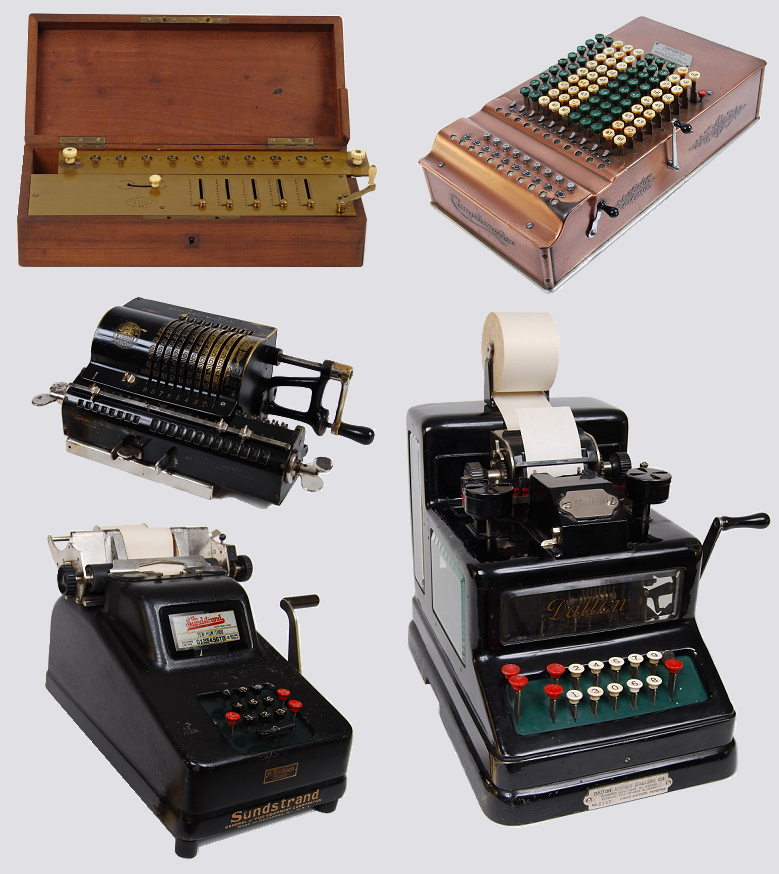
The Dawn of Mechanical Computation: Early Mechanical Calculators
The desire to automate calculation predates even the most rudimentary forms of mechanical calculators. Ancient civilizations developed abaci, simple counting frames that, while not technically calculators, represented the first significant step in abstracting numerical operations. However, the true genesis of the mechanical calculator lies in the 17th century, a period of burgeoning scientific discovery and mechanical innovation.
The Pascaline: A Mechanical Marvel
One of the earliest and most significant milestones in the invention of the calculator is widely attributed to Blaise Pascal, a brilliant French mathematician and philosopher. In 1642, at the tender age of nineteen, Pascal designed and built a mechanical calculating machine known as the Pascaline. This remarkable device was designed to aid his father, who was a tax supervisor, in performing tedious arithmetic calculations.
The Pascaline was a complex arrangement of gears, wheels, and levers. It could perform addition and subtraction directly. Multiplication and division were achieved through a series of repetitive additions and subtractions, respectively, which, while functional, was still a laborious process. Despite its limitations, the Pascaline was a revolutionary concept, demonstrating that complex mathematical operations could be mechanized. It represented a tangible departure from purely manual calculation and laid the groundwork for future innovations. Pascal’s invention, though not mass-produced in its time due to the intricate craftsmanship required and its high cost, was a testament to the potential of mechanical computation. It inspired subsequent inventors and solidified the idea that machines could be built to assist with mathematical tasks.
Leibniz’s Stepped Reckoner: Enhancing Multiplication and Division
Inspired by Pascal’s work, Gottfried Wilhelm Leibniz, a German mathematician and philosopher, took the concept of mechanical calculation a step further. In 1672, Leibniz began developing a more advanced machine, which he called the Stepped Reckoner. Completed around 1694, this machine was a significant improvement over the Pascaline.
The Stepped Reckoner incorporated a crucial innovation: a stepped drum or cylindrical cogwheel with nine teeth of varying lengths. This ingenious mechanism allowed the machine to perform all four basic arithmetic operations – addition, subtraction, multiplication, and division – directly and more efficiently than its predecessor. While still a complex and expensive machine to build, the Stepped Reckoner demonstrated a more robust approach to mechanical computation. Leibniz’s contribution was pivotal in expanding the capabilities of mechanical calculators, moving beyond simple addition and subtraction to tackle more complex operations with greater automation. His work highlighted the potential for sophisticated gear mechanisms to handle intricate calculations, paving the way for more refined mechanical calculators in the following centuries.
The Rise of Commercial Mechanical Calculators
While Pascal and Leibniz laid the conceptual and mechanical foundations, it was in the 19th and early 20th centuries that mechanical calculators began to evolve from individual inventions into commercially viable products. This era saw increased standardization, improved manufacturing techniques, and a growing demand for calculation tools in business and industry.
The Arithmometer: The First Commercially Successful Calculator
Perhaps the most influential mechanical calculator of the 19th century was the Arithmometer, developed by Charles Xavier Thomas de Colmar in France. Thomas patented his design in 1820, and production began in 1851. The Arithmometer was the first mechanical calculator to be produced in significant quantities and was a commercial success.
Its design was based on Leibniz’s principles but was more robust, reliable, and easier to operate. The Arithmometer used a system of movable drums and a crank for operation, allowing for efficient addition, subtraction, multiplication, and division. It became a standard tool in businesses, accounting offices, and scientific institutions across Europe and beyond. The success of the Arithmometer proved that there was a substantial market for calculating machines and spurred further innovation in their design and production. It was a testament to the practicality and utility of mechanical calculation, bridging the gap between theoretical invention and everyday application.
Other Notable Mechanical Developments
Throughout the 19th century, numerous inventors tinkered with and improved upon existing mechanical calculator designs. These included machines like the Curta calculator, a highly compact and portable mechanical calculator developed by Curt Herzstark during World War II, and the Comptometer, invented by Dorsey H. N. Johnson and later manufactured by Felt & Tarrant Manufacturing Company, which was known for its speed and efficiency in addition and subtraction. These developments, though perhaps less globally impactful than the Arithmometer, contributed to the refinement of mechanical calculation and highlighted the continuous drive for better and more accessible tools.

The Electric Revolution: From Mechanical Gears to Electronic Circuits
The advent of electricity in the late 19th and early 20th centuries was a transformative force across all industries, and calculation was no exception. The transition from purely mechanical devices to electrically powered ones marked a significant leap forward in speed, efficiency, and complexity.
Electromechanical Calculators: Bridging the Gap
The early stages of electrification saw the development of electromechanical calculators. These machines still relied on mechanical components but used electric motors to power their operations, reducing the manual effort required by the user. This made them faster and less prone to user error. Companies like Monroe Calculating Machine Company and Friden Calculating Machine Company became prominent manufacturers of these machines, producing devices that were widely used in offices throughout the mid-20th century. These electromechanical calculators retained the visible gears and mechanisms of their predecessors but gained a new level of automated operation, becoming more user-friendly and productive.
The Dawn of Electronic Computing: The Precursors to Modern Calculators
The true revolution in calculation came with the development of electronic computers. While early electronic computers like ENIAC were massive, room-filling machines designed for complex scientific and military calculations, they laid the foundational principles of digital computation. The miniaturization of electronic components, particularly the transistor (invented in 1947) and later the integrated circuit (IC), would prove to be the game-changer for calculators.
The integrated circuit, developed independently by Jack Kilby at Texas Instruments and Robert Noyce at Fairchild Semiconductor in the late 1950s, allowed for the consolidation of multiple transistors and other electronic components onto a single silicon chip. This miniaturization was critical for the development of smaller, more affordable, and more powerful electronic devices.
The Era of the Electronic Calculator: Miniaturization and Accessibility
The invention of the integrated circuit directly paved the way for the modern electronic calculator. The ability to place complex circuitry onto a small chip drastically reduced the size and cost of calculating devices.
The First True Electronic Calculators
The early electronic calculators of the 1960s were still relatively large and expensive, often referred to as “desktop calculators.” Companies like Friden and Sharp were pioneers in this field, producing machines that offered significantly faster calculation speeds and a wider range of functions than their mechanical predecessors. These were often quite costly, placing them out of reach for the average consumer.
The true democratization of the calculator arrived with the development of pocket calculators. This was a direct consequence of further advancements in integrated circuit technology, specifically the creation of microprocessors. The first commercially successful handheld electronic calculator is often cited as the Cal-Tech Programma 101, released by Olivetti in 1965, though it was more of a desktop programmable calculator.
However, the breakthrough for truly portable and affordable calculators came in 1971 with Intel’s introduction of the Intel 4004, the first single-chip microprocessor. This innovation enabled the creation of truly compact and affordable electronic calculators. By 1972, the HP-35 was released by Hewlett-Packard, often considered the first scientific handheld calculator, capable of performing trigonometric and logarithmic functions, and the Texas Instruments SR-10 was a more basic scientific calculator. The early to mid-1970s saw an explosion of handheld electronic calculators hitting the market, rapidly replacing mechanical and electromechanical devices in offices, schools, and homes.
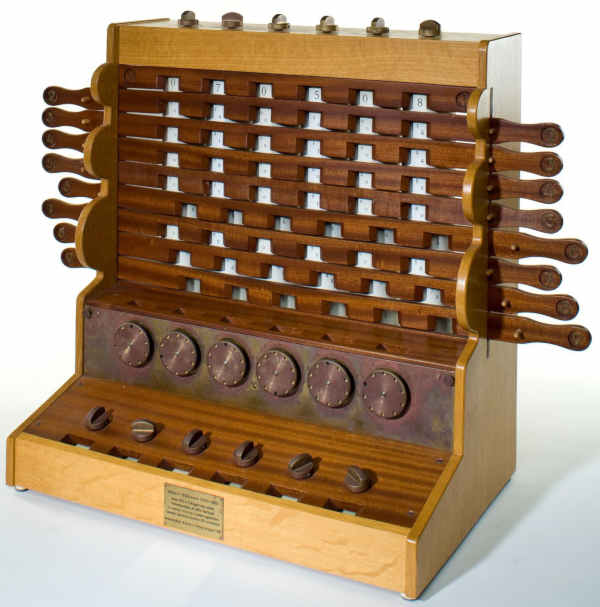
The Evolution of the Calculator: From Basic Functions to Advanced Capabilities
Since their widespread adoption in the 1970s, calculators have continued to evolve dramatically. What began as simple four-function devices has branched out into a diverse array of specialized tools:
- Basic Calculators: Still prevalent for everyday tasks, offering addition, subtraction, multiplication, and division.
- Scientific Calculators: Essential for students and professionals in STEM fields, featuring trigonometric, logarithmic, exponential, and statistical functions.
- Graphing Calculators: Capable of plotting functions, solving equations graphically, and performing advanced mathematical operations, they have become indispensable in secondary and higher education.
- Financial Calculators: Designed for business and finance professionals, offering functions for loan amortization, interest rate calculations, cash flow analysis, and more.
- Programmable Calculators: Allowing users to write and store their own programs, offering immense flexibility for specialized calculations.
The journey from Pascal’s rudimentary gears to the sophisticated microprocessors powering today’s calculators is a testament to human innovation. While there isn’t a single “invention date” for calculators, the mid-17th century marks the invention of the first mechanical calculating machines, and the early 1970s marks the widespread invention and commercial availability of affordable electronic calculators thanks to the advent of integrated circuits and microprocessors. This evolution has profoundly impacted our ability to understand, analyze, and manipulate numbers, shaping our technological and scientific progress.
aViewFromTheCave is a participant in the Amazon Services LLC Associates Program, an affiliate advertising program designed to provide a means for sites to earn advertising fees by advertising and linking to Amazon.com. Amazon, the Amazon logo, AmazonSupply, and the AmazonSupply logo are trademarks of Amazon.com, Inc. or its affiliates. As an Amazon Associate we earn affiliate commissions from qualifying purchases.