
The question “when was Tesla made” often invites a simple chronological answer: July 2003. However, from a technological perspective, Tesla was not merely “made” at a single point in time; it has been continuously engineered through a series of iterative breakthroughs that redefined the relationship between software and hardware. Founded by Martin Eberhard and Marc Tarpenning—and later spearheaded by Elon Musk—Tesla Motors set out to prove that electric vehicles (EVs) could be superior to gasoline cars through superior engineering.
To understand the technological timeline of Tesla is to understand the shift from traditional automotive mechanics to Silicon Valley-style systems integration. This evolution has moved through several distinct phases: the proof of concept, the scaling of battery technology, the birth of the software-defined vehicle, and the current leap into artificial intelligence and robotics.
The Genesis of the Silicon Valley Automaker (2003–2008)
Tesla’s technical journey began in 2003 with a radical hypothesis: the energy density of lithium-ion batteries had reached a tipping point where they could finally power a high-performance vehicle. Unlike legacy automakers who viewed EVs as a niche compliance tool, the early Tesla team viewed the car as a high-end gadget.
Founded in 2003: Not Just a Car Company
When Tesla was incorporated, the automotive industry was dominated by the internal combustion engine (ICE). The technical challenge wasn’t just building a motor; it was managing the thermal properties and energy discharge of thousands of small commodity battery cells. Tesla’s early engineers realized that by using the same cells found in laptop computers (the 18650 format), they could achieve energy densities far higher than the bulky lead-acid or nickel-metal hydride batteries used in previous EV attempts.
The AC Propulsion Heritage
A critical part of Tesla’s technical “making” was its early licensing of technology from AC Propulsion. The company utilized the tzero concept’s drive system as a baseline, but the real innovation came in the refinement of the power electronics. The ability to convert DC power from the battery into AC power for the motor with minimal heat loss became a core competency that still defines Tesla’s efficiency today.
The 2008 Roadster: Proof of Concept
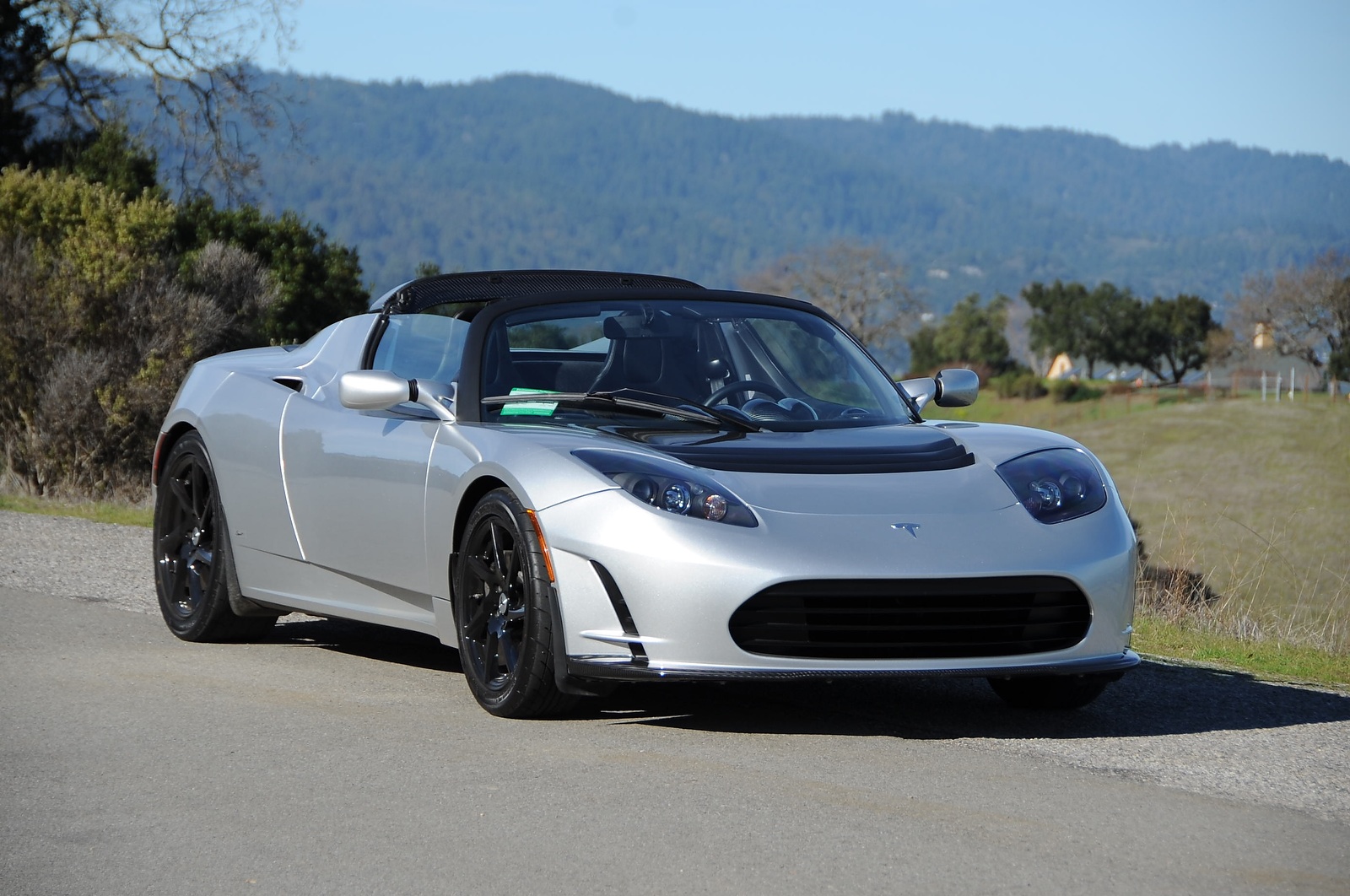
The 2008 Roadster was the first production car to use lithium-ion battery cells and travel more than 200 miles per charge. Tech-wise, it was a testbed. It featured a carbon-fiber body to offset battery weight and an early iteration of a proprietary battery management system (BMS). This BMS was perhaps Tesla’s most significant early tech contribution, as it monitored individual cells to prevent overheating and degradation, a feat of digital-to-analog engineering that had never been scaled for the road.
Reimagining the Power Plant: Battery Tech and Charging Infrastructure
Following the Roadster, Tesla moved from being a vehicle assembler to a vertically integrated technology powerhouse. The “making” of Tesla as a dominant tech force was cemented by its decision to build its own ecosystem for energy storage and delivery.
The Shift to Lithium-Ion Innovation
As Tesla moved toward the Model S in 2012, they moved away from the Roadster’s heavy chassis toward a bespoke “skateboard” architecture. This placed the battery pack at the bottom of the car, lowering the center of gravity and utilizing the battery as a structural element to increase rigidity. Technically, this was a masterstroke in packaging, allowing for more cabin space and improved safety—a design language now copied by every major EV manufacturer.
The Supercharger Network: Infrastructure as a Tech Advantage
Tesla realized that the “tech” of an EV wasn’t just in the car; it was in the network. In 2012, they began deploying the Supercharger network. This wasn’t just a series of plugs; it was a sophisticated power electronics system that communicated directly with the car’s BMS to optimize charging curves. By handling the handshake between the grid and the vehicle through proprietary software, Tesla solved the “range anxiety” problem through a seamless hardware-software integration.
4680 Cells and Structural Battery Packs
More recently, Tesla’s “making” has entered a new phase with the development of the 4680 battery cell. Moving to a larger form factor with a “tabless” design reduces internal resistance and simplifies manufacturing. By making the battery pack a structural component of the car’s frame (the structural battery pack), Tesla has reduced the vehicle’s weight and the number of parts required, representing a leap in mechanical engineering efficiency.
The Software-Defined Vehicle: Autopilot and OTA Updates

If the battery is the heart of a Tesla, the software is its brain. Tesla revolutionized the industry by treating the car as a computer on wheels, a philosophy that fundamentally changed how vehicles are maintained and upgraded.
Over-the-Air (OTA) Updates: Changing the Hardware Lifecycle
Before Tesla, a car’s features were static from the day it left the factory. In 2012, Tesla introduced Over-the-Air (OTA) updates. This allowed the company to improve braking distances, increase top speeds, and add entirely new interface features via Wi-Fi. This shifted the automotive paradigm from a hardware-first model to a software-defined model, where the value of the vehicle could technically appreciate over time through code optimization.
The Evolution of Autopilot Hardware (HW1 to HW4)
Tesla’s foray into semi-autonomous driving began in 2014 with “Hardware 1.” Over the years, the company transitioned from using third-party sensors (Mobileye) to developing its own proprietary AI chips. The move to “Tesla Vision”—a system that relies exclusively on cameras rather than radar or LiDAR—marked a significant technical pivot. Tesla’s engineers argued that since the road system is designed for human biological vision, a sufficiently advanced neural network could navigate using high-resolution cameras alone.
Neural Networks and the Quest for Full Self-Driving (FSD)
The technical backbone of Tesla’s Autopilot and FSD is its massive data flywheel. Every Tesla on the road acts as a data collection node, feeding real-world driving scenarios back to Tesla’s servers. These billions of miles of data are used to train complex neural networks. This approach to AI—using massive datasets to “teach” a car how to drive rather than hard-coding rules—positions Tesla more as an AI company than a traditional manufacturer.
Scaling Manufacturing Through Automation and Engineering
“When Tesla was made” can also refer to the moment it figured out how to build cars at scale, a period Elon Musk famously referred to as “production hell.” The solution was a technological overhaul of the factory itself.
The “Machine That Builds the Machine”
Tesla’s Gigafactories are arguably their greatest technological product. By rethinking the assembly line, Tesla introduced a level of vertical integration rarely seen in the 21st century. They produce their own seats, their own plastic components, and even their own glass. This reduces supply chain dependencies and allows for rapid iterative changes to the hardware without waiting for a mid-cycle refresh.
Megacasting and Giga Presses
One of the most significant recent technical innovations in automotive manufacturing is “Megacasting.” Traditionally, the rear underbody of a car is made of over 70 different pieces of metal stamped and welded together. Tesla utilized massive “Giga Presses” to cast these sections as a single piece of aluminum. This reduces weight, improves crash safety, and dramatically simplifies the manufacturing process, showcasing Tesla’s willingness to innovate in metallurgy and heavy machinery.
The Future Roadmap: AI, Robotics, and Beyond
Tesla is currently undergoing its most significant transformation yet, moving from a company that makes electric cars to a company that develops general-purpose artificial intelligence.
Project Dojo: Custom Silicon for AI
To process the vast amounts of video data coming from its fleet, Tesla developed “Dojo,” a custom supercomputer. At the heart of Dojo is the D1 chip, designed specifically for AI training. By creating its own silicon, Tesla has bypassed the limitations of general-purpose GPUs, allowing them to train neural networks faster and more efficiently than almost any other entity on earth.
Optimus and the Convergence of Robotics
The latest chapter in the Tesla technical timeline is the development of “Optimus,” a humanoid robot. Optimus utilizes the same computer vision system and AI “brain” as Tesla’s vehicles. This represents a convergence of Tesla’s core technologies: battery density, efficient electric motors (actuators), and advanced AI. The transition from a car to a humanoid form factor is the ultimate test of Tesla’s software-first approach.
Conclusion
The story of when Tesla was made is a continuous narrative of technological boundary-pushing. It began with the simple idea of using lithium-ion batteries to power a sports car and has evolved into a global ecosystem of energy storage, high-performance computing, and autonomous systems. By prioritizing vertical integration and a software-centric architecture, Tesla did more than just make a car; it created a new blueprint for the future of transportation and industrial AI. As the company continues to iterate on its hardware and refine its neural networks, the “making” of Tesla remains an ongoing process of engineering evolution.
aViewFromTheCave is a participant in the Amazon Services LLC Associates Program, an affiliate advertising program designed to provide a means for sites to earn advertising fees by advertising and linking to Amazon.com. Amazon, the Amazon logo, AmazonSupply, and the AmazonSupply logo are trademarks of Amazon.com, Inc. or its affiliates. As an Amazon Associate we earn affiliate commissions from qualifying purchases.