
To understand the current landscape of global technology, one must look back to a pivotal moment in the mid-1970s. When asking “when was Microsoft Corporation founded,” the date is historically anchored on April 4, 1975. On this day, two childhood friends, Bill Gates and Paul Allen, formed a partnership in Albuquerque, New Mexico, that would eventually redefine the relationship between humans and machines.
The founding of Microsoft was not merely the launch of a company; it was the birth of the software industry as a standalone economic and technological powerhouse. Before Microsoft, software was often bundled as an afterthought to massive, room-sized hardware. Gates and Allen envisioned a future where software was the primary driver of utility, leading to their famous mission of putting “a computer on every desk and in every home.”
The Dawn of 1975: A New Era in Software Engineering
The catalyst for Microsoft’s founding was the January 1975 issue of Popular Electronics, which featured the Altair 8800, a microcomputer kit based on the Intel 8080 CPU. Recognizing that hardware without a functional programming language was a dormant tool, Gates and Allen contacted MITS (Micro Instrumentation and Telemetry Systems), the creators of the Altair.
From Albuquerque to the World
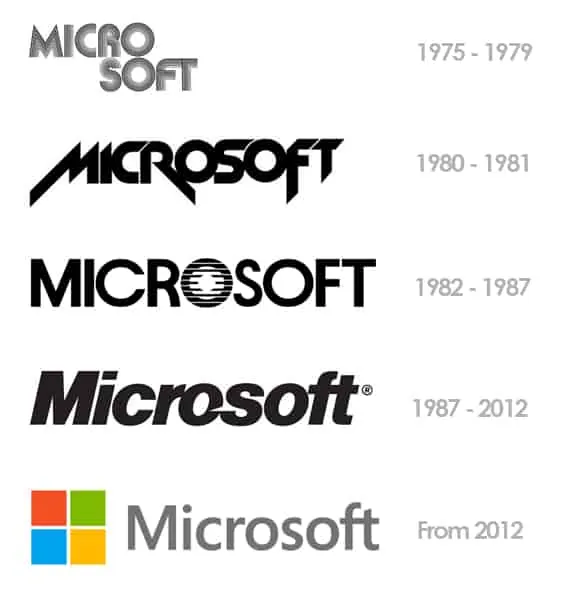
While Microsoft is now synonymous with the lush greenery of Redmond, Washington, its roots are in the desert of New Mexico. The founders chose Albuquerque to be close to MITS. In these early years, the company was actually styled as “Micro-Soft”—a portmanteau of “microcomputer” and “software.” The hyphen was eventually dropped, but the focus remained sharp: creating a version of the BASIC (Beginner’s All-purpose Symbolic Instruction Code) programming language that could run on the limited memory of the Altair.
The Altair 8800 and the First “Killer App”
The development of Altair BASIC was a feat of software engineering. Paul Allen wrote a simulator for the Intel 8080 that ran on a PDP-10 mainframe, while Bill Gates wrote the interpreter code on yellow legal pads. When Allen flew to Albuquerque to test the code on a physical Altair for the first time, it worked perfectly. This was a watershed moment in tech history; it proved that high-level languages could be squeezed into microcomputers, making them accessible to hobbyists and, eventually, the general public.
Engineering the Personal Computer Revolution
As the 1970s turned into the 1980s, the focus of the technology world shifted from hobbyist kits to standardized business machines. Microsoft’s ability to pivot its software architecture to meet these demands solidified its place as the foundational pillar of the PC era.
The MS-DOS Pivot and the IBM Partnership
The most significant technological turning point occurred in 1980 when IBM approached Microsoft to provide an operating system for their upcoming IBM PC. Microsoft did not actually have an operating system at the time; instead, they licensed QDOS (Quick and Dirty Operating System) from Seattle Computer Products, refined it, and rebranded it as MS-DOS (Microsoft Disk Operating System).
The technical brilliance of this move was not just in the code, but in the licensing model. Microsoft retained the right to license MS-DOS to other hardware manufacturers. This created a standardized software environment, allowing for “PC clones” to emerge. From a software perspective, this meant developers could write applications for a single operating system rather than porting code for dozens of different proprietary hardware platforms.
Windows: Transforming User Experience Through GUI
By the mid-80s, the command-line interface of MS-DOS was becoming a bottleneck for mainstream adoption. Microsoft began developing “Windows,” a graphical user interface (GUI) that ran on top of MS-DOS. Windows 1.0, released in 1985, introduced the concept of the mouse, drop-down menus, and icons.
While early versions were met with skepticism, the release of Windows 3.0 and 3.1 in the early 90s represented a massive leap in memory management and multitasking capabilities. It allowed the computer to move beyond text-based data entry into the realms of desktop publishing, digital imaging, and early multimedia. This transition marked the shift from “computing as a task” to “computing as an experience.”
Scaling the Stack: From Productivity Suites to Cloud Infrastructure
As hardware became faster and storage grew larger, Microsoft shifted its engineering focus toward the applications and infrastructure that would power the digital economy. The company transitioned from being a provider of operating systems to a provider of a complete technological ecosystem.
The Office Revolution: Digitizing the Workplace
In 1990, Microsoft launched the Microsoft Office suite, bundling Word, Excel, and PowerPoint. This was a masterstroke in software integration. By ensuring that these applications shared a common interface and could easily exchange data—via technologies like OLE (Object Linking and Embedding)—Microsoft defined the “digital office.” The technical complexity behind Excel’s calculation engine and Word’s formatting capabilities set the standard for professional software for decades, effectively digitizing the global workforce.
Azure and the Shift to Distributed Computing
In the 21st century, the focus shifted from the “local” computer to the “cloud.” Under the leadership of Satya Nadella, Microsoft underwent a profound technical transformation, prioritizing Azure, its cloud computing platform. Azure represents a move away from the traditional “boxed software” model toward a distributed, scalable infrastructure.
Today, Azure provides the backbone for millions of applications, offering Virtual Machines, SQL databases, and sophisticated DevOps tools. This shift allowed Microsoft to embrace “Software as a Service” (SaaS), where updates are delivered via the web, ensuring that users always have access to the most secure and feature-rich versions of their tools without manual installations.
The Modern Frontier: AI, Security, and the Future of Tech
Today, nearly five decades after its founding, Microsoft is at the forefront of the most significant technological shift since the internet: Artificial Intelligence. The company’s evolution from a BASIC interpreter to a leader in Large Language Models (LLMs) demonstrates an incredible capacity for technical adaptation.
Microsoft’s Role in the Generative AI Boom
Through its strategic partnership with OpenAI and the development of its own “Copilot” ecosystem, Microsoft has integrated AI directly into the operating system and productivity suite. This is not just a marketing layer; it involves deep engineering changes to how software interprets natural language and manages compute-intensive tasks. By leveraging the massive scale of Azure’s GPU clusters, Microsoft is making AI-assisted coding (via GitHub Copilot) and AI-assisted content creation a reality for billions of users.
Future-Proofing Software through Cybersecurity and Open Source
A critical component of Microsoft’s modern tech strategy is its commitment to digital security and open-source collaboration. Historically a closed-source company, Microsoft is now one of the largest contributors to the Linux kernel and the owner of GitHub. This openness is essential for modern software security.
With the rise of sophisticated cyber threats, Microsoft’s Security Signals—analyzing trillions of data points daily—allow for the deployment of “Zero Trust” architectures. By integrating security into the core of Windows and Azure, the company provides a defensive layer that protects everything from individual identity to global financial systems.

Conclusion
When Microsoft was founded in 1975, the idea of a “software company” was almost an oxymoron. Most people believed the value was in the metal and the wires. By focusing on the logic, the code, and the interface, Bill Gates and Paul Allen catalyzed a revolution that changed the world forever.
From the humble beginnings of a 4KB BASIC interpreter to the planetary-scale infrastructure of Azure and the cognitive capabilities of modern AI, Microsoft’s journey is a testament to the power of software engineering. Understanding its founding is not just a lesson in history; it is a roadmap for understanding how technology scales, how platforms are built, and how a single vision can eventually provide the digital fabric for the entire human race. As we look toward a future of quantum computing and autonomous systems, the foundations laid in a small office in Albuquerque remain more relevant than ever.
aViewFromTheCave is a participant in the Amazon Services LLC Associates Program, an affiliate advertising program designed to provide a means for sites to earn advertising fees by advertising and linking to Amazon.com. Amazon, the Amazon logo, AmazonSupply, and the AmazonSupply logo are trademarks of Amazon.com, Inc. or its affiliates. As an Amazon Associate we earn affiliate commissions from qualifying purchases.