
The history of finance is often defined by moments of extreme crisis followed by periods of radical innovation. In the late summer of 2008, the global financial system was teetering on the edge of total collapse. Major investment banks were folding, the housing market had imploded, and public trust in centralized financial institutions had reached an all-time low. It was against this backdrop of economic turmoil that the world’s first cryptocurrency was conceived.
To understand when Bitcoin was created is to understand a pivotal shift in the philosophy of money. It was not merely a technical invention; it was a direct response to a failing monetary system. By examining the timeline of Bitcoin’s inception, we can see how a digital experiment evolved into a trillion-dollar asset class that challenges the very foundations of how we save, invest, and transact.

The Economic Backdrop of 2008: Why Bitcoin Was Born in a Crisis
The question of “when” Bitcoin was created is inextricably linked to the “why.” While the code was finalized in early 2009, the intellectual and economic framework was forged in the heat of the 2008 Great Recession.
The Failure of Traditional Banking Systems
In 2008, the global economy witnessed the catastrophic failure of the subprime mortgage market in the United States. This led to a liquidity crisis that threatened to bring down the global banking sector. Central banks responded by printing unprecedented amounts of money to bail out institutions that were deemed “too big to fail.” For many, this highlighted a fundamental flaw in the traditional financial system: the reliance on intermediaries who could mismanage funds with little personal risk, while the general public bore the inflationary consequences.
The Need for Trustless Peer-to-Peer Transactions
Before Bitcoin, digital payments required a trusted third party, such as a bank or a credit card company, to verify that the sender actually had the funds they were trying to spend. This “double-spending” problem was the primary hurdle for digital currency. The creator of Bitcoin, known by the pseudonym Satoshi Nakamoto, sought to eliminate the need for these middlemen. By creating a decentralized ledger, Nakamoto proposed a system where money could be transferred directly between individuals, regardless of borders or bank holidays, without requiring permission from a central authority.
Inflationary Concerns and the “Hard Money” Solution
One of the most significant financial innovations of Bitcoin is its fixed supply. Unlike fiat currencies (such as the US Dollar or the Euro), which can be printed at the discretion of central banks, Bitcoin was designed with a hard cap of 21 million units. This scarcity mimics the properties of precious metals like gold. In the financial climate of 2008, where the value of the dollar was being diluted through quantitative easing, the idea of a “hard money” digital asset was a radical and timely financial proposition.
A Timeline of the Birth: From the Whitepaper to the Genesis Block
The actual “creation” of Bitcoin happened in stages. It moved from a theoretical concept to a functional software program over several months between late 2008 and early 2009.
October 31, 2008: The Manifesto for a New Economy
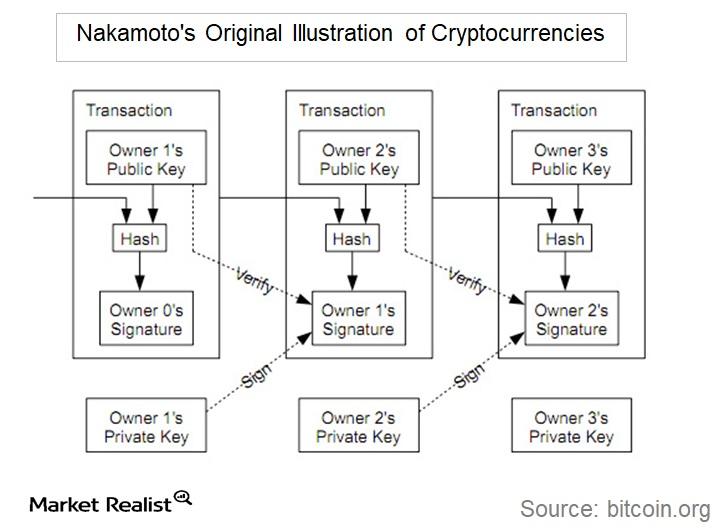
On Halloween of 2008, Satoshi Nakamoto published a document titled Bitcoin: A Peer-to-Peer Electronic Cash System to a cryptography mailing list. This document, now famously known as the Bitcoin Whitepaper, outlined the mathematical and logical framework for the network. It described how a “blockchain”—a chain of timestamped blocks—would allow for a secure, decentralized record of transactions. This date marks the conceptual birth of Bitcoin and remains one of the most important dates in the history of modern finance.
January 3, 2009: Mining the First 50 BTC
The transition from theory to reality occurred on January 3, 2009, when Nakamoto mined the “Genesis Block” (Block 0). This was the first block of the Bitcoin blockchain, and it effectively launched the network. With the mining of this block, the first 50 Bitcoins were brought into existence. Unlike modern mining, which requires massive data centers, the Genesis Block was likely mined on a standard personal computer, marking the humble beginnings of what would become a global financial revolution.

The Chancellor on Brink of Second Bailout: The Embedded Message
Inside the code of the Genesis Block, Satoshi Nakamoto left a permanent message: “The Times 03/Jan/2009 Chancellor on brink of second bailout for banks.” This headline, taken from The Times newspaper in London, served as a timestamp to prove the block wasn’t pre-mined. More importantly, it served as a political and financial statement. It anchored the creation of Bitcoin to the failures of the traditional banking system, reminding future users that Bitcoin was designed as an alternative to the era of endless bank bailouts.
Bitcoin as a New Asset Class: The Early Years of Valuation
In its first year of existence, Bitcoin had no market value. It was an experiment shared among a small group of “cypherpunks” and programmers. However, as the network grew, the financial world began to take notice of its potential as an investment.
The Famous 10,000 BTC Pizza: Determining Initial Value
For over a year after its creation, Bitcoin was essentially worthless in fiat terms. This changed on May 22, 2010, when a programmer named Laszlo Hanyecz famously traded 10,000 BTC for two Papa John’s pizzas. At the time, the trade was valued at roughly $41. This event is celebrated annually as “Bitcoin Pizza Day” because it represented the first time the digital currency was used as a medium of exchange for a physical good. It established a baseline for valuation, proving that Bitcoin had real-world purchasing power.
The Shift from Hobbyist Experiment to Investment Vehicle
As more people began to mine and trade Bitcoin, the first exchanges emerged. Early platforms like Mt. Gox allowed users to trade BTC for USD, leading to the first significant price spikes. Investors began to view Bitcoin not just as “digital cash,” but as “digital gold.” The narrative shifted toward long-term value storage. The financial community started to analyze Bitcoin’s “halving” cycles—events that occur every four years to reduce the rate of new supply—recognizing that these cycles created a predictable, deflationary economic model that was highly attractive to contrarian investors.
Market Volatility and the Maturation of Crypto-Finance
The early 2010s were defined by extreme volatility. Bitcoin would rise from pennies to $30, then crash to $2, only to rise again to $1,000. For the traditional financial world, this volatility was a sign of a “bubble.” However, for a new generation of digital-native investors, these swings represented the growing pains of a nascent asset class. Each crash failed to destroy the network, and with each recovery, the “Money” case for Bitcoin grew stronger, attracting more capital and sophisticated financial tools like futures and margin trading.
The Financial Legacy: How Bitcoin Changed Modern Portfolio Theory
Looking back at the period when Bitcoin was created, it is clear that its impact goes far beyond the technology itself. It has forced a complete re-evaluation of how we define “value” and “wealth” in the 21st century.
Decentralization as Financial Security
The creation of Bitcoin introduced the concept of self-custody. For the first time in history, an individual could hold a significant amount of wealth in a digital format without needing a bank to secure it. In the world of personal finance, this “be your own bank” philosophy provides a hedge against geopolitical instability, bank freezes, and currency devaluations. For investors in developing nations with unstable fiat currencies, the creation of Bitcoin in 2009 provided a lifeline and a stable alternative for wealth preservation.
Institutional Adoption and the Spot ETF Revolution
What began as an anonymous whitepaper in 2008 has now reached the highest echelons of Wall Street. The recent approval of Spot Bitcoin ETFs (Exchange-Traded Funds) by major financial institutions like BlackRock and Fidelity marks the ultimate validation of Bitcoin as a legitimate asset class. These financial products allow traditional investors to gain exposure to Bitcoin within their retirement accounts and brokerage portfolios, bridging the gap between the radical invention of 2009 and the conservative world of institutional finance.
The Future of Bitcoin in a Digitalized Global Economy
As we move further away from the date of Bitcoin’s creation, its role in the global economy continues to expand. It is no longer just a “side hustle” or a niche tech project; it is a core component of modern portfolio theory. Financial advisors now frequently discuss a 1% to 5% allocation to Bitcoin as a way to diversify against the risks of traditional equity and bond markets.
The creation of Bitcoin in the wake of the 2008 crisis was a masterclass in financial timing. By providing a transparent, capped, and decentralized alternative to fiat money, Satoshi Nakamoto didn’t just create a new piece of software—they created a new financial era. Whether viewed as a hedge against inflation or a high-growth technology investment, Bitcoin remains the most significant financial innovation of the digital age. Understanding its origins is the first step for any investor looking to navigate the complex landscape of 21st-century wealth.
aViewFromTheCave is a participant in the Amazon Services LLC Associates Program, an affiliate advertising program designed to provide a means for sites to earn advertising fees by advertising and linking to Amazon.com. Amazon, the Amazon logo, AmazonSupply, and the AmazonSupply logo are trademarks of Amazon.com, Inc. or its affiliates. As an Amazon Associate we earn affiliate commissions from qualifying purchases.