
In the realm of personal finance, travel often represents one of the most significant discretionary expenses an individual or family will face. Unlike a fixed monthly mortgage or a standard utility bill, the cost of airfare is notoriously volatile, fluctuating based on complex algorithms, global economic shifts, and consumer behavior. For the financially savvy, mastering the timing of a flight purchase is not merely a matter of convenience; it is a strategic move in capital preservation. Understanding when to buy flights is an exercise in market timing, much like investing in the stock market, where the goal is to minimize expenditure while maximizing the value of the service received.
The Macro-Economics of Airfare: Understanding Variable Pricing
To understand when flights are cheapest, one must first understand the economic principles that govern airline pricing. Airlines do not use fixed pricing models; instead, they employ sophisticated “Yield Management” or “Revenue Management” systems. These systems are designed to maximize the revenue for every single seat on an aircraft by constantly adjusting prices based on demand, remaining inventory, and historical data.
The Dynamics of Supply and Demand
At its core, the price of a flight is a real-time reflection of supply and demand. However, unlike a simple retail environment, the “supply” (seats on a plane) is perishable. Once a flight takes off, an empty seat has zero value. Therefore, airlines use aggressive pricing to ensure the plane is full enough to cover operating costs while high enough to generate profit. From a financial perspective, identifying the “trough” in this demand curve is the key to finding the lowest price. Typically, this trough occurs when leisure travelers are not competing with high-budget corporate travelers.
Revenue Management Systems: The Silent Financial Operators
Airlines employ thousands of analysts and high-powered AI to segment customers into “buckets.” There are leisure travelers (who are price-sensitive and book early) and business travelers (who are price-insensitive and book late). The financial strategy for a consumer is to ensure they fall into the lowest-priced bucket. This requires bypassing the airline’s attempts to “upsell” you as the departure date nears. Understanding that pricing is algorithmic—not personal—allows a traveler to approach the purchase with a clinical, data-driven mindset.
Why Last-Minute Booking is a Financial Risk
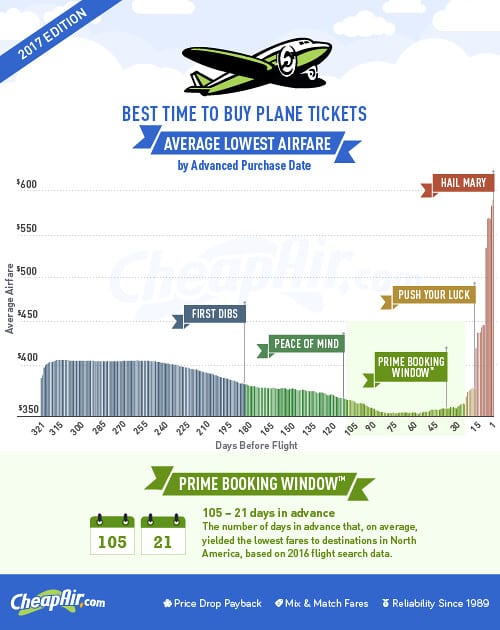
The age-old myth that airlines “fire sale” seats at the last minute to fill a plane is, in modern aviation, largely false. In the current economic landscape, airlines would rather leave a seat empty than devalue their brand or allow business travelers to wait for a last-minute discount. Financially, booking within 14 days of a flight is almost always a losing strategy, as prices tend to spike exponentially to exploit those who have no choice but to travel.
Strategic Timing: Data-Driven Booking Windows
While there is no “magic day” to buy a ticket that applies to every route, historical financial data suggests specific windows where the probability of hitting the lowest price is highest. Treating these windows as “buy zones” can lead to significant annual savings.
The “Goldilocks Window” for Domestic and International Travel
For domestic travel, the financial “sweet spot” typically falls between one and three months before departure. During this window, airlines have enough data to predict demand but are still hungry enough for early capital to offer lower fares. For international travel, the window expands to two to eight months. Booking outside these windows usually results in paying a premium for either “early-bird” uncertainty or “late-comer” desperation.
Dispelling the “Tuesday Afternoon” Myth
A common piece of outdated financial advice is that flights are cheapest if purchased at 3:00 PM on a Tuesday. While this may have been true when airlines manually updated fares once a week, modern systems update prices every second. The day you buy the ticket is far less important than the day you fly. Financially, your focus should be on the departure date rather than the transaction date, although avoiding weekend purchases can sometimes circumvent minor price bumps caused by increased search traffic.
Seasonal Fluctuations and Holiday Surcharges
In personal finance, we often discuss “peak” and “off-peak” spending. Travel is the ultimate example. The “cheapest” time is almost always during the “shoulder seasons”—the periods between peak summer/holidays and the dead of winter. For example, flying to Europe in late October or early May offers a significantly better Return on Investment (ROI) in terms of experience versus cost than flying in July.
Leveraging Financial Tools and Tech for Cost Reduction
In the digital age, a savvy investor uses tools to track their portfolio. Similarly, a savvy traveler should use financial tools to track airfare. These tools act as a hedge against price volatility, ensuring you don’t overpay for your “travel asset.”
Price Tracking and Prediction Algorithms
Tools like Google Flights, Hopper, and Kayak are essential for financial oversight. These platforms allow users to set price alerts, which function similarly to “limit orders” in stock trading. By setting a target price based on historical averages, you remove the emotional impulse to buy out of fear of prices rising, allowing the data to trigger your purchase when the price hits your predetermined “buy” zone.
The Role of Credit Card Rewards and Points in Travel Arbitrage
A sophisticated approach to the cost of flights involves looking beyond the cash price. The use of travel reward credit cards can effectively bring the cost of a flight down to near zero. By treating credit card points as a secondary currency, travelers can perform “arbitrage”—earning points on daily expenditures (like groceries or gas) and redeeming them for high-value international flights. This is a crucial component of modern wealth management: maximizing the value of every dollar spent.
Utilizing “Hidden City” Ticketing and Multi-City Routes
For those willing to engage in more complex financial maneuvers, “hidden city” ticketing (where you get off at a layover city because it’s cheaper than a direct flight) or booking “open-jaw” tickets can save hundreds. However, from a risk management perspective, one must be aware of airline terms of service. Just as a high-risk investment can yield high rewards, these strategies require a deep understanding of the rules to avoid financial penalties.
Behavioral Finance: How Flexibility Impacts Your Wallet
The psychological aspect of money—behavioral finance—plays a massive role in travel costs. The more rigid your requirements, the more you will pay. Flexibility is, quite literally, a form of currency in the travel industry.
The Fiscal Benefit of Mid-Week Departures
Data consistently shows that flying on Tuesdays, Wednesdays, or Saturdays is significantly cheaper than flying on Fridays or Sundays. By shifting your schedule by just 24 to 48 hours, you can often reduce your fare by 20% to 40%. From a budgeting perspective, this “flexibility discount” can then be reallocated to better accommodations or invested back into a savings account.
Airport Selection: The Cost-Benefit Analysis of Secondary Hubs
When calculating the true cost of a flight, one must consider the “all-in” price. Sometimes, flying into a secondary airport (e.g., London Gatwick instead of Heathrow, or Oakland instead of San Francisco) can result in a much lower airfare. However, a proper financial analysis must include the cost of ground transportation to the final destination. A $50 saving on a flight is erased if the Uber to the city center costs $70.
Setting a “Strike Price” for Your Travel Budget
In trading, a strike price is the price at which a contract can be exercised. In travel, you should have a “strike price” for your desired destination. If you know that a flight to Tokyo usually costs $1,200, and you see it for $850, you should “strike” immediately. Many travelers lose money by waiting for a “better” deal that never comes. Recognizing a good value when it appears is a hallmark of financial literacy.
Long-Term Travel Wealth Management
Viewing travel as a recurring line item in your annual budget rather than a one-off luxury allows for better long-term financial health.
Building a Dedicated Travel Sinking Fund
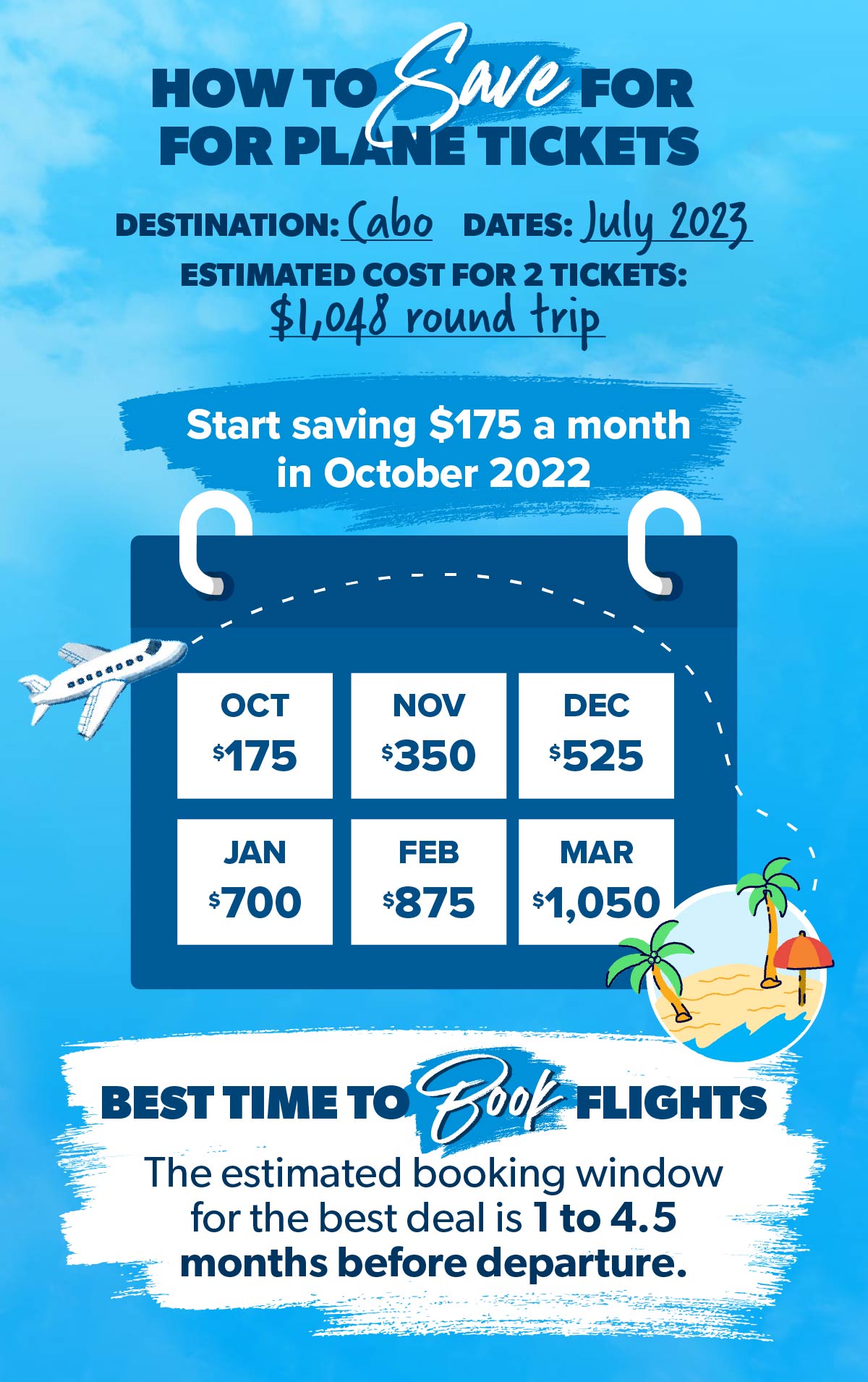
Rather than putting a flight on a high-interest credit card, the financially responsible approach is to utilize a “sinking fund.” This is a high-yield savings account where you deposit a set amount each month specifically for travel. When the “cheapest time to buy” arrives, you have the liquidity to act instantly, avoiding interest debt and capital stress.

Subscription Models and Airline Loyalty: Is the Investment Worth It?
Finally, one must consider the ROI of loyalty. Is it cheaper to always buy the lowest fare across all airlines, or to stick with one to earn elite status? For the frequent traveler, the “soft” financial benefits of status—free checked bags, lounge access (which saves on food costs), and complimentary upgrades—can outweigh the occasional $50 difference in base fare. This is a calculation of lifetime value versus immediate cost, a standard practice in business finance.
By treating the search for cheap flights as a financial discipline rather than a game of luck, travelers can significantly reduce their expenditures. The “cheapest time” is a confluence of strategic timing, the use of analytical tools, and the behavioral flexibility to move when the market is in your favor. In the end, the money saved on the flight is money that can be put toward your next investment, your retirement, or simply a better experience at your destination.
aViewFromTheCave is a participant in the Amazon Services LLC Associates Program, an affiliate advertising program designed to provide a means for sites to earn advertising fees by advertising and linking to Amazon.com. Amazon, the Amazon logo, AmazonSupply, and the AmazonSupply logo are trademarks of Amazon.com, Inc. or its affiliates. As an Amazon Associate we earn affiliate commissions from qualifying purchases.