
The phrase “Black Monday” evokes a sense of dread and significant financial turmoil, often used metaphorically to describe any major market downturn. However, for those deeply entrenched in finance and economic history, Black Monday refers to a singular, specific event: the most severe one-day stock market crash in history. Understanding this pivotal moment is not merely an academic exercise; it offers invaluable insights into market psychology, systemic risks, regulatory evolution, and the enduring principles of investing. For investors, financial professionals, and anyone concerned with economic stability, a comprehensive grasp of Black Monday’s causes, unfolding, and legacy is crucial for navigating the complexities of modern financial markets.
The Definitive Date and Immediate Impact
Black Monday did not happen without warning, but its speed and severity caught the world off guard. Pinpointing the exact date is the first step in unraveling this historical financial anomaly.
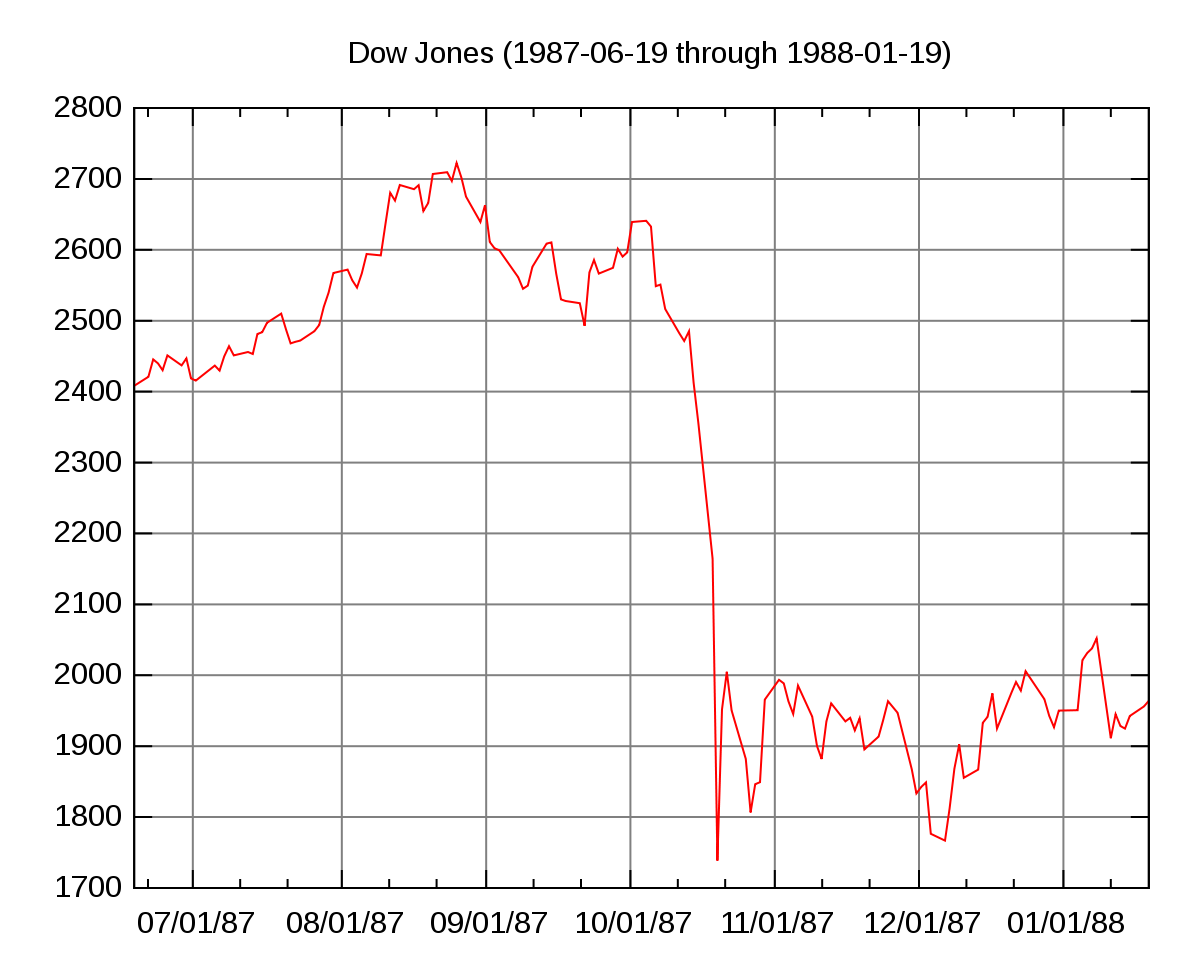
Pinpointing Black Monday: October 19, 1987
Black Monday occurred on Monday, October 19, 1987. On this fateful day, the Dow Jones Industrial Average (DJIA) plummeted by an astonishing 508 points, translating to a staggering 22.61% loss in a single trading session. To put this into perspective, if a similar percentage drop were to occur today, with the Dow around 38,000 points, it would mean a fall of over 8,600 points. This percentage decline remains the largest one-day market crash in the history of the DJIA, far surpassing even the most dramatic days of the Great Depression. The magnitude of this sudden and violent correction sent shockwaves across the globe, leaving investors bewildered and regulators scrambling for solutions.
The Scale of the Collapse: A Global Ripple Effect
While the DJIA’s plunge often takes center stage, Black Monday was not confined to the United States. Its effects rippled across international markets with alarming speed. Prior to the U.S. market open, stock exchanges in Hong Kong, London, Sydney, and Tokyo had already experienced significant declines. The Australian market, for instance, lost over 40% of its value by the end of October 1987, making it the most severely affected developed market outside of Hong Kong. This global synchronization highlighted the increasing interconnectedness of financial markets, a trend that would only intensify in the decades that followed. The rapid transmission of panic across time zones and continents underscored the systemic vulnerabilities present in a globally integrated financial system. Billions of dollars in wealth evaporated overnight, impacting pension funds, institutional investors, and individual portfolios alike.
Anatomy of a Crash: What Happened on That Day
The trading day of October 19, 1987, was characterized by an unprecedented cascade of selling. The initial declines were exacerbated by technical trading strategies, particularly “portfolio insurance.” This strategy, designed to protect large portfolios from losses by selling futures contracts as the market fell, inadvertently amplified the downward spiral. As prices dropped, these programs automatically triggered more sell orders, creating a vicious feedback loop. Liquidity dried up as buyers disappeared, further accelerating the decline. Margin calls skyrocketed, forcing more investors to sell their holdings to meet obligations. The sheer volume of sell orders overwhelmed trading systems, causing significant delays and pricing dislocations. Panic selling became widespread, driven by fear and the lack of clear information, demonstrating how quickly market sentiment can turn from exuberance to extreme despair.
Underlying Causes and Contributing Factors
While the immediate catalyst was a flurry of selling, Black Monday was the culmination of several underlying economic conditions and burgeoning technological trends that created a fragile environment ripe for a severe correction.
Pre-Crash Market Conditions: Overvaluation and Speculation
Leading up to Black Monday, the U.S. stock market had experienced an extended bull run. From August 1982 to August 1987, the DJIA had more than tripled in value, with many stocks trading at historically high price-to-earnings ratios. This period was marked by growing investor optimism, fueled by a strong economic recovery and increasing corporate profits. However, this optimism verged on speculation, with many market participants exhibiting irrational exuberance. There was a widespread belief that the market could only go up, leading to increasingly risky investment strategies and a detachment of stock prices from underlying fundamental values. This overvaluation created a brittle market susceptible to any significant negative shock.
The Role of Program Trading and Portfolio Insurance
Perhaps the most significant technical factor contributing to Black Monday’s severity was the widespread adoption of “portfolio insurance.” This was a hedging strategy employed by institutional investors to protect against large market declines. It involved using computer models to automatically sell stock index futures when the market fell, thereby “insuring” the portfolio’s value. In theory, it seemed sound; in practice, it became a massive accelerant. As the market started to drop on October 19th, these programmed sell orders kicked in simultaneously, creating an enormous wave of selling pressure on the futures markets. This, in turn, drove down prices in the underlying cash equity markets through arbitrage, triggering more portfolio insurance selling, and so on. The cascading effect of these automated trades overwhelmed the market’s capacity to absorb the selling pressure.
Macroeconomic Pressures: Trade Deficits and Interest Rates
Beyond market mechanics, several macroeconomic factors created an environment of unease. The United States was running a significant trade deficit, indicating a perceived weakness in the U.S. economy. Concurrently, the Federal Reserve had begun raising interest rates to combat inflation, which typically dampens economic growth and corporate earnings. Rising interest rates make bonds more attractive relative to stocks, potentially drawing capital away from the equity markets. There were also concerns about the stability of the U.S. dollar and growing geopolitical tensions. These macroeconomic uncertainties, though not direct causes, fostered a climate of anxiety that made investors more sensitive to negative news and quicker to panic.
Psychological Factors: Panic and Herd Behavior
Underpinning all the technical and economic factors was the undeniable power of human psychology. Once the market began its precipitous fall, panic quickly set in. Individual and institutional investors, seeing their portfolios erode rapidly, succumbed to herd behavior, selling their holdings indiscriminately to cut losses. The lack of clear communication from market authorities and the overwhelming speed of the decline fueled fear and uncertainty. The inability of brokers to answer calls, coupled with the sheer volume of sell orders, created a sense of chaos and helplessness. This collective psychological shift from optimism to abject fear played a crucial role in transforming a significant correction into a historic crash.
The Aftermath and Regulatory Responses
The days following Black Monday were fraught with tension, as financial authorities scrambled to prevent a complete systemic meltdown. Their interventions and the subsequent regulatory changes profoundly reshaped market operations.
Short-Term Market Recovery and Policy Interventions
Miraculously, the market did not collapse entirely after Black Monday. The recovery was swift, largely due to decisive actions by the Federal Reserve and other central banks. The Fed, under Chairman Alan Greenspan, immediately announced its readiness to provide liquidity to the financial system, reassuring banks that they would not run short of funds. This explicit commitment to support the market played a critical psychological role, signaling that a systemic collapse would be prevented. Additionally, major financial institutions stepped in to provide liquidity and support key stocks. This coordinated effort helped to stabilize markets in the ensuing days, preventing the panic from spiraling into a prolonged depression.
Introducing Circuit Breakers and Market Protections
One of the most significant regulatory changes born out of Black Monday was the introduction of “circuit breakers.” These are temporary trading halts triggered when major stock indexes fall by a predetermined percentage within a single day. The idea is to provide a cooling-off period during extreme market volatility, allowing investors to pause, reassess information, and prevent unchecked panic selling from overwhelming the market. Initially implemented in 1988, these rules have been refined over time and remain a cornerstone of market regulation. Black Monday also prompted a re-evaluation of margin requirements, clearing processes, and the interplay between futures and cash markets to enhance overall market stability.
Lessons Learned in Risk Management and Systemic Stability
Black Monday served as a harsh lesson in risk management, particularly for large institutional investors. It highlighted the dangers of over-reliance on automated trading strategies without adequate human oversight and the potential for seemingly innocuous hedging strategies to exacerbate volatility. The event also underscored the importance of liquidity in financial markets and the critical role of central banks as lenders of last resort during crises. Regulators gained a deeper understanding of systemic risk – the risk of collapse of an entire financial system or market – and the need for robust mechanisms to prevent contagion. The crash catalyzed discussions and reforms aimed at strengthening market infrastructure and increasing transparency.
Black Monday’s Enduring Legacy on Modern Investing
Even decades later, Black Monday continues to cast a long shadow over financial markets, influencing everything from investor behavior to the design of financial products.
Shaping Investor Psychology and Market Volatility
The memory of Black Monday has ingrained itself into the collective consciousness of investors. It serves as a stark reminder of the potential for extreme market volatility and the speed with which fortunes can change. This historical context influences investor behavior, making many more cautious during periods of rapid ascent and more prone to seeking diversification and risk mitigation strategies. While the market has seen numerous corrections since 1987, the 22.61% single-day drop remains a benchmark for catastrophic events, contributing to a permanent sense of vigilance regarding market health and stability. It reinforces the idea that what goes up can indeed come down, often unpredictably.
The Evolution of Financial Technology and Risk Models
Ironically, while program trading was a culprit in 1987, Black Monday spurred significant advancements in financial technology and risk modeling. The inadequacy of communication systems and trading infrastructure during the crash highlighted the need for more robust, real-time systems. Today’s high-frequency trading and sophisticated algorithmic strategies operate on vastly superior technological foundations, incorporating lessons from 1987 regarding market depth, liquidity, and cross-market dependencies. Risk models have become more complex, attempting to account for tail risks and systemic interconnections, although the challenge of predicting and preventing future “Black Swan” events remains.
Preparing for Future Market Downturns: A Modern Perspective
Black Monday reinforced the timeless investing principle of having a long-term perspective and avoiding emotional reactions during market turbulence. Modern financial planning emphasizes diversification across asset classes, regular rebalancing, and maintaining an emergency fund. For institutional investors, robust stress testing and scenario analysis are standard practices. While the specific triggers and mechanisms of future crises may differ, the core lessons from Black Monday – the dangers of speculation, the power of panic, and the importance of regulatory oversight – remain highly relevant in preparing portfolios and financial systems for inevitable future downturns.
Is Another Black Monday Inevitable?
The question of whether another Black Monday is inevitable is a perennial concern for investors and policymakers alike. While market crashes are a recurring feature of economic cycles, the specific circumstances and preventative measures in place today make a precise repeat of 1987 unlikely.
Distinguishing Between Corrections and Crashes
It’s crucial to differentiate between market corrections and full-blown crashes. Corrections, typically defined as a 10% to 20% decline from a recent peak, are relatively common and a healthy part of the market cycle, serving to purge excesses. Crashes, like Black Monday, are far more severe, characterized by sudden, drastic, and often systemic declines. While corrections are expected, the unprecedented nature of Black Monday’s single-day drop makes it a distinct event. Modern markets, equipped with circuit breakers and enhanced regulatory frameworks, are designed to mitigate the speed and depth of such rapid, unchecked declines, aiming to transform potential crashes into more manageable corrections.
The Role of Central Banks and Global Interconnectivity
Central banks, armed with the lessons of 1987 and subsequent crises like the 2008 financial meltdown, are far more proactive in providing liquidity and reassurance during times of stress. Their readiness to intervene can significantly temper panic. However, the increased global interconnectivity also presents new challenges. While markets are more robust, the potential for a crisis originating in one region to rapidly spread worldwide is ever-present. Financial crises today are often complex, involving novel financial instruments and interdependencies that require sophisticated global coordination to address.

Personal Strategies for Financial Resilience
For individual investors, the best defense against any potential “Black Monday” is a well-thought-out investment strategy focused on long-term goals, diversification, and emotional discipline. Avoid timing the market, resist the urge to panic sell during downturns, and consistently invest through dollar-cost averaging. Maintaining a diversified portfolio across various asset classes, geographies, and industries can cushion the blow of a severe decline in any single area. Furthermore, having a cash reserve for emergencies ensures that you won’t be forced to sell assets at distressed prices to cover immediate needs. While we cannot predict the future, understanding history, particularly events like Black Monday, provides an invaluable roadmap for building financial resilience.
aViewFromTheCave is a participant in the Amazon Services LLC Associates Program, an affiliate advertising program designed to provide a means for sites to earn advertising fees by advertising and linking to Amazon.com. Amazon, the Amazon logo, AmazonSupply, and the AmazonSupply logo are trademarks of Amazon.com, Inc. or its affiliates. As an Amazon Associate we earn affiliate commissions from qualifying purchases.