
For anyone involved in the world of finance, from seasoned institutional investors to individual day traders and long-term savers, understanding the operational hours of the New York Stock Exchange (NYSE) is fundamental. It’s not just a matter of knowing when you can buy or sell; it’s about comprehending the very pulse of market activity, managing risk, executing strategies, and staying ahead in an ever-evolving financial landscape. The question “When does the NYSE close today?” might seem simple on the surface, but its implications reach deep into investment strategy, financial planning, and even global economic interconnectedness. This comprehensive guide delves into the standard NYSE trading schedule, explores exceptions like holidays and early closures, provides a global perspective on market hours, and discusses the strategic importance of this knowledge for every participant in the financial markets.
Understanding Standard NYSE Trading Hours
The New York Stock Exchange operates on a meticulously structured schedule designed to facilitate orderly trading while accommodating the needs of a vast ecosystem of market participants. These fixed hours are more than just arbitrary timings; they represent a carefully considered framework that has evolved over decades to balance accessibility, market liquidity, and operational efficiency.
The Regular Trading Session: Open and Close
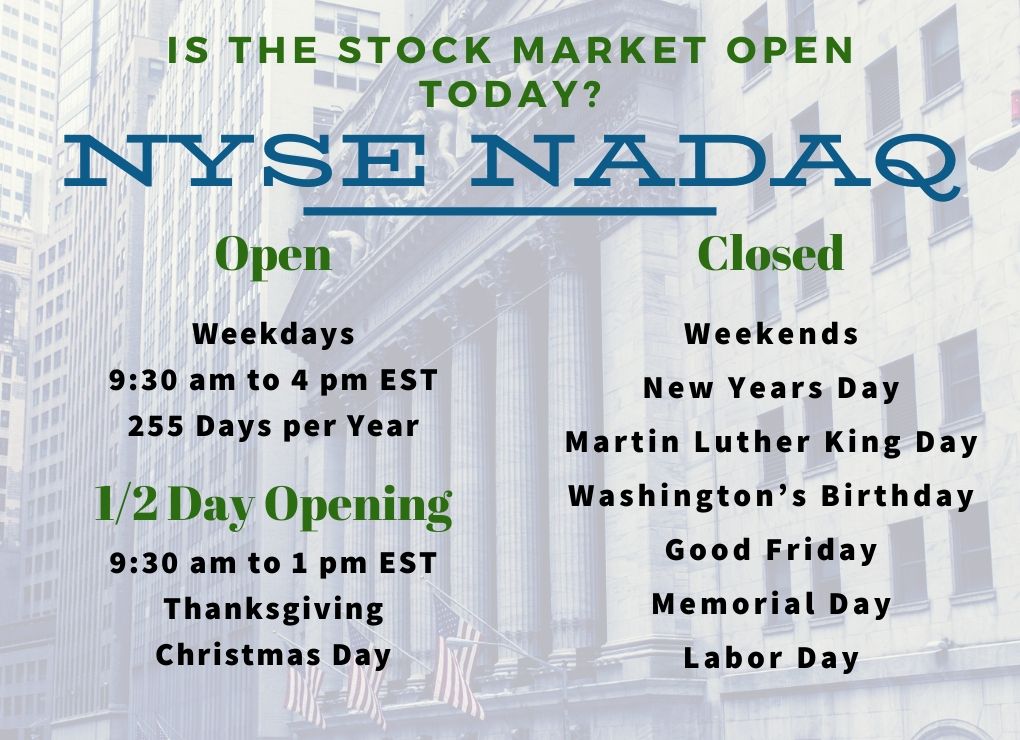
At the heart of the NYSE’s operations is its regular trading session, a period during which the vast majority of transactions occur and market prices are established through continuous auction. This session begins at 9:30 AM Eastern Time (ET) and concludes at 4:00 PM ET on weekdays. For most investors, these are the critical hours during which they can actively trade stocks and other listed securities. The opening bell ceremony, often featuring a prominent company or individual, signifies the start of the trading day, while the closing bell marks its end, often accompanied by a flurry of last-minute trading activity. This structured period ensures that market participants globally have a clear, consistent window to engage with one of the world’s most influential financial exchanges.
Pre-Market and After-Hours Trading: Extending the Day
While the regular 9:30 AM to 4:00 PM ET window defines the core trading day, the financial markets don’t entirely go dormant outside these hours. Modern electronic trading systems have enabled pre-market and after-hours trading sessions, extending the opportunities for investors to react to news and execute trades.
- Pre-Market Trading typically begins as early as 4:00 AM ET and runs until the market opens at 9:30 AM ET.
- After-Hours Trading commences immediately after the 4:00 PM ET close and can extend as late as 8:00 PM ET.
These extended hours are primarily facilitated through Electronic Communication Networks (ECNs) rather than the traditional exchange floor. While they offer flexibility, it’s crucial for investors to understand that pre-market and after-hours sessions often exhibit lower liquidity, wider bid-ask spreads, and higher volatility compared to the regular session. This can lead to greater price discrepancies and increased risk, making them generally more suitable for professional traders or those needing to react urgently to breaking news, such as earnings reports released outside standard hours.
The Rationale Behind Fixed Trading Hours
The persistence of fixed trading hours, despite the 24/7 nature of much of the digital world, is rooted in several key rationales. Firstly, it concentrates liquidity, ensuring that a sufficient number of buyers and sellers are present simultaneously to facilitate efficient price discovery and minimize market manipulation. Without concentrated hours, trading could become too fragmented and illiquid, leading to greater volatility and less fair pricing. Secondly, fixed hours provide a necessary break for market participants to process information, strategize, and manage their positions without the constant pressure of live trading. This downtime allows for crucial administrative tasks, system maintenance, and a period of reflection. Lastly, it aligns with global financial traditions and provides a predictable framework for international investors who need to coordinate their activities across different time zones.
Navigating Market Holidays and Early Closures
While the 9:30 AM to 4:00 PM ET schedule is standard, the NYSE, like any major institution, observes certain holidays and occasionally implements abbreviated trading sessions. Being aware of these exceptions is just as important as knowing the regular hours, as they directly impact trading opportunities and settlement cycles.
Official NYSE Holidays: A Calendar for Investors
The NYSE observes a set calendar of federal holidays, during which the exchange remains completely closed. These closures are typically aligned with major U.S. holidays, providing both a break for market participants and a time when financial activity generally slows across the nation. Common holidays include:
- New Year’s Day
- Martin Luther King, Jr. Day
- Presidents’ Day
- Good Friday
- Memorial Day
- Juneteenth National Independence Day
- Independence Day
- Labor Day
- Thanksgiving Day
- Christmas Day
It’s important to note that if a holiday falls on a weekend, the NYSE may observe it on the preceding Friday or the following Monday. Investors should always consult the official NYSE website or reliable financial news sources for the exact holiday schedule each year, as slight variations can occur. Trading platforms and brokerage accounts typically provide alerts and updated calendars to help clients plan accordingly.
Half-Day Sessions: Planning for Abbreviated Trading
In addition to full-day closures, the NYSE sometimes operates on a half-day schedule, closing earlier than the standard 4:00 PM ET. These abbreviated sessions are most commonly seen on the day before or after certain major holidays, such as the day after Thanksgiving (Black Friday) or Christmas Eve. During these days, the market typically closes at 1:00 PM ET.
Understanding these early closures is crucial for traders and investors. They significantly shorten the window for executing trades, reacting to news, and managing positions. Orders placed late in the day might not be filled, or they may carry over to the next trading day. For those relying on intraday volatility or specific time-sensitive strategies, a half-day session requires careful planning and potentially adjusted execution tactics to avoid missing opportunities or incurring unexpected risks.
Impact of Unscheduled Closures or Delays (Rare Events)
While extremely rare, the NYSE may also experience unscheduled closures or delays due to unforeseen circumstances. Historically, these have been triggered by major national crises, natural disasters, or significant technical malfunctions. For instance, the market was closed for several days after the September 11th attacks in 2001 and briefly during major power outages. In such extraordinary events, official announcements are swiftly disseminated through all major financial news channels and the NYSE’s official communication channels. While these events are outliers, they underscore the importance of staying connected to reliable news sources and having contingency plans for managing investments during times of extreme uncertainty. The stability and resilience of the NYSE’s infrastructure mean such disruptions are minimized, but preparedness remains a virtue for any serious investor.
The Global Perspective: How Other Markets Operate
Understanding NYSE hours in isolation provides only part of the picture. In today’s interconnected financial world, U.S. market hours are just one component of a 24-hour global trading cycle. How other major exchanges operate, and how they interact with NYSE hours, is critical for investors with international portfolios or those involved in global macro strategies.
Contrasting US Exchange Hours with International Markets
Different countries and regions have their own unique market hours, often influenced by local business culture, time zones, and public holidays.
- Asian Markets: Exchanges like the Tokyo Stock Exchange (TSE), Hong Kong Stock Exchange (HKEX), and Shanghai Stock Exchange (SSE) typically open when the NYSE is closed, effectively kicking off the global trading day. For example, Tokyo typically opens around 8:00 PM ET the previous day and closes around 2:00 AM ET.
- European Markets: Major exchanges such as the London Stock Exchange (LSE), Euronext (Paris, Amsterdam, Brussels), and Frankfurt Stock Exchange (Xetra) generally overlap with the latter part of Asian trading and the early part of U.S. trading hours. London, for instance, operates from 3:00 AM ET to 11:30 AM ET.
This staggered schedule creates a continuous flow of trading activity around the clock. As one major market closes, another is either opening or in full swing, ensuring that financial news and economic data can be priced into various assets almost instantaneously across different time zones.
Implications for Global Investors and Arbitrage

For investors with a global outlook, understanding this mosaic of market hours is paramount.
- Continuous Monitoring: News breaking in Asia during the U.S. night can affect U.S. stocks when they open, meaning that those engaged in global investing may need to monitor international markets even when the NYSE is closed.
- Arbitrage Opportunities: Discrepancies in pricing for dually listed stocks (companies traded on multiple exchanges) or related assets (like ETFs tracking global indices) can present arbitrage opportunities, though these are often fleeting and require sophisticated tools.
- Currency Markets: The foreign exchange (forex) market, which is truly 24/5 (closing only for weekends), serves as a constant backdrop, with currency movements often influencing equity markets globally.
Sophisticated global investors and institutional desks often operate around the clock, with teams in different regions handing off positions as trading shifts from one major financial center to the next.
The 24/7 Nature of Certain Financial Instruments
While equity exchanges like the NYSE maintain fixed hours, certain financial instruments and markets operate almost continuously.
- Cryptocurrencies: Markets for Bitcoin, Ethereum, and other cryptocurrencies trade 24 hours a day, 7 days a week. Their prices can fluctuate wildly irrespective of traditional stock market hours, sometimes influencing investor sentiment that eventually spills over into traditional assets.
- Forex Market: As mentioned, the spot forex market allows currency trading practically around the clock from Monday morning in Asia until Friday afternoon in New York.
- Futures and Options on Indices: While tied to underlying assets traded on exchanges with fixed hours, futures and options contracts on major indices (like S&P 500 futures) often have extended trading hours far beyond the cash market, allowing for risk management and speculative activity during off-hours.
This distinction highlights the evolving nature of financial markets, where traditional fixed-hour trading coexists with a growing segment of always-on, digitally native assets and derivatives. Investors must tailor their strategies and risk management to the specific instruments and markets they choose to engage with.
Strategic Implications for Investors and Traders
The NYSE’s operational hours are not merely administrative details; they have profound strategic implications for how investors and traders manage their portfolios, execute orders, and perceive market dynamics. Understanding these nuances can be the difference between successful execution and missed opportunities or unexpected losses.
Real-Time Monitoring vs. Long-Term Investing
The relevance of daily closing times varies significantly depending on an investor’s time horizon and strategy.
- Day Traders and Short-Term Investors: For these participants, knowing the exact open and close is paramount. Every minute of the trading day can present an opportunity or a risk. They often monitor real-time price movements, volume, and news to make split-second decisions. The closing bell represents a critical juncture where positions are often squared away to avoid overnight risks or left open with specific stop-loss or take-profit orders.
- Long-Term Investors: While less concerned with intraday fluctuations, even long-term investors benefit from understanding market hours. Major news or economic data released outside trading hours can significantly impact a stock’s opening price the next day (a “gap up” or “gap down”). Long-term investors need to be aware of how these overnight developments might affect their portfolio’s value and their ability to rebalance or make new investments.
Ultimately, the market’s fixed hours create periods of heightened activity and liquidity, followed by periods of relative calm where positions are held and information is processed. This rhythm fundamentally shapes trading psychology and market behavior.
Managing Orders: Market vs. Limit Orders Around Close
The type of order an investor places becomes particularly critical around the market’s close.
- Market Orders: A market order instructs a broker to buy or sell a security immediately at the best available current price. While simple, if placed just before the close, especially during periods of high volatility, the execution price might be less favorable than anticipated, as prices can shift rapidly in the final minutes. There’s also a risk that if an order isn’t fully filled by the bell, the remainder might be cancelled or carried over.
- Limit Orders: A limit order specifies a maximum price an investor is willing to pay (for buying) or a minimum price they are willing to accept (for selling). These orders offer price protection but might not be executed if the market price doesn’t reach the specified limit before the close. Investors often use “Good ‘Til Cancelled” (GTC) limit orders, which remain active for a specified period (or until cancelled) rather than expiring at the end of the trading day.
Understanding the implications of each order type, especially as liquidity can thin or volatility spike in the final moments of trading, is essential for avoiding unintended outcomes and ensuring trades are executed according to one’s strategy.
The “Closing Bell” Effect and End-of-Day Volatility
The final hour, and particularly the last few minutes, of the trading day are often characterized by heightened activity and increased volatility, a phenomenon sometimes referred to as the “closing bell effect.” Several factors contribute to this:
- Institutional Balancing: Large institutional investors and fund managers often execute significant block trades to balance their portfolios, meet redemption requests, or adjust exposure to indices.
- Market-on-Close (MOC) Orders: Many institutions and algorithmic traders place MOC orders, which are designed to be executed as close to the official closing price as possible. This influx of orders can create considerable buying or selling pressure.
- Momentum Trading: Short-term traders might try to capitalize on end-of-day momentum, pushing prices in one direction.
This concentrated activity can lead to larger price swings and increased volume, creating both opportunities and risks. While experienced traders might thrive in this environment, it can be a challenging period for less experienced investors to navigate. Understanding that the market’s closing moments can be disproportionately impactful helps investors avoid hasty decisions and manage their expectations regarding execution prices.
Tools and Resources for Staying Informed
In the fast-paced world of financial markets, staying informed about market hours, holidays, and any unexpected changes is non-negotiable. Fortunately, a wealth of tools and resources are available to help investors keep their finger on the pulse.
Official Exchange Websites and Financial News Outlets
The most authoritative source for NYSE trading hours and holiday schedules is, of course, the New York Stock Exchange’s official website. It provides up-to-date calendars, announcements, and any specific details regarding operations. Similarly, reputable financial news outlets like The Wall Street Journal, Bloomberg, Reuters, CNBC, and other established financial publications and websites regularly publish market holiday schedules and will be the first to report any unscheduled closures or significant delays. Subscribing to their newsletters or setting up news alerts can ensure you receive timely notifications.
Trading Platforms and Mobile Apps
Most modern online brokerage platforms and investment apps are designed with user convenience in mind and integrate real-time market information. They typically display the current market status (open, closed, pre-market, after-hours) and often include built-in calendars for upcoming market holidays and early closures. Many also offer customizable dashboards where you can see countdowns to market open or close. For active traders, these platforms are indispensable, providing not only trading capabilities but also critical operational information directly at their fingertips. Mobile versions of these apps ensure that investors can stay informed even when away from their desks.
Setting Up Alerts and Notifications
To avoid manually checking calendars every day, investors can leverage various alert systems:
- Brokerage Alerts: Many brokerage accounts allow you to set up email or push notifications for market openings, closings, and specific company news.
- Financial News Apps: Apps from major financial news providers often allow users to customize alerts for market-wide events, including closures.
- Calendar Integration: Some services allow you to import market holiday calendars directly into your personal digital calendar (e.g., Google Calendar, Outlook Calendar), providing automated reminders.
By proactively setting up these notifications, investors can ensure they are always aware of when the NYSE is open for business, when it closes, and when it will be observing a holiday, allowing them to adjust their investment plans and trading strategies accordingly.

Conclusion
The question “When does NYSE close today?” is more than a trivial inquiry; it’s a gateway to understanding the intricate dynamics of financial markets. From the consistent rhythm of its standard trading sessions to the planned interruptions of holidays and the dynamic extensions of pre- and after-hours trading, every aspect of the NYSE’s operational schedule holds strategic significance. For individual investors, knowing these times is crucial for effective order management, risk mitigation, and staying aligned with investment objectives. For global participants, it’s about navigating a complex tapestry of international exchanges that weave together a 24/7 financial world. By leveraging available resources and maintaining a diligent awareness of the market’s pulse, investors can confidently participate in the New York Stock Exchange, making informed decisions that contribute to their financial success. The clock never stops ticking in the world of finance, and knowing its rhythm is key to mastering its movements.