
In the world of finance, timing is often just as important as the assets you choose to hold. For the modern investor, the question “when do the stock markets close today” is frequently the starting point for a deeper dive into market mechanics, liquidity, and strategic execution. While the short answer for major U.S. exchanges is 4:00 PM Eastern Time, the reality of global finance is far more complex.
Understanding the nuances of market hours—including extended sessions, holiday schedules, and international time zones—is essential for anyone looking to navigate the markets with professional precision. This guide explores the structure of the trading day, the risks of extended hours, and how to synchronize your investment strategy with the closing bell.
1. Standard Trading Sessions in the United States
The backbone of the American financial system is built upon the operating hours of its two largest exchanges: the New York Stock Exchange (NYSE) and the Nasdaq. For most retail and institutional investors, the “standard” session represents the period of highest liquidity and most stable pricing.
The Core Hours of the NYSE and NASDAQ
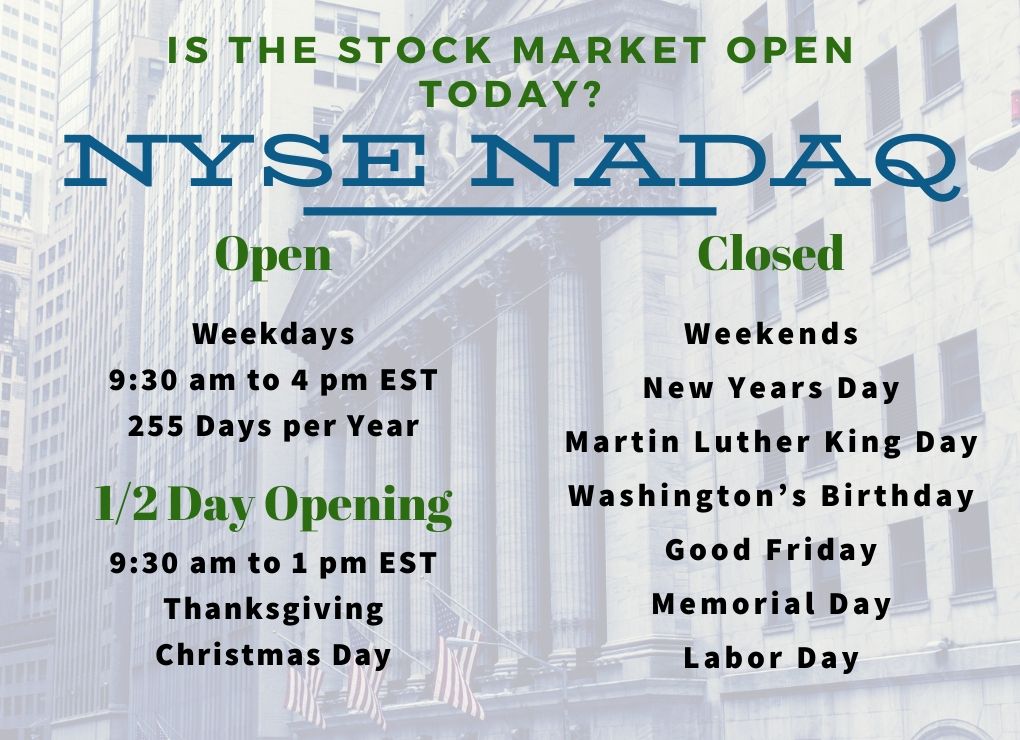
Standard trading hours for the NYSE and Nasdaq are Monday through Friday, from 9:30 AM to 4:00 PM Eastern Time. During this six-and-a-half-hour window, the vast majority of stock transactions occur. These hours were established to provide a centralized period where buyers and sellers can meet, ensuring that price discovery is efficient and transparent.
The Opening and Closing Bells: Why They Matter
The opening and closing bells are more than just ceremonial traditions. The 4:00 PM closing bell triggers a sophisticated process known as the “Closing Auction.” This is a concentrated period of high-volume trading where the official closing price of a security is determined. Institutional investors often prefer to execute large orders at the close to ensure they receive a price that reflects the day’s consensus value. For the individual investor, the closing price is the benchmark used to calculate portfolio performance and mutual fund Net Asset Values (NAV).
Time Zone Management for Global Investors
One of the most common points of confusion for new investors is the adjustment for time zones. All major U.S. exchanges operate on Eastern Time (ET). If you are trading from the West Coast, the market closes at 1:00 PM PT. For international investors in London or Tokyo, tracking the U.S. close requires a constant awareness of Daylight Savings Time shifts, which may not occur simultaneously in all countries. Failure to account for these shifts can lead to missed opportunities or unintended exposure to overnight volatility.
2. Extended Trading Hours: Pre-Market and After-Hours Sessions
The 4:00 PM closing bell does not mean that trading stops entirely. In the digital age, electronic communication networks (ECNs) allow for trading to continue long after the physical trading floors have emptied. However, the environment during extended hours is significantly different from the standard session.
Understanding the Pre-Market Window
Pre-market trading in the U.S. typically begins as early as 4:00 AM ET and runs until the official opening at 9:30 AM ET. This session is often used by traders to react to overnight news, such as geopolitical events or European economic data. While it offers the advantage of early positioning, the pre-market is characterized by low volume and wide “bid-ask spreads,” meaning it can be much more expensive to enter or exit a position.
The Risks and Rewards of After-Hours Trading
The after-hours session begins immediately at 4:00 PM ET and generally concludes at 8:00 PM ET. This is arguably the most volatile time of day for individual stocks, as most companies release their quarterly earnings reports shortly after the 4:00 PM close. A positive or negative earnings surprise can cause a stock to move 10% or 20% in minutes. While this offers the potential for quick profits, the lack of liquidity means that prices can swing wildly, and “slippage”—the difference between your expected price and the actual execution price—is a common risk.
Liquidity and Volatility in Extended Sessions
In a standard session, thousands of market makers ensure that you can buy or sell shares instantly. In the extended sessions, that “cushion” of liquidity disappears. Because fewer people are trading, a single large sell order can send a stock price tumbling. Financial advisors generally recommend that retail investors avoid market orders during these times, instead using “limit orders” to specify the exact price they are willing to accept.
3. Holiday Schedules and Early Closures
If you find yourself asking “when does the market close today” on a Friday before a long weekend, the answer might be different than usual. The U.S. stock market observes several federal holidays, and on certain occasions, it implements “early close” protocols.
The Annual Stock Market Holiday Calendar
The NYSE and Nasdaq close entirely for several major holidays, including:
- New Year’s Day
- Martin Luther King Jr. Day
- Presidents’ Day
- Good Friday
- Memorial Day
- Juneteenth National Independence Day
- Independence Day (July 4th)
- Labor Day
- Thanksgiving Day
- Christmas Day
If a holiday falls on a Saturday, the market usually closes on the preceding Friday. If it falls on a Sunday, the market closes on the following Monday.
The 1:00 PM Early Close Rule
On certain days—most notably the day after Thanksgiving (Black Friday) and sometimes Christmas Eve (if it falls on a weekday)—the markets close early at 1:00 PM ET. These shortened days are typically characterized by very low trading volume, as many institutional traders take the day off.
How Half-Days Impact Trading Volume
Low volume on early-close days can lead to “choppy” price action. With fewer participants, the market lacks the momentum to sustain significant trends. For the strategic investor, these days are often better spent on research rather than active trading, as the price movements seen on a low-volume Friday afternoon may not reflect the true long-term direction of the market once full participation returns on Monday.
4. Global Perspectives: When International Markets Close
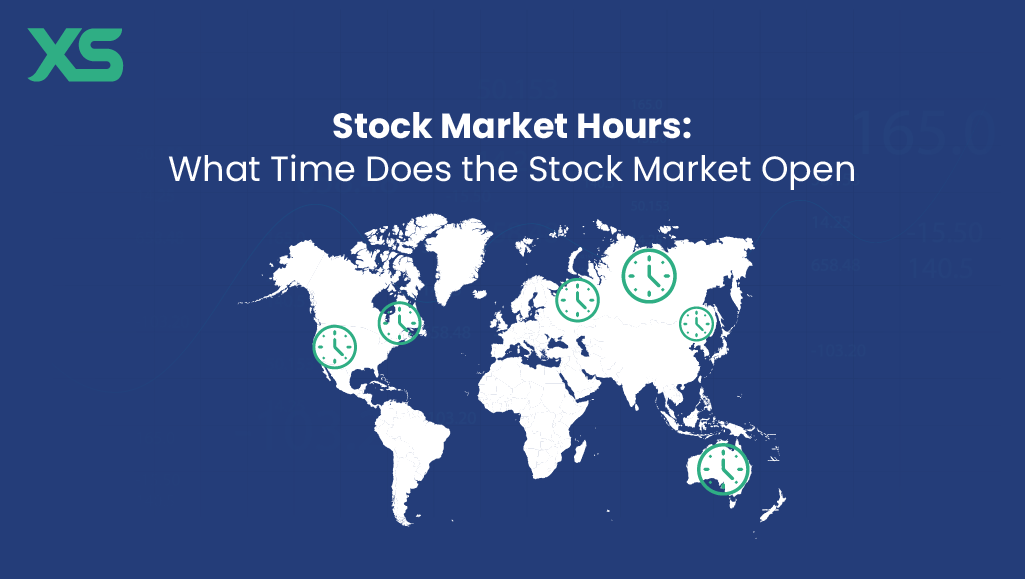
For the diversified investor, the U.S. market is only one piece of the puzzle. The global financial system operates on a “follow the sun” model, where as one market closes, another is preparing to open.
The European Markets
The London Stock Exchange (LSE) and the Euronext (which includes Paris and Amsterdam) are vital hubs for global capital. The LSE typically closes at 4:30 PM local time (GMT/BST). For U.S. traders, this means the European markets are closing just as the U.S. markets are hitting their mid-day stride. Watching the European close can often provide clues about the sentiment that will carry over into the final hours of the NYSE session.
The Asian Powerhouses
The Tokyo Stock Exchange (TSE), Hong Kong Stock Exchange (HKEX), and Shanghai Stock Exchange represent the start of the global trading day. Unlike Western markets, many Asian exchanges include a mandatory lunch break. For example, the Tokyo exchange typically trades from 9:00 AM to 11:30 AM, closes for an hour, and then resumes from 12:30 PM to 3:00 PM local time.
The 24-Hour Cycle of Global Finance
While individual stock exchanges have set closing times, the “market” for assets like currencies (Forex) and certain commodities (like Gold and Oil) never truly closes during the workweek. These markets trade 24 hours a day from Sunday night to Friday night. Understanding this 24-hour cycle is crucial for investors who hold international ETFs or stocks with heavy global exposure, as news in Asia at 2:00 AM ET will inevitably dictate the opening price in New York at 9:30 AM ET.
5. Strategic Timing: When Should You Execute Your Trades?
Knowing when the market closes is the first step; knowing when to act within those hours is what separates successful investors from the rest. The trading day has its own “rhythm” that affects price stability and cost.
The “Power Hour” Phenomenon
The final hour of trading, from 3:00 PM to 4:00 PM ET, is often referred to as the “Power Hour.” This is frequently the period of highest volume and volatility as day traders close out their positions and institutional managers rebalance their portfolios. For those looking to execute large trades, the liquidity of the Power Hour is beneficial. However, for those wary of volatility, the rapid price swings can be daunting.
Avoiding the Mid-Day Lull
Statistically, the period between 11:30 AM and 1:30 PM ET often sees a significant drop in volume—frequently called the “lunchtime doldrums.” During this window, prices may drift aimlessly. Professional traders often suggest that retail investors avoid making major decisions during this lull, as the lack of volume can make it difficult to get a true sense of the market’s direction.
Using Limit Orders to Manage Market Closures
If you cannot be at your computer when the market closes, the “Limit Order” is your most powerful tool. Unlike a “Market Order,” which executes at whatever price is available, a Limit Order allows you to set a maximum buy price or a minimum sell price. You can also set “GTC” (Good ‘Til Canceled) orders that remain active across multiple days, ensuring that your financial strategy is executed even if you aren’t watching the clock as 4:00 PM approaches.
In conclusion, while the question “when do the stock markets close today” seems simple, the answer is a gateway into the complex machinery of global finance. By mastering the schedule of the standard session, understanding the risks of extended hours, and respecting the influence of global time zones, you position yourself to make more informed, disciplined, and profitable investment decisions. Whether you are a long-term saver or an active participant, the clock is a constant factor in your financial journey.
aViewFromTheCave is a participant in the Amazon Services LLC Associates Program, an affiliate advertising program designed to provide a means for sites to earn advertising fees by advertising and linking to Amazon.com. Amazon, the Amazon logo, AmazonSupply, and the AmazonSupply logo are trademarks of Amazon.com, Inc. or its affiliates. As an Amazon Associate we earn affiliate commissions from qualifying purchases.