
In the fast-paced world of finance, timing is often as critical as the assets themselves. For the modern investor, the question “When do markets close?” is rarely a simple inquiry about a clock on a wall. It is an investigation into liquidity, volatility, and the strategic windows that define the global economy. Understanding market hours is foundational for anyone looking to manage a portfolio, execute timely trades, or understand the ripple effects of global economic news.
While the rise of digital platforms has created the illusion of a market that never sleeps, the reality is that traditional exchanges operate within strict temporal boundaries. These boundaries dictate when the highest volume of trading occurs and when price discovery is most efficient. This guide explores the closing times of major global exchanges, the nuances of extended-market trading, and why these timestamps are pivotal for your financial strategy.
The Standard Trading Day: Navigating Domestic Exchange Hours
For the vast majority of retail investors in the West, the financial world revolves around the “Big Two” in New York: The New York Stock Exchange (NYSE) and the Nasdaq. These institutions set the rhythm for the American financial landscape, and their operating hours are the benchmark for domestic activity.
The Core Session and the Closing Bell
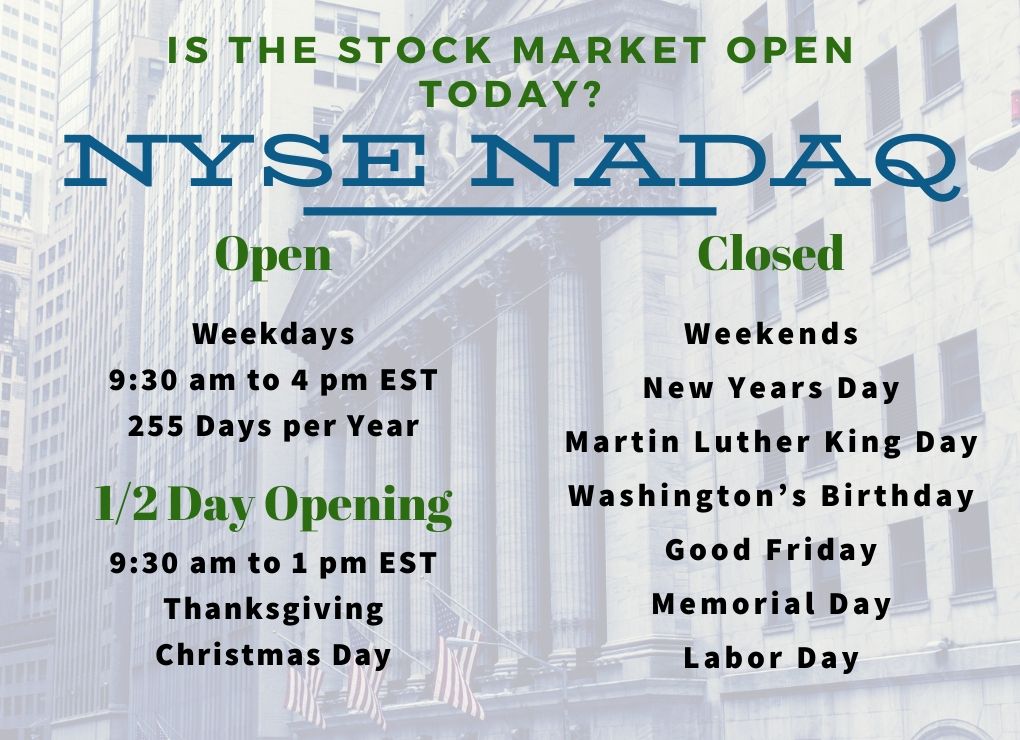
The standard trading session for both the NYSE and Nasdaq runs from 9:30 AM to 4:00 PM Eastern Time (ET), Monday through Friday. The 4:00 PM closing bell is more than just a ceremonial tradition; it marks the “official” end of the trading day and the point at which the closing price for thousands of securities is calculated. This closing price is the gold standard used by mutual funds to calculate their Net Asset Value (NAV) and by analysts to evaluate daily performance.
During these six and a half hours, liquidity—the ease with which you can buy or sell an asset without affecting its price—is at its peak. This is because institutional investors, high-frequency trading firms, and retail participants are all active simultaneously.
Holiday Schedules and Early Closures
It is vital for investors to realize that the market calendar does not always align with the standard work calendar. U.S. markets close for major federal holidays, including New Year’s Day, Martin Luther King Jr. Day, Presidents’ Day, Good Friday, Memorial Day, Juneteenth, Independence Day, Labor Day, Thanksgiving, and Christmas.
Furthermore, “early closures” are a common occurrence. On days such as the Friday after Thanksgiving or Christmas Eve (if it falls on a weekday), the markets typically close at 1:00 PM ET. Navigating these shortened sessions requires caution, as lower trading volumes can lead to increased volatility and wider “bid-ask spreads,” making it more expensive to execute trades.
Beyond the Closing Bell: Pre-Market and After-Hours Trading
While the “core” session ends at 4:00 PM ET, the digital nature of modern finance allows for activity long after the physical floor has cleared. This is known as extended-hours trading, divided into the pre-market and the after-hours sessions.
How Extended Hours Work
Extended-hours trading occurs on Electronic Communication Networks (ECNs), which match buyers and sellers digitally without the need for a centralized exchange floor.
- Pre-Market Session: Typically runs from 4:00 AM to 9:30 AM ET.
- After-Hours Session: Typically runs from 4:00 PM to 8:00 PM ET.
Many investors use these sessions to react to news that breaks outside of standard hours, such as corporate earnings reports or sudden geopolitical shifts. If a major tech company releases a stellar earnings report at 4:05 PM, the stock price may skyrocket immediately in the after-hours session before the general public can trade it the following morning.
The Risks and Rewards of Late-Night Trading
While the ability to trade at 7:00 PM offers flexibility, it comes with significant risks that any disciplined investor must consider. The primary concern is liquidity. With far fewer participants in the market, it can be difficult to find a buyer or seller at your desired price. This leads to volatility; a relatively small order can cause a disproportionately large swing in a stock’s price.
Additionally, most brokerages only allow “limit orders” during extended hours. This means you must specify the exact price you are willing to pay or receive, rather than a “market order” which executes at the best available current price. For those focused on long-term wealth building, the after-hours market is often a place to watch rather than a place to act, unless a significant fundamental change justifies the added risk.
Global Market Synchronization: A 24-Hour Cycle
For those involved in international investing or diversification, the closing bell in New York is just one part of a global relay race. As the sun sets on one financial capital, it rises on another, creating a continuous cycle of price discovery.
European and Asian Market Windows
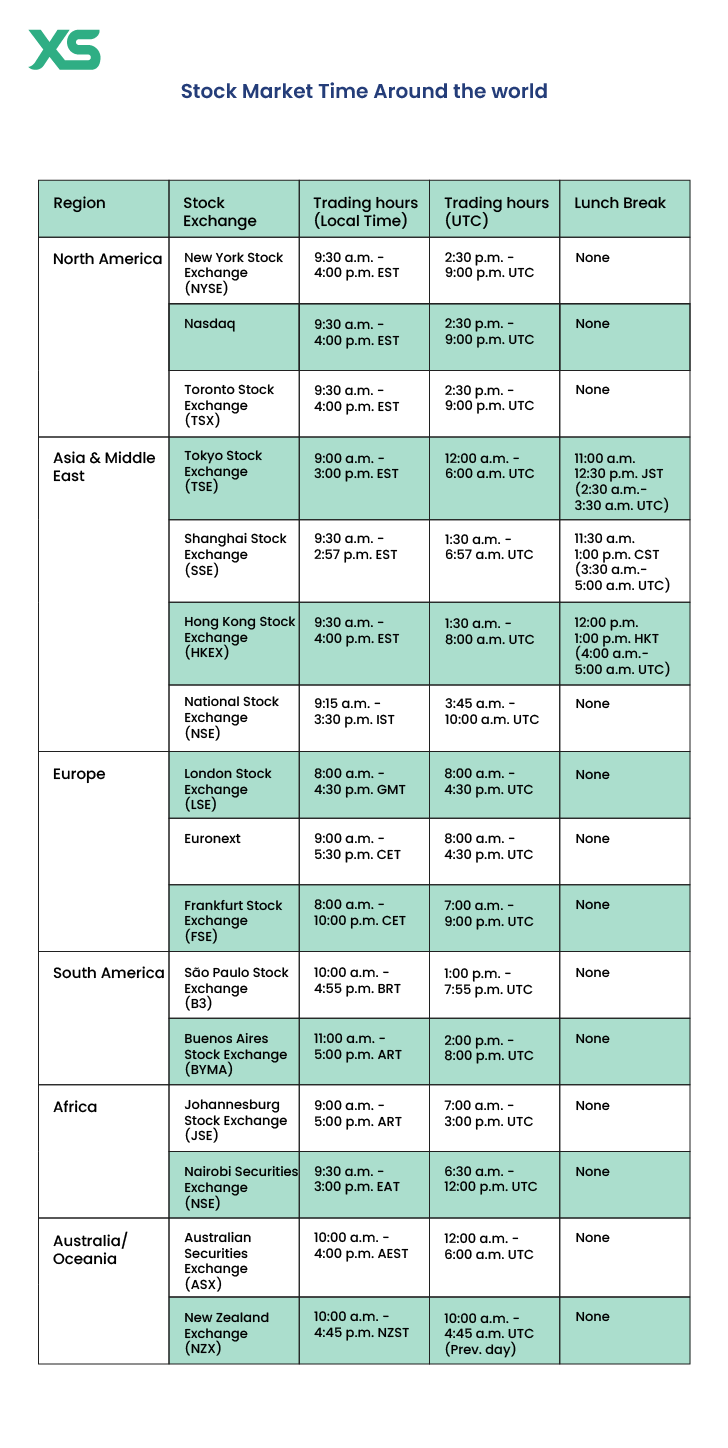
Investors looking toward Europe must track the London Stock Exchange (LSE), which typically closes at 4:30 PM GMT (11:30 AM ET). This creates a crucial period of “overlap” between 9:30 AM and 11:30 AM ET, where both the U.S. and European markets are open. This window often sees some of the highest trading volumes of the day.
In Asia, the schedule is slightly different. The Tokyo Stock Exchange (TSE) and the Hong Kong Stock Exchange (HKEX) operate on local time, which is roughly 12 to 13 hours ahead of New York. Notably, many Asian markets still observe a “lunch break”—a mid-day closure where trading halts for an hour or more—a practice that has largely disappeared from Western exchanges.
The 24-Hour Reality of Forex and Crypto
While equities have fixed closing times, other asset classes in the “Money” niche do not. The Foreign Exchange (Forex) market is a decentralized global market that operates 24 hours a day, five days a week. It opens on Sunday evening (ET) as the Asian session begins and does not close until Friday afternoon (ET) when New York winds down.
Even more extreme is the Cryptocurrency market. Unlike stocks or bonds, Bitcoin and other digital assets trade 24/7/365. There are no closing bells, no holidays, and no weekends in the crypto space. For investors, this means that “market close” is a relative term that only applies to traditional assets, requiring a different set of risk management tools for digital holdings.
Why Market Closing Times Matter for Your Portfolio Strategy
Understanding when markets close is not merely an administrative detail; it is a tactical component of professional money management. The “close” represents a period of intense institutional activity that can dictate the trend for the following days.
Managing Volatility at the Close
The final 30 minutes of the trading day, often referred to as the “Happy Hour” or the “Closing Cross,” is frequently the most volatile. Large institutional investors and index funds often wait until the end of the day to execute massive “rebalancing” trades. They do this to ensure their portfolios match the closing prices used for benchmarks.
For the individual investor, trading in the final minutes can be treacherous. Prices may swing wildly as “Market-on-Close” (MOC) orders are filled. Conversely, observing the “closing auction”—the process by which the final price is determined—can provide deep insights into the “smart money’s” sentiment heading into the next day.
Liquidity and Order Execution
If you place a trade too close to the market’s close, you run the risk of your order not being filled, or being filled at a sub-optimal price. Professional traders often advise against placing large market orders in the final seconds of the day. Understanding the closing schedule also helps in managing “Good ‘Til Canceled” (GTC) orders. If a market closes and a significant event happens overnight, your GTC order might trigger at a “gap” price the next morning—a price significantly different from where the market closed.
Tools and Tactics for Monitoring Market Cycles
In a globalized economy, keeping track of various closing times across different time zones can be a challenge. However, leveraging the right tools can simplify this process and ensure you are never caught off guard.
Financial Calendars and Real-Time Alerts
Most high-quality financial platforms and brokerages offer integrated economic calendars. These tools go beyond simple closing times; they highlight upcoming “early closes,” exchange holidays, and the release of economic data (like the Jobs Report or CPI) that occurs just before the markets open or after they close.
Setting up mobile alerts for “Market Open” and “Market Close” can also help investors transition their mindset. For many, the close is a signal to stop active trading and begin the “post-mortem” analysis of the day’s performance.
The Importance of the Weekly Close
In the world of technical analysis and long-term investing, the “Weekly Close” (Friday at 4:00 PM ET) is often considered more significant than the daily close. It represents the final consensus on an asset’s value after a full week of news and trading. Investors often look at the weekly closing price to determine if a stock has “broken out” of a trend or if a bear market is beginning to bottom out. By focusing on the weekly close, investors can filter out the “noise” of daily fluctuations and focus on the broader financial narrative.
Conclusion
The closing of the market is far more than a cessation of activity; it is a vital structural component of the financial system. Whether it is the traditional 4:00 PM bell on Wall Street, the 24/5 cycle of Forex, or the never-ending stream of Cryptocurrency trading, knowing when the “gates” close allows an investor to manage liquidity, minimize risk, and strategize with precision. By mastering the clock, you don’t just know when the day ends—you know when the best opportunities begin.