
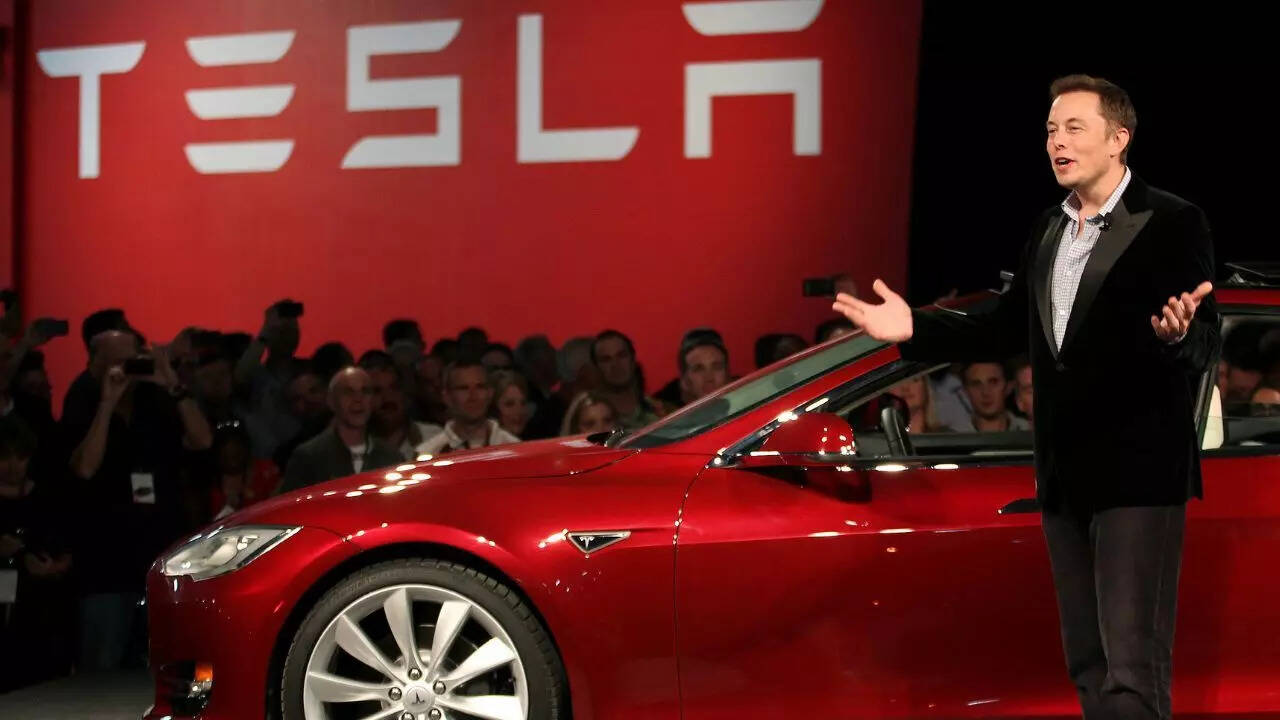
The narrative of Tesla is often framed as a tale of engineering brilliance or a triumph of sustainable energy. However, from a financial perspective, the story of Tesla is a masterclass in venture capital, risk management, and the power of strategic reinvestment. When Elon Musk joined Tesla in February 2004, he didn’t just join a company; he initiated one of the most significant financial pivots in corporate history. For investors, business analysts, and students of finance, the timeline of Musk’s entry into Tesla offers profound insights into how capital infusion can transform a struggling startup into a global titan with a trillion-dollar market capitalization.
The Seed of a Revolution: The 2004 Series A Funding Round
To understand the financial foundations of Tesla, one must look past the sleek lines of the Model S and focus on the ledger sheets of 2004. Tesla Motors was incorporated in July 2003 by Martin Eberhard and Marc Tarpenning. While the founders had the vision, the company lacked the requisite capital to move from a conceptual white paper to a tangible prototype. This is where Elon Musk entered the frame, not as a technical consultant, but as the primary financier.
The Series A Investment: A $6.5 Million Bet
In February 2004, Elon Musk led the Series A funding round for Tesla. At the time, Musk was flush with capital from the sale of PayPal to eBay. He contributed $6.5 million of his own money toward the $7.5 million round, effectively becoming the majority shareholder and Chairman of the Board. From a business finance perspective, this was a high-risk “angel” style investment. The electric vehicle (EV) market was virtually non-existent, and the technological barriers to entry were astronomical. Musk’s entry represented a classic venture capital move: identifying a disruptive potential and providing the “dry powder” necessary to ignite growth.
From Angel Investor to Active Chairman
Unlike passive investors who simply provide capital and wait for quarterly reports, Musk’s entry into Tesla was marked by an active involvement in fiscal strategy. He understood that in the world of high-tech manufacturing, capital burn is the greatest enemy. By taking the role of Chairman, he ensured that the company’s financial trajectory aligned with a long-term roadmap rather than short-term gains. This period established the “Tesla Way”—a lean, aggressive financial model that prioritized R&D and vertical integration over traditional dividends or conservative cash reserves.
Capital Infusion and Risk Management: Navigating the 2008 Crisis
The true test of a company’s financial health is not how it performs during a bull market, but how it survives a liquidity crunch. For Tesla, the 2008 global financial crisis was a “near-death” experience that required unprecedented financial maneuvering from Musk and his team.
Navigating the 2008 Financial Crisis
By late 2008, Tesla was running out of cash. The development of the Roadster had proved more expensive than anticipated, and the global credit markets had frozen. Musk, who had already invested tens of millions into the company, faced a choice: let the company go bankrupt or double down. In a move that is now legendary in business finance circles, Musk liquidated his remaining personal assets to fund a $40 million internal bridge loan. This move wasn’t just about saving a company; it was about maintaining investor confidence. Had Musk not provided that personal guarantee, external venture capital firms would have likely walked away, signaling the end of the EV experiment.
Government Loans and Fiscal Resilience
Following the internal rescue, Tesla’s financial strategy shifted toward leveraging public-private partnerships. In 2009, Tesla secured a $465 million loan from the U.S. Department of Energy’s Advanced Technology Vehicles Manufacturing program. This was a critical financial lever. It allowed Tesla to scale its manufacturing capabilities in Fremont, California, without further diluting equity at a low valuation. Remarkably, Tesla paid back the loan in full in 2013, nine years ahead of schedule. This early repayment served as a powerful signal to the markets that Tesla was not just a subsidized experiment, but a fiscally disciplined enterprise capable of generating its own cash flow.
The Valuation Explosion: The 2010 IPO and Beyond

The transition from a private startup to a public entity is the ultimate goal for many investors. For Tesla, the Initial Public Offering (IPO) was the catalyst that moved the company from a niche luxury car maker to a global financial powerhouse.
The 2010 IPO: A Turning Point for Retail Investors
On June 29, 2010, Tesla went public on the NASDAQ, offering 13.3 million shares at $17.00 per share. It was the first American car company to go public since Ford in 1956. For early investors, this was the moment of liquidity. However, the IPO was more than just a fundraising event; it was a branding exercise that invited the “retail” investor into the fold. Musk’s ability to communicate a vision of the future allowed Tesla to trade at a premium, often disconnected from traditional automotive metrics like P/E (Price-to-Earnings) ratios. This “Tesla Premium” became a hallmark of the company’s valuation, driven by the belief in its future software and energy ecosystem rather than just its hardware sales.
Scaling Production as a Financial Lever
In the years following the IPO, Tesla’s financial strategy focused on “economies of scale.” The capital raised through subsequent secondary offerings was funneled directly into Gigafactories. From a business finance standpoint, this was a high-stakes play: spend billions on infrastructure today to drive down the per-unit cost of batteries tomorrow. As production volumes for the Model 3 and Model Y increased, Tesla’s gross margins began to eclipse those of traditional OEMs (Original Equipment Manufacturers). By 2020, Tesla had achieved sustained profitability, proving that the high-capex (capital expenditure) model could eventually lead to high-margin returns.
Tesla as a Case Study in Corporate Finance
Analyzing Tesla through the lens of corporate finance reveals a strategy that differs significantly from the “Big Three” automakers. Musk’s influence ensured that Tesla operated more like a Silicon Valley software firm than a Detroit manufacturing plant.
The “Master Plan” as a Financial Roadmap
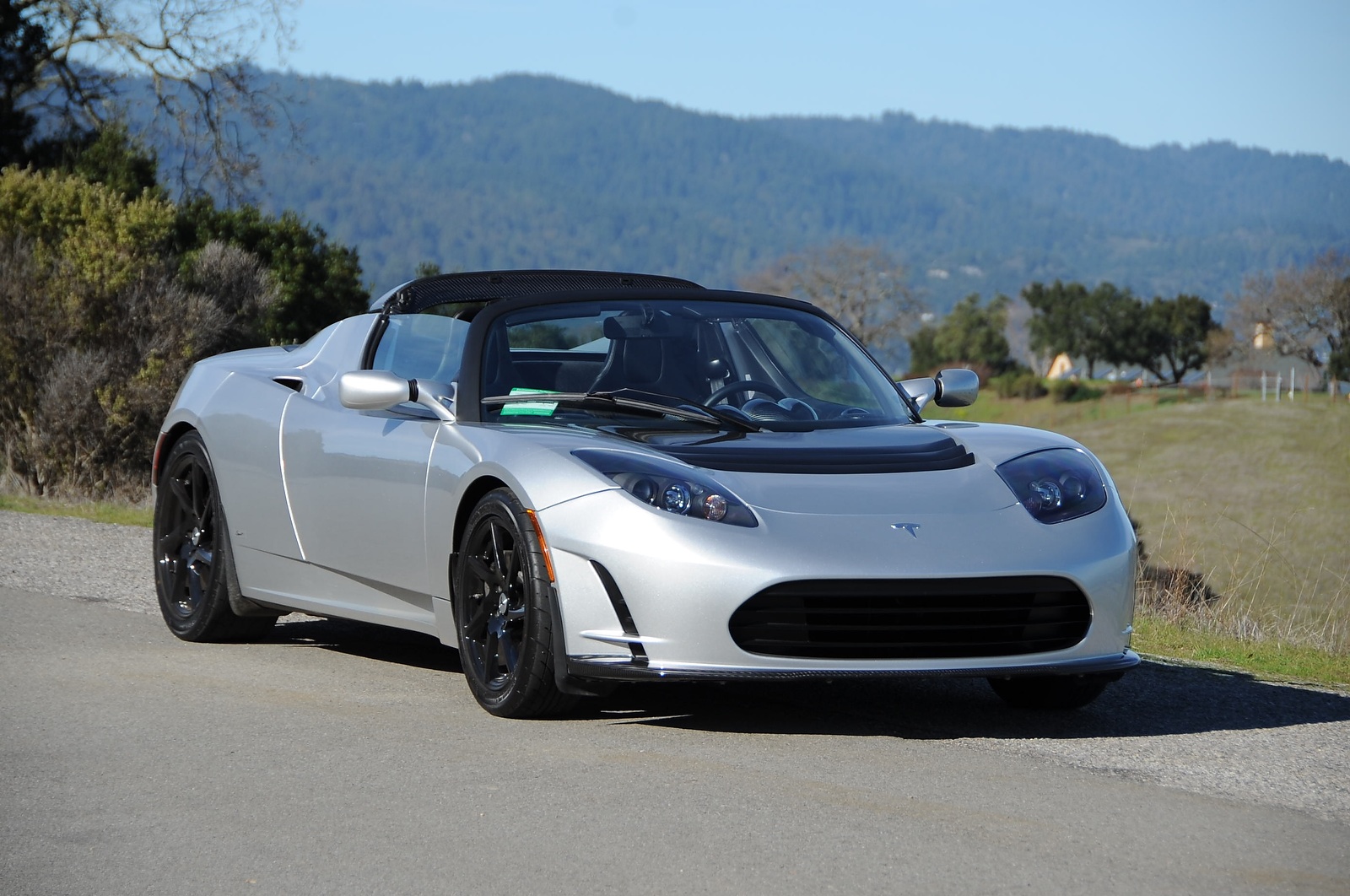
Musk’s “Secret Master Plan,” published in 2006, was essentially a financial manifesto. It outlined a three-step process: build an expensive car for a few (Roadster), use that money to build a mid-priced car for more (Model S/X), and finally, use that money to build an affordable car for the masses (Model 3). This tiered approach to product development is a classic example of using high-margin “low volume” products to fund “high volume” market penetration. It allowed the company to grow organically without being entirely dependent on external debt.
Market Cap vs. Traditional Automotive Metrics
One of the most debated topics in the financial world is Tesla’s market capitalization, which at various points has exceeded that of the next nine largest automakers combined. Critics argue that based on car sales alone, the valuation is inflated. However, proponents of the “Money” niche argue that Tesla is being valued as an AI and energy company. Its investments in Full Self-Driving (FSD) technology, battery storage, and solar energy are seen as future revenue streams with much higher margins than traditional manufacturing. This shift in how a company is valued—based on future data and energy dominance rather than current metal production—is perhaps Musk’s greatest contribution to modern finance.
Lessons for Modern Investors
The story of Elon Musk joining Tesla is not just history; it is a blueprint for modern investing. It highlights the importance of visionary leadership, the necessity of personal “skin in the game,” and the power of long-term thinking.
Understanding Long-term Capital Gains
Investors who followed Musk into Tesla in 2004 or even at the 2010 IPO learned a vital lesson in patience. Tesla’s stock has been notoriously volatile, subject to massive swings based on tweets, production delays, and regulatory hurdles. However, for those who understood the underlying financial trajectory—the consistent growth in delivery numbers and the shrinking cost per kilowatt-hour of battery storage—the rewards have been life-changing. It serves as a reminder that in the “Money” niche, wealth is often built not by timing the market, but by spending time in the market with the right assets.
The Role of Visionary Leadership in Portfolio Growth
Finally, the Tesla saga emphasizes that a company’s leadership is as much a financial asset as its physical inventory. Elon Musk’s ability to raise capital under duress and his willingness to reinvest nearly all profits back into the company’s growth have been the primary drivers of Tesla’s success. For the modern investor, the lesson is clear: when evaluating a potential investment, look beyond the balance sheet. Look at who is steering the ship and whether their financial interests are aligned with yours. Musk’s journey with Tesla, starting with a $6.5 million check in 2004, remains one of the greatest examples of value creation in the history of global business.
aViewFromTheCave is a participant in the Amazon Services LLC Associates Program, an affiliate advertising program designed to provide a means for sites to earn advertising fees by advertising and linking to Amazon.com. Amazon, the Amazon logo, AmazonSupply, and the AmazonSupply logo are trademarks of Amazon.com, Inc. or its affiliates. As an Amazon Associate we earn affiliate commissions from qualifying purchases.