
The question “When did Bitcoin start?” is more than a simple query about a date; it’s an inquiry into the genesis of a paradigm shift in global finance. Understanding Bitcoin’s origins is crucial for anyone engaging with cryptocurrency, whether as an investor, a business owner contemplating blockchain integration, or a casual observer trying to grasp the evolving digital economy. Its birth narrative is intertwined with a period of profound financial uncertainty, offering context to its design and the aspirations of its enigmatic creator. Far from being a mere technological novelty, Bitcoin was conceived as a direct response to systemic flaws in traditional banking, aiming to empower individuals with a decentralized, peer-to-peer electronic cash system. This article delves into Bitcoin’s inception, tracing its journey from a theoretical concept to a formidable financial asset that continues to redefine wealth, transactions, and monetary policy worldwide.
The Mysterious Genesis: Satoshi Nakamoto and the Whitepaper
The story of Bitcoin begins not with a corporate launch or a grand announcement, but with an anonymous entity, or perhaps a group, known only as Satoshi Nakamoto. This deliberate anonymity underscores Bitcoin’s core principle: decentralization and resistance to control by any single authority. The precise date of Bitcoin’s start can be pinpointed through a series of foundational events that laid the groundwork for its operational existence.
The 2008 Financial Crisis as a Catalyst
To fully appreciate why Bitcoin emerged when it did, one must look back at the global financial landscape of 2008. The world was grappling with an unprecedented financial crisis, triggered by subprime mortgage lending in the United States, leading to bank failures, government bailouts, and a deep erosion of public trust in conventional financial institutions. Centralized banks and governments, once seen as pillars of stability, were now viewed with skepticism, accused of malfeasance, opaque practices, and an overreach of power. It was in this environment of distrust and urgent need for an alternative that Satoshi Nakamoto began to finalize his vision. The opening line of the Bitcoin genesis block’s coinbase transaction famously references this crisis: “The Times 03/Jan/2009 Chancellor on brink of second bailout for banks,” serving as a permanent timestamp and a powerful ideological statement embedded in the very first block of the Bitcoin blockchain.
The Bitcoin Whitepaper: A New Financial Blueprint
While the official launch date is January 3, 2009, the intellectual genesis precedes it. On October 31, 2008, Satoshi Nakamoto published the seminal paper titled “Bitcoin: A Peer-to-Peer Electronic Cash System” to a cryptography mailing list. This whitepaper was not just a technical document; it was a manifesto outlining a revolutionary financial system. It proposed a novel solution to the “double-spending problem” inherent in digital currencies – how to prevent the same digital unit from being spent twice – without relying on a trusted third party like a bank. Instead, it introduced the concept of a public ledger (the blockchain) secured by cryptographic proof, enabling direct transactions between users without intermediaries. For the first time, a truly decentralized digital currency seemed achievable, promising autonomy, censorship resistance, and transparency, all features highly appealing in a post-2008 financial world.
The Birth of the Genesis Block (January 3, 2009)
Following the publication of the whitepaper, the theoretical framework needed to become a practical reality. This crucial transition happened on January 3, 2009. On this historic day, Satoshi Nakamoto mined the genesis block of the Bitcoin blockchain. This “Block 0” was the very first block in the chain, marking the official launch of the Bitcoin network. It contained the aforementioned message referencing The Times newspaper headline, permanently linking Bitcoin’s inception to the perceived failures of the traditional financial system. With the genesis block mined, the Bitcoin network was live, and the initial 50 bitcoins were created, albeit unspendable as they were built into the very foundation of the blockchain. This event officially marked Bitcoin’s birth, setting in motion a chain of events that would forever alter the financial landscape.
Early Days: From Concept to Financial Tool
Once the network was live, Bitcoin began its nascent journey from a purely theoretical concept to a fledgling financial tool. The early days were characterized by experimentation, community building, and the gradual assignment of real-world value to this purely digital asset.
The First Bitcoin Transaction: A Peer-to-Peer Exchange
The first verifiable person-to-person Bitcoin transaction outside of Satoshi’s own testing occurred on January 12, 2009. Satoshi Nakamoto sent 10 bitcoins to Hal Finney, a renowned cryptographer and early supporter. This transaction proved the functionality of the peer-to-peer electronic cash system described in the whitepaper. It demonstrated that bitcoins could be sent directly from one digital wallet to another, confirming the network’s operational viability and its potential as a true financial instrument that bypassed traditional banking rails. While not involving fiat currency, it was a pivotal moment in establishing Bitcoin’s utility as a medium of exchange.
The Early Community and Value Formation
In its infancy, Bitcoin was primarily a curiosity for cryptographers, computer scientists, and privacy advocates. The “value” of Bitcoin was almost entirely conceptual, driven by the belief in its underlying technology and philosophical ideals. There was no exchange where bitcoins could be readily traded for dollars or other fiat currencies. Instead, early adopters acquired bitcoins through mining on their own computers or by receiving them as gifts within the burgeoning community. The community itself was the first market, assigning value based on perceived utility and scarcity. Forums like Bitcointalk.org became central hubs for discussion, development, and the very first informal trades, fostering a sense of shared ownership in this revolutionary project.
The First Real-World Financial Exchange (Bitcoin Pizza Day)

The most famous early real-world transaction, and arguably the moment Bitcoin truly began to acquire tangible financial value, occurred on May 22, 2010. Laszlo Hanyecz, a programmer from Florida, famously purchased two Papa John’s pizzas for 10,000 Bitcoins. At the time, 10,000 Bitcoins were worth approximately $41. The transaction was facilitated by another early Bitcoin user who accepted the bitcoins and ordered the pizzas for Hanyecz. This event, now celebrated annually as “Bitcoin Pizza Day,” was monumental because it demonstrated Bitcoin’s potential as a medium of exchange for goods and services in the physical world. It solidified the idea that this digital currency, once purely an idea, could function as real money, albeit at a significantly low valuation at the time compared to its future trajectory. It was a clear signal that Bitcoin was transitioning from an experimental technology to a burgeoning financial asset with real-world utility.
Bitcoin’s Evolution: Shaping the Modern Financial Landscape
From its humble beginnings, Bitcoin began its ascent, navigating immense volatility, skepticism, and gradual acceptance to cement its place as a significant, albeit unconventional, player in the global financial landscape. Its evolution is a testament to both its resilience and the enduring appeal of its core principles.
From Niche Curiosity to Investment Asset
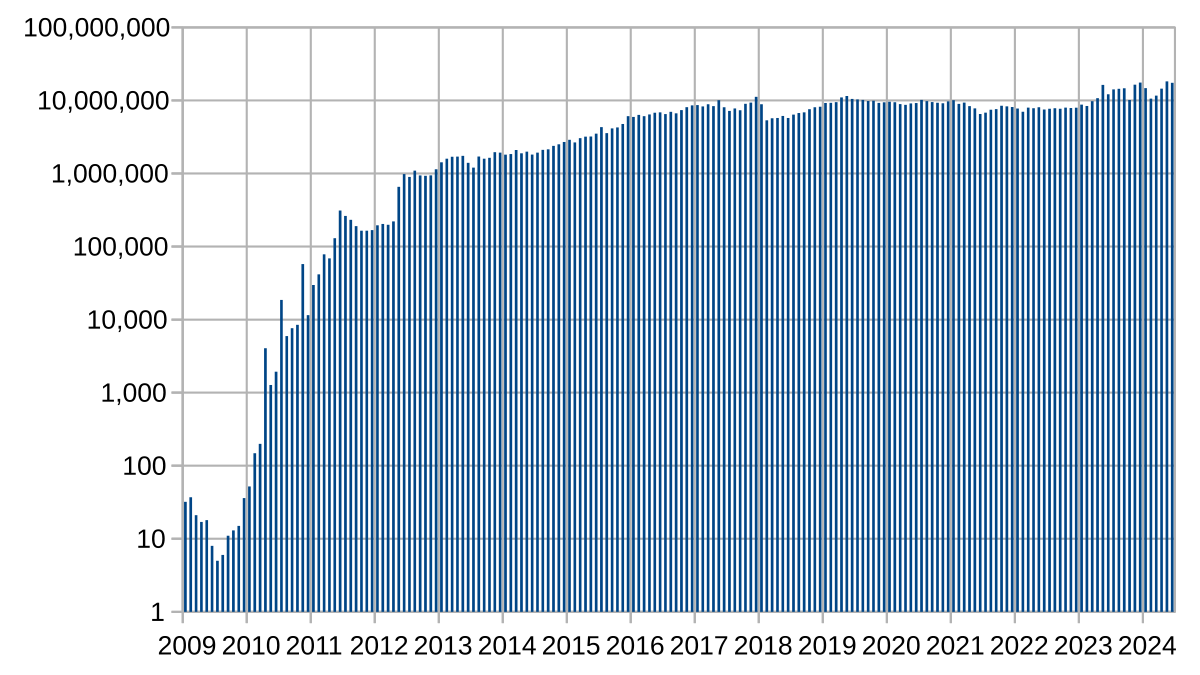
The period following “Bitcoin Pizza Day” saw a slow but steady increase in awareness and, critically, the establishment of its first rudimentary financial infrastructure. As more individuals learned about Bitcoin, some recognized its speculative investment potential. The narrative shifted from purely being a “peer-to-peer electronic cash system” to also being a potential “digital gold” or a new asset class. Early adopters who held onto their coins saw their value skyrocket, attracting further attention and investment. This attracted more technically inclined investors and eventually those looking for high-risk, high-reward opportunities. The emergence of price charts, market capitalization data, and basic trading platforms transformed Bitcoin from a geeks’ experiment into a financial asset that could be bought, sold, and held for profit.
Volatility and Risk: The Early Investor’s Journey
Bitcoin’s journey has been anything but smooth. Its price history is famously characterized by extreme volatility, with dramatic price surges followed by equally sharp corrections. Early investors experienced thrilling bull runs and terrifying bear markets. This volatility, while a deterrent for some, was also part of its appeal for others, offering unparalleled opportunities for capital gains, albeit with significant risk. The “wild west” era saw numerous hacks of exchanges, scams, and regulatory uncertainties, which further fueled price swings. For those who invested in these early years, understanding risk management, market psychology, and the long-term vision was paramount. It highlighted the nascent nature of this new financial market and the need for robust infrastructure and clearer regulatory frameworks.
The Emergence of Exchanges and Financial Infrastructure
A key factor in Bitcoin’s maturation as a financial asset was the development of dedicated exchanges. Initially, trading happened informally or on platforms like Mt. Gox, which, despite its eventual infamous collapse, played a crucial role in establishing initial price discovery and liquidity. Over time, more professional and secure exchanges emerged globally, such as Coinbase, Kraken, and Binance. These platforms made it easier for ordinary individuals to buy and sell Bitcoin using fiat currencies, drastically lowering the barrier to entry for new investors. Alongside exchanges, other financial tools began to surface: Bitcoin ATMs, payment processors that allowed merchants to accept Bitcoin, and eventually, derivative products like futures contracts. This growing ecosystem of financial services and infrastructure legitimized Bitcoin further, moving it from the fringes into a more accessible, albeit still specialized, part of the broader financial system.
Bitcoin’s Enduring Financial Impact and Future Outlook
Today, Bitcoin is no longer just a digital curiosity or a speculative gamble; it is a globally recognized financial asset with a market capitalization that often rivals that of major corporations or even national economies. Its existence has spurred innovation, challenged traditional economic thought, and forced a re-evaluation of what constitutes “money.”
A Hedge Against Inflation and Economic Instability?
One of the most profound impacts of Bitcoin from a financial perspective is its perceived role as a hedge against inflation and economic instability. Its fixed supply (capped at 21 million coins) and decentralized nature stand in stark contrast to fiat currencies, which can be subject to inflationary pressures through quantitative easing and government spending. In times of economic uncertainty, political turmoil, or high inflation, some investors and even nations have turned to Bitcoin as a store of value, likening it to “digital gold.” This narrative has gained traction, particularly in countries experiencing hyperinflation or capital controls, where Bitcoin offers an alternative way to preserve wealth and conduct transactions outside the traditional, often volatile, banking system. While its price volatility still presents risks, the underlying principles of scarcity and decentralization offer a compelling argument for its role in a diversified financial portfolio.
Institutional Adoption and Mainstream Integration
The journey from niche asset to mainstream financial instrument is marked by increasing institutional adoption. Initially, large financial firms were wary of Bitcoin due to its volatility and regulatory ambiguities. However, as the market matured, clearer regulatory guidance emerged, and investor demand grew, institutions began to embrace it. Investment banks started offering Bitcoin-related products, asset managers launched Bitcoin funds and ETFs, and even corporate treasuries began allocating a portion of their cash reserves to Bitcoin. This institutional stamp of approval has brought significant capital into the ecosystem, further solidifying Bitcoin’s legitimacy as a serious investment asset. It signals a broader acceptance that Bitcoin is not just a temporary fad but a durable component of the future financial infrastructure.

The Ongoing Debate: Digital Gold vs. Payment System
As Bitcoin continues to evolve, an ongoing debate persists about its primary financial function. Is it primarily “digital gold” – a store of value similar to precious metals, intended for long-term holding and wealth preservation? Or is it an effective “peer-to-peer electronic cash system” – a medium of exchange for everyday transactions, fulfilling its original whitepaper vision? While technological advancements like the Lightning Network aim to enhance Bitcoin’s transaction speed and reduce fees, making it more viable for payments, its significant price volatility still makes it less practical for stable day-to-day commerce compared to traditional currencies. The consensus leans towards its role as a store of value and an investment asset, with other cryptocurrencies or layers built on Bitcoin potentially handling faster, cheaper transactions. Regardless of which role ultimately prevails, Bitcoin’s dual potential continues to drive innovation and investment within the financial technology sector.
In conclusion, Bitcoin officially started on January 3, 2009, with the mining of its genesis block. However, its true birth as a financial phenomenon encompasses the foundational whitepaper in October 2008 and the crucial early transactions that imbued it with real-world value. From a response to the 2008 financial crisis, Bitcoin has grown into a powerful force challenging traditional financial systems, attracting billions in investment, and inspiring an entirely new digital economy. Its journey from an obscure technical experiment to a globally recognized financial asset underscores its revolutionary potential and its enduring impact on how we perceive, create, and manage money in the 21st century. As it continues to mature, Bitcoin remains a pivotal subject for anyone navigating the complexities and opportunities of modern finance.
aViewFromTheCave is a participant in the Amazon Services LLC Associates Program, an affiliate advertising program designed to provide a means for sites to earn advertising fees by advertising and linking to Amazon.com. Amazon, the Amazon logo, AmazonSupply, and the AmazonSupply logo are trademarks of Amazon.com, Inc. or its affiliates. As an Amazon Associate we earn affiliate commissions from qualifying purchases.