
The query “what’s the Dow Jones trading at” is a common one, frequently posed by investors, financial professionals, and even curious onlookers seeking a quick pulse on the market. While the immediate answer is a specific number reflecting its current point value, understanding the Dow Jones Industrial Average (DJIA) goes far beyond a simple quote. It’s a barometer, a narrative, and a psychological touchstone for the American economy and global financial markets. This article delves into the intricacies of the Dow, exploring its composition, significance, daily movements, and how to interpret its ever-changing value within the broader financial landscape. For anyone navigating the world of personal finance, investing, or business, grasping the Dow’s role is fundamental to informed decision-making.

Decoding the Dow Jones Industrial Average (DJIA)
The Dow Jones Industrial Average isn’t just a random collection of stocks; it’s a carefully curated index with a rich history and a specific methodology that sets it apart from other market benchmarks. To truly understand “what it’s trading at,” one must first understand what it is.
A Brief History and Purpose
Conceived by Charles Dow, editor of The Wall Street Journal and co-founder of Dow Jones & Company, the DJIA was first published on May 26, 1896. Initially, it comprised 12 industrial companies, primarily railroads and cotton, gas, sugar, and tobacco companies, aiming to provide a clear, concise snapshot of the health of the nascent American industrial sector. Its creation marked a pivotal moment in financial journalism, offering an accessible metric for public consumption. Over a century later, while the constituent companies have changed dramatically to reflect modern industries, its core purpose remains: to serve as a leading indicator of the U.S. stock market’s performance and, by extension, the broader economic sentiment. It was designed to represent the “blue-chip” segment of the market – large, well-established, and financially sound companies.
The “Average” Misnomer: Price-Weighted Index Explained
Despite its name, the Dow Jones Industrial Average is not a simple arithmetic average of its component stock prices. This is a common misconception. Instead, it is a price-weighted index. This means that stocks with higher share prices have a greater impact on the index’s value than stocks with lower share prices, regardless of their market capitalization (total value of outstanding shares).
Consider two companies in the Dow: Company A trading at $300 and Company B trading at $100. If Company A’s stock price increases by $10, it will have a three times greater effect on the Dow’s total points than if Company B’s stock price increased by $10. This stands in contrast to market-capitalization-weighted indices like the S&P 500, where a company’s influence is proportional to its total market value. The price-weighted nature means that stock splits or dividends necessitate adjustments to a “divisor” to maintain continuity and prevent artificial jumps or drops in the index’s value. This unique methodology can sometimes lead to the Dow not perfectly reflecting the broader market movements, particularly if a high-priced stock experiences significant volatility.
The 30 Constituents: Who’s In, Who’s Out, and Why It Matters
The DJIA is made up of 30 “blue-chip” companies chosen by the editors of The Wall Street Journal. These aren’t necessarily the 30 largest companies by market capitalization, but rather companies deemed to have excellent reputations, sustained growth, and broad investor interest. The selection committee aims to ensure that the index reflects a diverse cross-section of major U.S. industries, excluding transportation and utilities, which have their own specialized Dow Jones Averages.
Changes to the Dow’s constituents are relatively rare but significant when they occur. When a company is added or removed, it’s not merely a technical adjustment; it’s often seen as a statement about the evolving economic landscape and the declining or rising influence of particular industries or companies. For example, the inclusion of tech giants like Apple or Microsoft over the years reflects the shift from heavy industry to technology as a dominant economic force. Conversely, the removal of companies like General Electric (a founding member) marked the end of an era for industrial conglomerates. These changes affect the index’s overall character and can influence how investors perceive the underlying health of the economy represented by the Dow.
More Than Just a Number: Why the Dow’s Value Matters
While the specific number “what the Dow Jones is trading at” provides an immediate snapshot, its true significance lies in its role as a multifaceted indicator and its far-reaching impact on investor behavior and economic perception.
A Barometer of Economic Health
The Dow is often referred to as a “barometer” for the U.S. economy, and for good reason. Its upward or downward movements are widely interpreted as reflections of investor confidence in corporate profits and economic stability. A consistently rising Dow often suggests that businesses are thriving, consumer spending is healthy, and future economic prospects are optimistic. Conversely, a significant drop can signal concerns about recession, geopolitical instability, or corporate struggles. While it represents only 30 companies, these companies are so large and influential that their collective performance is often seen as indicative of the broader economic trend. It’s a simplifying lens through which complex economic forces are often filtered for public consumption.
Impact on Investor Psychology
The headline number of the Dow Jones has a profound psychological effect on investors, both institutional and individual. Large point swings, whether up or down, often generate immediate news coverage and can trigger emotional responses. A robust rally can fuel optimism, encouraging more investment and spending, while a sharp decline can induce fear, leading to panic selling and a general pullback in market participation. This psychological feedback loop can, at times, amplify market movements, creating momentum-driven rallies or sell-offs that aren’t solely based on fundamental economic data. Individual investors, in particular, may react emotionally to prominent Dow movements, sometimes making impulsive decisions that deviate from their long-term financial plans.
Influence on Other Markets
The Dow’s performance doesn’t exist in a vacuum. Its movements can have a ripple effect across various other financial markets. For instance, a strong Dow rally might signal a “risk-on” environment, leading investors to reallocate funds from safer assets like bonds into stocks. This can push bond prices down and yields up. Conversely, a sharp decline in the Dow might trigger a flight to safety, increasing demand for government bonds and gold. Furthermore, the DJIA’s performance is often correlated with other major U.S. indices like the S&P 500 and the Nasdaq Composite, although their different weightings and constituent companies mean they don’t always move in perfect lockstep. Global markets also often take cues from the Dow, with strong U.S. market performance often translating into positive sentiment in Asian and European trading sessions.
Understanding Daily Fluctuations and Key Drivers
The Dow Jones is not static; it fluctuates constantly throughout the trading day, reacting to a multitude of forces. Understanding these drivers is crucial for interpreting “what it’s trading at” beyond a superficial level.
Corporate Earnings and News
One of the most immediate and significant drivers of Dow movements is the performance and news from its constituent companies. Strong quarterly earnings reports, positive forward guidance, successful product launches, or strategic acquisitions by one or more Dow components can boost their stock prices, thereby lifting the entire index. Conversely, missed earnings targets, profit warnings, scandals, or adverse regulatory news can send individual stocks plummeting, dragging the Dow down with them. The cumulative effect of these company-specific events, especially during earnings seasons, can account for a substantial portion of the Dow’s daily volatility.
Macroeconomic Indicators
Beyond individual company news, broader macroeconomic data plays a critical role. Investors and traders constantly monitor reports such as:
- Inflation data (CPI, PPI): High inflation can erode purchasing power and corporate profits, leading to concerns about interest rate hikes.
- Interest rate decisions (Federal Reserve): The Fed’s stance on interest rates directly impacts borrowing costs for businesses and consumers, influencing economic growth and market valuations. Higher rates typically cool the economy and can be bearish for stocks.
- Employment reports (Non-Farm Payrolls, Unemployment Rate): A strong job market signals economic health, but excessively tight labor markets can also fuel inflation concerns.
- GDP Growth: The overall measure of economic output provides a fundamental gauge of economic expansion or contraction.
- Consumer Confidence: Surveys of consumer sentiment can indicate future spending patterns, which are vital for a consumption-driven economy.
Each of these indicators, when released, can cause immediate and significant reactions in the Dow as market participants adjust their expectations for future economic conditions and corporate profitability.
Geopolitical Events and Global News
In an increasingly interconnected world, geopolitical events and global news can significantly impact the Dow. Wars, political instability in key regions, major trade disputes, changes in international alliances, or even global health crises can introduce uncertainty and volatility into financial markets. For example, concerns over supply chain disruptions due to international conflicts or tariffs imposed on goods can directly affect the profitability of Dow companies, many of which operate globally. Similarly, economic slowdowns or booms in major trading partners can indirectly influence the U.S. market. The Dow, therefore, serves as a reflection not just of the U.S. economy, but also its place within the global economic framework.
Market Sentiment and Technical Factors
Beyond fundamentals, market sentiment—the overall psychological mood of investors—can drive short-term Dow movements. Periods of irrational exuberance or panic can lead to buying or selling frenzies that temporarily decouple stock prices from their underlying values. Technical factors, such as the breaching of key support or resistance levels on charts, trading volume, and the actions of large institutional investors (e.g., program trading), can also influence intraday and short-term movements. While these factors are often seen as less fundamental, they can create self-fulfilling prophecies in the short run, influencing where the Dow is “trading at” from moment to moment.
How to Track the Dow Jones and Interpret Its Movements
Knowing “what’s the Dow Jones trading at” is merely the first step. The real value comes from understanding how to track its movements accurately and interpret them within a broader financial context.
Reliable Sources for Real-Time Data
In today’s digital age, real-time Dow Jones data is readily available. Reliable sources include:
- Financial News Websites: Major financial news outlets like The Wall Street Journal, Bloomberg, Reuters, CNBC, and Yahoo Finance provide live quotes, charts, and news feeds.
- Brokerage Platforms: If you have an investment account, your brokerage’s online platform or mobile app will offer real-time market data, often with advanced charting tools.
- Dedicated Market Data Services: Professional services like FactSet or Refinitiv (formerly Thomson Reuters) offer comprehensive, institutional-grade market data, though these are typically subscription-based.
- Stock Market Apps: Numerous free and paid mobile applications provide quotes and news directly to your smartphone.
When checking these sources, pay attention to the time of the quote, as prices update rapidly, especially during volatile trading periods.
Beyond the Headline Number: Looking at Percentage Changes
While the absolute point change of the Dow is often highlighted in news headlines (“Dow up 300 points!”), the percentage change is a far more meaningful metric. A 300-point gain when the Dow is at 10,000 is a 3% increase, which is significant. The same 300-point gain when the Dow is at 30,000 is only a 1% increase. As the Dow’s value has grown over decades, large point swings are increasingly common and represent smaller percentage changes than they did in the past. Focusing on the percentage change provides a standardized way to assess the magnitude of a day’s movement and allows for better historical comparisons.
Contextualizing Performance: Comparing to Other Indices
To gain a holistic view of market performance, it’s essential to compare the Dow’s movements with other major indices.
- S&P 500: Represents 500 large U.S. companies and is market-capitalization-weighted, often considered a broader and more accurate representation of the overall U.S. stock market.
- Nasdaq Composite: Heavily weighted towards technology and growth stocks, reflecting a different segment of the economy.
- Russell 2000: Tracks small-cap U.S. companies, offering insight into the performance of smaller, often more domestically focused businesses.
If the Dow is performing strongly but the Nasdaq is faltering, it might suggest that traditional industries are doing well while tech is struggling, or vice-versa. Divergences among indices can provide valuable insights into which sectors are leading or lagging and the underlying health of different parts of the economy.
Long-Term vs. Short-Term Perspective
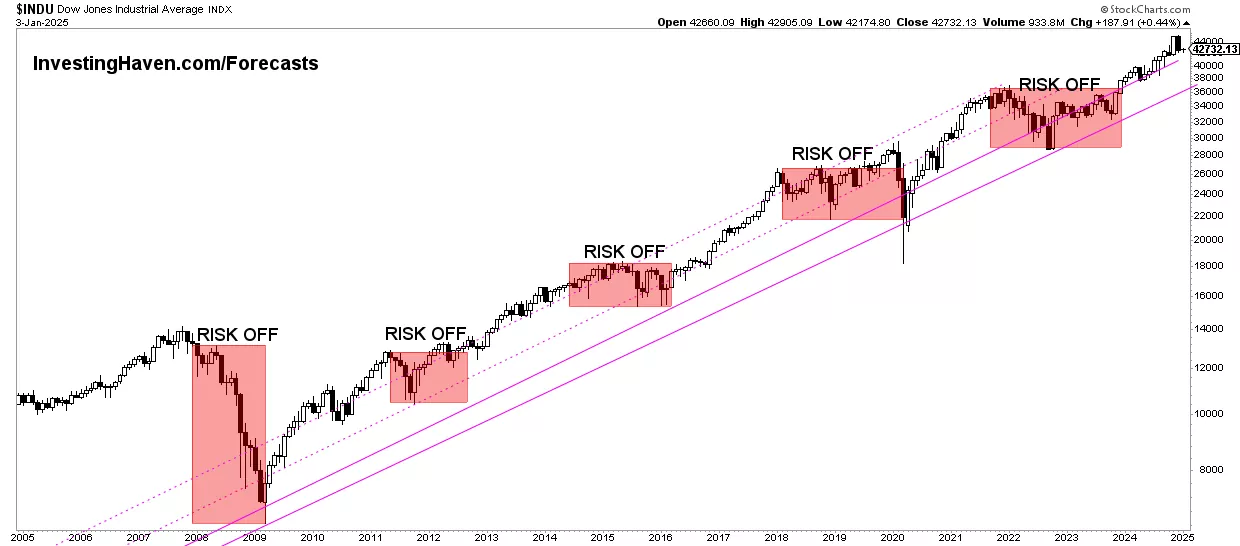
Perhaps the most crucial aspect of interpreting the Dow is distinguishing between short-term noise and long-term trends. Daily fluctuations, while exciting or alarming, are often just that – daily fluctuations. They are influenced by a myriad of transient factors and are generally not indicative of long-term economic health or investment opportunities. For long-term investors, focusing on the Dow’s trajectory over months and years provides a more accurate picture of capital appreciation and economic growth. Attempting to time the market based on daily Dow movements is a notoriously difficult and often unprofitable endeavor. Instead, understanding the Dow in its historical context and as part of a diversified investment strategy is key to successful financial planning.
The question “what’s the Dow Jones trading at” is a simple inquiry that opens the door to a complex world of finance. It’s a gateway to understanding economic indicators, corporate performance, investor psychology, and market dynamics. While its specific number on any given day is a fleeting snapshot, its enduring legacy as a market benchmark provides invaluable insights for anyone serious about managing their money and navigating the investment landscape. For the discerning investor, it’s not just about the number itself, but what that number truly represents about the state of our financial world.
aViewFromTheCave is a participant in the Amazon Services LLC Associates Program, an affiliate advertising program designed to provide a means for sites to earn advertising fees by advertising and linking to Amazon.com. Amazon, the Amazon logo, AmazonSupply, and the AmazonSupply logo are trademarks of Amazon.com, Inc. or its affiliates. As an Amazon Associate we earn affiliate commissions from qualifying purchases.