
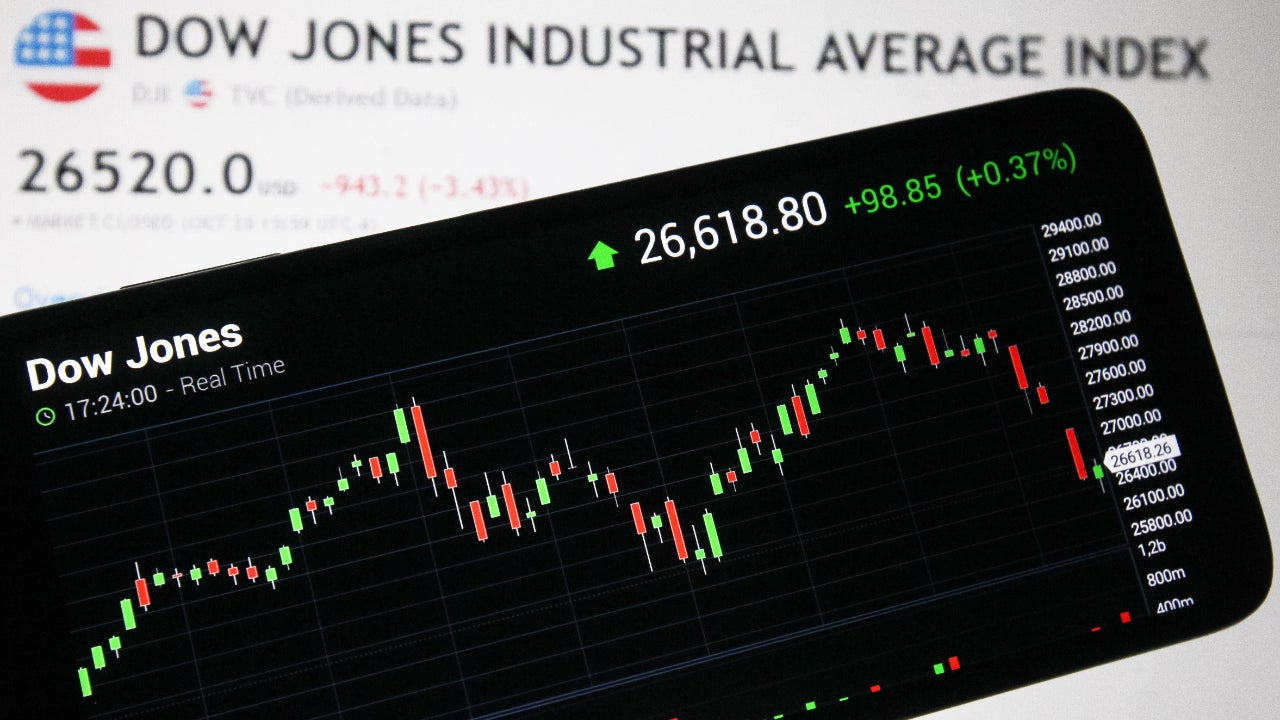
Every day, millions of investors, economists, and casual observers ask the same question: “What is the Dow at?” This single figure, often flashing in red or green on news tickers across the globe, is more than just a numerical value. The Dow Jones Industrial Average (DJIA) serves as a primary barometer for the health of the United States stock market and, by extension, the broader global economy.
For the modern investor, understanding the “Dow” is not just about tracking a daily percentage move; it is about comprehending the mechanics of price-weighted indices, the selection of blue-chip companies, and the psychological impact that these thirty titans of industry have on the financial landscape. To truly answer what the Dow is “at,” one must look beyond the current price and into the financial architecture that supports it.

The Anatomy of the Dow Jones Industrial Average
The Dow Jones Industrial Average is one of the oldest and most followed equity indices in the world. Founded by Charles Dow and Edward Jones in 1896, it originally consisted of just 12 industrial companies. Today, it has evolved into a sophisticated collection of 30 prominent companies listed on stock exchanges in the United States. Despite the “Industrial” in its name, the index now spans diverse sectors including technology, healthcare, finance, and consumer goods.
How the Dow is Calculated: The Price-Weighting Model
Unlike the S&P 500 or the Nasdaq Composite, which are market-capitalization-weighted, the Dow is a price-weighted index. This means that companies with higher share prices have a greater influence on the index’s total value than those with lower share prices.
To maintain consistency when companies undergo stock splits or spin-offs, the index uses the “Dow Divisor.” This mathematical constant is used to normalize the price movements. When you see the Dow “up 100 points,” it does not mean the 30 companies gained a collective $100 in value; it means the sum of their stock prices, divided by the current divisor, has increased by that amount. For investors, this creates a unique dynamic where a $5 move in a high-priced stock like UnitedHealth Group has a significantly larger impact on the index than a $5 move in a lower-priced stock like Verizon.
The “Blue-Chip” Selection Process
The components of the Dow are not chosen by a rigid formula, but rather by a committee at S&P Dow Jones Indices. The goal is to select “blue-chip” companies—entities that are household names, demonstrate sustained growth, and represent a significant portion of the U.S. economy. Because there are only 30 slots available, being added to the Dow is considered a mark of corporate prestige and stability. Conversely, being removed from the index often signals a shift in the economic relevance of a particular industry or company.
Why Investors Watch the Dow in a Modern Economy
In an era of high-frequency trading and complex derivatives, some critics argue that a 30-stock index is too narrow to represent the modern economy. However, the Dow remains a vital tool for personal finance and institutional strategy for several key reasons.
A Benchmark for Personal Portfolios
For the individual investor, the Dow provides a snapshot of “Old Guard” stability. While technology startups and speculative growth stocks often dominate the headlines, the companies within the Dow—such as Coca-Cola, Procter & Gamble, and JPMorgan Chase—represent the bedrock of many retirement portfolios and 401(k) plans. When an investor asks what the Dow is at, they are often checking the health of their “safe” or “value” investments. It serves as a psychological anchor; if the Dow is performing well, there is a general sense of stability in the corporate sector.
Psychological Impact and Market Sentiment
The Dow is the “Main Street” index. Because it is quoted in points rather than just percentages, it is easily digestible for the general public. Large milestones—such as the Dow hitting 30,000 or 40,000—carry immense psychological weight. These levels often trigger “FOMO” (fear of missing out) among retail investors or, conversely, signal a period of overvaluation that might lead to a correction. In the world of business finance, sentiment is often as important as balance sheets, and the Dow is the primary driver of that sentiment.

Comparing the Dow to the S&P 500 and Nasdaq
To understand what the Dow’s current level truly means, it is helpful to contrast it with other major indices. Financial professionals rarely look at the Dow in isolation; they use it as a comparative tool to gauge where capital is flowing.
Breadth vs. Tradition
The S&P 500 tracks 500 of the largest U.S. companies and is weighted by market cap, making it a more accurate representation of the total equity market’s value. When the Dow is up but the S&P 500 is down, it suggests that “value” and “industrial” stocks are outperforming “growth” stocks. This “rotation” is a critical signal for investors looking to rebalance their portfolios. The Dow represents the giants, while the S&P 500 represents the market’s breadth.
Sector Weighting and Tech Exposure
The Nasdaq Composite is heavily weighted toward technology and biotechnology. In periods of rapid technological advancement or low-interest rates, the Nasdaq often outpaces the Dow. However, during times of economic uncertainty or rising interest rates, investors often flee the volatility of the Nasdaq and seek refuge in the stable, dividend-paying companies found in the Dow. By observing the “spread” between what the Dow is at and what the Nasdaq is at, investors can determine the market’s current risk appetite.
Strategies for Investing in the Dow Jones
Knowing what the Dow is at is only the first step; the second is knowing how to capitalize on that information. There are several ways that both novice and experienced investors engage with the index to build wealth.
Index Funds and ETFs
The most common way to invest in the Dow is through Exchange-Traded Funds (ETFs) that track the index, such as the SPDR Dow Jones Industrial Average ETF Trust (Ticker: DIA), often referred to as “Diamonds.” These funds allow investors to own a fractional piece of all 30 companies with a single purchase. This provides instant diversification across sectors like aerospace, financials, and healthcare, making it an ideal core holding for a long-term investment strategy.
The “Dogs of the Dow” Strategy
For those focused on income and value, the “Dogs of the Dow” is a popular investment strategy. This involves identifying the ten companies in the DJIA with the highest dividend yields at the end of the year and investing an equal dollar amount in each. The theory is that these high-yield companies are temporarily undervalued and will see a price recovery in addition to providing steady dividend income. It is a disciplined approach to “buying the dip” within the safest tier of the stock market.
The Future of the DJIA in a Digital World
As we move further into the 21st century, the Dow continues to adapt to the changing landscape of global business finance. The index is no longer just about steel and railroads; it is about data, semiconductors, and digital payments.
Rebalancing for the 21st Century
The committee that manages the Dow has become increasingly proactive in swapping out legacy companies for modern giants. The inclusion of companies like Amazon, Apple, and Microsoft reflects the reality that technology is now an industrial pillar. As the global economy becomes more digitized, we can expect the Dow to continue its evolution, potentially adding leaders in AI and renewable energy, ensuring that the question “what’s the Dow at?” remains relevant for decades to come.
Volatility and Global Influences
In an interconnected world, the Dow is influenced by more than just domestic earnings. Interest rate decisions by the Federal Reserve, geopolitical tensions, and global supply chain shifts all manifest in the Dow’s daily fluctuations. Today’s investor must realize that the Dow is a global index; most of its 30 components derive a significant portion of their revenue from international markets. Consequently, the Dow’s level is a reflection of the world’s collective economic confidence.
Ultimately, asking “what’s the Dow Jones Industrial Average at” is about seeking clarity in a complex financial world. Whether the index is at a record high or navigating a bear market, it remains the definitive storyteller of American capitalism. For the disciplined investor, the Dow is not just a number to be watched, but a guide for building a resilient and profitable financial future.
aViewFromTheCave is a participant in the Amazon Services LLC Associates Program, an affiliate advertising program designed to provide a means for sites to earn advertising fees by advertising and linking to Amazon.com. Amazon, the Amazon logo, AmazonSupply, and the AmazonSupply logo are trademarks of Amazon.com, Inc. or its affiliates. As an Amazon Associate we earn affiliate commissions from qualifying purchases.