
For over a century, the phrase “What’s the Dow doing today?” has served as the universal shorthand for the health of the American economy. Whether whispered in the halls of Wall Street or checked via a smartphone app over morning coffee, the Dow Jones Industrial Average (DJIA) remains the most iconic barometer of financial prosperity—or peril. However, understanding what the Dow is “doing” requires more than just glancing at a red or green number on a screen. To the sophisticated investor, the movement of these thirty blue-chip titans offers a window into corporate health, consumer confidence, and the shifting tides of global capital.
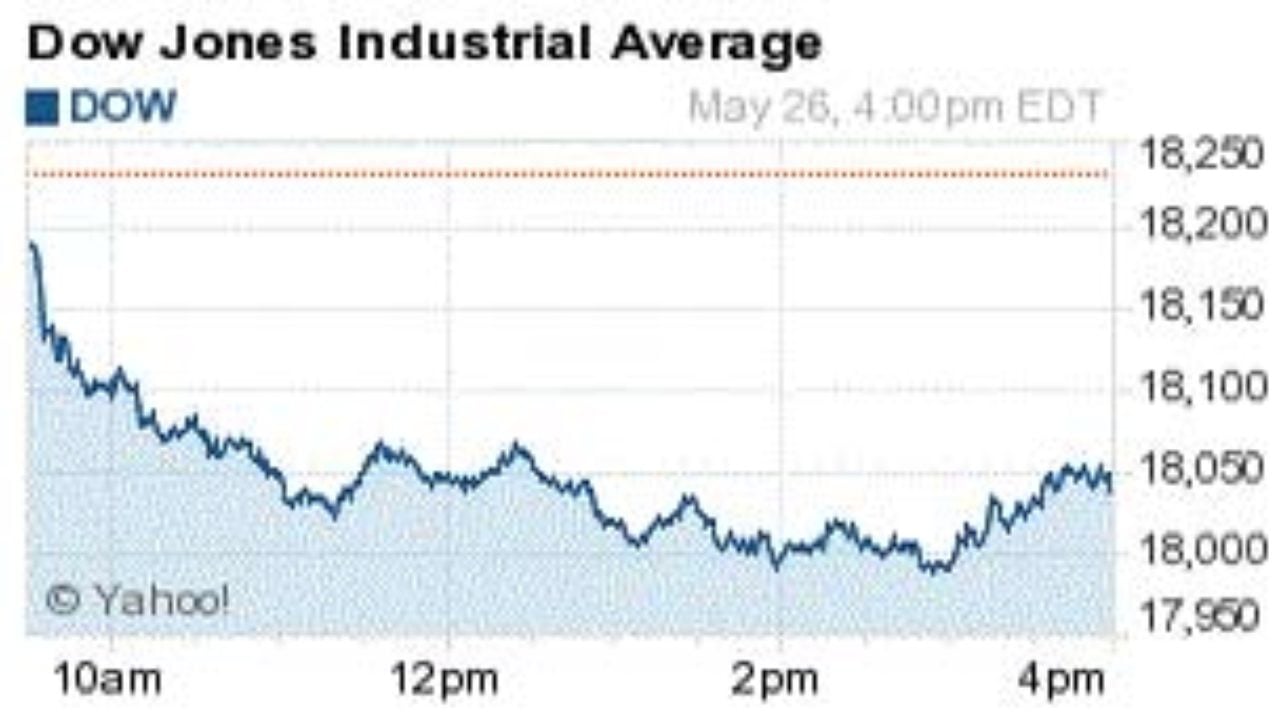
In this exploration, we will move beyond the surface-level fluctuations and examine the mechanics, influences, and strategic implications of the Dow’s daily performance.
Decoding the Dow: More Than Just a Number
To understand what the Dow is doing today, one must first understand what the Dow is. Unlike the S&P 500 or the Nasdaq Composite, which track hundreds or thousands of companies, the Dow Jones Industrial Average is a price-weighted index of 30 prominent companies listed on stock exchanges in the United States. These are the “blue chips”—the established, stable, and financially sound giants that theoretically represent the backbone of the U.S. economy.
The Price-Weighted Methodology
One of the most unique, and often criticized, aspects of the Dow is its price-weighted nature. In a market-capitalization-weighted index like the S&P 500, the largest companies by total value have the most influence. In the Dow, however, the companies with the highest share price exert the most influence on the index’s movement. This means a $1 change in a high-priced stock like UnitedHealth Group moves the index significantly more than a $1 change in a lower-priced stock like Coca-Cola, regardless of the relative size of the companies. When you ask what the Dow is doing, you are essentially seeing a mathematical average of these price movements, adjusted by a “Dow Divisor.”
The 30 Blue-Chip Titans
The composition of the Dow is not static; it evolves to reflect the changing landscape of the American economy. Over the decades, heavy industrial companies have made room for technology giants and service providers. Today, the index includes a cross-section of sectors, from retail (Walmart) and technology (Microsoft and Apple) to finance (Goldman Sachs) and entertainment (Disney). Because these companies are leaders in their respective fields, their daily performance serves as a proxy for the broader sector’s health.
Why the Dow Still Matters in a Multi-Index World
Critics often argue that 30 stocks cannot possibly represent a multi-trillion-dollar economy. While the S&P 500 is technically a more accurate statistical representation of the “market,” the Dow retains its psychological and historical dominance. It is the index the general public follows most closely. When the Dow hits a new milestone, such as 30,000 or 40,000 points, it boosts consumer sentiment and can create a “wealth effect,” where investors feel more confident spending money, thereby fueling further economic growth.
Factors Influencing Today’s Market Movement
The Dow does not move in a vacuum. Its daily trajectory is the result of a complex interplay between macroeconomic data, corporate performance, and central bank policy. When the Dow is volatile today, it is usually reacting to one of several key catalysts.
Federal Reserve Policy and Interest Rates
Perhaps no single entity has more influence over “what the Dow is doing” than the Federal Reserve. Investors hang on every word from the Fed Chair, looking for clues regarding interest rate hikes or cuts. Lower interest rates generally stimulate the economy by making borrowing cheaper for corporations and consumers, which typically pushes the Dow higher. Conversely, when the Fed raises rates to combat inflation, it increases the cost of capital, often leading to “red days” on the index as investors recalibrate the future earnings of these 30 companies.
Corporate Earnings Reports
Four times a year, during “earnings season,” the Dow’s movement is dictated by the quarterly reports of its constituent members. If a heavyweight like Apple or Caterpillar reports earnings that exceed analyst expectations—and, more importantly, provides positive “forward guidance”—the Dow is likely to see a significant lift. However, even if a company reports record profits, the index may drop if the company expresses concern about future supply chain issues, labor costs, or slowing demand.
Geopolitical Events and Macroeconomic Indicators
The Dow is a global index. The 30 companies within it derive a massive portion of their revenue from international markets. Consequently, a trade war in Asia, a conflict in Europe, or a change in oil prices can send shockwaves through the index. Additionally, monthly data releases such as the Consumer Price Index (CPI) and the Jobs Report (Non-Farm Payrolls) provide the “temperature” of the economy. If inflation is hotter than expected, the Dow may retreat on fears of tighter monetary policy.
Interpreting “Red” vs. “Green” Days

For the retail investor, the daily fluctuation of the Dow can be an emotional rollercoaster. A “green” day brings a sense of relief, while a “red” day can trigger anxiety. However, professional money management requires a more nuanced interpretation of these daily swings.
Short-Term Volatility vs. Long-Term Growth
It is essential to distinguish between “noise” and “signal.” A 500-point drop in a single day might seem catastrophic, but in the context of an index trading at high five-figure levels, it is often just a standard percentage fluctuation. Volatility is the price of admission for equity investing. Historically, the Dow has survived world wars, depressions, and pandemics, always eventually trending upward. Seeing the Dow “down” today is often just a temporary correction or profit-taking by institutional investors.
Understanding Market Breadth
Sometimes the Dow may be “up” while the broader market is “down,” or vice versa. This phenomenon is known as a divergence in market breadth. If the Dow is rising but the majority of stocks in the S&P 500 or the Russell 2000 are falling, it suggests that investors are “fleeing to quality”—moving their money out of risky small-cap stocks and into the perceived safety of the 30 blue-chip giants.
The Role of Investor Sentiment and the Fear & Greed Index
Human psychology plays a massive role in what the Dow does on any given Tuesday. Markets are driven by the dual engines of fear and greed. Tools like the CNN Fear & Greed Index help investors understand if the current Dow movement is based on fundamentals (like earnings) or emotion (like panic selling). When the market is in a state of “Extreme Fear,” the Dow may be undervalued, presenting a buying opportunity for the disciplined investor.
Strategic Responses to Market Activity
Knowing what the Dow is doing is only half the battle; knowing how to respond is what defines a successful investor. The most common mistake made in personal finance is reacting impulsively to daily market headlines.
The Dangers of Reactive Trading
The temptation to “sell before it goes lower” or “buy before I miss out” is powerful. However, data consistently shows that market timing is a losing game for most. Missing just a few of the Dow’s best-performing days over a decade can significantly reduce an investor’s total return. Instead of reacting to what the Dow is doing today, investors should focus on what their portfolio should be doing over the next ten years.
Dollar-Cost Averaging as a Hedge Against Uncertainty
One of the most effective strategies for dealing with a volatile Dow is Dollar-Cost Averaging (DCA). By investing a fixed amount of money at regular intervals—regardless of whether the Dow is up or down—investors naturally buy more shares when prices are low and fewer when prices are high. This removes the emotional weight of “checking the Dow” every morning, as the strategy thrives on the very volatility that scares others.
Portfolio Rebalancing in a Fluctuating Market
While “staying the course” is generally good advice, significant movements in the Dow may necessitate portfolio rebalancing. If a prolonged bull market has caused the equity portion of your portfolio to grow from 60% to 80%, you may be taking on more risk than you intended. A day when the Dow is at an all-time high might be an excellent time to sell some winners and reallocate funds into bonds or other asset classes to maintain your desired risk profile.
The Future of the Dow: Evolution in the Digital Age
As we look toward the future, the question of “What’s the Dow doing?” will increasingly be answered by technological and structural shifts in the financial world.
Sector Rotations (Tech vs. Industrials)
The “Industrial” in Dow Jones Industrial Average is largely a historical vestige. We are currently witnessing a massive sector rotation where technology and healthcare are becoming the dominant drivers of the index. As AI and biotechnology continue to redefine the economy, the Dow’s movement will become increasingly decoupled from traditional manufacturing and more tied to digital innovation.
The Impact of Algorithmic and High-Frequency Trading
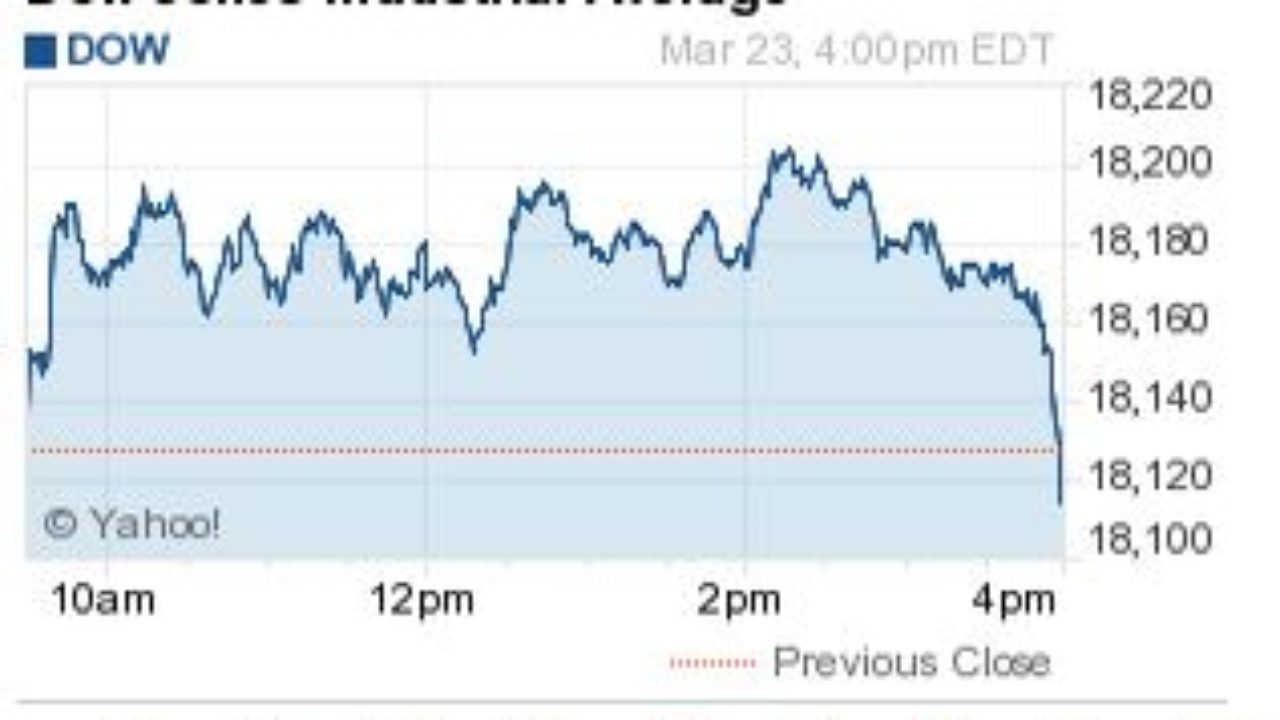
In the modern era, the Dow is no longer moved solely by humans on a trading floor. High-frequency trading (HFT) and algorithmic models execute thousands of trades per second based on news headlines and technical triggers. This can lead to “flash crashes” or rapid spikes that don’t always align with fundamental economic reality. Understanding this helps the modern investor remain calm when the Dow makes a sudden, inexplicable move in a matter of minutes.
In conclusion, “what the Dow is doing today” is a snapshot of the global economic zeitgeist. It is a reflection of corporate earnings, government policy, and collective human emotion. By understanding the mechanics behind the numbers and maintaining a disciplined, long-term perspective, investors can look at the daily tickers not with fear, but with the insight necessary to build lasting wealth. Whether the ticker is red or green, the Dow remains a testament to the enduring resilience of the market economy.
aViewFromTheCave is a participant in the Amazon Services LLC Associates Program, an affiliate advertising program designed to provide a means for sites to earn advertising fees by advertising and linking to Amazon.com. Amazon, the Amazon logo, AmazonSupply, and the AmazonSupply logo are trademarks of Amazon.com, Inc. or its affiliates. As an Amazon Associate we earn affiliate commissions from qualifying purchases.