
In the world of emergency medical services (EMS), the terms “EMT” and “Paramedic” are often used interchangeably by the general public. However, from a career planning and financial perspective, they represent two vastly different investment profiles. Choosing between these roles is not merely a clinical decision; it is a financial one that involves calculating the cost of education, the potential for salary growth, and the long-term return on investment (ROI).
Whether you are looking for a high-intensity side hustle or a long-term career in public safety, understanding the fiscal nuances between an Emergency Medical Technician (EMT) and a Paramedic is essential for making an informed professional choice.

The Initial Investment: Analyzing the Cost of Certification
Every career path begins with an upfront cost. In the EMS industry, the disparity between EMT and Paramedic training is significant, representing the difference between a minor financial hurdle and a major educational commitment.
EMT-Basic: Low Entry Cost, High Accessibility
The EMT-Basic (EMT-B) certification is the entry-level tier of the profession. Financially, it is one of the most accessible “quick-start” careers in the healthcare sector. On average, an EMT course costs between $1,000 and $2,000, depending on the state and the institution. These programs typically last between three to six months, making the “opportunity cost”—the income lost while studying—relatively low.
For those looking for a side hustle or a way to enter the workforce quickly, the EMT-B offers a rapid path to earning. Many community colleges and private training centers offer evening or weekend courses, allowing students to maintain their current income while transitioning into the field. From a personal finance standpoint, the EMT certification is a low-risk investment with an immediate path to employment.
Paramedic Programs: The Price of Advanced Clinical Education
The jump from EMT to Paramedic is a substantial financial leap. A Paramedic program is an intensive, college-level undertaking that can take anywhere from 12 to 24 months to complete. The tuition for these programs ranges from $10,000 to over $15,000. Unlike the EMT-B, which is a certificate program, many Paramedic programs are tied to Associate Degrees, adding the cost of general education credits to the total bill.
Beyond tuition, the “hidden costs” of Paramedic training are significant. Students must complete upwards of 500 to 1,000 hours of unpaid clinical rotations and field internships. For a working professional, this often necessitates a reduction in work hours, leading to a temporary dip in liquidity. However, this investment is the prerequisite for the higher pay scales and specialized roles that define the upper echelons of emergency medicine.
Earnings Potential: Comparing Salaries and Long-term Growth
The primary motivation for moving from an EMT to a Paramedic role is the increased earning ceiling. While both roles are vital to public health, the market values the advanced scope of practice—and the associated liability—of a Paramedic much higher than that of an EMT.
Entry-Level Gains and Regional Variations
The starting salary for an EMT-Basic generally hovers around the $35,000 to $40,000 range, though this fluctuates wildly based on geography and the type of employer (private ambulance vs. fire department). In high-cost-of-living areas, EMTs may earn more, but their purchasing power remains relatively stagnant. As an entry-level position, the EMT role often lacks a steep vertical ladder for raises without further education.
For many, the EMT role serves as a “financial bridge”—a way to gain experience while preparing for a higher-paying healthcare role like nursing or physician assistant school. As a standalone career, the EMT salary often requires significant overtime to achieve a middle-class lifestyle.
The Paramedic Pay Gap: Quantifying the Return on Education
Paramedics, by contrast, command a much higher baseline salary. According to the Bureau of Labor Statistics, the median pay for Paramedics is significantly higher than that of EMTs, often starting between $50,000 and $70,000, with senior Paramedics in municipal fire departments or flight programs earning upwards of $90,000 to $100,000.
When you calculate the ROI, the $15,000 invested in Paramedic school often pays for itself within the first two years of post-certification employment. Because Paramedics can perform advanced life support (ALS) interventions—such as intubation, manual defibrillation, and the administration of a wide array of medications—they are more valuable to insurance billing structures. Private ambulance companies can bill at a much higher rate for an ALS transport than a Basic Life Support (BLS) transport, and a portion of that increased revenue is passed down to the Paramedic.
Diversified Income Streams: EMS as a Side Hustle or Business Venture
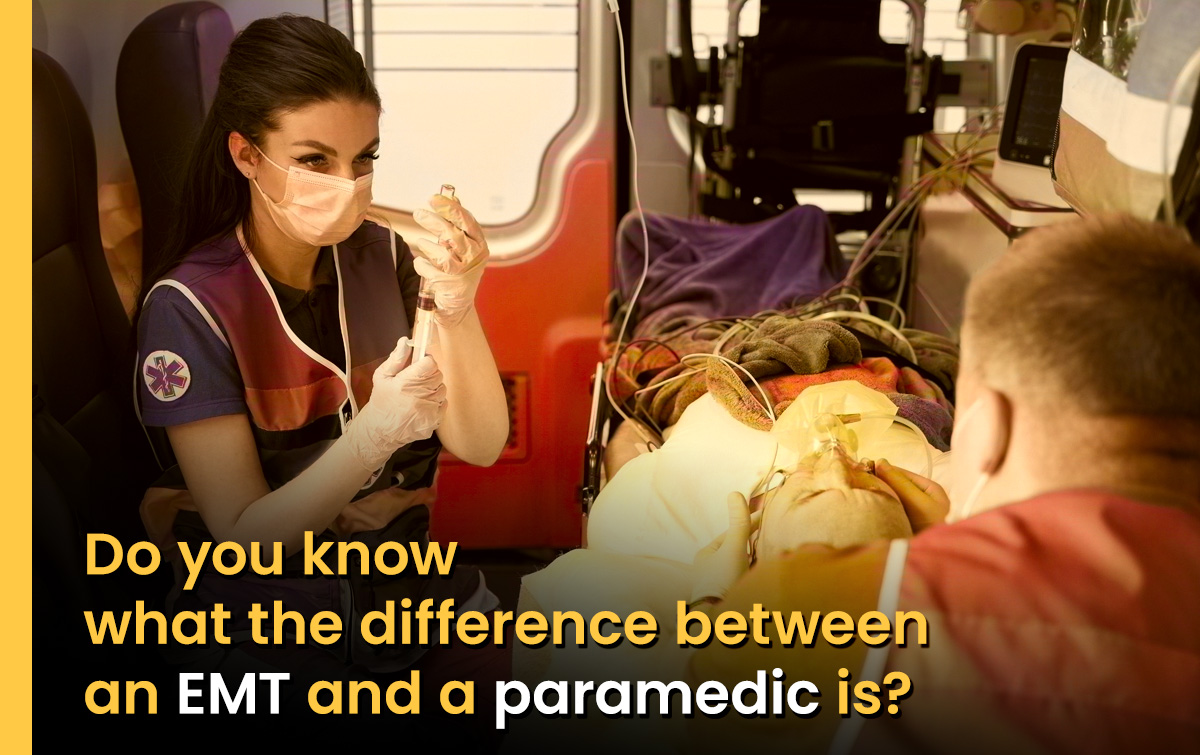
One of the most overlooked aspects of the EMT vs. Paramedic debate is the flexibility for “income stacking.” The EMS schedule—often consisting of 24-hour shifts followed by 48 or 72 hours off—is perfectly designed for the modern gig economy and entrepreneurial ventures.
Overtime and Private Transport Contracts
For the EMT, the most common way to increase income is through the “overtime engine.” Because the industry faces a chronic labor shortage, overtime is almost always available. An industrious EMT can boost their annual earnings by 20–30% simply by picking up extra shifts.
Additionally, private transport contracts—moving patients between hospitals or to dialysis appointments—provide a steady stream of “low-intensity” work. For those looking for a side hustle to supplement a main job, being a part-time EMT for a private service offers a reliable, hourly wage with no “homework” or administrative overhead.
Entrepreneurial Opportunities: Training and Consultation
Paramedics have a broader range of high-margin side hustle opportunities. Due to their advanced medical knowledge, they are frequently hired as “Set Medics” for film and television productions, which often pay daily rates significantly higher than standard ambulance shifts.
Furthermore, Paramedics can leverage their credentials to start businesses in the safety and compliance sector. This includes teaching advanced certifications (ACLS, PALS) to other healthcare professionals or acting as a consultant for corporate disaster preparedness. The Paramedic license is a professional “stamp of approval” that carries weight in the corporate insurance and safety consulting worlds, allowing for a pivot away from physical labor toward intellectual and advisory income.
Benefits and Retirement: The Total Compensation Package
When comparing these two paths, one must look beyond the hourly wage. The “total compensation” package, including health insurance, retirement contributions, and tuition reimbursement, plays a massive role in long-term wealth accumulation.
Pension Plans and Government Benefits
The most financially secure EMS professionals are typically those employed by government entities, such as municipal fire departments or third-service EMS agencies. In these roles, both EMTs and Paramedics often gain access to defined-benefit pension plans.
However, Paramedics are more likely to secure these “gold-standard” government jobs. Because of the higher barrier to entry, there is less competition for Paramedic slots in fire departments compared to EMT slots. A Paramedic who secures a municipal job at age 25 can potentially retire at 50 with a lifetime pension and full medical benefits—a financial asset worth millions of dollars in a private-sector equivalent.
Healthcare and Tuition Reimbursement
Many large hospital systems and private ambulance conglomerates offer tuition reimbursement programs. A savvy financial strategy often involves starting as an EMT, utilizing an employer’s tuition reimbursement to pay for Paramedic school, and then “moving up the chain.” This eliminates the student debt typically associated with advanced certifications, effectively maximizing the ROI of the career transition.
Risk vs. Reward: The Financial Longevity of an EMS Career
No financial analysis is complete without a discussion of risk management. EMS is a physically demanding field, and the “career life” of a street medic can be cut short by injury or burnout.
Managing Occupational Burnout and Disability Insurance
From a personal finance perspective, an EMT or Paramedic’s greatest asset is their physical ability to work. The risk of back injuries or post-traumatic stress is high. For this reason, a portion of the increased Paramedic salary should always be diverted toward high-quality disability insurance.
Paramedics generally have more “exit ramps” than EMTs. If a Paramedic can no longer work on an ambulance, their advanced certification allows them to transition into hospital emergency departments as “ER Techs,” work in remote industrial sites (oil rigs or mines) for high-hazard pay, or move into EMS management and dispatch. This versatility acts as a financial hedge against the physical risks of the job.

Conclusion: Making the Financial Choice
The difference between an EMT and a Paramedic is ultimately a question of scale. The EMT is an excellent entry-level role with a low barrier to entry and immediate earning potential—perfect for those testing the waters or seeking a steady side income. The Paramedic, however, is a professional career path that requires a significant upfront investment of time and money but offers a vastly superior long-term financial trajectory.
By viewing these roles through the lens of investment, salary growth, and diversified income, you can choose the path that best aligns with your personal financial goals and long-term career aspirations. In the business of saving lives, the most successful professionals are those who also know how to save for their future.
aViewFromTheCave is a participant in the Amazon Services LLC Associates Program, an affiliate advertising program designed to provide a means for sites to earn advertising fees by advertising and linking to Amazon.com. Amazon, the Amazon logo, AmazonSupply, and the AmazonSupply logo are trademarks of Amazon.com, Inc. or its affiliates. As an Amazon Associate we earn affiliate commissions from qualifying purchases.