
Donna Tartt’s The Secret History is a novel that, even decades after its publication, continues to captivate readers with its intricate plot, complex characters, and immersive atmosphere. While the story’s enduring appeal lies in its exploration of morality, obsession, and the dark underbelly of intellectualism, a crucial element that grounds its narrative and enhances its thematic resonance is its specific temporal setting. Understanding when the events of The Secret History unfold is not merely an academic exercise; it is fundamental to appreciating the cultural, social, and psychological context that shapes the actions and motivations of its protagonists. This article delves into the precise year in which the chilling events of The Secret History are set, examining the implications of this temporal anchor for the novel’s powerful and enduring impact.
The Immersive Echoes of the Early 1980s: Pinpointing the Temporal Landscape
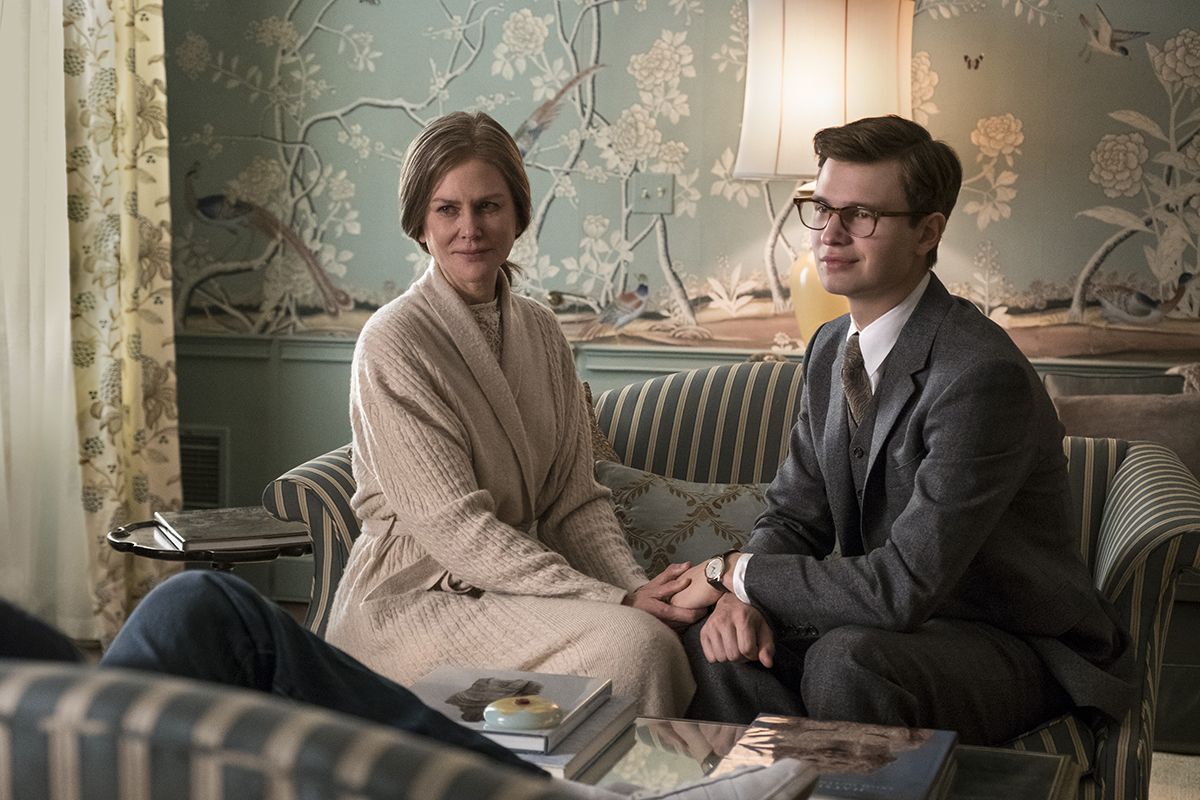
The brilliance of Tartt’s storytelling lies in her ability to create a world that feels both vividly real and dreamlike, a testament to her meticulous attention to detail. While the novel itself was published in 1992, the narrative arc of The Secret History is firmly rooted in a specific, earlier era. The early 1980s provide a fertile ground for the novel’s exploration of intellectual isolation, burgeoning social anxieties, and a certain nostalgic romanticism that often accompanies periods of significant societal transition. By carefully weaving in subtle yet distinct markers of this period, Tartt ensures that the reader is transported not just to a place, but to a specific moment in time, allowing the narrative’s thematic weight to settle with greater force.
The Discreet Clues: Unearthing Temporal Signifiers
Tartt is a master of subtle exposition, and the temporal setting of The Secret History is revealed through a series of carefully placed clues rather than overt declarations. The primary narrative, told from the perspective of Richard Papen, looks back on events that transpired during his undergraduate years at Hampden College. While the novel is intentionally vague about the exact year of Richard’s graduation, a close examination of references within the text points definitively to the early 1980s.
The most significant temporal marker is the general cultural milieu. The sense of intellectual earnestness, the specific brand of bohemianism embraced by Julian Morrow and his select group of students, the pervasive use of analog technology (record players, typewriters, landline telephones), and the overall social and political climate all align with the early years of that decade. There are no overt mentions of specific, era-defining technological advancements that would place the story later. Instead, the narrative feels steeped in an era where classic literature, intellectual discourse, and a certain pre-internet interconnectedness were paramount.
Furthermore, the attitudes towards social issues, while not the central focus, subtly reflect the early 1980s. There’s a palpable sense of a world on the cusp of change, but not yet fully immersed in the hyper-connected, digitally saturated environment that would characterize later decades. This allows for a heightened sense of insularity within the small, elite world of Hampden College, an insularity that is both a product of the characters’ deliberate choices and the temporal context in which they exist. The novel doesn’t feel like it could be set in the late 1980s or the 1990s; the absence of certain cultural touchstones and the presence of others firmly anchor it in the earlier period.
The Significance of Setting: How the Early 1980s Shapes the Narrative
The choice to set The Secret History in the early 1980s is far from arbitrary; it significantly amplifies the novel’s thematic concerns. This era was a period of transition, caught between the radicalism of the 1960s and 1970s and the more commercially driven, technologically advanced landscape of the late 20th century. For a group of students seeking an escape from the perceived banality of contemporary life and a return to a more rarefied, classical ideal, this temporal positioning offers a unique resonance.
The early 1980s represented a moment when traditional academic pursuits still held a certain prestige, and the intellectual fervor of previous decades, though perhaps waning, had left a discernible imprint. Julian Morrow’s pursuit of ancient Greek and his insistence on a detached, aesthetic approach to life can be seen as a nostalgic echo of a perceived intellectual golden age, a pursuit that feels more plausible in this transitional era than in a hyper-modern context. The characters’ desire to live “apart” from the world, to create their own reality, is made more poignant by the fact that this “apartness” is achieved through intellectual and social isolation rather than technological disengagement.
Moreover, the relative lack of pervasive digital connectivity in the early 1980s contributed to the characters’ ability to maintain their secrets and their tightly controlled social circle. The slow dissemination of information, the reliance on personal communication, and the absence of constant digital surveillance created an environment where clandestine activities could fester more effectively. This temporal choice allows for a more profound exploration of guilt, confession, and the burden of hidden knowledge, as the characters are forced to confront each other directly with their transgressions, unmediated by the digital filters of later eras.
The Ghostly Presence of Time: Memory and the Temporal Divide
A central pillar of The Secret History is its retrospective narration. Richard Papen, the story’s unreliable narrator, recounts events that occurred years prior, imbuing the narrative with a melancholic and introspective tone. This temporal distance between the events and their telling allows for a deeper analysis of the psychological impact of guilt, trauma, and regret. The reader experiences not just the unfolding of the tragedy but also its lingering, spectral presence in the narrator’s memory.
The Two Timelines: The Then and the Now of Richard’s Recollection
The novel operates on at least two distinct temporal planes: the period of the actual events at Hampden College, and the period of Richard’s narration. While the precise year of the events is the early 1980s, the year in which Richard is writing his account is less explicitly defined but clearly occurs some years after his departure from Hampden. This narrative technique creates a fascinating interplay between immediacy and reflection.

When Richard describes the days leading up to the murder of Bunny Corcoran, the narrative possesses a vividness that draws the reader into the moment. We feel the tension, the fear, and the escalating desperation of the group. However, this immediacy is always framed by the wisdom (or perhaps the warped perspective) of hindsight. Richard’s commentary, his attempts to rationalize or condemn the actions of his former friends, are filtered through the lens of years of reflection. This creates a dual narrative experience: we are simultaneously present in the unfolding horror and observing its aftermath through the eyes of someone deeply affected by it.
The temporal divide also highlights the destructive and enduring nature of the past. The secrets unearthed in the early 1980s continue to haunt Richard, influencing his present life and his ability to connect with the world. The narrative is, in essence, an act of confession and an attempt at catharsis, a testament to the fact that even seemingly closed chapters can continue to exert a powerful influence on the living. The temporal gap underscores the profound and lasting impact of the events, demonstrating that the “secret history” is not just a collection of past actions but a living, breathing burden carried by those who participated in it.
The Unreliable Narrator and the Shifting Sands of Memory
Richard Papen’s unreliability as a narrator is intrinsically linked to the temporal distance from which he recounts his story. Memory is not a perfect recording device; it is a fluid and subjective construct, prone to embellishment, omission, and reinterpretation. As Richard revisits the events of his past, his narrative is shaped by his evolving understanding of himself and his companions. He grapples with his own complicity, his desires, and his disillusionment, all of which color his recollections.
The specific temporal setting of the early 1980s, with its less intrusive media landscape, further aids in this unreliability. Without the constant barrage of digital information and immediate verification, the characters are left to construct their own narratives, both individually and collectively. When Richard looks back, he is not just recalling facts but reconstructing a narrative that serves his present needs, whether that be self-exculpation, a desperate attempt to make sense of the senseless, or a mournful elegy for lost innocence and corrupted ideals. The temporal gap, therefore, becomes a fertile ground for the exploration of how personal history is shaped, distorted, and ultimately reinterpreted through the passage of time and the introspective gaze of memory.
The Aesthetic of Obsolescence: How the Temporal Setting Enhances the Novel’s Atmosphere
The Secret History is renowned for its rich, evocative prose and its ability to create a palpable atmosphere. The specific temporal setting of the early 1980s plays a significant role in shaping this aesthetic, contributing to a sense of melancholic beauty and intellectual isolation that permeates the novel. The absence of overt technological ubiquity, the emphasis on physical artifacts, and the prevailing cultural mood of the era all coalesce to create a world that is both alluring and unsettling.
Tangible Artifacts and Analog Existence
In the early 1980s, the world was still largely an analog one. This is reflected in the physical objects and experiences that populate The Secret History. The students pore over ancient texts, hold philosophical debates in dimly lit rooms, listen to music on vinyl records, and communicate via landline telephones and handwritten letters. These tangible elements contribute to a sense of groundedness, but also of a world that is slowly receding into the past.
The focus on physical books, for instance, underscores the characters’ intellectual pursuits. The weight of the volumes, the smell of the paper, and the act of turning pages all contribute to a sensory experience that is different from the ephemeral nature of digital reading. Similarly, the presence of record players and the shared experience of listening to music become ritualistic, fostering a sense of community and shared sensibility among the group. These analog details create a world that feels more deliberate, more tactile, and ultimately, more intimate. They are also markers of a time that is passing, contributing to the novel’s overall elegiac tone.
A Pre-Digital Solitude: The Cultivation of Secrecy and Isolation
The temporal setting of the early 1980s is crucial to understanding the effectiveness of the group’s secrecy and isolation. In a world without the internet, social media, and instant global communication, it was far easier to create and maintain a hermetically sealed environment. The characters at Hampden College, particularly Julian Morrow’s inner circle, actively cultivate their detachment from the outside world. Their pursuit of esoteric knowledge and their disdain for conventional society are facilitated by the technological and social landscape of the time.
The absence of pervasive digital surveillance meant that their clandestine activities, their secret rituals, and ultimately, their horrific crime, could remain hidden for a considerable period. The slow pace of information dissemination and the reliance on word-of-mouth and personal interactions meant that their secrets were held within their small, self-imposed community. This temporal choice allows for a deeper exploration of the psychological toll of such isolation and secrecy, as the weight of their actions presses down on them without the possibility of external distraction or immediate exposure. The early 1980s, therefore, provides the perfect temporal crucible for the intense psychological drama and the profound moral quandaries at the heart of The Secret History.
The Enduring Resonance: Why the Early 1980s Still Matters
In conclusion, while The Secret History transcends any single time period in its exploration of universal human themes, its specific temporal setting in the early 1980s is an integral component of its power and enduring appeal. This era, characterized by its transitional nature, its lingering intellectual traditions, and its pre-digital insularity, provides the ideal backdrop for the novel’s dark narrative.
The early 1980s allowed Donna Tartt to craft a story of intellectual obsession and moral corruption that felt both grounded in a recognizable reality and uniquely isolated from the broader societal currents. The characters’ pursuit of an idealized past, their detachment from the present, and their ability to maintain their secrets were all amplified by the temporal landscape of the time. As readers continue to be drawn into the claustrophobic world of Hampden College, it is the subtle yet significant temporal markers that allow them to fully immerse themselves in the novel’s chilling exploration of beauty, corruption, and the profound consequences of buried truths. The year in which The Secret History is set is not just a detail; it is a cornerstone of its unforgettable literary edifice.
aViewFromTheCave is a participant in the Amazon Services LLC Associates Program, an affiliate advertising program designed to provide a means for sites to earn advertising fees by advertising and linking to Amazon.com. Amazon, the Amazon logo, AmazonSupply, and the AmazonSupply logo are trademarks of Amazon.com, Inc. or its affiliates. As an Amazon Associate we earn affiliate commissions from qualifying purchases.