
The year 1962 marks a pivotal moment in the history of American fast food, signaling the birth of a brand that would revolutionize a cuisine and embed itself deeply into popular culture: Taco Bell. While the simple query “what year did Taco Bell open?” elicits a straightforward answer, its true significance lies in the profound branding implications of this inaugural moment. A brand’s origin story is more than a date; it’s the genesis of its identity, the blueprint for its market positioning, and the foundation upon which its entire corporate narrative is constructed. For Taco Bell, 1962 was the year an ambitious entrepreneur, Glen Bell, laid the groundwork for a brand that would demystify Mexican-inspired food for the masses and forge a unique, enduring connection with consumers, a testament to strategic vision and consistent brand building.
The Genesis of a Global Brand: Glen Bell’s Vision
Every enduring brand has a founder with a vision, and Taco Bell is no exception. Glen Bell’s journey to establish Taco Bell in 1962 was not an overnight success but the culmination of years of entrepreneurial experimentation, observation, and a keen understanding of consumer desires. His relentless pursuit of a novel fast-food concept ultimately shaped Taco Bell’s initial brand identity and its long-term market strategy.
From Hot Dogs to Hard Shells: An Entrepreneurial Spirit
Glen Bell was a serial entrepreneur with a knack for identifying emerging market trends and filling culinary gaps. His early ventures painted a clear picture of an individual constantly refining his brand offering. Beginning with a hot dog stand in San Bernardino, California, in 1946, Bell quickly recognized the burgeoning demand for convenience and speed in post-war America. He progressed to Bell’s Drive-In, offering hamburgers and hot dogs, but his true breakthrough came from observing the success of Mexican restaurants, particularly a local taco stand popular with the Latino community.
Bell wasn’t content merely to imitate; he sought to innovate. His initial foray into Mexican-inspired cuisine involved studying how to mass-produce crispy taco shells – a crucial innovation that would become a cornerstone of the Taco Bell brand. He developed the “taco-burger,” a hybrid that eased American palates into new flavors, and eventually launched several small ventures like Taco-Tia (opened in 1954) and El Taco. These early establishments served as crucial proving grounds, allowing Bell to perfect recipes, streamline operations, and understand the nuances of marketing a relatively unfamiliar cuisine to a broader, mainstream audience. This iterative process of product development and brand testing was instrumental in crystallizing the concept that would become Taco Bell. Each failure and success taught Bell valuable lessons about product consistency, operational efficiency, and, most importantly, how to position an “exotic” food as accessible and desirable.
The Inaugural Bell: Launching in Downey, California (1962)
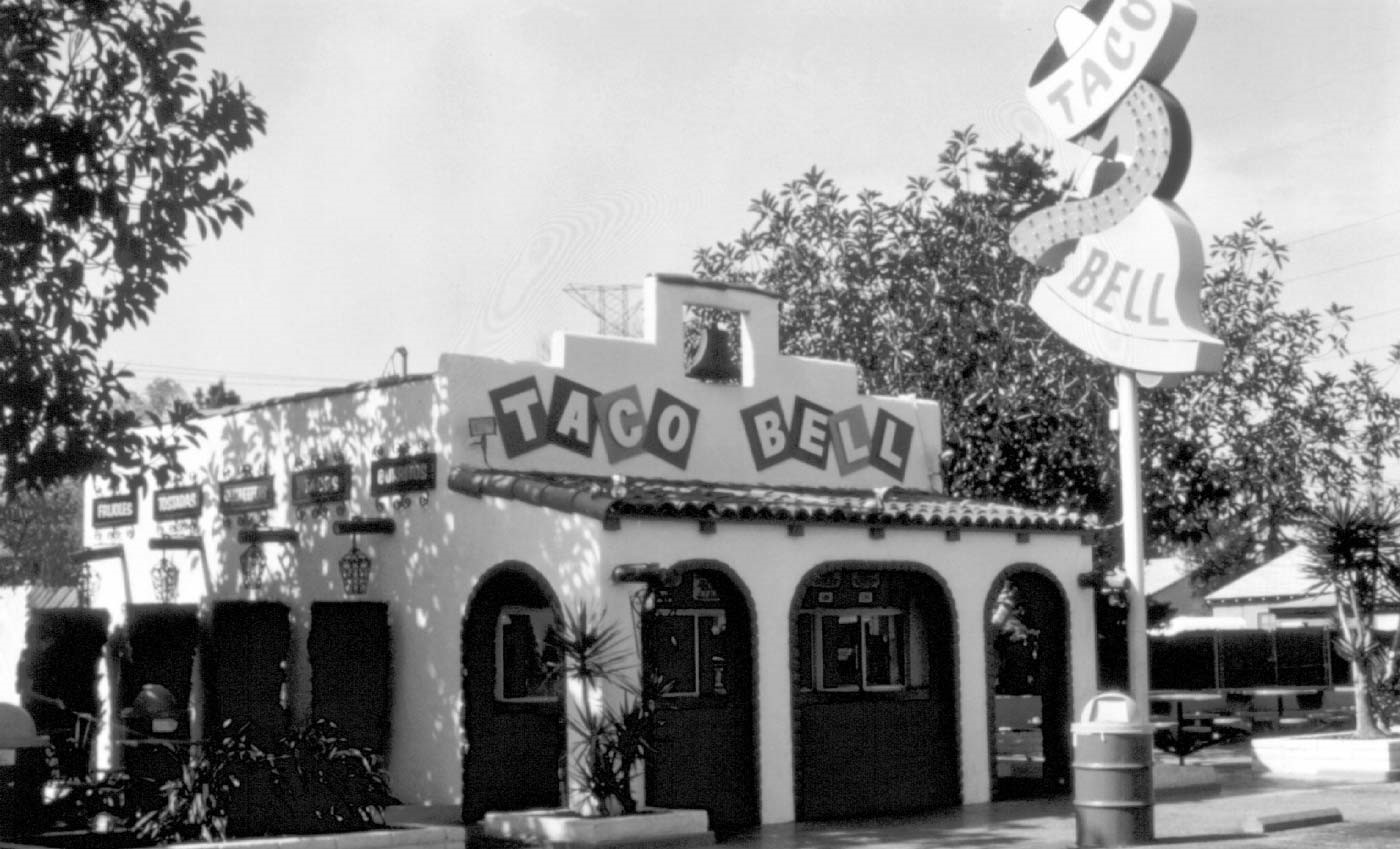
With years of experience and refined concepts under his belt, Glen Bell finally opened the first Taco Bell restaurant in Downey, California, in March 1962. This location wasn’t just another restaurant; it was the physical embodiment of a fully articulated brand vision. The initial menu was simple, focusing on affordability and speed: tacos, burritos, tostadas, and frijoles. A taco cost a mere 19 cents, making it an irresistible option for consumers seeking novelty and value.
The choice of Downey was strategic, a growing suburban area ripe for new dining experiences. The restaurant’s design was modest but functional, emphasizing efficiency for quick service. More significantly, the brand promised a distinct culinary experience: “Mexican food” that was fast, consistent, and appealing to an American palate accustomed to burgers and fries. This early positioning was critical. Taco Bell wasn’t trying to be an authentic Mexican restaurant; it was creating its own niche as a purveyor of “Mexican-inspired” fast food. This differentiation was key to its initial success and laid the groundwork for its subsequent expansion, defining a brand promise centered on accessibility, affordability, and a unique flavor profile.
Crafting a Distinct Identity: Early Branding and Market Positioning
The success of Taco Bell beyond its initial location was not accidental; it was the direct result of a deliberate and astute branding strategy that aimed to carve out a unique space in a burgeoning fast-food market. From the very beginning, Taco Bell understood the importance of clarity in its brand message and consistency in its customer experience.
The “Taco” Revolution: Democratizing a Cuisine
One of Taco Bell’s most significant early branding achievements was its role in democratizing Mexican-inspired cuisine in America. Prior to 1962, tacos and burritos were largely confined to specific cultural enclaves or specialty restaurants. Glen Bell’s genius lay in recognizing the potential of these foods and simplifying them for mass appeal. The brand’s promise was not just about serving food, but about introducing a new flavor experience to the average American family in a format they understood: fast, convenient, and affordable.
This act of “democratization” involved several branding elements. First, the food itself was adapted. Bell’s innovation with the hard-shell taco made it easier to eat and less intimidating for newcomers. Second, the menu was concise and easy to navigate, reducing decision fatigue for customers. Third, the pricing strategy made Taco Bell an everyday option rather than an occasional treat. By making “tacos” a household name and an accessible meal choice, Taco Bell wasn’t just selling food; it was selling an experience – the chance to try something new without venturing too far outside their comfort zone or budget. This focus on accessibility became a core tenet of the Taco Bell brand, establishing it as a fun, adventurous yet reliable choice.
Visuals and Voice: Building Recognition
While early branding might seem rudimentary compared to today’s sophisticated digital strategies, the foundations of visual and verbal identity were crucial for Taco Bell. The name “Taco Bell” itself was simple, memorable, and directly communicated the primary product and the founder’s name. It was catchy and easily distinguishable from burger or chicken chains.

Early branding efforts focused on creating a recognizable and friendly image. Store designs, though evolving over time, consistently emphasized cleanliness, efficiency, and a vibrant, inviting atmosphere. Advertising, even in its nascent forms, aimed to convey the brand’s unique offering with a clear, approachable voice. The brand’s consistent messaging around speed, flavor, and value helped to build trust and familiarity with consumers. This consistent application of visual and verbal identity across all touchpoints, from the menu board to the exterior signage, was essential in establishing Taco Bell as a distinct and reliable brand in a rapidly expanding fast-food landscape. It was about creating an identity that resonated with its target audience and stood out from the growing competition.
Scaling the Brand: From Local Favorite to National Powerhouse
The successful launch in Downey was merely the first step. For Taco Bell to evolve into the household name it is today, Glen Bell understood that strategic expansion and brand reinforcement were paramount. The early years post-1962 were characterized by aggressive growth, demonstrating a clear brand strategy for scaling.
Franchise Model: A Blueprint for Expansion
A critical decision that propelled Taco Bell from a regional success to a national phenomenon was its early adoption of the franchising model. Recognizing the capital-intensive nature of rapid expansion, Bell began franchising Taco Bell restaurants just two years after its inception, in 1964. This strategic move was a brilliant branding maneuver. Franchising allowed for swift market penetration without the burden of full corporate ownership, leveraging local entrepreneurs’ motivation and capital.
However, a franchising model only works if the core brand is strong, replicable, and provides a clear value proposition. Taco Bell’s initial success proved its concept was sound. The brand offered franchisees a proven business model, a streamlined menu, and operational simplicity. In return, the franchisees committed to upholding Taco Bell’s brand standards, ensuring consistency in product quality, customer service, and store appearance across diverse geographical locations. This uniformity was essential for maintaining brand integrity as it expanded. The ability to deliver the same “Taco Bell experience” in California, the Midwest, or the East Coast was crucial for building national brand recognition and consumer trust. The franchise model effectively turned individual restaurants into brand ambassadors, spreading the Taco Bell message far and wide.
Adapting and Innovating: Maintaining Brand Relevance
Even in its early decades, Taco Bell understood that a static brand is a dying brand. To sustain its growth and maintain relevance, the brand continually adapted its menu, marketing, and store concepts. While the core “taco” remained, the brand introduced new items, like the Bell Beefer (a loose meat sandwich served in a bun, akin to a sloppy joe, but with taco seasoning, appealing to the American palate) or the iconic Burrito Supreme. These innovations showed a willingness to experiment while staying true to its “Mexican-inspired” roots.
Marketing campaigns evolved to capture changing consumer tastes and demographics, employing catchy slogans and memorable commercials. Store designs underwent updates to remain modern and inviting, reflecting contemporary architectural trends while retaining the brand’s distinctive identity. This continuous cycle of innovation and adaptation was not about abandoning its origins but about demonstrating the brand’s dynamism and responsiveness to its audience. It ensured that Taco Bell remained fresh and exciting, preventing it from becoming a relic of the past and instead positioning it as a forward-thinking, yet familiar, fast-food giant. This ability to innovate within its established brand framework has been a hallmark of Taco Bell’s long-term success.
The Enduring Legacy: Why Origin Stories Matter for Brands
The opening of Taco Bell in 1962 is far more than a simple historical marker; it’s the genesis of a powerful brand narrative. For any brand, understanding its origins is not just an exercise in nostalgia but a strategic imperative that informs its past, present, and future trajectory.
A Foundation for Authenticity and Narrative
Taco Bell’s origin story, rooted in Glen Bell’s entrepreneurial spirit and his vision to popularize Mexican-inspired cuisine, provides a rich vein of authenticity that continues to resonate with consumers today. In an era where consumers seek genuine connections with the brands they support, an authentic origin story provides depth and meaning. It allows the brand to tell a compelling narrative about its purpose, its struggles, and its triumphs.
This narrative can be leveraged in modern marketing, creating emotional connections that extend beyond the product itself. When Taco Bell references its heritage, it’s not just sharing history; it’s reinforcing its core identity as a pioneer, an innovator, and a brand built on a desire to offer unique flavors to the masses. This foundational authenticity helps differentiate it from competitors and fosters a sense of loyalty among its customer base. It reminds consumers that behind the quirky marketing campaigns and innovative menu items, there’s a consistent brand ethos that has driven it since 1962.

Inspiring Future Strategy: Learning from the Past
The lessons embedded in Taco Bell’s founding years continue to inform its strategic decisions. Glen Bell’s initial focus on affordability, accessibility, and introducing a distinct flavor profile remains relevant. Even as the brand introduces extravagant items like Doritos Locos Tacos or the Cantina Bell menu, the underlying principles of value, convenience, and unique taste experiences are still evident.
Understanding its origins helps Taco Bell stay true to its core mission while exploring new avenues. It reminds the brand of the boldness required to introduce a new cuisine and the importance of adapting to consumer tastes without losing its identity. This connection to its past provides a compass for future innovation, ensuring that new products and marketing initiatives align with the brand’s established character. The legacy of 1962 isn’t just about how Taco Bell began; it’s about the enduring principles that continue to guide its brand strategy, allowing it to adapt, innovate, and thrive while remaining distinctively Taco Bell.
In conclusion, the answer to “what year did Taco Bell open?” is 1962. But this date represents far more than a chronological marker. It signifies the commencement of a brand’s journey—a testament to entrepreneurial vision, strategic market positioning, and the relentless pursuit of an innovative concept. Taco Bell’s origins illustrate that a brand’s birth is a foundational chapter, shaping its identity, guiding its evolution, and imbuing it with a narrative that continues to resonate with millions globally. It is a powerful reminder that every successful brand begins with a singular moment of creation, the ripples of which can be felt for decades to come, defining its place in the world and its connection with its audience.
aViewFromTheCave is a participant in the Amazon Services LLC Associates Program, an affiliate advertising program designed to provide a means for sites to earn advertising fees by advertising and linking to Amazon.com. Amazon, the Amazon logo, AmazonSupply, and the AmazonSupply logo are trademarks of Amazon.com, Inc. or its affiliates. As an Amazon Associate we earn affiliate commissions from qualifying purchases.