
The term “satellite state” conjures images of distant celestial bodies orbiting a dominant power, and in a geopolitical context, this analogy holds a significant, albeit often imposed, truth. Understanding satellite states is crucial for grasping the dynamics of international relations, particularly during the Cold War era. These were nations that, while nominally independent, were effectively controlled by a more powerful external state, usually a superpower. Their political, economic, and military decisions were heavily influenced, if not dictated, by the dominant power, creating a hierarchical relationship that reshaped global landscapes and ideologies.
The very concept of a satellite state is rooted in the notion of asymmetrical power. It describes a state that, despite possessing the outward trappings of sovereignty – its own government, flag, and international representation – lacks genuine autonomy. Its foreign policy is dictated, its domestic policies often shaped to align with the patron’s interests, and its military is frequently integrated into or subordinate to the patron’s defense structure. This form of control wasn’t always overt coercion; it could manifest through economic dependency, political pressure, or the threat of intervention. The defining characteristic is the absence of true self-determination in key areas of national policy, rendering the state a pawn on the larger geopolitical chessboard.
The Rise of the Satellite State: Ideology and Geopolitical Necessity
The emergence of satellite states is intrinsically linked to the ideological struggles and strategic calculations of major global powers, most notably during the 20th century. The Cold War, in particular, provided fertile ground for the proliferation of this model, as the United States and the Soviet Union vied for influence across the globe.
Post-World War II Power Vacuum and Soviet Expansion
Following the devastation of World War II, Europe, and indeed much of the world, was left in a state of flux. The old imperial powers were weakened, and two new superpowers, the United States and the Soviet Union, emerged with vastly different political and economic ideologies. The Soviet Union, driven by a desire to secure its borders and expand its communist influence, actively sought to establish a buffer zone of friendly states in Eastern Europe.
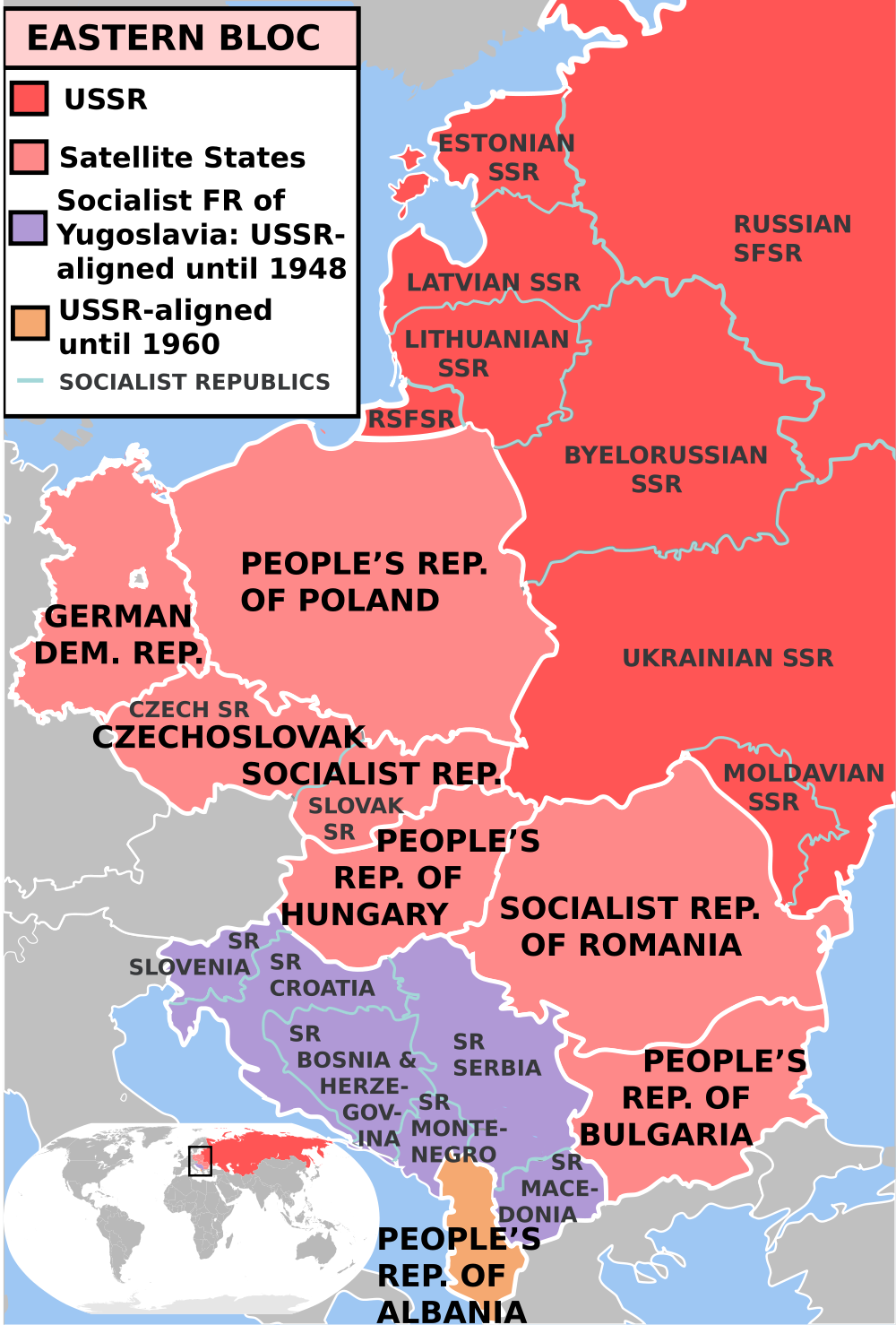
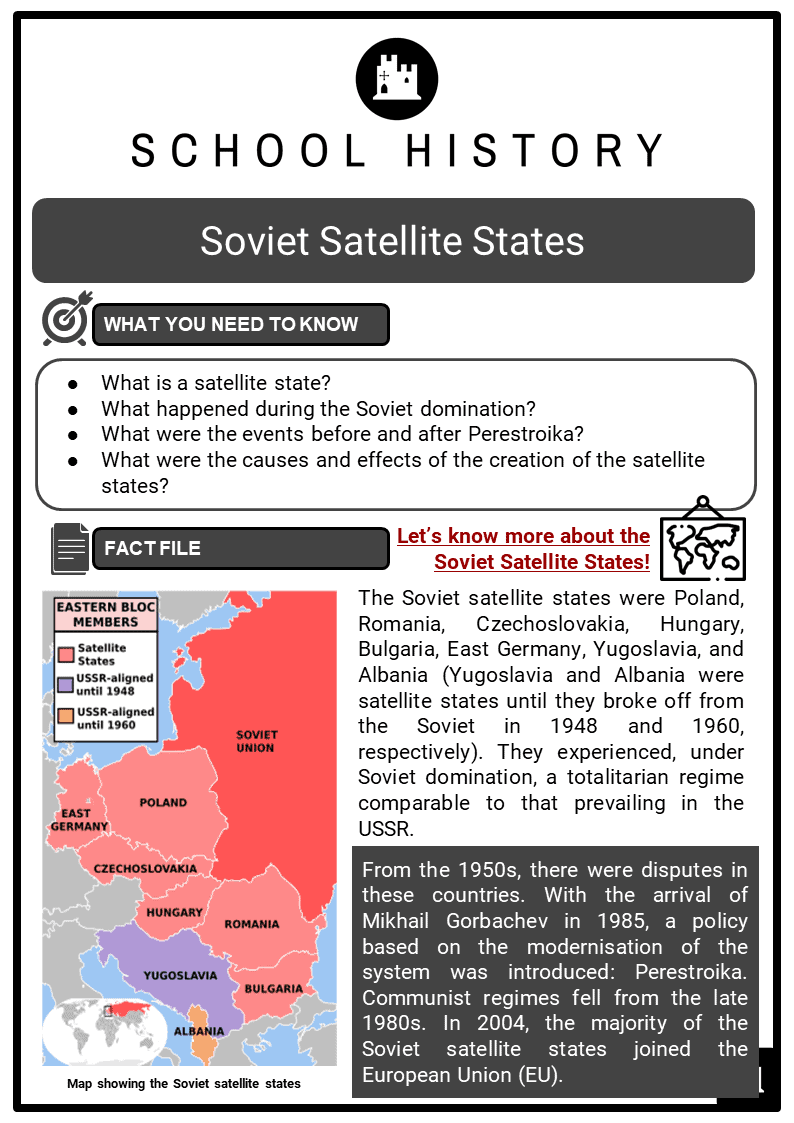
The Yalta and Potsdam conferences, while aiming to establish a post-war order, also laid the groundwork for future divisions. As Soviet forces liberated Eastern European nations from Nazi Germany, they often installed or supported communist-dominated governments. These governments, while initially appearing as independent national entities, quickly fell under Moscow’s sway. Countries like Poland, Czechoslovakia, Hungary, Romania, Bulgaria, and East Germany became prime examples of Soviet satellite states. Their internal political systems were molded to the Soviet model, their economies were integrated into the Soviet bloc, and their foreign policies were invariably aligned with Moscow’s directives. This was not merely about ideological solidarity; it was a strategic imperative for the USSR, aiming to prevent future invasions from the West and project its power.
The Truman Doctrine and Western Spheres of Influence
While the Soviet Union was establishing its bloc in Eastern Europe, the Western powers, led by the United States, were also concerned with containing communist expansion. The Truman Doctrine, articulated in 1947, pledged American support to nations threatened by communism. This led to significant economic and military aid being channeled to countries like Greece and Turkey, helping them resist Soviet influence.
In Western Europe, while direct control was not the model, a strong sphere of influence was cultivated through organizations like NATO and economic initiatives such as the Marshall Plan. While these nations retained far greater autonomy than their Eastern counterparts, the overarching geopolitical alignment meant their foreign policies were largely dictated by the need to counter Soviet power. This created a different kind of dependency, one based on shared security interests and economic interdependence within the Western bloc, rather than direct political subjugation. However, when considering the strict definition of a satellite state, the Eastern European nations under Soviet control fit the paradigm most clearly.
Characteristics of a Satellite State: Control Beyond Independence
The defining features of a satellite state were not merely superficial; they represented a profound erosion of true national sovereignty. The dominant power exerted control through a multifaceted approach, encompassing political, economic, and military levers.
Political Subordination and Ideological Conformity
One of the most significant aspects of a satellite state was its political subordination. While these nations had their own governments and elected (or seemingly elected) leaders, these individuals and institutions were ultimately beholden to the ruling party or leadership of the patron state. Any deviation from the approved political line could result in severe consequences, including purges, imprisonment, or even outright replacement of leadership.
Ideological conformity was paramount. The patron state would often export its political ideology, ensuring that the satellite state’s ruling party adhered strictly to its tenets. This involved controlling the media, education system, and cultural output to promote the dominant ideology and suppress dissent. The “Iron Curtain,” a term coined by Winston Churchill, vividly described the ideological and physical barriers that separated the Soviet bloc from the West, a division reinforced by the enforced political homogeneity within the satellite states. Elections, where they occurred, were often carefully managed to ensure the desired outcomes, with opposition parties suppressed or nonexistent.

Economic Dependence and Resource Exploitation
Economic control was another crucial tool used by patron states to maintain their grip on satellite nations. The economies of satellite states were often restructured to serve the interests of the dominant power. This could involve prioritizing the production of raw materials or manufactured goods needed by the patron, rather than focusing on the developmental needs of the satellite itself.
The Council for Mutual Economic Assistance (COMECON), established in 1949 by the Soviet Union and its Eastern European allies, is a prime example of this economic integration. While ostensibly designed to foster economic cooperation, it primarily served to bind the economies of the satellite states to the Soviet Union. Trade flowed predominantly within the bloc, and the Soviet Union often dictated trade terms that benefited itself. Furthermore, resources and industrial output from satellite states could be diverted to support the patron’s larger economic or military objectives. This economic dependency made it exceedingly difficult for satellite states to pursue independent economic development or forge trade relationships outside the Soviet bloc, further entrenching their subservient position.
Military Subordination and Security Integration
Military control was perhaps the most visible and potent indicator of a satellite state’s lack of autonomy. The patron state would often station its own troops within the satellite nation, ostensibly for defense, but effectively as a tool of control and a deterrent against internal dissent or external threats perceived by the patron.
The Warsaw Pact, formed in 1955 in response to the integration of West Germany into NATO, was the military embodiment of the Soviet satellite system. It formalized a collective defense alliance, but in practice, it placed the military forces of Eastern European nations under a unified command structure largely controlled by the Soviet Union. Military doctrines, training, and even weaponry were standardized according to Soviet specifications. The intervention in Hungary in 1956 and Czechoslovakia in 1968 by Warsaw Pact forces, albeit with Soviet leadership, starkly demonstrated the limited military sovereignty of these states and the patron’s willingness to use force to maintain control. Their defense capabilities were thus not geared towards national defense as an independent entity, but rather as an extension of the patron’s security apparatus.
The Decline and Legacy of Satellite States
The geopolitical landscape shifted dramatically in the late 20th century, leading to the eventual dissolution of most satellite state systems. The inherent weaknesses of this model, coupled with internal pressures and external changes, ultimately led to their demise.
Internal Dissent and the Erosion of Soviet Power
Despite efforts to enforce ideological conformity and suppress dissent, the desire for genuine independence and self-determination simmered within many satellite states. Economic stagnation, the suppression of human rights, and the glaring disparities in living standards between the East and West fueled discontent. Movements advocating for reform and greater freedom emerged, often met with brutal suppression, as seen in the Hungarian Uprising of 1956 and the Prague Spring of 1968.
However, the Soviet Union itself began to weaken. Economic challenges, coupled with the immense cost of maintaining its vast empire and the arms race with the West, strained its resources. Mikhail Gorbachev’s reforms of Glasnost (openness) and Perestroika (restructuring) in the late 1980s, intended to revitalize the Soviet system, inadvertently unleashed forces that led to its unraveling. The relaxation of Soviet control emboldened reform movements across Eastern Europe, and the Soviet Union, no longer willing or able to intervene militarily, allowed these nations to chart their own course.
The Fall of the Berlin Wall and the Dissolution of the Eastern Bloc
The symbolic end of the satellite state era arrived with the fall of the Berlin Wall in November 1989. This event, stemming from growing protests and the relaxation of border controls in East Germany, triggered a domino effect across Eastern Europe. One by one, communist regimes crumbled, and nations previously under Soviet domination transitioned towards democracy and market economies.
The dissolution of the Soviet Union itself in December 1991 marked the definitive end of the satellite state system as it had been understood during the Cold War. The former satellite states, now truly sovereign, embarked on their own paths, grappling with the challenges of nation-building, economic transition, and reintegration into the broader international community. Many eventually joined NATO and the European Union, forging new alliances and securing their independence.
Enduring Lessons and Modern Echoes
The era of satellite states offers profound lessons about the nature of power, sovereignty, and the human desire for self-determination. It highlights the fragility of states built on coercion and the enduring strength of national aspirations. While the specific geopolitical context of the Cold War has passed, the concept of asymmetrical influence and the potential for external powers to exert control over weaker states continues to resonate in contemporary international relations. While not always labeled as “satellite states,” instances of economic, political, or military dependency can still be observed, reminding us that the dynamics of power and influence are ever-present, albeit in evolving forms. The historical understanding of satellite states serves as a vital reminder of the importance of true sovereignty and the dangers of imposed control in shaping the destiny of nations.
aViewFromTheCave is a participant in the Amazon Services LLC Associates Program, an affiliate advertising program designed to provide a means for sites to earn advertising fees by advertising and linking to Amazon.com. Amazon, the Amazon logo, AmazonSupply, and the AmazonSupply logo are trademarks of Amazon.com, Inc. or its affiliates. As an Amazon Associate we earn affiliate commissions from qualifying purchases.