
The allure of propelling an object through space, of competition and strategy, has been a fundamental human drive for millennia. Among the myriad forms this takes, sports involving a ball hold a particularly ancient and universal appeal. But when did this fascination truly begin? Unraveling the genesis of ball sports requires delving into the mists of prehistory and sifting through archaeological evidence, ancient texts, and anthropological insights. While a definitive, single “first” sport with a ball remains elusive, we can trace the earliest known ball-like objects and their utilization in activities that foreshadow organized sport.
The Dawn of the Ball: Early Evidence and Purpose
The concept of a spherical object used in games is remarkably old, predating many of the civilizations we typically associate with the origins of sport. The very earliest evidence points towards functional rather than purely recreational use.
Prehistoric Spherical Objects
Long before the organized leagues and elaborate stadiums of modern times, humans were crafting and utilizing spherical objects. Archaeological digs have unearthed stone spheres from Paleolithic and Neolithic eras. These objects, ranging in size and material, were not necessarily designed for the sophisticated rules of a game as we understand it today. Their purpose could have been multifaceted: as tools for hunting, for religious ceremonies, or as rudimentary projectiles. However, the very act of creating and manipulating a spherical object suggests an inherent human fascination with its properties – its rolling, its bouncing, its potential for directed motion.
Early Materials and Craftsmanship
The materials used for these early “balls” were as varied as the regions and eras in which they were found. Smooth, rounded stones were the most readily available option. Over time, as human craftsmanship evolved, so too did the materials. Archaeological finds include carved wooden spheres, and in some instances, tightly bound bundles of animal hair, reeds, or even animal bladders stuffed with various materials. These more sophisticated constructions indicate a growing deliberate intent to create an object suitable for throwing, kicking, or hitting. The ability to consistently craft a spherical object implies a level of precision and an understanding of its aerodynamic or kinetic properties, even if not consciously articulated in scientific terms.
Ancient Civilizations and Emerging Ball Games
As civilizations began to flourish, so too did more complex social structures and, consequently, more organized forms of recreation. It is within these societies that we find the clearest precursors to modern ball sports.
Mesoamerican Ball Game: A Ritualistic and Athletic Endeavor
One of the most compelling and well-documented early ball games originates from Mesoamerica, particularly the Olmec, Maya, and Aztec civilizations. Known by various names, including ōllamaliztli (Nahuatl), this ancient sport was far more than mere recreation; it was deeply interwoven with religious ritual, political significance, and social hierarchy.
The balls themselves were substantial, often weighing several kilograms, and made from solid rubber, a testament to the sophisticated understanding of materials possessed by these cultures. The game was played by two opposing teams in specially constructed ballcourts, often characterized by sloping walls and a “T” or “I” shape. Players were not permitted to use their hands or feet but had to propel the ball using only their hips, thighs, and sometimes forearms. The objective was to advance the ball down the court and through a stone hoop, an incredibly difficult feat given the size and weight of the ball.
The stakes of the Mesoamerican ball game were incredibly high. While the exact nature of the consequences is debated by scholars, it is widely believed that losing teams, or even individuals who performed poorly, faced severe penalties, potentially including human sacrifice. This highlights the profound cultural and spiritual importance attached to the game, elevating it from a simple athletic pursuit to a matter of life and death. The longevity of this tradition, spanning thousands of years, underscores its deep cultural roots and its role in shaping the identity of these ancient societies.
Ancient Egypt and the Ball Game of “Throwing”

Evidence from Ancient Egypt also suggests the existence of early ball games. Hieroglyphs and tomb paintings depict individuals engaging in activities that appear to involve throwing and catching balls. These balls were likely made from linen, papyrus, or animal skins, stuffed with materials like straw or rags. While the precise rules and objectives of these Egyptian ball games are not as well understood as their Mesoamerican counterparts, the visual evidence points towards a form of recreational activity that involved hand-eye coordination and potentially competitive interaction. These depictions offer glimpses into the daily lives and leisure pursuits of ancient Egyptians, demonstrating the widespread human inclination towards games involving a ball.
Ancient Greece and the “Episkyros”
In Ancient Greece, the sport of episkyros emerges as a significant contender for one of the earliest organized ball games. Described by ancient writers, episkyros was a team sport played with a ball, and it bore some resemblance to modern-day rugby or American football. The game involved two teams, with a variable number of players, attempting to throw the ball over the heads of the opposing team. Physical contact was permitted, and the game was known for its aggressive and physically demanding nature.
The ball used in episkyros was likely made of leather stuffed with hair or feathers. While the exact rules remain somewhat obscure due to the limited surviving texts, it’s clear that it was a competitive and popular pastime. The fact that it was described by prominent Greek writers suggests it held a notable place in their athletic culture. Furthermore, the inclusion of episkyros and other ball games in ancient Olympic festivals indicates their recognized status as legitimate forms of athletic competition.
The Evolution and Spread of Ball Sports
From these early, often ritualistic or rudimentary forms, ball sports began to evolve and diversify, spreading across continents and influencing the development of countless variations.
Roman Adaptations and Military Applications
The Romans, renowned for their military prowess and engineering, also adopted and adapted ball games from the cultures they encountered, including the Greeks. They developed their own versions, with harpastum being a particularly noted example. Similar to episkyros, harpastum was a rough, physically demanding game where the objective was to keep possession of the ball and prevent the opposing team from gaining control. It is believed that harpastum was used as a form of physical training for Roman soldiers, enhancing their agility, strength, and teamwork. The existence of dedicated ball-making facilities and the clear descriptions of gameplay suggest a more formalized structure compared to some earlier instances.
The spread of Roman influence across Europe undoubtedly facilitated the dissemination of ball-playing traditions, laying groundwork for future regional developments.
Early Forms in East Asia
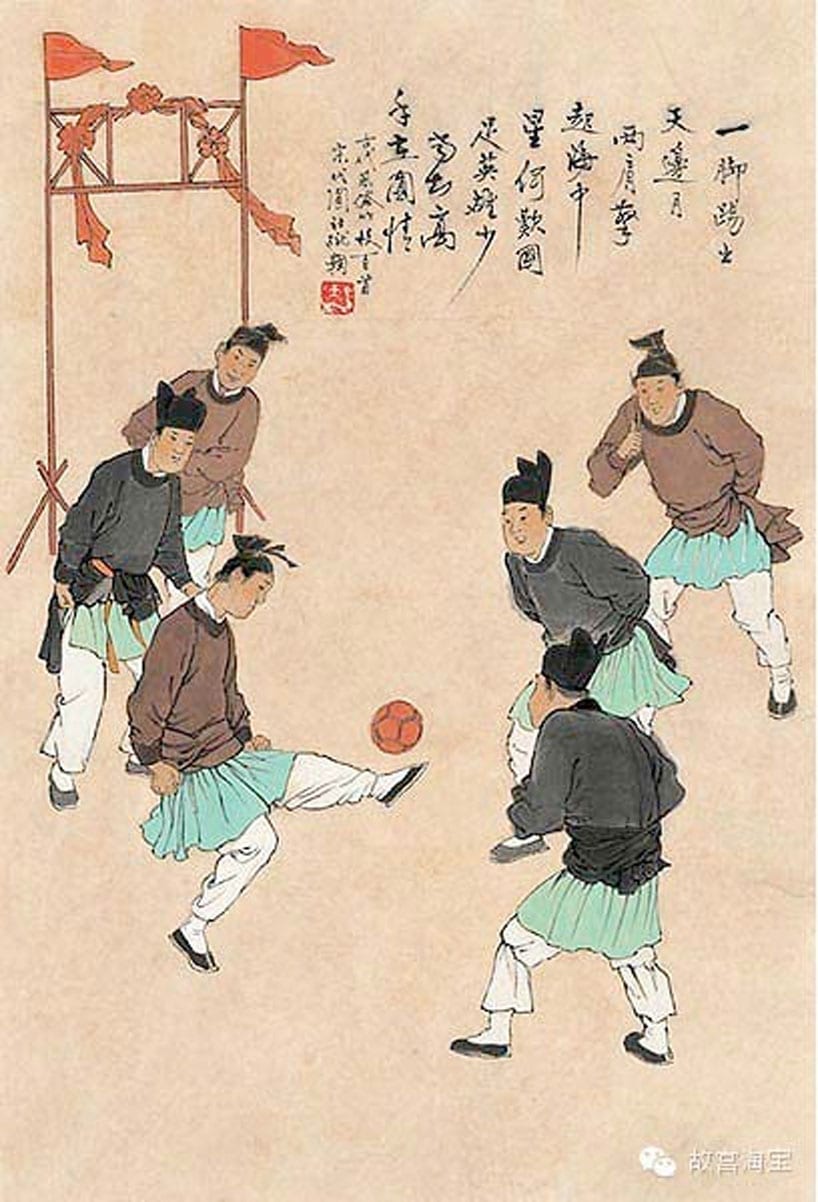
Across the globe, in East Asia, distinct forms of ball games also emerged. In China, ancient versions of cuju (literally “kick ball”) have been documented as far back as the Han Dynasty (206 BCE – 220 CE). Cuju involved kicking a leather ball, often stuffed with feathers or hair, through an opening in a net or a designated space. It was played with varying rules, sometimes involving scoring goals and other times focusing on keeping the ball aloft. Cuju was not only a sport but also an art form, with skilled players demonstrating incredible dexterity and control. It was enjoyed by both the military and civilian populations, indicating its broad appeal.
In Japan, kemari, a more ceremonial and less physically aggressive ball game, developed. This game, which dates back to the 7th century CE, involved players working cooperatively to keep a ball aloft using only their feet, without letting it touch the ground. The focus was on grace, skill, and coordination rather than competition. While different in nature from the more combative games, kemari still represents an ancient engagement with a ball-based activity.
Conclusion: A Universal Human Pursuit
While pinpointing a single “first” sport with a ball is a complex endeavor, the evidence overwhelmingly suggests that the practice of using a ball in games is an ancient and deeply ingrained human activity. From the rudimentary stone spheres of prehistory to the sophisticated rubber balls of Mesoamerica and the kicking games of ancient China, the ball has served as a focal point for recreation, ritual, and competition across diverse cultures and millennia.
The evolution of ball sports is a testament to human ingenuity, our innate desire for play, and our capacity for developing complex rules and strategies. Whether driven by religious observance, military training, or sheer enjoyment, the act of interacting with a ball has consistently fostered physical skill, social bonding, and a spirit of friendly (or sometimes fierce) rivalry. The legacy of these ancient ball games continues to resonate today, as countless sports worldwide owe their existence to these foundational practices that first harnessed the simple yet profound magic of a ball. The answer to “what was the first sport with a ball” is not a singular event, but rather a continuous thread of human engagement with this timeless object, weaving through the tapestry of our shared history.
aViewFromTheCave is a participant in the Amazon Services LLC Associates Program, an affiliate advertising program designed to provide a means for sites to earn advertising fees by advertising and linking to Amazon.com. Amazon, the Amazon logo, AmazonSupply, and the AmazonSupply logo are trademarks of Amazon.com, Inc. or its affiliates. As an Amazon Associate we earn affiliate commissions from qualifying purchases.