
The image of the Statue of Liberty, majestic and serene, presiding over New York Harbor, is etched into the global consciousness. Her distinctive greenish-blue hue is as iconic as her torch and tablet, instantly recognizable as a symbol of freedom, democracy, and hope. Yet, this familiar green is not the color Lady Liberty was when she first arrived on American shores. Her transformation from a gleaming metallic figure to the weathered beacon we know today is a fascinating tale, not just of chemistry and time, but also of how an enduring brand evolves, the technology that helps us understand her past, and the financial legacy required to sustain such an international marvel. Delving into the statue’s original appearance opens a window into its creation, its purpose, and the powerful interplay between material reality and symbolic meaning, all while offering surprising connections to modern themes of technology, branding, and financial stewardship.
The Original Luster: A Copper Icon’s Genesis
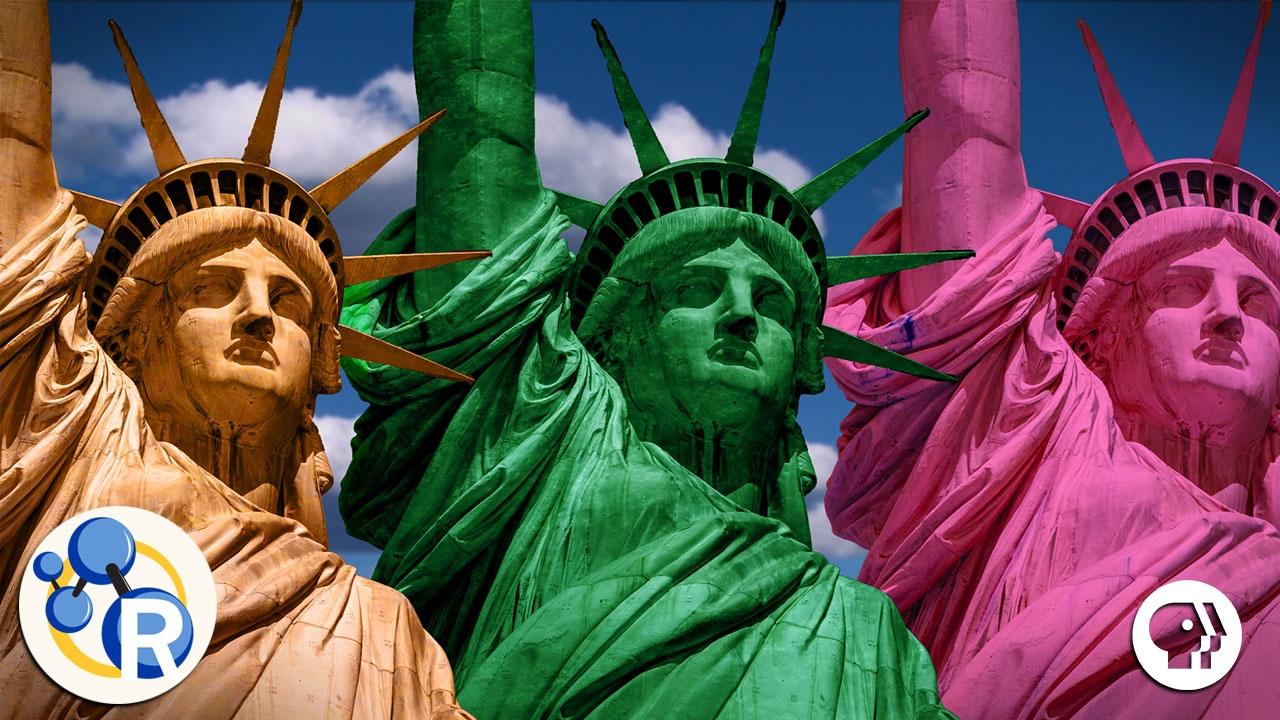
When Frédéric Auguste Bartholdi’s colossal sculpture, “Liberty Enlightening the World,” was completed in France and presented to the United States in 1884, it was far from the green monument we celebrate today. Lady Liberty, in her nascent glory, was a striking vision of burnished copper, radiating a reddish-brown, almost coppery-penny sheen. This original color was not merely a default but a deliberate choice, reflecting the advanced metallurgy of the era and imbuing the statue with an initial visual identity that was both literally brilliant and symbolically potent.
From Parisian Workshop to New York Harbor: The Engineering Marvel
The construction of the Statue of Liberty was a monumental undertaking, pushing the boundaries of 19th-century engineering and design. Gustave Eiffel, the visionary behind the Eiffel Tower, designed the intricate internal skeletal framework of iron pylons and trusses, allowing the statue to withstand the harsh coastal winds while supporting its heavy external skin. This skin consisted of over 300 individual hammered copper sheets, each meticulously shaped and riveted by hand. The choice of copper, a relatively lightweight yet durable metal, was crucial. It allowed for a grand scale without prohibitive weight and offered a certain flexibility, essential for a structure designed to sway gently in the breeze.
The sheer scale of the project necessitated innovative manufacturing processes, a precursor to modern modular construction. Each copper sheet, ranging in thickness from 0.094 to 0.12 inches (2.4 to 3.0 mm), roughly the thickness of two pennies, was crafted in Paris, then disassembled into 350 individual pieces and packed into 214 crates for its transatlantic voyage. The precision required in its fabrication and assembly without the aid of modern CAD software or automated machinery speaks volumes about the artisan skill and nascent technological capabilities of the time. This massive project also demanded significant financial backing, with the French contributing to the statue’s construction and the Americans responsible for the pedestal and assembly, laying the groundwork for the ongoing financial considerations that would accompany such a colossal public work. The innovative techniques employed, from the internal iron skeleton to the hammered copper skin, represented the cutting edge of structural engineering, demonstrating how technology, even in the 19th century, was crucial for realizing such ambitious artistic visions.
The Brilliant Brand: Lady Liberty’s Initial Visual Identity
Before its color transformation, the Statue of Liberty’s original coppery hue played a significant role in establishing its initial brand identity. Imagine the anticipation surrounding its unveiling: a gift from France, a symbol of Franco-American friendship, and a beacon for immigrants. The statue, glistening in the sun, would have been a dazzling spectacle, a literal embodiment of “enlightenment” reflecting light across the harbor. This initial visual was not merely aesthetic; it was a powerful branding statement. Copper, a valuable and resilient metal, conveyed strength, permanence, and a certain warmth. Its earthy tones connected it to natural resources, while its polish spoke of human ingenuity and artistry.
This initial branding strategy, albeit not consciously termed “branding” at the time, leveraged the visual impact of the material itself. It was a direct, visceral statement of quality and purpose. For arriving immigrants, the sight of a gleaming, monumental figure would have been breathtaking, symbolizing not just freedom but also the prosperity and innovative spirit of the new world. This original color set a foundational, if ephemeral, brand identity that suggested newness, vibrancy, and the bright promise of the future. It underscored the monumental undertaking and the preciousness of the gift, making the statue a truly luminous landmark and an unforgettable initial impression for millions.
The Patina’s Embrace: Nature’s Masterpiece
The transition of the Statue of Liberty from its original radiant copper to its familiar green was not an abrupt change but a gradual, natural process spanning several decades. This transformation, a testament to the inexorable forces of nature, ultimately redefined the statue’s visual brand, imbuing it with new layers of meaning and recognition. The patina, far from being a flaw, became an integral part of its identity, a visual chronicle of its enduring presence.
The Science of Transformation: How Copper Turns Green
The scientific process behind the Statue of Liberty’s color change is known as oxidation, a common chemical reaction involving metals. When copper is exposed to the elements – specifically oxygen, moisture, and pollutants in the atmosphere – it undergoes a series of chemical reactions that form a protective layer called a patina. This patina is primarily composed of various copper compounds:
- Cuprite (Cu₂O): A reddish-brown layer that forms first.
- Tenorite (CuO): A black layer that follows.
- Brochantite (Cu₄(SO₄)(OH)₆) and Antlerite (Cu₃(SO₄)(OH)₄): These are green copper sulfates that develop over time, especially in urban or industrial environments where sulfur dioxide is present in the air.
- Atacamite (Cu₂Cl(OH)₃): A green copper chloride that forms in coastal areas due to salt spray.
Given the Statue of Liberty’s location in New York Harbor, exposed to sea spray, rain, wind, and the early industrial pollution of the late 19th and early 20th centuries, the conditions were perfect for the rapid formation of this distinctive green patina. The process began almost immediately after installation, with observers noting a dulling of the original shine within a few years. By the 1920s, much of the statue had taken on its characteristic green hue, a process that stabilized over time. This natural “weathering” effectively sealed the copper, protecting it from further corrosion and ensuring the statue’s longevity. Understanding this electrochemical process is vital for the ongoing preservation efforts, as modern technology allows for precise environmental monitoring and tailored conservation strategies to maintain the integrity of this unique surface.
A New Chapter in Branding: The Green Icon’s Global Recognition
As the patina developed, it dramatically altered the visual brand of the Statue of Liberty, transforming it from a “new” and “bright” symbol to one that conveyed age, endurance, and wisdom. The green color, initially a consequence of natural chemical reactions, became deeply intertwined with its identity, forging a brand image that resonated globally. The shift in color didn’t diminish its power; rather, it arguably enhanced it. The green patina lent the statue an ancient, almost monumental quality, making it appear as if it had stood for centuries, an unwavering constant amidst changing times.
This new visual brand, characterized by its unique green, became universally recognized. It distinguished the Statue of Liberty from other metallic monuments and cemented its place as a unique emblem. The green became symbolic of environmental resilience, timelessness, and the enduring nature of the ideals it represents. For millions, the green statue is the only statue, reflecting a collective memory shaped by its environmental transformation. This accidental branding success demonstrates how even unforeseen physical changes can profoundly impact a symbol’s reputation and recognition. The current green status is now an unchangeable element of its global identity, informing tourism marketing, educational materials, and even merchandise. Any suggestion of “restoring” it to its original copper color is met with widespread public disapproval, highlighting how deeply entrenched this green brand identity has become in the collective consciousness and how crucial it is to respect the evolved brand in reputation management.
Unveiling the Past, Preserving the Future: Technology’s Role

While the Statue of Liberty’s green hue is now iconic, a deep fascination persists regarding its original appearance. Modern technology provides invaluable tools for reconstructing this past, offering insights into its history and informing critical decisions about its ongoing preservation. From digital forensics to advanced material science, technology plays a pivotal role in maintaining the integrity and understanding the legacy of this global landmark.
Digital Forensics: Reconstructing Lady Liberty’s Original Hue
Reconstructing the precise original color of the Statue of Liberty is a task perfectly suited for modern digital forensics and advanced imaging technologies. While historical photographs exist, early photographic processes often rendered colors inaccurately or in black and white, making precise color determination challenging. Here’s where technology steps in:
- Spectrophotometry and Material Analysis: Scientists can take minute samples (where permitted and non-invasive) or use non-destructive spectrophotometers to analyze the un-patinated copper in protected areas (e.g., inside folds or crevices). This analysis reveals the exact composition and original surface properties of the copper, which can then be matched to known samples of freshly minted copper of that era.
- 3D Scanning and Digital Modeling: High-resolution 3D laser scanning can create an incredibly detailed digital twin of the entire statue. This digital model allows researchers to apply hypothetical textures and colors, virtually “stripping away” the patina to visualize the original copper. It can also simulate how light would have reflected off its polished surface, offering a dynamic understanding of its initial appearance.
- AI and Image Processing: Artificial intelligence algorithms, trained on vast datasets of historical materials and modern color science, can be used to analyze existing archival photographs and artist renderings. By cross-referencing these with material analysis data, AI can help predict and reconstruct the most probable original color palette, even colorizing old black-and-white images with greater historical accuracy.
- Virtual Reality (VR) and Augmented Reality (AR): These immersive technologies offer an unprecedented way to experience the Statue of Liberty as it once was. Museums and educational platforms can develop VR experiences that allow users to “walk around” a digitally rendered, gleaming copper statue, transporting them back to 1886. AR apps could even allow visitors on Liberty Island to point their phones at the current green statue and see an overlay of its original copper color in real-time, bridging the past and present in an interactive and educational manner.
These technological advancements not only satisfy curiosity about the statue’s past but also serve educational purposes, allowing a new generation to appreciate the full historical journey of this iconic monument.
The Tools of Preservation: Ensuring an Enduring Legacy
Beyond historical reconstruction, technology is indispensable for the ongoing maintenance and preservation of the Statue of Liberty. Given its age, exposure to a harsh marine environment, and the constant influx of visitors, a sophisticated approach to conservation is crucial.
- Structural Monitoring Systems: Modern sensors and IoT (Internet of Things) devices are integrated into the statue’s internal structure, continuously monitoring for stress, vibration, temperature fluctuations, and humidity levels. This data is transmitted in real-time to engineers, allowing them to detect potential issues early and predict structural fatigue, preventing major damage before it occurs.
- Advanced Material Science: Research into new coatings and repair materials helps conserve the existing structure without altering its historical integrity. While the patina itself is protective, extreme environmental conditions can lead to localized corrosion or material degradation. Scientists develop specialized alloys or non-invasive repair techniques that are compatible with the original copper and iron framework.
- Digital Documentation and Archiving: Every conservation effort, repair, and inspection is meticulously documented using digital tools. High-resolution photography, 3D scans, and comprehensive databases track the statue’s condition over time. This digital archive is invaluable for future generations of conservators, providing a complete history of interventions and material performance.
- Environmental Control Systems: Inside the pedestal and museum areas, climate control systems regulate temperature and humidity to protect artifacts and the building materials from deterioration. Air quality monitoring also helps assess the impact of external pollutants on the statue itself.
- Robotics and Drones: For inspections of hard-to-reach areas or external surfaces, drones equipped with high-resolution cameras can provide detailed visual data, reducing the need for costly and time-consuming scaffolding. Robotic systems are also being explored for more precise, localized cleaning or repair tasks.
These technological investments ensure that the Statue of Liberty remains structurally sound and visually compelling for centuries to come. They represent a significant commitment to heritage preservation, recognizing that maintaining such a profound symbol requires continuous innovation and resources.
The Economics of an Icon: Funding Liberty’s Legacy
The Statue of Liberty, while a symbol of ideals, is also a colossal physical asset requiring substantial financial resources for its initial construction, ongoing maintenance, and sustained operation. Its economic story is one of ambitious fundraising, enduring public support, and a significant contribution to the local and national economy. Understanding the financial underpinning of this icon reveals another critical dimension of its enduring legacy.
A Monument Built on Philanthropy: The Original Funding Drive
The construction and assembly of the Statue of Liberty were monumental tasks, funded not by a single government decree but through an extraordinary transnational fundraising effort that exemplifies early public-private partnerships. The French people, spurred by popular donations, lotteries, and public events, raised the funds necessary for the statue’s fabrication. This was a testament to the popular enthusiasm for the project and a powerful demonstration of collective giving.
On the American side, the challenge was to fund the pedestal upon which the statue would stand. Despite its monumental significance, government funding was initially elusive. It was newspaper magnate Joseph Pulitzer who rallied the American public through his newspaper, The New York World. Recognizing the power of crowd-funding before the term existed, Pulitzer launched a passionate campaign, appealing to the patriotism and generosity of ordinary citizens. He promised to print the name of every donor, no matter how small their contribution. This ingenious strategy resonated deeply, especially among the working class and schoolchildren. Thousands responded, contributing small sums – often less than a dollar – that quickly added up. This grassroots campaign ultimately raised over $100,000 (equivalent to several million dollars today), successfully funding the pedestal.
This original funding model highlights several key “money” themes: the power of collective action, the role of media in galvanizing financial support, and the early recognition that national symbols require community investment. It demonstrates that truly iconic projects often transcend traditional financial models, becoming a shared venture owned by the people they represent. This initial financial endeavor set a precedent for the public’s enduring sense of ownership and responsibility for the statue.

Sustaining the Symbol: The Ongoing Financial Commitment
Today, the Statue of Liberty continues to be a major financial commitment, albeit one that yields significant returns. The National Park Service (NPS) is primarily responsible for the statue’s care, with funding largely derived from federal appropriations, complemented by visitor fees, philanthropic contributions, and partnerships with organizations like the Statue of Liberty-Ellis Island Foundation.
- Maintenance and Preservation Costs: As discussed in the “Tech” section, modern preservation involves advanced structural monitoring, material science, and regular inspections. These activities are incredibly costly. For instance, major restoration projects, such as those undertaken in the 1980s or following Hurricane Sandy, can run into tens of millions of dollars. These costs cover everything from scaffold construction to expert conservators, specialized equipment, and material procurement.
- Operational Expenses: Beyond preservation, there are significant daily operational costs. This includes staffing (rangers, security, maintenance crews), utility bills, ferry services to Liberty Island, and visitor center management. Ensuring the safety and accessibility of millions of visitors annually is a complex and expensive undertaking.
- Economic Impact of Tourism: The Statue of Liberty is a major tourism driver for New York City and the U.S., attracting millions of domestic and international visitors each year. This influx of tourists generates substantial economic activity through ticket sales, transportation, accommodation, dining, and souvenir purchases. While direct revenue from the statue itself might be limited to ferry tickets and gift shop sales, its indirect economic impact, supporting countless local businesses and jobs, is enormous. It acts as a powerful magnet for global tourism, bringing in foreign currency and boosting local economies.
- Value as an Asset and Brand Monetization: Beyond its direct financial impact, the Statue of Liberty holds immense intrinsic value as a national and global asset. Its image is copyrighted and carefully managed by the NPS, generating some revenue through licensing for approved merchandise. This monetization, however, is balanced with the need to protect the symbol’s integrity and avoid over-commercialization. It represents an investment in cultural heritage that pays dividends not just in economic terms but also in national pride and international goodwill.
The ongoing financial commitment to the Statue of Liberty underscores its status as an invaluable asset. It’s an investment in a global brand, a historical monument, and a living symbol that continuously requires astute financial management and sustained public and governmental support to thrive for generations to come.
From its original copper brilliance to its iconic green patina, the Statue of Liberty’s journey is a profound narrative. It speaks to the marvels of 19th-century engineering, the intricate chemistry of nature, and the evolving power of a global brand. As we navigate the complexities of her past and ensure her future, it’s clear that technology is our compass, guiding our understanding and enabling her preservation. Simultaneously, the enduring financial commitment, from grassroots fundraising to modern tourism economies, reminds us that the ideals of liberty, while intangible, require tangible and sustained investment. Lady Liberty, in all her colors and through all her transformations, remains a timeless testament to human aspiration, a beacon continually reflecting the values, ingenuity, and collective spirit that brought her to life and keep her standing tall.
aViewFromTheCave is a participant in the Amazon Services LLC Associates Program, an affiliate advertising program designed to provide a means for sites to earn advertising fees by advertising and linking to Amazon.com. Amazon, the Amazon logo, AmazonSupply, and the AmazonSupply logo are trademarks of Amazon.com, Inc. or its affiliates. As an Amazon Associate we earn affiliate commissions from qualifying purchases.