
The title “What was Don Quixote about?” might seem an odd question to encounter on a website dedicated to tech, branding, and money. However, delve beneath the surface, and Miguel de Cervantes’ enduring masterpiece offers surprisingly relevant insights into the very core of these modern domains. Don Quixote, the quintessential knight-errant of La Mancha, embarks on a quest driven by ideals, imagination, and a profound disconnect from reality. While his adventures are set in a bygone era, the underlying themes of perception, aspiration, and the struggle between the ideal and the practical resonate deeply with the challenges and opportunities we face today in technology, brand building, and financial endeavors.

This isn’t just a story about windmills and chivalry; it’s a narrative that explores the power of belief, the creation of narratives, and the often-blurry line between vision and delusion. Understanding Don Quixote’s essence can help us navigate the complexities of our technologically saturated world, craft compelling brands, and make sound financial decisions.
The Quixotic Pursuit: Ideals vs. Reality in the Digital Age
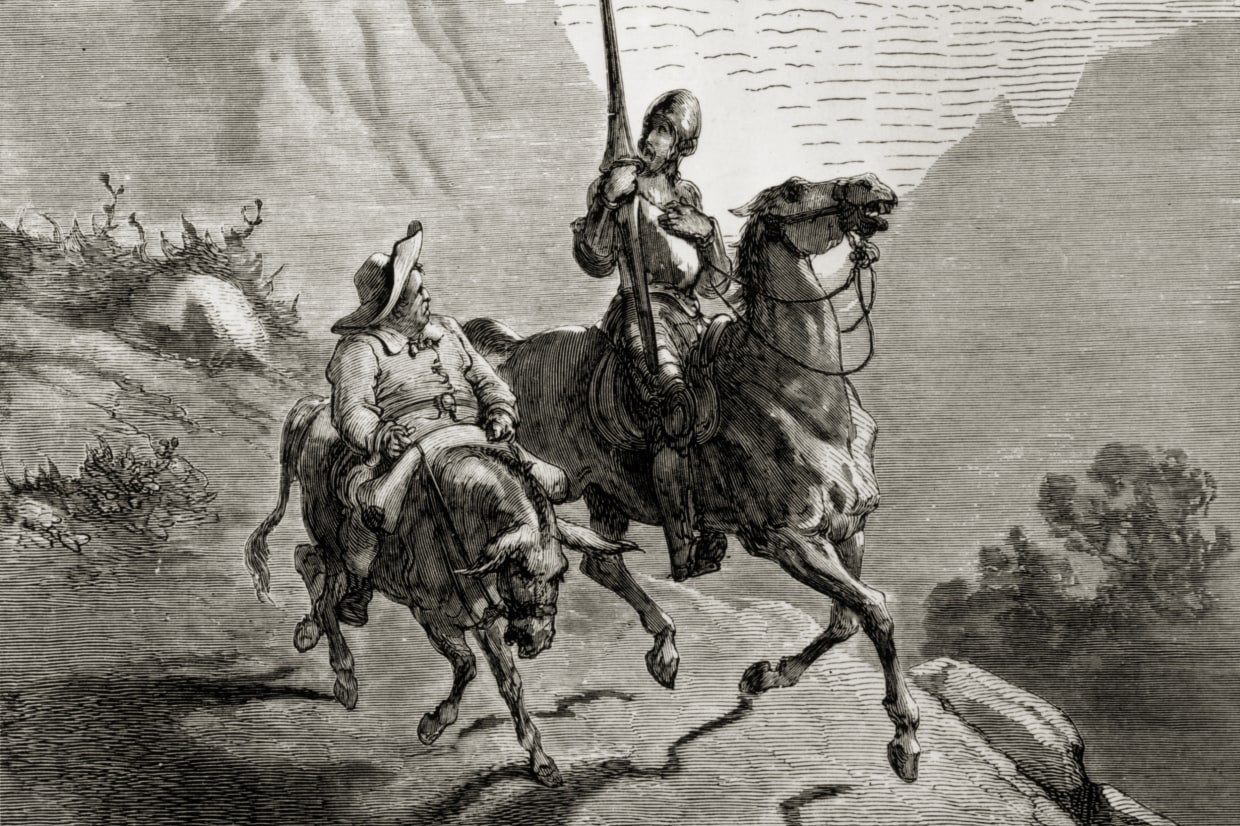
At its heart, Don Quixote is about the clash between deeply held ideals and the often harsh, mundane reality. Alonso Quijano, a Hidalgo of modest means, becomes so engrossed in reading tales of chivalry that he loses his grip on sanity and decides to become Don Quixote, a knight-errant dedicated to righting wrongs and upholding justice. His noble intentions are constantly thwarted by a world that no longer operates by the rules of ancient romances. He mistakes inns for castles, peasant girls for princesses, and windmills for fearsome giants.
This is where the connection to our modern world becomes striking, particularly within the Tech landscape. The pursuit of revolutionary technological advancements often begins with a grand, idealistic vision. Think of the early days of AI, where the promise was to solve humanity’s grandest problems, or the utopian visions associated with early internet adoption. These are akin to Don Quixote’s noble aspirations.
The Illusion of the Grand Project
Many tech projects, from ambitious startups to large-scale AI initiatives, are born from a Quixotic desire to change the world. Developers and entrepreneurs, much like Don Quixote, believe in the transformative power of their creations. They envision a future where their software automates mundane tasks, their AI predicts and prevents disasters, or their gadgets revolutionize communication.
However, the “windmills” of reality can be brutal. Market adoption might be slower than anticipated. User interfaces might be too complex for the average person. The ethical implications of powerful new technologies might be overlooked in the initial fervor. We see this with the hype surrounding certain AI tools, where the initial promise of effortless creativity or problem-solving is often met with the reality of limitations, biases, and the sheer effort required for effective implementation.
Navigating the Landscape of Hype and Substance
Don Quixote’s delusion wasn’t entirely without merit. He believed in a world of honor and virtue, even if that world was largely a figment of his imagination. Similarly, in the tech world, there’s a constant interplay between genuine innovation and the often-inflated hype surrounding new products and trends. A new app promises to streamline your life; a new AI tool claims to unlock unprecedented productivity.
The Quixotic lesson here is to approach these promises with a healthy dose of skepticism, much like Sancho Panza, Don Quixote’s pragmatic squire. While Don Quixote sees giants, Sancho sees windmills. We need our “Sancho Panzas” in the tech world – those who can identify the practical challenges, the potential pitfalls, and the actual capabilities versus the aspirational promises. When evaluating software, AI tools, or new gadgets, the key is to ask: does this truly solve a problem, or is it a romanticized solution to a problem that doesn’t quite exist in this form? Is the brand behind it building something sustainable and valuable, or is it chasing a fleeting trend with unrealistic expectations?
Building Your Knightly Brand: The Narrative of Identity
Don Quixote’s transformation is fundamentally an act of self-branding. He doesn’t just act like a knight; he becomes Don Quixote, a persona meticulously crafted from his reading. He chooses his name, his armor, his steed (Rocinante), and his lady-love (Dulcinea del Toboso). This is a powerful demonstration of how identity, and by extension, brand, is built through narrative and consistent presentation.
In the realm of Brand, this resonates profoundly. Whether it’s a personal brand or a corporate identity, the essence of what you project to the world is crucial. Don Quixote, in his unwavering commitment to his chosen identity, becomes a force, albeit a misguided one.
The Power of the Chosen Narrative
Just as Don Quixote curated his knightly persona, businesses and individuals must carefully construct their brand narrative. What are the core values? What is the unique selling proposition? What story do you want to tell the world? This isn’t about fabricating a false identity, but rather about identifying the strongest, most authentic aspects of an entity and amplifying them.
For a company, this means defining its corporate identity with clarity and consistency. Is it innovative and forward-thinking? Is it reliable and trustworthy? Is it community-focused and socially responsible? These are the “armor” and “steed” of a brand. Personal branding, similarly, involves identifying your unique strengths, passions, and expertise and presenting them in a compelling and consistent manner across various platforms.
The Dulcinea Effect: The Idealized Audience
Don Quixote’s devotion to the imagined Dulcinea del Toboso, a peasant girl he elevates to the status of a noble lady, highlights the importance of the idealized audience or customer in branding. He projects his desires and ideals onto her, transforming her into the object of his quest. In branding, this translates to understanding your target audience so intimately that you can craft messages and offerings that resonate with their aspirations and needs, even if they don’t yet fully articulate them.
This isn’t about deception, but about empathy and strategic positioning. A brand that understands its audience’s dreams and challenges can position itself as the solution, the enabler, or the companion on their journey. The “Dulcinea effect” in branding is about creating something so desirable and aligned with the audience’s ideal self that they are drawn to it, just as Don Quixote was driven by his vision of Dulcinea.
Reputation: The Windmills of Public Perception
Don Quixote’s adventures often end in ridicule and physical pain. His grand gestures are met with misunderstanding and mockery, much like a poorly executed marketing campaign or a brand that missteps in the public eye. His reputation suffers because his actions, while noble in his mind, are perceived as foolish or dangerous by others.
In the world of branding, reputation is everything. A single misstep, a poorly handled crisis, or a campaign that misses the mark can tarnish years of hard work. The digital realm amplifies these perceptions, making it crucial for brands to be mindful of how their actions are interpreted. Just as Don Quixote needed Sancho Panza to ground him, brands need to listen to feedback, understand public sentiment, and be prepared to adjust their sails when faced with the “windmills” of public opinion. The case studies of successful and failed brands often mirror the narrative of Don Quixote – grand ambitions met with either brilliant execution or spectacular, often comical, failure.
The Financial Flourish: From Folly to Fortune
The world of Money is perhaps where the contrast between Don Quixote’s idealism and practical reality is most starkly illustrated, and where the lessons are most critical. Don Quixote is not concerned with material wealth or financial prudence. His quest is for glory, honor, and the restoration of a chivalric age. His actions often lead to him being robbed, beaten, and indebted, a far cry from any sensible financial strategy.
However, even in his folly, there are subtle lessons about belief, investment, and the pursuit of goals.
The Illusion of Instant Riches (and the Reality of Side Hustles)
Don Quixote believes that a single heroic deed will bring him eternal glory and likely vast riches. This is the kind of thinking that can lead to impulsive, ill-advised financial decisions. In the modern context, this mirrors the allure of get-rich-quick schemes, speculative investments without proper research, or the belief that a single viral success will lead to financial freedom.
The reality, as most successful individuals in the “Money” domain understand, is that significant financial gains are typically the result of consistent effort, wise planning, and diversified strategies. This is where the concept of “side hustles” becomes relevant. While Don Quixote chased windmills for abstract glory, a modern individual might pursue a side hustle to build supplementary income, develop new skills, or explore entrepreneurial ventures. The key difference lies in the grounding in reality and the focus on tangible, incremental progress.
Investing in Yourself: The Most Valuable Capital
While Don Quixote’s “investments” were in illusory quests, the underlying principle of investing resources to achieve a future goal remains. In the financial world, the most valuable capital is often human capital – investing in education, skills development, and personal growth. These are investments that yield long-term returns, much like a well-researched and diversified investment portfolio.
A modern “Don Quixote” might be someone who dedicates years to mastering a complex software, learning a new programming language, or developing expertise in a niche area of AI. These are not necessarily glamorous pursuits, but they build a foundation for future earning potential. The “return on investment” might not be immediate glory, but a solid career path and financial stability.

The Pragmatism of Sancho Panza: Financial Tools and Sound Advice
Sancho Panza’s role as the voice of reason is crucial in the Don Quixote narrative. He constantly points out the practical realities, the dangers, and the need for sustenance. In the financial world, Sancho Panza represents the sound advice, the practical tools, and the disciplined approach that underpins financial success.
This includes:
- Financial Tools: Budgeting apps, investment platforms, financial planning software – these are the modern equivalents of Sancho’s common sense, helping individuals track their spending, manage their investments, and make informed decisions.
- Personal Finance Principles: Understanding debt, saving, investing, and risk management are the practical skills that Don Quixote lacked entirely.
- Business Finance: For entrepreneurs, understanding cash flow, profitability, and scalability is essential. These are the practical concerns that separate a fleeting fantasy from a sustainable business.
The story of Don Quixote, viewed through the lens of tech, brand, and money, reminds us that while grand visions and idealistic pursuits are essential drivers of innovation and aspiration, they must be tempered with realism, strategic planning, and a deep understanding of the practicalities of execution. It’s a timeless tale about the human condition, the power of narrative, and the enduring quest for meaning, a quest that continues to play out in the digital landscapes and financial markets of our modern world. The challenge, for us all, is to be a Don Quixote with a Sancho Panza by our side.
aViewFromTheCave is a participant in the Amazon Services LLC Associates Program, an affiliate advertising program designed to provide a means for sites to earn advertising fees by advertising and linking to Amazon.com. Amazon, the Amazon logo, AmazonSupply, and the AmazonSupply logo are trademarks of Amazon.com, Inc. or its affiliates. As an Amazon Associate we earn affiliate commissions from qualifying purchases.