
Force, a fundamental concept in physics, underpins much of our understanding of the physical world and its technological applications. While the question “What unit is force?” might seem straightforward, its answer reveals a rich tapestry of scientific inquiry, technological development, and even the economic drivers behind scientific progress. To truly grasp the significance of force and its units, we must delve into the realm of physics and its tangible manifestations in the technological landscape.
The Foundation: Understanding Force in Physics
At its core, force is an interaction that, when unopposed, will change the motion of an object. It can cause an object with mass to accelerate, decelerate, change direction, or change its shape. The study of force is central to classical mechanics, pioneered by Sir Isaac Newton. Newton’s three laws of motion provide the bedrock for understanding how forces behave and interact.
Newton’s Laws of Motion: The Pillars of Force
Newton’s First Law of Motion, also known as the law of inertia, states that an object will remain at rest or in uniform motion in a straight line unless acted upon by an external force. This law highlights that a force is the cause of change in motion. If an object is moving at a constant velocity, it means the net force acting on it is zero. Conversely, if an object is at rest, there’s no net force pushing it into motion.
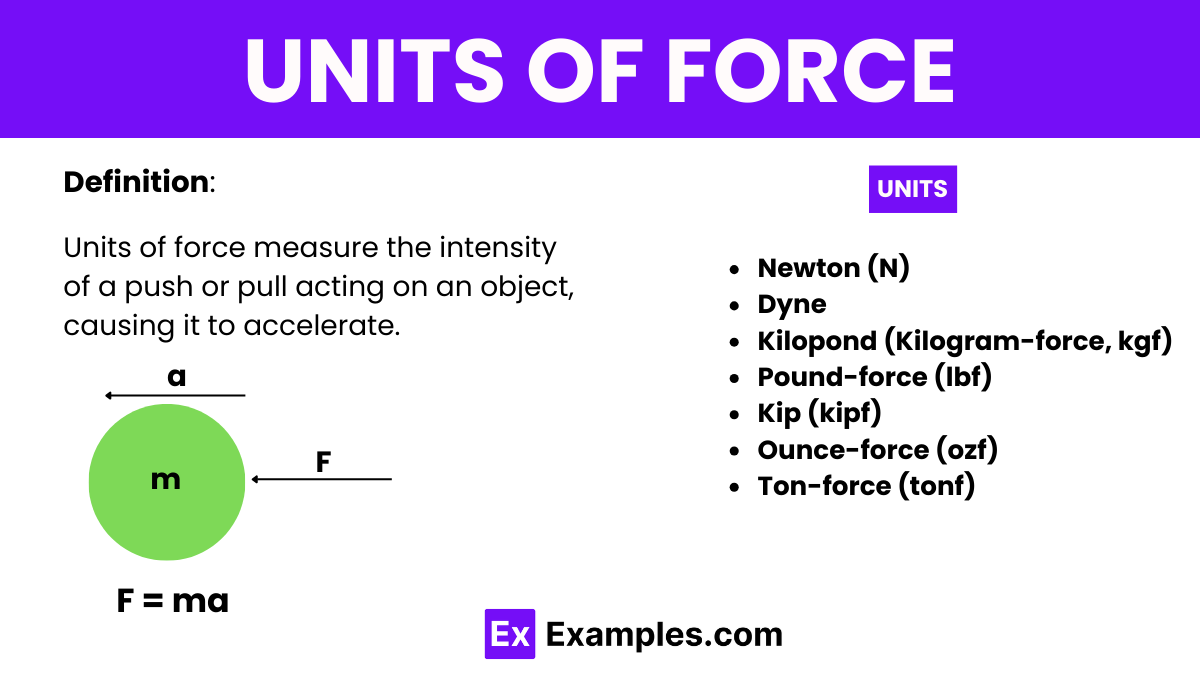
Newton’s Second Law of Motion is perhaps the most direct in defining force quantitatively. It states that the acceleration of an object is directly proportional to the net force acting upon it and inversely proportional to its mass. Mathematically, this is expressed as F = ma, where F represents the net force, m is the mass of the object, and a is its acceleration. This equation is crucial because it directly links force to measurable quantities like mass and acceleration, allowing us to quantify force.
Newton’s Third Law of Motion, the law of action and reaction, posits that for every action, there is an equal and opposite reaction. This means that forces always occur in pairs. When one object exerts a force on a second object, the second object simultaneously exerts a force equal in magnitude and opposite in direction on the first object. Understanding these laws is paramount to comprehending how forces operate in any physical system, from the simple act of pushing a door to the complex mechanics of rocket propulsion.
The Genesis of Measurement: From Observation to Quantification
Historically, the understanding of force evolved from qualitative observations to precise quantitative measurements. Early thinkers recognized that pushing or pulling something exerted a “strength” or “effort.” However, it wasn’t until the development of classical mechanics that a rigorous framework for measuring force emerged. This quantification was driven by the need to design and build increasingly sophisticated machines and structures. Without a standardized unit of force, it would be impossible to predict the behavior of these systems or ensure their safety and efficiency. The development of measurement tools, like spring scales and dynamometers, further facilitated this transition from abstract concept to quantifiable entity.
The Standard Unit: The Newton (N)
In the International System of Units (SI), the standard unit of force is the Newton (N). This unit is a derived unit, meaning it is defined in terms of other fundamental SI units. As established by Newton’s Second Law of Motion (F = ma), one Newton is defined as the force required to accelerate a mass of one kilogram at a rate of one meter per second squared.
Defining the Newton: A Practical Application of F = ma
To fully appreciate the Newton, let’s break down its definition:
- Mass (m): Measured in kilograms (kg). The kilogram is a fundamental SI unit representing a specific amount of matter.
- Acceleration (a): Measured in meters per second squared (m/s²). This unit describes how the velocity of an object changes over time.
Therefore, 1 Newton (N) = 1 kg ⋅ m/s².
This definition is incredibly powerful because it directly links force to mass and acceleration, two quantities that are readily measurable in many scientific and engineering contexts. For instance, if you apply a force to an object and observe that it accelerates at a certain rate, you can calculate the magnitude of the force using this relationship.
Illustrative Examples of the Newton
To make the concept of a Newton more concrete, consider these examples:
- Weight of an Apple: The Earth’s gravitational pull exerts a force on objects. An average apple, weighing about 100 grams (0.1 kg), experiences a gravitational force of approximately 1 Newton on Earth’s surface. This is because the acceleration due to gravity on Earth is roughly 9.8 m/s². So, F = 0.1 kg * 9.8 m/s² ≈ 1 N.
- Lifting a Book: If you lift a standard textbook (say, weighing 2 kg) off a table at a constant velocity (meaning the net force is zero, and the upward force you apply equals the downward force of gravity), you are applying an upward force of approximately 20 Newtons (2 kg * 9.8 m/s²).
- Pushing a Car: Pushing a stalled car requires a significant amount of force. Depending on its mass and the friction involved, you might need to apply hundreds or even thousands of Newtons of force to get it moving.

These examples highlight that while a Newton might seem like an abstract unit, it represents a tangible force that we encounter and apply in our daily lives.
Beyond the SI: Other Units of Force and Their Contexts
While the Newton is the universally accepted standard in scientific and international contexts, other units of force have been used historically or remain in specific regional or technical applications. Understanding these units provides a broader perspective on how force has been measured and discussed.
The Imperial System: The Pound-Force (lbf)
In countries that primarily use the imperial system of units, such as the United States, the pound-force (lbf) is the common unit of force. The pound-force is defined as the force exerted by gravity on a mass of one pound at sea level. This definition is inherently tied to gravity, making it a “gravitational” unit rather than a purely “inertial” unit like the Newton.
- Relationship to the Newton: 1 lbf is approximately equal to 4.44822 Newtons. This conversion factor is essential when working with data or specifications that use different unit systems.
- Applications: The pound-force is frequently encountered in engineering, manufacturing, and everyday measurements in imperial-system-dominant regions. For example, when a tire pressure gauge reads “30 PSI,” it refers to 30 pounds per square inch, where the “pound” here is a unit of force (pound-force).
Other Historical and Specialized Units
Beyond the Newton and the pound-force, several other units of force exist, often tied to specific scientific disciplines or historical periods:
- Dyne (dyn): This is the unit of force in the CGS (centimeter-gram-second) system of units. One dyne is defined as the force required to accelerate a mass of one gram by one centimeter per second squared (1 dyn = 1 g ⋅ cm/s²). Since the SI system has largely superseded CGS, the dyne is less commonly used in modern physics but may still be encountered in older literature or specialized fields. 1 Newton is equal to 100,000 dynes.
- Kilogram-force (kgf or kp): Also known as a kilopond, this unit is based on the force exerted by one kilogram of mass under standard gravity. Similar to the pound-force, it’s a gravitational unit. 1 kgf is equal to the force exerted by 1 kg mass due to standard gravity (approximately 9.80665 N). This unit is often used in some engineering contexts, particularly in regions with a historical influence from the metric system but not strictly adhering to SI.
The existence of these various units underscores the evolution of scientific measurement and the importance of clear, standardized definitions, especially in a globally interconnected technological world.
Force Measurement in Technology and Engineering
The precise measurement and application of force are critical across a vast spectrum of technological advancements and engineering disciplines. From the microscopic forces within materials to the colossal forces involved in aerospace and civil engineering, understanding and quantifying force is non-negotiable.
Materials Science and Structural Integrity
In materials science, measuring the force a material can withstand before deforming or fracturing is paramount. Concepts like tensile strength, compressive strength, and shear strength are all defined in terms of force per unit area (pressure or stress), but the underlying measurement of the applied force is fundamental. Engineers use force sensors to test the durability of components, predict failure points, and ensure the safety of structures like bridges, buildings, and vehicles. The development of advanced alloys, composites, and manufacturing techniques relies heavily on precise force-feedback systems during testing and production.
Robotics and Automation
The field of robotics is intrinsically linked to the concept of force. Robots are designed to interact with their environment, and this interaction often involves applying or sensing forces. Force sensors embedded in robotic arms allow them to grasp objects with appropriate pressure, perform delicate assembly tasks, and even sense collisions. In industrial automation, precise control of forces ensures that machinery operates efficiently and safely, preventing damage to products and equipment. The advancements in haptic feedback in robotics, allowing humans to “feel” the forces exerted by a remote robot, further highlight the importance of force measurement.
Aerospace and Automotive Engineering
In aerospace, forces are of immense consequence. The lift generated by wings, the thrust from engines, the drag experienced by an aircraft, and the forces experienced during atmospheric re-entry are all critical parameters that must be precisely calculated and managed. Similarly, in automotive engineering, understanding the forces involved in braking, acceleration, suspension systems, and collision safety (crash testing) is vital for designing safe and efficient vehicles. Advanced simulations and physical testing rely on accurate force measurements to validate designs and ensure compliance with stringent safety regulations.

Medical Devices and Biomechanics
Even in the realm of healthcare and medicine, force measurement plays a significant role. Prosthetic limbs are designed to exert and respond to forces in a way that mimics natural movement. Surgical robots require precise force control for delicate operations. Furthermore, biomechanics, the study of the mechanical laws relating to the movement or structure of the living organism, relies heavily on understanding and quantifying forces within the human body, from muscle contractions to the impact forces on bones.
In conclusion, the unit of force, the Newton, is not merely an abstract physics term. It is the cornerstone of countless technological innovations and engineering marvels. Its precise definition and consistent application across scientific disciplines enable us to design, build, and understand the complex physical world around us, driving progress in fields as diverse as AI-powered manufacturing and life-saving medical technologies.
aViewFromTheCave is a participant in the Amazon Services LLC Associates Program, an affiliate advertising program designed to provide a means for sites to earn advertising fees by advertising and linking to Amazon.com. Amazon, the Amazon logo, AmazonSupply, and the AmazonSupply logo are trademarks of Amazon.com, Inc. or its affiliates. As an Amazon Associate we earn affiliate commissions from qualifying purchases.