
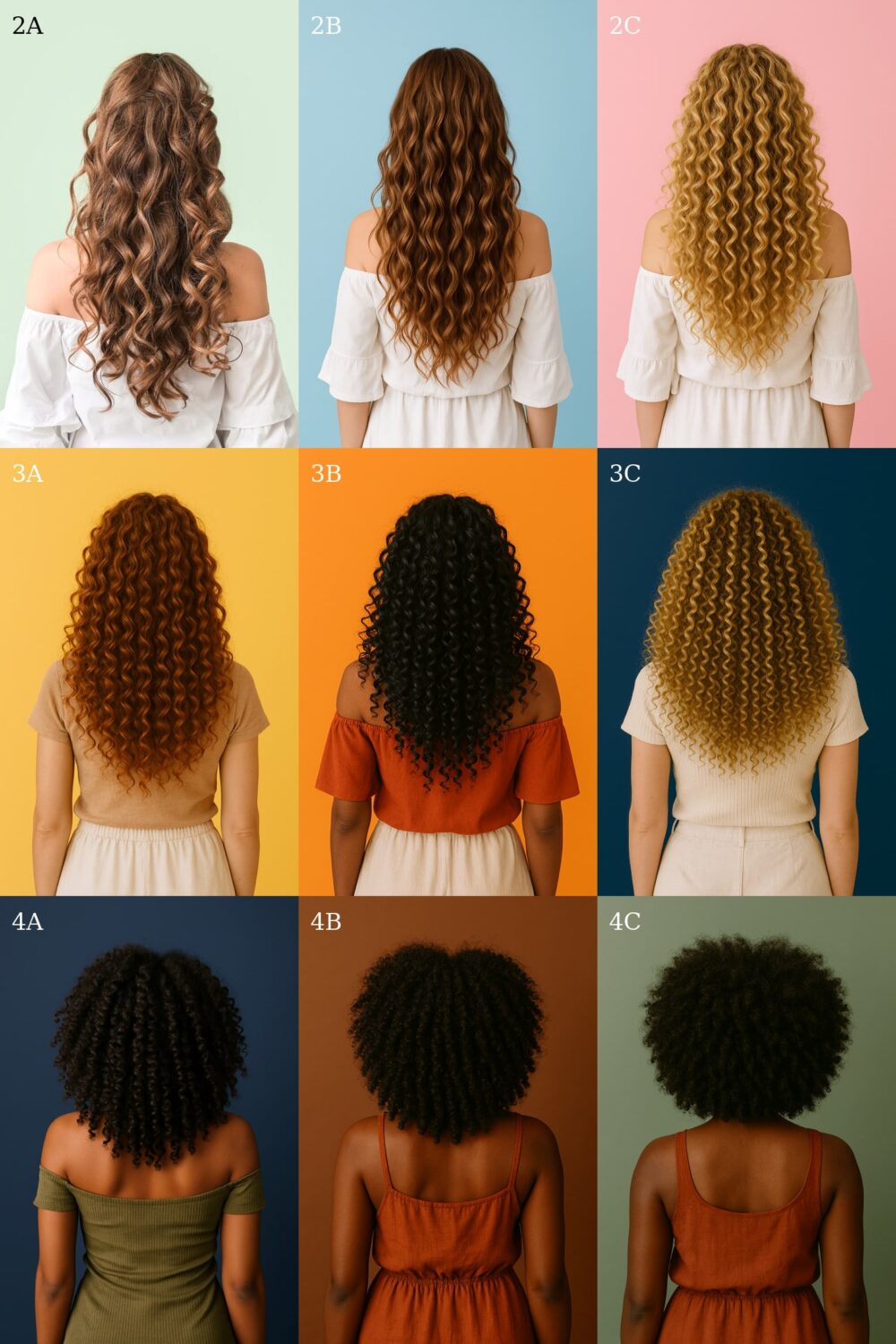
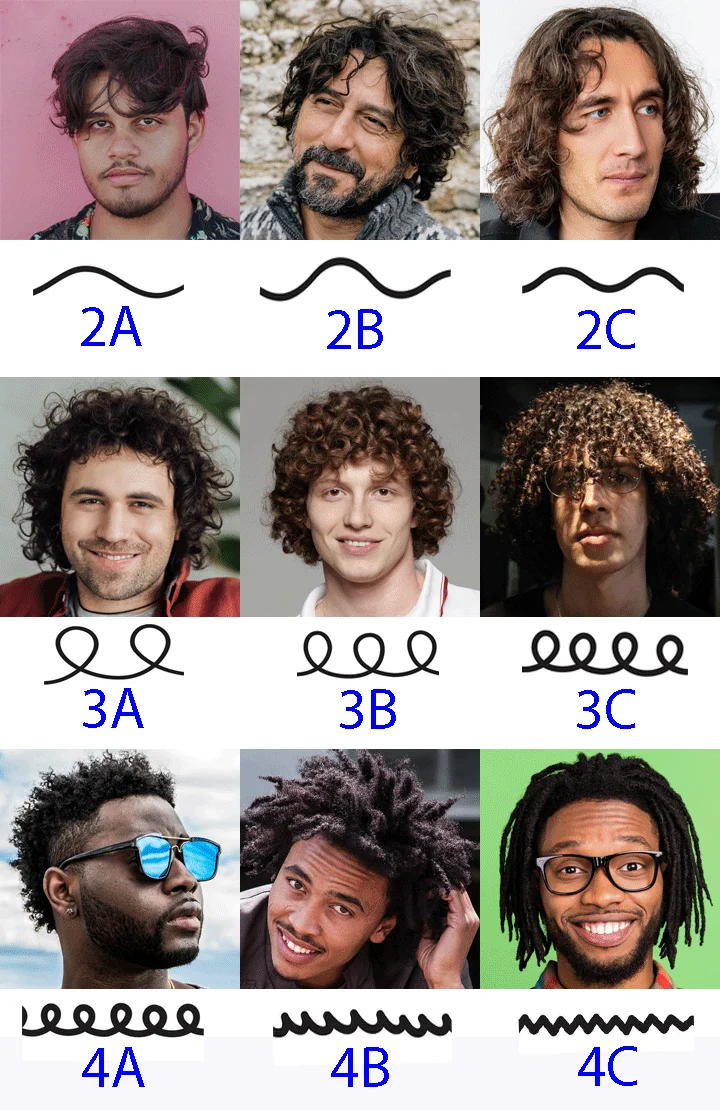
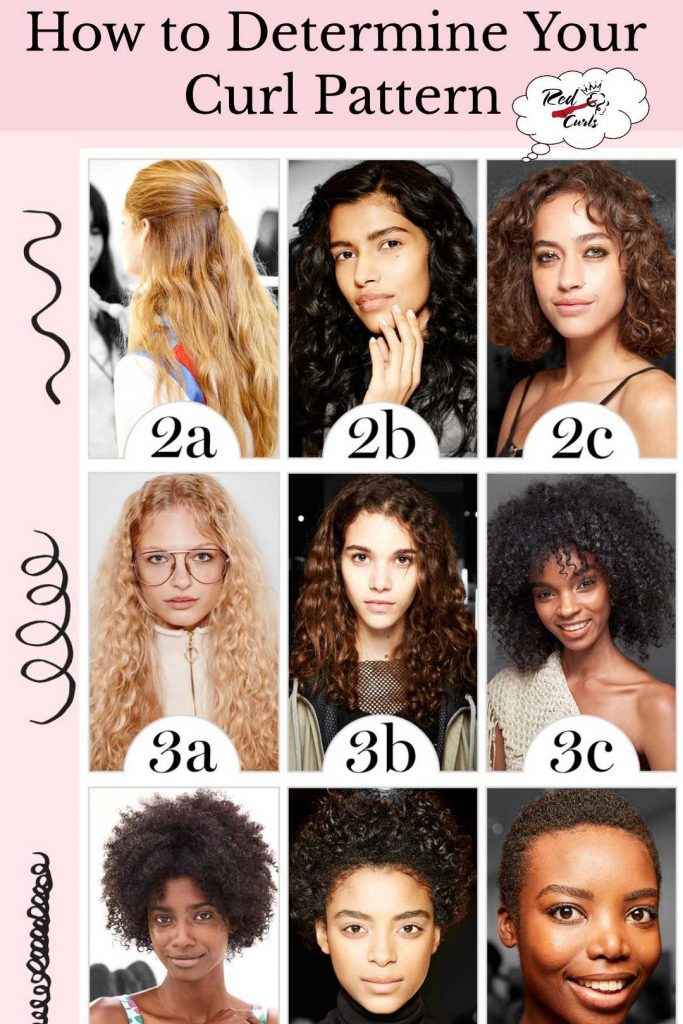
For decades, the answer to the question “What type of curly hair do I have?” was found at the back of a shampoo bottle or on a static infographic shared in online forums. Identification relied on the “Andre Walker System,” a manual classification ranging from Type 2 (wavy) to Type 4 (coily). However, as we move deeper into the decade of personalization, the subjective eye of the consumer is being replaced by the objective precision of artificial intelligence, computer vision, and machine learning.
The intersection of BeautyTech and data science has transformed hair typing from a guessing game into a sophisticated technical analysis. Today, identifying your hair type is no longer just about aesthetics; it is about the data-driven optimization of personal care through high-tech diagnostics.
The Digital Taxonomy of Texture: How Algorithms Categorize Curls
The complexity of human hair—specifically the elliptical shape of the follicle and the disulfide bond distribution—makes it a difficult subject for traditional software to analyze. Unlike skin, which presents a relatively flat surface, curly hair exists in a three-dimensional, high-contrast environment with overlapping patterns.
Computer Vision and Pattern Recognition
At the heart of modern hair identification is computer vision. When a user uploads a high-resolution photo to a diagnostic app, the software utilizes convolutional neural networks (CNNs) to analyze the geometric properties of individual strands. The algorithm looks for “curl diameter,” “torsion points,” and “spatial frequency.”
For instance, a Type 3C curl has a circumference similar to a pencil, while a Type 4A curl is more like a needle. AI models are trained on millions of images to distinguish these micro-differences, filtering out noise such as frizz or lighting variations to provide a precise technical classification that goes beyond what the human eye can discern in a mirror.
From Manual Charts to Neural Networks
Traditional charts are linear, but hair is multidimensional. Modern tech tools are moving toward a “multivariate hair profile.” This includes not just the curl pattern (the “what”), but the porosity, elasticity, and density (the “how”). By utilizing neural networks, developers can now offer “Texture DNA” profiles. These profiles use deep learning to predict how a specific curl type will react to humidity or protein-based treatments, turning a simple identification into a predictive model for hair behavior.
The Rise of Hair-Analysis Apps and Smart Beauty Tools
The quest to answer “What type of curly hair do I have?” has birthed a new ecosystem of software and hardware designed to bring the laboratory experience into the consumer’s bathroom. This segment of the “Self-Care Tech” industry is currently seeing a massive influx of venture capital and R&D.
Virtual Consultations and Augmented Reality (AR)
Augmented Reality is no longer just for trying on virtual lipstick. Advanced AR overlays can now map the “clumping” patterns of curls in real-time. By using the LiDAR (Light Detection and Ranging) sensors found in modern smartphones, apps can create a 3D mesh of a user’s hair. This allows the software to measure the “shrinkage factor”—a critical metric for those with Type 4 hair—by calculating the difference between the coiled length and the projected straight length of the fiber.
IoT Sensors and the Smart Mirror Ecosystem
The “Smart Mirror” is becoming the central hub of the high-tech home. Integrated with high-definition cameras and multispectral sensors, these mirrors can analyze hair health on a daily basis. Some prototypes even use infrared sensors to detect moisture levels within the hair shaft (porosity). If the mirror detects that your “Type 3B” curls are showing signs of hygral fatigue (over-moisturization), it can trigger an automated notification to your smartphone, suggesting a shift in your grooming routine based on real-time data.
Big Data and Hyper-Personalization in the Cosmetic Tech Industry
Once the technology identifies the hair type, the next logical step is the application of that data. The “one-size-fits-all” model of the 20th century is being dismantled by algorithmic formulation.
Algorithmic Formulation: Custom Chemistry
Companies like Function of Beauty and Prose have pioneered the use of proprietary algorithms to turn hair-type data into custom chemistry. When a user inputs their hair type—identified via tech-driven quizzes or photo analysis—the backend software runs a cross-reference against thousands of ingredient combinations.
This is essentially a “Software as a Service” (SaaS) model applied to physical goods. The “code” is the formula, and the “output” is a bespoke product. This level of personalization is only possible because of the data gathered during the hair-typing phase, proving that knowing your hair type is the primary data point in a much larger beauty-tech stack.
Predictive Analytics for Hair Health
Beyond immediate identification, big data allows for predictive modeling. By aggregating anonymized data from millions of users with “Type 4C” hair, tech companies can identify longitudinal trends. For example, data might show that users in a specific geographic location (tracked via GPS) with a specific hair type experience increased breakage during certain UV-index peaks. This allows the software to provide “preventative grooming” alerts, moving the user experience from reactive to proactive.
Ethics and Data Privacy in Beauty Technology
As we rely more on technology to answer personal questions like “What type of curly hair do I have?”, we must address the technical and ethical implications of sharing biometric data with software corporations.
Biometric Data Security
A photo of your hair and scalp is a form of biometric data. In the wrong hands, high-resolution images can be used for more than just hair typing; they can reveal information about an individual’s health, ethnicity, and even age. As the BeautyTech sector grows, the implementation of “Privacy by Design” becomes paramount. Tech-savvy consumers must look for end-to-end encryption and clear data-deletion policies before uploading their “Texture DNA” to the cloud.
Addressing Algorithmic Bias in Hair Diversity
One of the most significant challenges in the tech industry today is algorithmic bias. Early iterations of facial recognition and image analysis often struggled with darker skin tones and highly textured hair due to a lack of diversity in the training datasets.
For a hair-typing app to be truly effective, its machine-learning model must be trained on a global dataset that includes the full spectrum of human hair. The tech industry is currently undergoing a “correction phase,” where developers are intentionally over-sampling underrepresented hair types to ensure that the answer provided to a user with 4C coils is just as accurate as the one provided to a user with 2A waves.
The Future: Molecular Diagnostics and Beyond
The next frontier in answering “What type of curly hair do I have?” lies in biotechnology and wearable sensors. We are moving toward a future where a wearable “smart hair clip” could monitor your hair’s tension and moisture levels throughout the day, providing a live stream of data to your digital twin in the metaverse.
Furthermore, we are seeing the emergence of “at-home DNA hair kits.” By analyzing the specific proteins and genetic markers in a single follicle, these kits can provide a molecular breakdown of your hair type that far exceeds the capabilities of a simple visual scan. This is the ultimate synthesis of Tech and Biology—where the “type” is not just a category, but a genetic blueprint.
In conclusion, the question “What type of curly hair do I have?” has evolved from a simple aesthetic inquiry into a gateway for high-tech integration. Through computer vision, IoT devices, and big data analytics, consumers are gaining an unprecedented level of insight into their biological makeup. As we continue to bridge the gap between software and self-care, the way we understand, manage, and brand our natural hair will be dictated not by tradition, but by the precision of the algorithm.
aViewFromTheCave is a participant in the Amazon Services LLC Associates Program, an affiliate advertising program designed to provide a means for sites to earn advertising fees by advertising and linking to Amazon.com. Amazon, the Amazon logo, AmazonSupply, and the AmazonSupply logo are trademarks of Amazon.com, Inc. or its affiliates. As an Amazon Associate we earn affiliate commissions from qualifying purchases.