
For anyone venturing into the world of investing, one of the most fundamental pieces of information to grasp is the operating hours of the stock market. It might seem like a simple query, but the answer is nuanced, encompassing various trading sessions, international exchanges, and critical implications for an investor’s strategy and success. Understanding when the market is open—and, just as importantly, when it’s not—is pivotal for managing trades, reacting to news, and navigating the inherent volatility of financial assets. This guide will delve into the intricacies of stock market hours, providing clarity on standard sessions, global variations, the significance of these timings, and essential tools for investors.
The stock market isn’t a single, monolithic entity that flips a switch at 9 AM and closes at 5 PM everywhere. Instead, it’s a vast global network of exchanges, each with its own set of rules, holidays, and operational hours, all influenced by local time zones. For the average investor, especially those focused on domestic equities, the primary concern typically revolves around the major exchanges in their region. However, a truly informed investor recognizes the interconnectedness of global markets and how activity across different time zones can impact their portfolio.
Understanding Standard Market Hours in the U.S.
When most people in the United States refer to “the stock market,” they are typically thinking of the two largest exchanges: the New York Stock Exchange (NYSE) and the Nasdaq Stock Market (Nasdaq). Both of these powerhouses operate under largely similar trading hours, which have become the de facto standard for U.S. equity trading.
Regular Trading Session
The core of market activity occurs during what is known as the regular trading session. For both the NYSE and Nasdaq, this session runs from 9:30 AM Eastern Time (ET) to 4:00 PM ET, Monday through Friday. During these hours, liquidity is at its highest, meaning there are ample buyers and sellers, which generally leads to tighter bid-ask spreads and more efficient price discovery. This is the period when most individual investors and institutional traders execute their primary strategies, and it’s when the vast majority of volume is traded. The end of the trading day, often called the “market close,” is a significant event, as many news releases and corporate announcements are timed to coincide with it, preventing immediate, potentially disruptive, market reactions.
Pre-Market Trading
The market doesn’t just spring to life at 9:30 AM ET. For many active traders and institutional investors, the trading day begins much earlier through what’s called pre-market trading. This session typically starts as early as 4:00 AM ET and runs until 9:30 AM ET. Pre-market trading allows investors to react to news that breaks overnight or before the official opening bell. Earnings reports, economic data, and major corporate announcements are frequently released during these hours.
While pre-market trading offers an opportunity for early action, it comes with specific characteristics and risks. Liquidity is generally much lower compared to the regular session, meaning there are fewer buyers and sellers. This reduced liquidity can lead to wider bid-ask spreads and increased price volatility. A relatively small trade could have a more significant impact on a stock’s price during pre-market hours. Therefore, while it provides a strategic advantage for some, it requires careful consideration and a robust understanding of its dynamics.
After-Hours Trading
Similarly, trading doesn’t simply cease at 4:00 PM ET. After-hours trading allows investors to continue buying and selling stocks typically from 4:00 PM ET until 8:00 PM ET, though the exact end time can vary by brokerage firm. Like pre-market trading, after-hours sessions provide an opportunity to react to late-breaking news, such as economic reports, political developments, or unexpected company announcements released after the market close.
The characteristics of after-hours trading mirror those of pre-market trading: lower liquidity, wider spreads, and heightened volatility. This environment can present both opportunities and risks. For example, a company might announce surprisingly positive earnings after 4:00 PM ET, causing its stock to surge in after-hours trading. Conversely, negative news can lead to sharp declines. Investors participating in these extended hours must be aware of the inherent challenges and adjust their strategies accordingly, often favoring limit orders over market orders to control execution prices.
Navigating International Stock Market Hours
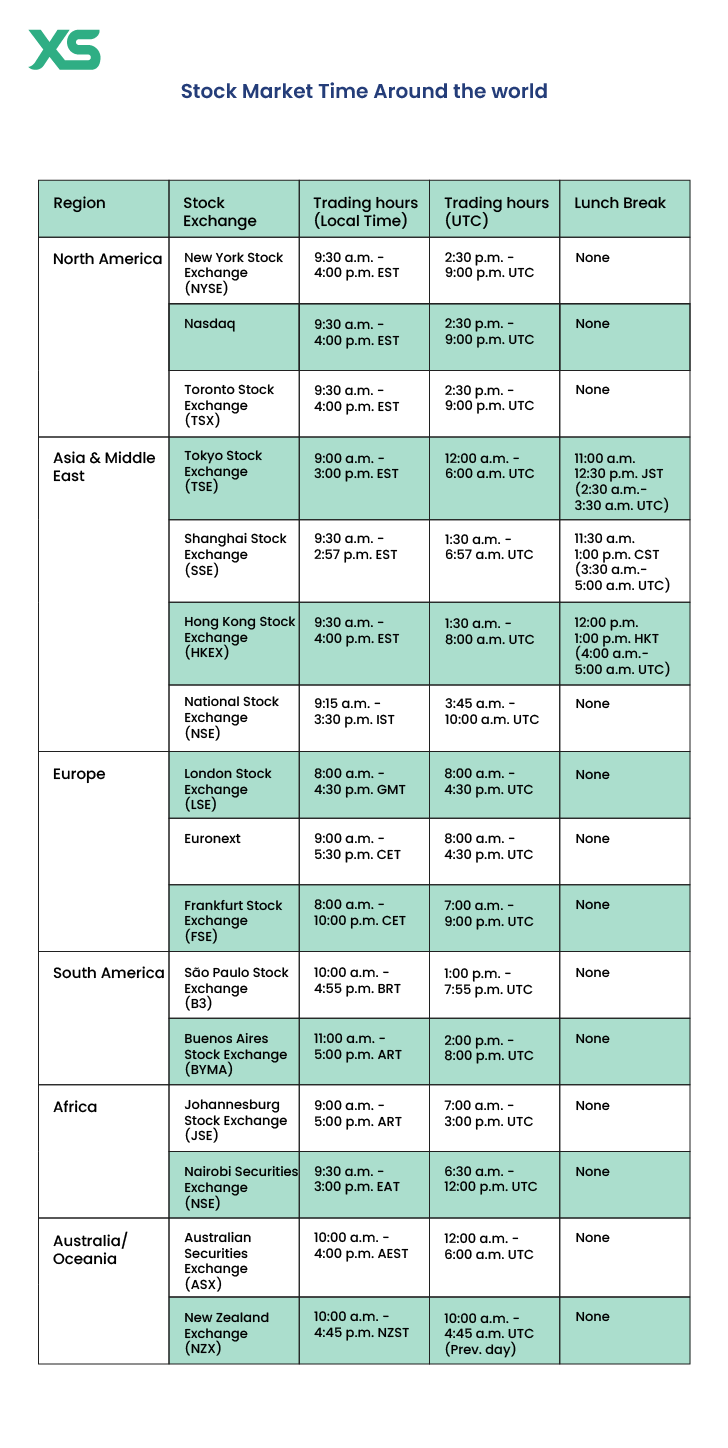
The global nature of finance means that markets around the world are continuously in motion. When the U.S. market is settling down for the evening, markets in Asia are waking up, followed by Europe, creating a 24-hour cycle of trading activity across different time zones. Understanding these global hours is crucial for investors with international portfolios or those who want to grasp the worldwide influences on their domestic holdings.
Key Global Exchanges and Their Hours (Examples)
- London Stock Exchange (LSE): One of Europe’s largest, the LSE operates from 8:00 AM to 4:30 PM Greenwich Mean Time (GMT), Monday through Friday. Its open and close often influence sentiment across the European continent.
- Tokyo Stock Exchange (TSE): As a major Asian market, the TSE trades from 9:00 AM to 3:00 PM Japan Standard Time (JST), with a lunch break from 11:30 AM to 12:30 PM JST. Its activity often sets the tone for Asian trading days.
- Shanghai Stock Exchange (SSE): A rapidly growing market, the SSE’s hours are 9:30 AM to 3:00 PM China Standard Time (CST), also with a lunch break from 11:30 AM to 1:00 PM CST.
- Frankfurt Stock Exchange (XETRA): A key German exchange, XETRA operates from 9:00 AM to 5:30 PM Central European Time (CET), Monday through Friday, playing a significant role in the Eurozone.
- Australian Securities Exchange (ASX): Trading runs from 10:00 AM to 4:00 PM Australian Eastern Standard Time (AEST), Monday through Friday, kicking off the trading week in many parts of the world.
The Impact of Time Zones and Overlapping Hours
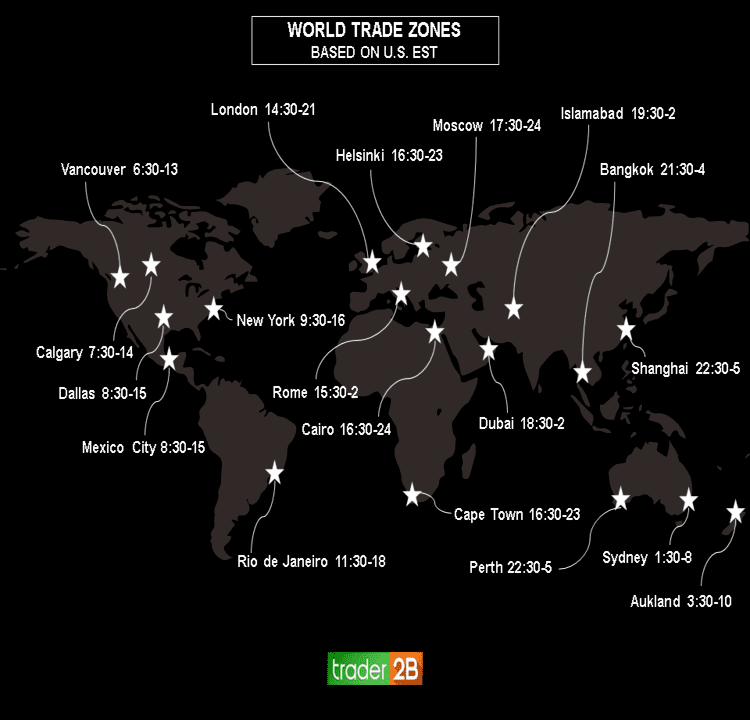
The staggered opening and closing times of global exchanges mean there are periods when multiple major markets are active simultaneously. For instance, the later hours of Asian markets overlap with the early hours of European markets, which then overlap with the pre-market and regular sessions of U.S. exchanges. This constant flow of information and capital means that news or major economic reports released in one region can immediately impact trading in another, even before its regular session officially begins.
For global traders, this round-the-clock activity can be both a blessing and a curse. It offers continuous opportunities to react to events, but it also necessitates vigilance and a keen understanding of how different markets influence one another. A major economic announcement in Europe could, for example, heavily influence the opening sentiment of the U.S. market a few hours later.
Why Market Hours Matter for Investors
Understanding market hours is far more than just knowing when you can place a trade. It’s a critical component of risk management, strategic planning, and overall investment success.
Liquidity and Volatility
The most direct impact of market hours relates to liquidity and volatility. During the regular trading session, millions of participants contribute to a deep and liquid market. This depth typically means that large orders can be executed without drastically moving the price, and the spread between the buy (bid) and sell (ask) price is narrow. This environment is generally more predictable and safer for executing trades.
Conversely, pre-market and after-hours sessions are characterized by significantly lower liquidity. With fewer participants, even relatively small trades can cause outsized price movements, leading to higher volatility. This can be beneficial for those who make correct predictions but poses substantial risks for others. For long-term investors, trying to buy or sell during these illiquid periods might result in less favorable prices than during regular hours.
Information Flow and Price Discovery
Major financial news, such as company earnings, economic data releases, central bank announcements, or political developments, often occurs outside regular market hours. This timing is deliberate, designed to give investors and analysts time to digest the information before the next trading session.
The market’s reaction to this news unfolds across different trading sessions. A positive earnings report released after the U.S. close might lead to a stock gap-up at the next day’s open. However, pre-market and after-hours trading provide an immediate, albeit less liquid, avenue for price discovery as traders react in real-time. Understanding these dynamics helps investors anticipate market movements and decide when to act on new information.
Order Execution and Strategy
The choice of when to place an order can significantly impact its execution. During regular hours, “market orders” (requests to buy or sell at the best available current price) are generally safe due to high liquidity. However, placing a market order during pre-market or after-hours can be risky because of wide spreads and low liquidity, potentially leading to an execution price far worse than anticipated.
This is why “limit orders” (requests to buy or sell at a specific price or better) are often preferred during extended hours. A limit order gives the investor control over the price they are willing to accept, mitigating the risk of unfavorable execution in a volatile, illiquid environment. Day traders, swing traders, and long-term investors will all tailor their strategies based on market hours, using different order types and timing their entries and exits for optimal results.
Exceptions and Special Considerations
While regular market hours provide a baseline, there are several exceptions and special considerations investors must be aware of to avoid surprises.
Market Holidays
Stock markets observe a range of national and federal holidays, during which they are entirely closed. In the U.S., these typically include New Year’s Day, Martin Luther King, Jr. Day, Presidents’ Day, Good Friday, Memorial Day, Juneteenth National Independence Day, Independence Day, Labor Day, Thanksgiving Day, and Christmas Day. Some holidays may also result in half-day sessions, where the market closes early (e.g., the day before Thanksgiving or Christmas Eve when it falls on a weekday). It is crucial for investors to consult a market holiday calendar to plan their trading activities and avoid missed opportunities or unexpected delays.
Circuit Breakers and Trading Halts
In times of extreme volatility, exchanges employ “circuit breakers” or initiate trading halts to curb panic selling or excessive speculation. Circuit breakers are pre-defined thresholds for market-wide drops (e.g., S&P 500 falling by 7%, 13%, or 20%) that trigger automatic trading pauses for a set duration. These halts are designed to give investors a chance to process information and prevent a freefall. Trading halts can also occur for individual stocks due to pending news, regulatory reviews, or unusual price movements. These mechanisms can temporarily interrupt trading during regular hours and are important for maintaining market stability.
Different Asset Classes
While this article focuses on stock markets, it’s worth noting that other asset classes have different trading hours. The bond market, for example, generally has longer hours than the stock market. The foreign exchange (Forex) market operates 24 hours a day, five days a week, due to its decentralized, global nature. Cryptocurrencies trade 24/7, year-round, reflecting their digital and decentralized characteristics. Understanding these differences is important for investors with diversified portfolios.
Tools and Resources for Tracking Market Hours
Staying informed about market hours, holidays, and real-time status is easier than ever with the plethora of resources available.
Financial News Websites
Major financial news outlets like Bloomberg, The Wall Street Journal, Reuters, Financial Times, and Yahoo Finance provide up-to-the-minute market status, including whether exchanges are open, in pre-market, or after-hours, along with holiday calendars.
Brokerage Platforms
Virtually all online brokerage platforms integrate real-time market data, often displaying the current trading session and countdowns to opening or closing times directly within their interfaces. Many also offer notifications for trading halts or upcoming holidays.
Financial Calendars and Mobile Apps
Dedicated financial calendars (e.g., Investing.com, MarketWatch) provide comprehensive lists of market holidays for exchanges worldwide. Numerous mobile apps also offer customizable alerts and real-time market status, making it convenient to track market hours on the go.
Conclusion
Knowing “what time the stock market opens” is more than just a trivial detail; it’s a foundational piece of knowledge for any successful investor. From the standard 9:30 AM to 4:00 PM ET for U.S. equities to the extended pre-market and after-hours sessions, and the diverse operating times of global exchanges, each timeframe carries unique implications for liquidity, volatility, and order execution.
By understanding these nuances, accounting for market holidays, and staying informed through reliable financial tools, investors can make more strategic decisions, mitigate risks, and optimize their trading strategies. Whether you’re a day trader seeking to capitalize on short-term movements or a long-term investor building wealth, a comprehensive grasp of market hours is an indispensable asset in your financial toolkit. It empowers you to navigate the complexities of the financial world with greater confidence and precision, ultimately enhancing your potential for informed and profitable investing.
aViewFromTheCave is a participant in the Amazon Services LLC Associates Program, an affiliate advertising program designed to provide a means for sites to earn advertising fees by advertising and linking to Amazon.com. Amazon, the Amazon logo, AmazonSupply, and the AmazonSupply logo are trademarks of Amazon.com, Inc. or its affiliates. As an Amazon Associate we earn affiliate commissions from qualifying purchases.