
In the fast-paced world of high-stakes finance, timing is not just a secondary consideration; it is the very foundation upon which successful portfolios are built. For the modern investor, asking “what time does the stock market close today?” is often the first step in a daily ritual that dictates entry points, exit strategies, and risk management. While the short answer for major U.S. exchanges is 4:00 PM Eastern Time (ET), the reality of the financial markets is far more nuanced. Understanding the intricacies of market hours, extended sessions, and global time zone overlaps is essential for anyone looking to navigate the complexities of personal finance and institutional investing.
The Standard Trading Session: Understanding the 9:30 to 4:00 Window
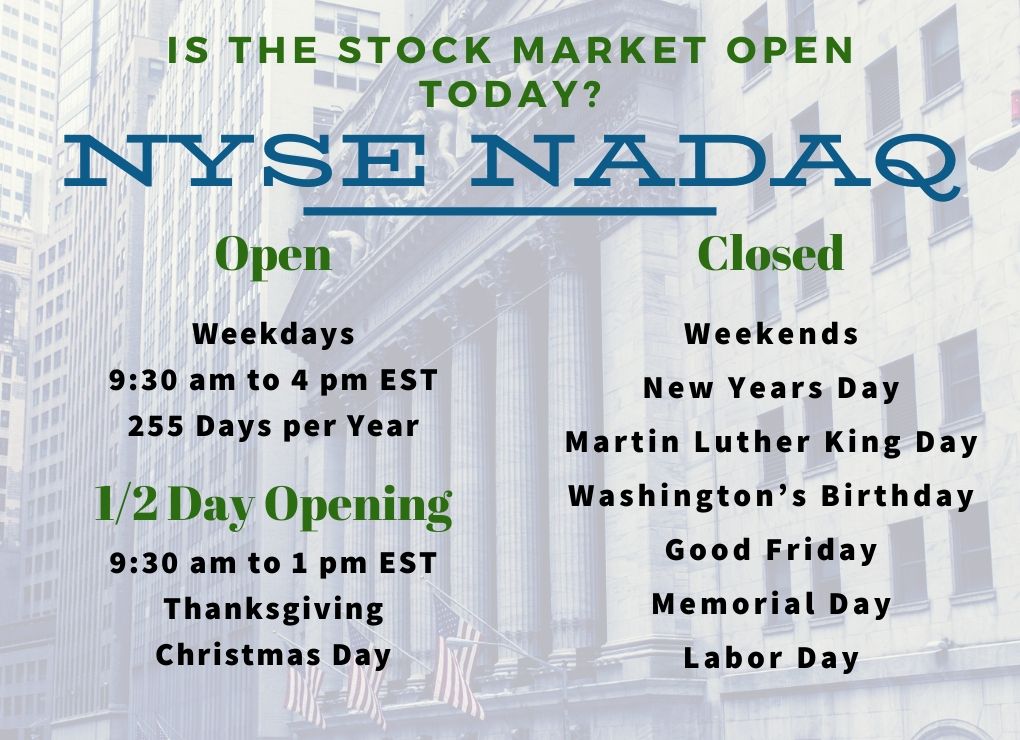
The core of the American financial system revolves around the “regular” trading session. For the New York Stock Exchange (NYSE) and the NASDAQ, the two largest stock exchanges in the world, the opening bell rings at 9:30 AM ET, and the closing bell tolls at 4:00 PM ET. This six-and-a-half-hour window represents the peak of liquidity and price discovery.
The Significance of the Closing Bell
The 4:00 PM close is more than just a signal to stop trading; it is the moment when the “official” closing price of a security is determined. This price is used to calculate mutual fund Net Asset Values (NAVs), determine the value of retirement accounts, and serve as a benchmark for technical analysis. For many institutional investors, the final minutes of the trading day—often referred to as the “Closing Cross”—see a massive surge in volume as funds rebalance their holdings to match index weights.
Holiday Schedules and Early Closures
While the Monday-through-Friday schedule is the norm, the market follows a strict calendar of federal holidays. On days like Thanksgiving, Christmas, and New Year’s Day, the markets are closed entirely. Furthermore, investors must be aware of “early close” days. Typically occurring on the day before or after a major holiday (such as the Friday after Thanksgiving or Christmas Eve), the market often closes at 1:00 PM ET. Keeping a financial calendar synchronized with the NYSE holiday schedule is a fundamental task for any disciplined investor.
The “Power Hour” Phenomenon
The final hour of the regular session, from 3:00 PM to 4:00 PM ET, is colloquially known as the “Power Hour.” During this time, volatility often increases as day traders close out their positions to avoid overnight risk and institutional “smart money” makes its final moves. Understanding the dynamics of this hour can help retail investors avoid being caught on the wrong side of a rapid price swing.
Beyond the Bell: The World of Extended-Hours Trading
The digital age has rendered the idea of a “closed” market somewhat archaic. While the physical floor may quiet down at 4:00 PM, electronic communication networks (ECNs) allow trading to continue long after the bells have stopped. Extended-hours trading is divided into two segments: pre-market and after-hours.
Navigating After-Hours Trading
The after-hours session typically runs from 4:00 PM to 8:00 PM ET. This window is particularly critical during “earnings season.” Most major corporations release their quarterly financial results immediately after the 4:00 PM close to ensure that the news is disseminated fairly to all investors. As a result, a stock can experience massive price movements at 4:05 PM that were never seen during the regular session. While this offers opportunities for profit, it also carries significant risks due to lower liquidity and wider “bid-ask” spreads.
The Pre-Market Prep
On the other side of the clock, pre-market trading begins as early as 4:00 AM ET, though the bulk of activity starts around 8:00 AM ET. This session allows investors to react to overnight news, international market movements, or early-morning economic data (such as Jobs Reports or CPI data). For the retail investor, the pre-market provides a glimpse into how the market will “gap” at the 9:30 AM open.
The Risks of Extended Sessions
It is vital for those managing their own money to understand that the rules of engagement change after 4:00 PM. Most brokerages require the use of “limit orders” during extended hours to protect investors from price slippage. Because there are fewer participants, a relatively small sell order can drop a stock’s price significantly more than it would during the regular session. Professional financial advisors often suggest that retail investors observe extended hours for information but execute the majority of their trades during regular hours.
Global Markets and the 24-Hour Financial Cycle
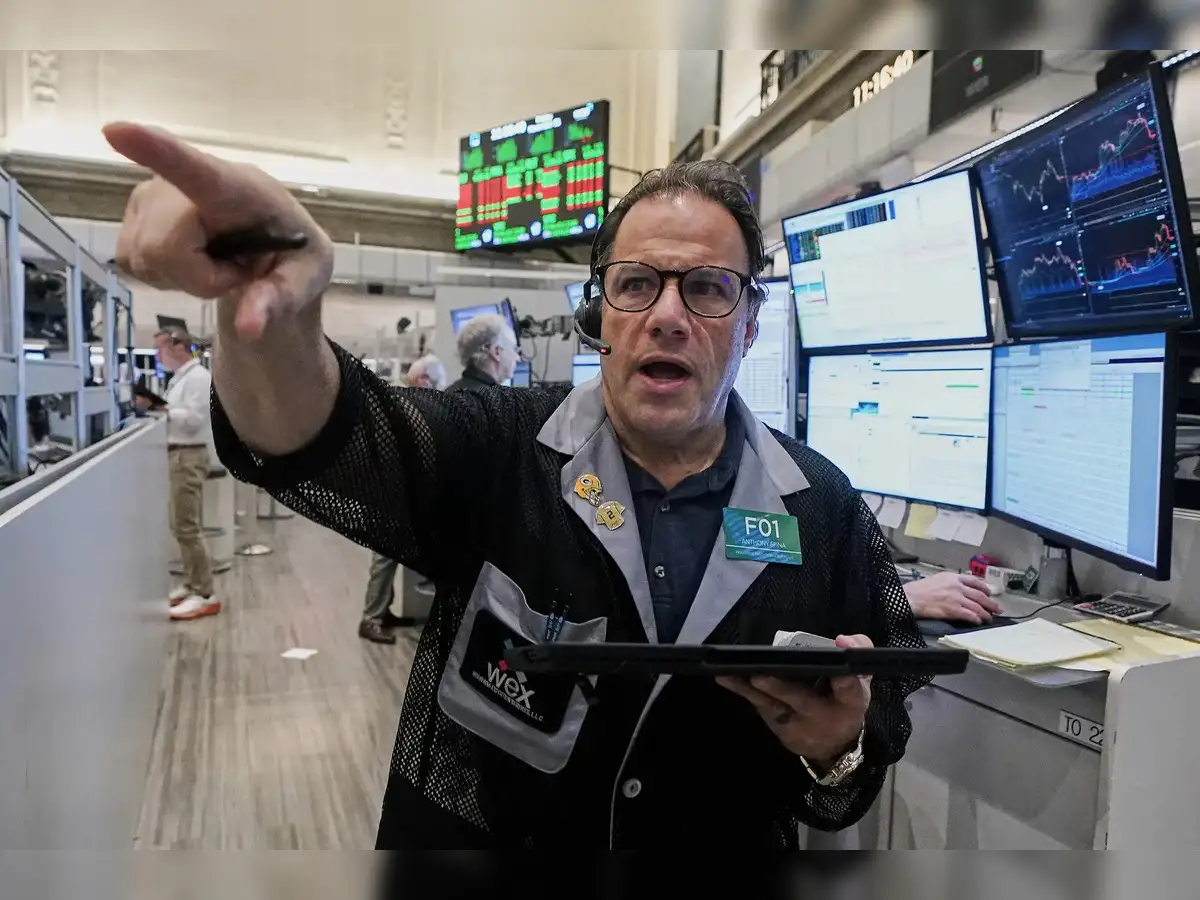
For the sophisticated investor, the question isn’t just when the U.S. market closes, but how that closure fits into the global financial ecosystem. We live in an era of interconnected capital, where a tumble in the Hang Seng in Hong Kong or the DAX in Germany can dictate the opening price of the S&P 500 in New York.
The European and Asian Overlap
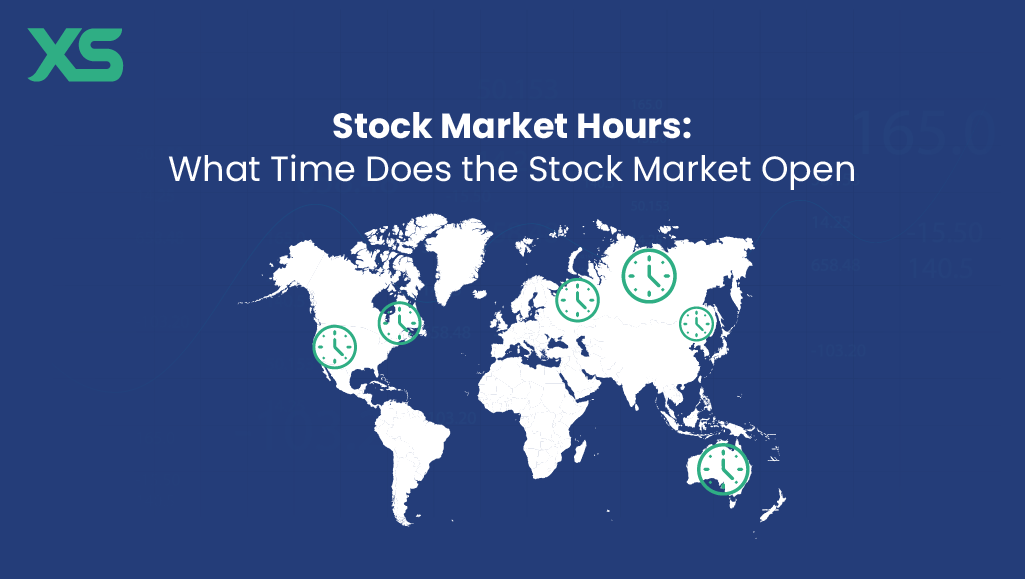
The London Stock Exchange (LSE) usually closes at 11:30 AM ET, meaning it overlaps with the U.S. market for its first two hours of operation. This overlap is often the most liquid period for global forex markets and international equities. Similarly, as the U.S. market closes at 4:00 PM ET, Asian markets are preparing to open. The Tokyo Stock Exchange (TSE) and the Shanghai Stock Exchange provide the first pulse of the new trading day, reflecting the global sentiment that will eventually make its way back to American shores the following morning.
Trading International ETFs
For investors who cannot trade directly on foreign exchanges due to regulatory or time zone constraints, international ETFs (Exchange-Traded Funds) provide a solution. These instruments trade on U.S. exchanges during U.S. hours but represent assets in foreign markets. This creates an interesting dynamic where the ETF may trade based on “expected” movements in its underlying home market, highlighting the importance of understanding global time zones when managing a diversified portfolio.
The Rise of 24/7 Asset Classes
While the stock market maintains its traditional hours, other areas of finance have moved toward a 24/7 model. The foreign exchange (Forex) market operates 24 hours a day, five days a week, and the cryptocurrency market never closes. The pressure for stock markets to move toward a 24/7 model is growing, as retail investors increasingly demand the same accessibility for equities that they have for digital assets. Understanding this shift is key to anticipating future trends in market structure.
Strategic Planning: How to Trade the Closing Bell
Knowing the time the market closes is one thing; knowing how to act during those final minutes is what separates amateur savers from savvy investors. The “close” is a psychological and technical threshold that requires specific strategies.
Market-on-Close (MOC) and Limit-on-Close (LOC) Orders
For those who want to ensure their trade is executed at the final official price, MOC orders are the tool of choice. These orders are aggregated by the exchange to ensure they are filled as close to 4:00 PM as possible. Conversely, a Limit-on-Close order allows an investor to participate in the closing price only if it stays within a certain price range. These tools are essential for managing “slippage”—the difference between the expected price of a trade and the price at which the trade is actually executed.
Dealing with “Overnight Risk”
When the market closes at 4:00 PM, an investor’s capital is essentially “locked” until the next morning, unless they participate in extended hours. This creates “overnight risk”—the possibility that major news (geopolitical events, natural disasters, or unexpected corporate scandals) will break while the market is closed, causing the price to “gap down” at the next opening. Long-term investors often ignore this volatility, but for short-term traders, managing position sizes before the closing bell is a vital risk-mitigation strategy.
The Role of Volatility at the Close
Statistical data shows that the first and last 30 minutes of the trading day are the most volatile. For a retail investor looking to buy a “blue-chip” stock for a long-term retirement account, it is often better to execute trades during the “mid-day lull” (between 11:00 AM and 2:00 PM ET) when prices are generally more stable and less influenced by institutional rebalancing.
The Future of Market Accessibility and Financial Tools
As we look toward the future of personal finance, the rigid 9:30 AM to 4:00 PM window is facing unprecedented challenges. Technology is democratizing access to capital markets, and the tools available to the average person are more powerful than ever.
The Impact of Mobile Trading Apps
The rise of zero-commission mobile trading platforms has changed when and how people trade. With notifications sent directly to smartphones, retail investors can react to market closes in real-time. This has led to an increase in “retail sentiment” influencing the closing prices of “meme stocks” and highly-shorted equities. Staying informed about market hours is no longer just for professionals with Bloomberg terminals; it is a necessity for anyone with a brokerage app.
Algorithmic Trading and High-Frequency Execution
A significant portion of the volume seen at the 4:00 PM close is driven by algorithms. These programs are designed to execute thousands of trades in milliseconds based on the closing price. For the individual investor, understanding that they are competing with high-frequency machines at the close is a sobering reminder to stick to a disciplined, long-term strategy rather than trying to “time” the exact second of the closing bell.
Financial Literacy as a Wealth Builder
Ultimately, understanding the mechanics of the stock market—starting with something as simple as its operating hours—is a cornerstone of financial literacy. By knowing when the market closes, how after-hours trading functions, and how global markets interact, individuals can take control of their financial destiny. Whether you are saving for a home, building a retirement nest egg, or seeking to generate side income through active trading, the clock is a tool. Use it wisely, respect its boundaries, and let the discipline of the market’s schedule guide your journey toward financial independence.
aViewFromTheCave is a participant in the Amazon Services LLC Associates Program, an affiliate advertising program designed to provide a means for sites to earn advertising fees by advertising and linking to Amazon.com. Amazon, the Amazon logo, AmazonSupply, and the AmazonSupply logo are trademarks of Amazon.com, Inc. or its affiliates. As an Amazon Associate we earn affiliate commissions from qualifying purchases.