
For the modern investor, understanding the clock is just as critical as understanding a balance sheet. While we live in an era of 24/7 digital connectivity, the global financial markets still operate within a structured framework of opening and closing bells. If you have ever wondered “what time does the stock market close,” you are likely looking for more than just a timestamp; you are looking for an understanding of how market timing influences liquidity, price discovery, and your overall investment strategy.
In the United States, the primary stock exchanges—the New York Stock Exchange (NYSE) and the Nasdaq—follow a synchronized schedule that dictates the flow of trillions of dollars daily. However, the closing of the “regular” session is only one piece of a much larger chronological puzzle.
The Standard Trading Window: Understanding Core Market Hours
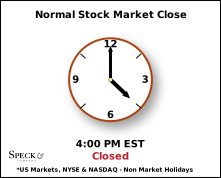
The standard operating hours for the major U.S. stock exchanges are from 9:30 AM to 4:00 PM Eastern Time (ET), Monday through Friday. This six-and-a-half-hour window is known as the “regular trading session.”
The Significance of the 4:00 PM Closing Bell
The closing bell at 4:00 PM ET is one of the most iconic sounds in finance. Beyond the ceremony, the close represents the moment when the “official” price of a security is determined for the day. This closing price is the benchmark used by mutual funds to calculate their Net Asset Value (NAV) and by investors to track the historical performance of their portfolios.
During these core hours, market liquidity is at its highest. Liquidity refers to the ease with which an asset can be bought or sold without affecting its price. Because the vast majority of institutional investors, retail traders, and high-frequency trading algorithms are active during this window, the “bid-ask spread”—the difference between what a buyer is willing to pay and what a seller is willing to accept—is typically at its narrowest.
The Mid-Day Lull
Interestingly, the activity within this window is not uniform. Markets typically experience a “U-shaped” volume curve. Trading is heaviest in the first hour after the 9:30 AM open and the last hour before the 4:00 PM close. The mid-day period, often referred to as the “lunch hour” (roughly 12:00 PM to 1:30 PM ET), usually sees a significant drop in volume and volatility as institutional traders step away, leading to slower price movements.
Extended Hours Trading: Pre-Market and After-Hours Sessions
While the regular session ends at 4:00 PM, the digital nature of modern finance allows for trading well beyond those hours. This is known as “Extended Hours Trading,” divided into the pre-market and the after-hours sessions.
The After-Hours Session (4:00 PM – 8:00 PM ET)
Immediately following the closing bell, the after-hours session begins. This session typically runs until 8:00 PM ET. This is a critical time for corporate news. Most publicly traded companies wait until the 4:00 PM close to release their quarterly earnings reports to ensure that the news can be digested without causing an immediate halt in regular trading.
As a result, the after-hours market can be incredibly volatile. If a major tech giant misses its earnings expectations at 4:05 PM, the stock price might drop 10% in minutes. However, trading during these hours is handled through Electronic Communication Networks (ECNs), and there are fewer participants. This lower volume means higher volatility and wider bid-ask spreads, making it riskier for the average retail investor.
The Pre-Market Session (4:00 AM – 9:30 AM ET)
On the other side of the clock, the pre-market session allows traders to react to news that broke overnight or in international markets. While some brokerages allow trading as early as 4:00 AM ET, the bulk of pre-market activity occurs between 8:00 AM and 9:30 AM. Investors use this time to position themselves before the “opening cross” at 9:30 AM, which officially kicks off the day’s regular session.
Global Market Synchronicity: When Do International Exchanges Close?
In our interconnected global economy, the closing time of the U.S. market is often influenced by what happened earlier in the day in London, Tokyo, or Hong Kong. Investing is a 24-hour cycle that moves westward across the globe.
European Markets: The London Stock Exchange (LSE)
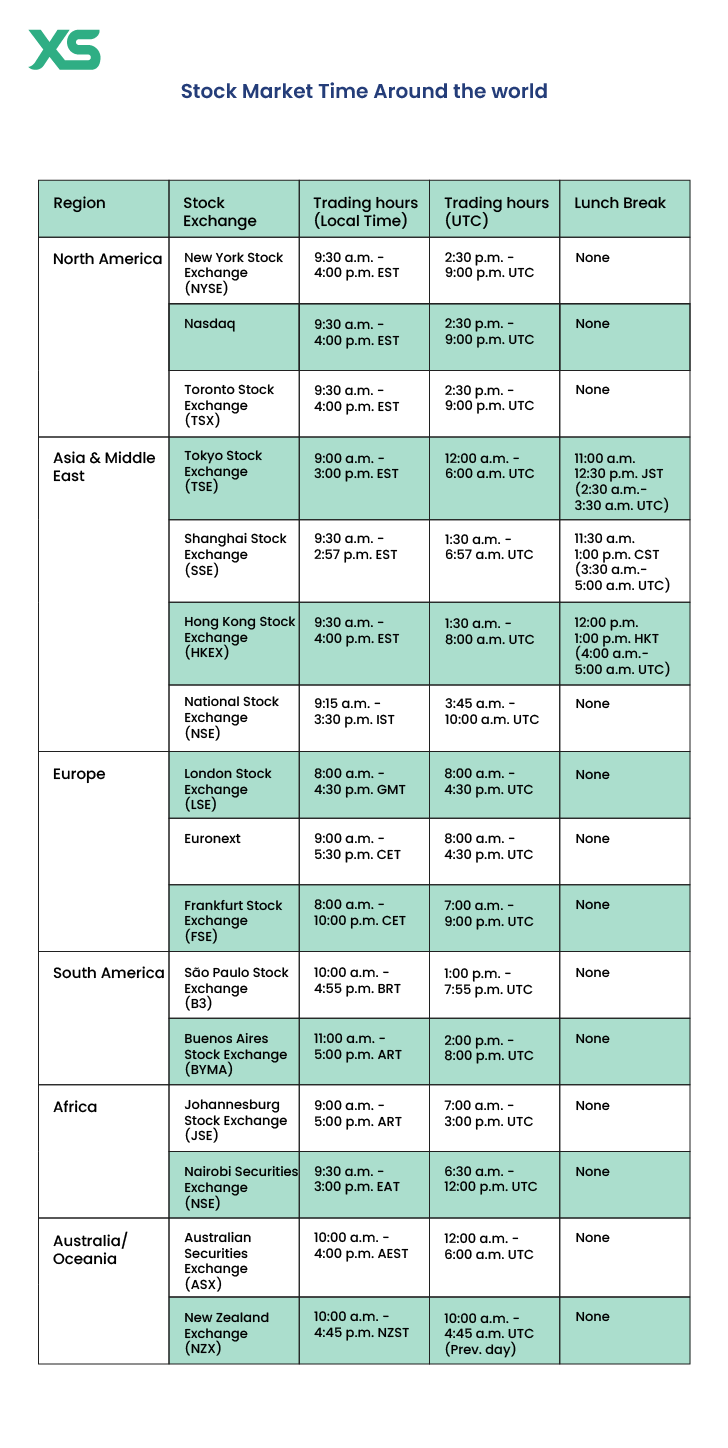
The London Stock Exchange, one of the world’s oldest and most influential, operates from 8:00 AM to 4:30 PM Greenwich Mean Time (GMT). For traders on the East Coast of the U.S., the LSE closes at 11:30 AM ET. This overlap between 9:30 AM and 11:30 AM ET is often the most volatile and liquid time of the day for global equities, as both European and American desks are active simultaneously.
Asian Markets: The “Overnight” Factor
The Tokyo Stock Exchange (TSE) and the Hong Kong Stock Exchange (HKEX) operate while the U.S. is asleep. The Tokyo market closes at 3:00 PM local time (which is 1:00 AM or 2:00 AM ET, depending on Daylight Savings).
Many professional investors monitor the “Nikkei 225” or the “Hang Seng Index” closures to gauge the global sentiment. If Asian markets close with heavy losses, it often sets a “risk-off” tone for the U.S. pre-market session, potentially leading to a lower open in New York.
Market Holidays and Early Closures: Navigating the Trading Calendar
The stock market does not follow the standard 365-day calendar. It observes specific federal holidays, and in some instances, it closes early to accommodate festive periods.
Standard Market Holidays
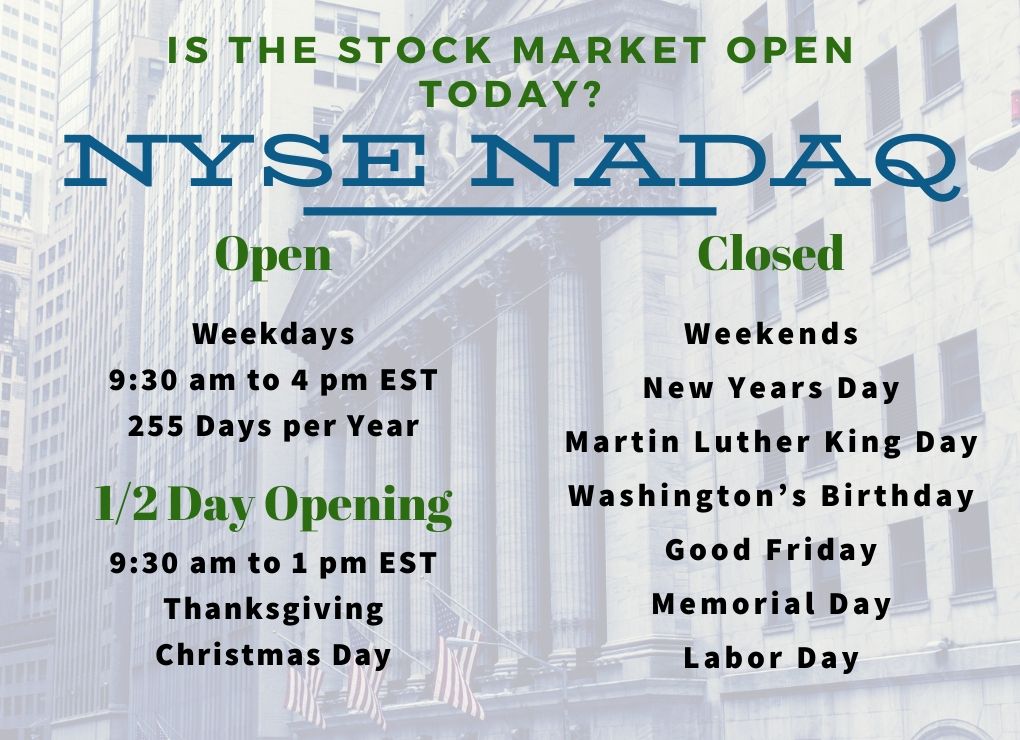
In the United States, the stock market is closed on the following days:
- New Year’s Day
- Martin Luther King, Jr. Day
- Washington’s Birthday (Presidents’ Day)
- Good Friday
- Memorial Day
- Juneteenth National Independence Day
- Independence Day
- Labor Day
- Thanksgiving Day
- Christmas Day
If a holiday falls on a Saturday, the market usually closes on the preceding Friday. If it falls on a Sunday, the market closes on the following Monday.
Early Closing Days
There are specific days when the market closes at 1:00 PM ET instead of 4:00 PM. These typically include the day after Thanksgiving (Black Friday) and Christmas Eve (if it falls on a business day). These “half-days” are characterized by very low trading volume, as many institutional players take the day off. For the retail investor, these days can be deceptively quiet, though sudden large trades can cause outsized price movements due to the lack of liquidity.
Strategic Timing: Why the Closing Bell Matters for Investors
Understanding when the market closes is not just about logistics; it is a vital part of a sophisticated money management strategy. The final minutes of the trading day, often called the “Power Hour,” are among the most consequential.
The Closing Auction and Price Discovery
The NYSE and Nasdaq use a “Closing Auction” to determine the final price of the day. During the final minutes of trading, the exchange software aggregates all the “limit-on-close” and “market-on-close” orders. This process matches buyers and sellers at a single price that maximizes the number of shares traded.
Institutional investors and index funds (like those tracking the S&P 500) often wait until the very end of the day to execute their trades. They do this to minimize “market impact”—the risk that their large buy or sell orders will move the price against them. By participating in the closing auction, they can move large blocks of stock at the official closing price.
Managing Risk Overnight
The 4:00 PM close introduces “overnight risk.” Because you cannot easily exit a position at a fair price once the market closes, you are vulnerable to any news that breaks before the next morning’s open. Political instability, natural disasters, or unexpected corporate scandals can cause a stock to “gap down,” meaning it opens the next day at a significantly lower price than it closed.
For long-term investors, this volatility is often “noise.” However, for short-term traders or those utilizing margin (borrowed money), the closing bell marks the deadline for managing their exposure.
The “Weekend Effect”
The Friday close is perhaps the most significant of the week. Investors often trim their positions on Friday afternoon to avoid being exposed to potential negative news over the weekend when the markets are completely shuttered. This can sometimes lead to a “Friday sell-off,” particularly in volatile market environments. Conversely, a strong “Green Friday” close is often interpreted as a sign of high investor confidence heading into the new week.
Conclusion
The question of “what time the stock market closes” serves as an entry point into the complex mechanics of global finance. While 4:00 PM ET is the definitive end of the regular session, the reality of modern investing is a continuous stream of data and trade opportunities that span various time zones and sessions.
For the disciplined investor, the close represents a moment of reflection—a time to analyze the day’s movements and prepare for the next. Whether you are a retail investor managing a 401(k) or an active trader looking for an edge, respecting the market’s clock is essential. By understanding the nuances of core hours, extended sessions, and the impact of global time zones, you can better navigate the ebbs and flows of the financial world and make more informed decisions with your money.
aViewFromTheCave is a participant in the Amazon Services LLC Associates Program, an affiliate advertising program designed to provide a means for sites to earn advertising fees by advertising and linking to Amazon.com. Amazon, the Amazon logo, AmazonSupply, and the AmazonSupply logo are trademarks of Amazon.com, Inc. or its affiliates. As an Amazon Associate we earn affiliate commissions from qualifying purchases.