
In the digital age, the simple query “what time is it in Mexico” represents a complex interaction between global networking protocols, localized database management, and national legislative shifts. While the average user sees a digital clock on their smartphone, beneath the surface lies a sophisticated infrastructure of Network Time Protocol (NTP) servers, atomic clock synchronization, and the constant maintenance of the IANA Time Zone Database. For developers, sysadmins, and tech architects, Mexico’s recent transition away from Daylight Saving Time (DST) serves as a definitive case study in how technological systems must adapt to the shifting realities of geopolitical decisions.

The Digital Architecture of Mexico’s Time Zones
The foundation of timekeeping in Mexico is not merely a matter of setting a watch; it is a highly regulated technological framework overseen by the Centro Nacional de Metrología (CENAM). As the national laboratory for weights and measures, CENAM maintains the “Hora Oficial” (Official Time) using a cluster of high-precision atomic clocks.
The Role of CENAM and NTP Servers
To distribute this precision across a country of over 120 million people and millions of interconnected devices, CENAM utilizes the Network Time Protocol (NTP). NTP is one of the oldest Internet protocols still in use, designed to synchronize the clocks of computers over a network. Mexico’s stratum-1 NTP servers are directly linked to the atomic clocks, providing a “source of truth” for stratum-2 servers used by Internet Service Providers (ISPs), corporate networks, and government digital infrastructure.
For software engineers, understanding this hierarchy is crucial. When a server in Mexico City logs a transaction, its ability to remain synchronized within milliseconds of the global Coordinated Universal Time (UTC) prevents race conditions in databases and ensures the integrity of encrypted communications, which rely heavily on accurate timestamps for SSL/TLS handshakes.
Overcoming the 2023 Daylight Saving Time Abolition Technical Debt
In late 2022, the Mexican government moved to abolish Daylight Saving Time across most of the country, ending a practice that had been in place since 1996. While this was a legislative move, it triggered a massive “technical debt” event for the global tech community.
Legacy systems, embedded devices, and older operating systems were hard-coded to expect a time shift in April and October. The technical challenge wasn’t just changing the clock; it was updating the “zoneinfo” or Olson database across millions of nodes. Systems that failed to receive these updates experienced “time drift” relative to local reality, causing scheduling errors in cloud computing environments and desynchronizing automated backup routines. This event highlighted the fragility of hard-coded temporal logic and the necessity of dynamic time zone management.
Integrating Mexican Time into Global Software Ecosystems
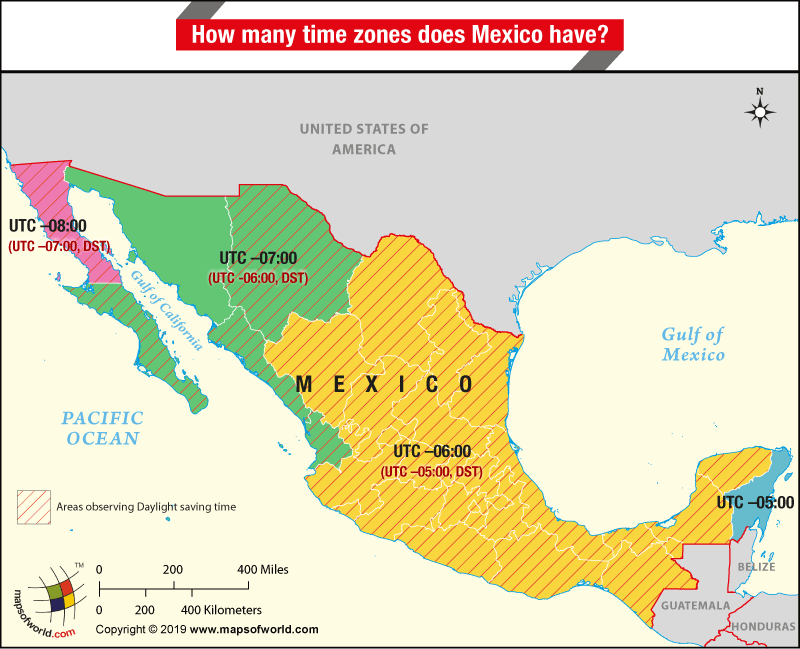
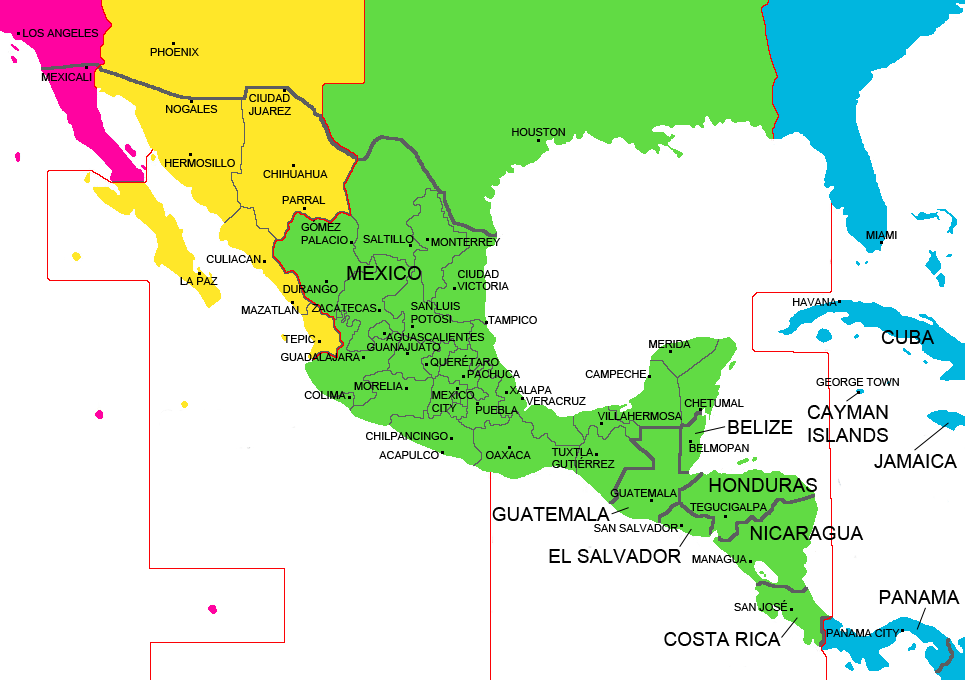
For developers building SaaS platforms or global applications, Mexico presents a unique challenge due to its four distinct time zones: Northwest, Pacific, Central, and Southeast. Effectively managing these within a tech stack requires more than a basic understanding of UTC offsets; it requires a robust implementation of time-aware libraries.
API Management for Multi-Zone Coordination
When designing APIs that interact with users in Mexico, best practices dictate that all timestamps should be stored in UTC in the backend. The conversion to “Mexican Time” should only happen at the presentation layer. However, the complexity arises when dealing with border cities like Ciudad Juárez or Tijuana, which often maintain synchronization with U.S. time zones (like Pacific Time) to facilitate cross-border commerce, even when the rest of their respective states might follow different rules.
Modern APIs now utilize location-based metadata to determine the specific time zone of the user. Using libraries such as moment-timezone in JavaScript or pytz in Python allows developers to call the specific IANA identifier (e.g., America/Mexico_City or America/Cancun). This ensures that the application accounts for regional nuances, such as Quintana Roo’s permanent adoption of Eastern Standard Time to maximize sunlight for the tourism tech sector.
Database Challenges and the Olson Timezone Database
The IANA Time Zone Database, often referred to as the Olson database, is the gold standard for tech implementations. It records the history and predicted future of time zone changes worldwide. When Mexico changed its laws, the IANA database was updated (specifically in version 2022f).
The technical hurdle for many enterprises was ensuring that their database management systems (DBMS)—whether PostgreSQL, MySQL, or Oracle—were updated to reflect these changes. If a database is not updated, a query such as SELECT NOW() AT TIME ZONE 'America/Mexico_City' would return an incorrect hour, potentially ruining data analytics, financial reporting, and logs for audit trails. This highlights the importance of regular environment patching as a core component of digital security and operational reliability.
The Impact of Time Synchronization on Cross-Border Fintech and Infrastructure
In the world of high-frequency trading and fintech, time is a commodity measured in microseconds. Mexico’s position as a major trading partner with the United States means that the technological synchronization between the Bolsa Mexicana de Valores (BMV) and the New York Stock Exchange (NYSE) is critical for market stability.
Low-Latency Requirements for the Mexican Stock Exchange
The BMV relies on ultra-low latency connections where time-stamping is handled by PTP (Precision Time Protocol) rather than standard NTP. PTP can achieve sub-microsecond accuracy, which is essential for “matching engines” that execute trades. If the timing between Mexico City and New York is misaligned by even a fraction of a second, it creates opportunities for arbitrage that can destabilize the local currency (the Peso) or lead to “flash crashes.”
Furthermore, as Mexico becomes a hub for “Nearshoring” tech talent, the synchronization of project management tools like Jira, Slack, and AWS instance scheduling becomes a matter of operational efficiency. Automated scripts that spin up or shut down cloud resources to save costs must be perfectly aligned with the local working hours to avoid disrupting developers.
Cybersecurity and Timestamp Integrity
From a digital security perspective, accurate time is a prerequisite for a secure environment. Most authentication protocols, including Kerberos and OAuth 2.0, use time-sensitive “nonces” and tokens. If a server in Mexico has a clock skew of more than five minutes, it will likely reject legitimate login attempts, leading to a self-inflicted Denial of Service (DoS).
Moreover, in forensic cybersecurity investigations, the “Timeline of Events” is the most critical piece of evidence. If a hacker breaches a network in Monterrey, investigators must be able to correlate those logs with global traffic. If Mexico’s time zones are incorrectly handled in the SIEM (Security Information and Event Management) system, the entire investigation could be compromised, as the sequence of packets would appear out of order.
Future-Proofing Digital Systems for Regional Time Variances
As we look toward the future, the technology of time in Mexico is moving toward even greater decentralization and precision. With the rollout of 5G networks across major Mexican hubs, the requirements for time synchronization are becoming even more stringent.
Edge Computing and Localized Time Data
The rise of Edge Computing in Mexico’s manufacturing sectors (such as the automotive plants in Puebla and Querétaro) requires that time be processed locally rather than relying on a distant cloud server. 5G base stations require nanosecond-level synchronization to coordinate the “handover” of mobile devices between cells. This is achieved through integrated GPS/GNSS receivers in the base stations themselves, which provide a highly accurate time pulse (PPS – Pulse Per Second).
For tech innovators, this means that the “time” in Mexico is increasingly being delivered via satellite and processed at the edge. This reduces reliance on terrestrial backhaul and ensures that even if a global fiber-optic link is severed, the local Mexican infrastructure remains synchronized.
Best Practices for Developers Working with Mexican Locales
To avoid the pitfalls of the past, developers and IT architects should follow a strict “Time-Tech” checklist when building for the Mexican market:
- Never Hard-code Offsets: Always use IANA time zone strings (e.g.,
America/Merida) instead of fixed offsets likeUTC-6. - Automate TZData Updates: Ensure that the operating system’s
tzdatapackage is part of the regular automated patch cycle. - Use Modern Libraries: Transition away from deprecated libraries like
java.util.Datein favor ofjava.time(JSR-310), which handles zone changes more gracefully. - Validate Frontend Logic: Ensure that client-side applications detect the browser’s locale and time zone dynamically, rather than assuming a single time for all of Mexico.
In conclusion, “what time Mexico” is a question that sits at the intersection of law, geography, and cutting-edge technology. By understanding the underlying NTP infrastructure, the importance of the IANA database, and the requirements of high-precision fintech, technology professionals can ensure their systems remain robust, secure, and perfectly in sync with the pulse of the country.
aViewFromTheCave is a participant in the Amazon Services LLC Associates Program, an affiliate advertising program designed to provide a means for sites to earn advertising fees by advertising and linking to Amazon.com. Amazon, the Amazon logo, AmazonSupply, and the AmazonSupply logo are trademarks of Amazon.com, Inc. or its affiliates. As an Amazon Associate we earn affiliate commissions from qualifying purchases.