
For the modern investor, time is as much a currency as the dollar, the euro, or the yen. The question “what time does the market close?” might seem like a simple logistical inquiry, but for those navigating the complexities of personal finance and institutional investing, the answer serves as the heartbeat of the global economy. The closing bell does more than just signal the end of a trading session; it dictates liquidity, triggers automated algorithmic strategies, and marks the final valuation of trillions of dollars in assets.
Understanding the nuances of market hours—including regular sessions, extended-hours trading, and the variations across different asset classes—is fundamental to building a robust investment strategy. Whether you are a retail investor managing a retirement portfolio or a day trader looking for intraday volatility, mastering the clock is essential for financial success.
The Standard Trading Day: The Core of Equity Markets
The global financial landscape is anchored by major stock exchanges, each operating within specific windows that align with their local time zones. For the majority of investors in the Western hemisphere, the primary focus is on the North American markets.
The New York Stock Exchange (NYSE) and NASDAQ
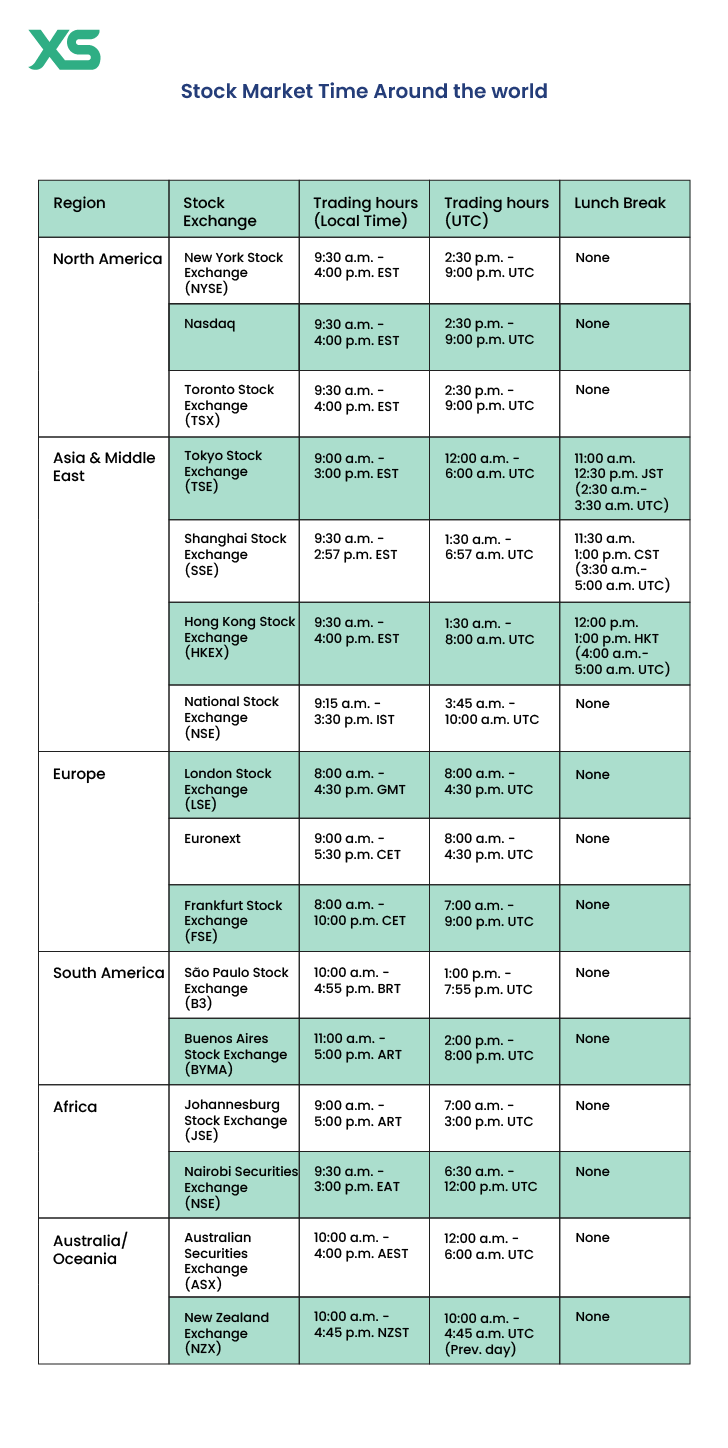
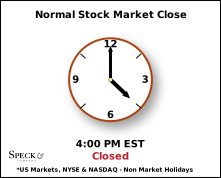
In the United States, the two most prominent exchanges—the NYSE and the NASDAQ—operate on a synchronized schedule. The regular trading session begins at 9:30 AM Eastern Time (ET) and concludes at 4:00 PM ET. This 6.5-hour window is where the vast majority of stock trading volume occurs. It is during these hours that market makers are most active, ensuring that the “bid-ask spread” (the difference between what a buyer is willing to pay and what a seller is willing to accept) remains narrow.
For investors, the 4:00 PM close is a critical milestone. This is when the “closing price” of a security is determined, which is used to calculate mutual fund Net Asset Values (NAVs) and serves as the official benchmark for historical performance tracking.
Global Market Synchronization
Investing is no longer a localized endeavor. A diversified portfolio often includes exposure to international markets, each with its own closing time.
- London Stock Exchange (LSE): Generally closes at 4:30 PM local time (GMT/BST).
- Tokyo Stock Exchange (TSE): Closes at 3:00 PM local time, notably featuring a lunch break between 11:30 AM and 12:30 PM.
- Hong Kong Stock Exchange (HKEX): Closes at 4:00 PM local time, also with a midday break.
Understanding these times is vital for “cross-border” investing. For example, economic news released in the U.S. during the afternoon may not be priced into Asian markets until they reopen the following day, creating potential opportunities or risks for the global investor.
After-Hours and Pre-Market Trading: Navigating the Extended Session
While the “closing bell” rings at 4:00 PM ET, the digital nature of modern finance means that the market never truly stops. Extended-hours trading allows participants to buy and sell securities outside of the standard 9:30 AM to 4:00 PM window.
How Extended Hours Work
Extended trading is divided into the “Pre-market” (typically 4:00 AM to 9:30 AM ET) and the “After-hours” session (4:00 PM to 8:00 PM ET). These sessions are facilitated by Electronic Communication Networks (ECNs), which match buyers and sellers directly without the need for a physical exchange floor.
Initially, these sessions were the exclusive playground of institutional investors and high-net-worth individuals. However, most modern brokerage platforms now grant retail investors access to these hours, democratizing the ability to react to news in real-time.
Risks and Rewards of Late-Night Trading
The primary motivation for trading after the market closes is to react to significant news, such as corporate earnings reports or geopolitical events. If a company releases a stellar quarterly report at 4:15 PM, the stock price may jump significantly before the next morning’s opening.
However, after-hours trading carries substantial risks:
- Lower Liquidity: Far fewer people are trading, meaning it may be difficult to execute a large order without significantly moving the price.
- Higher Volatility: With fewer participants, prices can swing wildly on relatively small trade volumes.
- Wider Spreads: The gap between the bid and ask prices often widens, making it more expensive to enter and exit positions.
For the conservative personal finance enthusiast, the after-hours market is often a place to observe rather than participate, as the lack of liquidity can lead to “slippage,” where a trade is executed at a much worse price than intended.
Why Timing Matters: The Psychology and Liquidity of Market Closes
The final hour of the trading day, often referred to as the “Power Hour” (3:00 PM to 4:00 PM ET), is frequently the most volatile and high-volume period of the day. Understanding why this happens is key to professional-grade market analysis.
The “Closing Cross” and Price Discovery
As the clock approaches 4:00 PM, exchanges execute what is known as the “Closing Cross.” This is a specialized auction process designed to find the single price that maximizes the number of shares traded, ensuring a fair and transparent closing price.
Institutional investors, such as pension funds and ETFs, often need to execute massive orders at the end of the day to match their benchmark indexes. This influx of capital creates a surge in volume, making the “market close” the most liquid moment of the entire trading session.
Market-on-Close (MOC) Orders
A “Market-on-Close” order is a directive given to a broker to execute a trade as near to the closing price as possible. These orders are essential for mutual fund managers who must invest new capital at the day’s official price. For the individual investor, observing the direction of MOC orders can provide insight into “big money” sentiment. If there is a massive imbalance of buy orders at the close, it often suggests bullish sentiment heading into the next day.
Asset-Specific Closing Times: Beyond the Stock Market
While equity markets follow a strict schedule, other financial instruments operate under different rules. For a well-rounded business finance perspective, one must look at the 24-hour nature of global liquidity.
The 24/5 Nature of the Forex Market
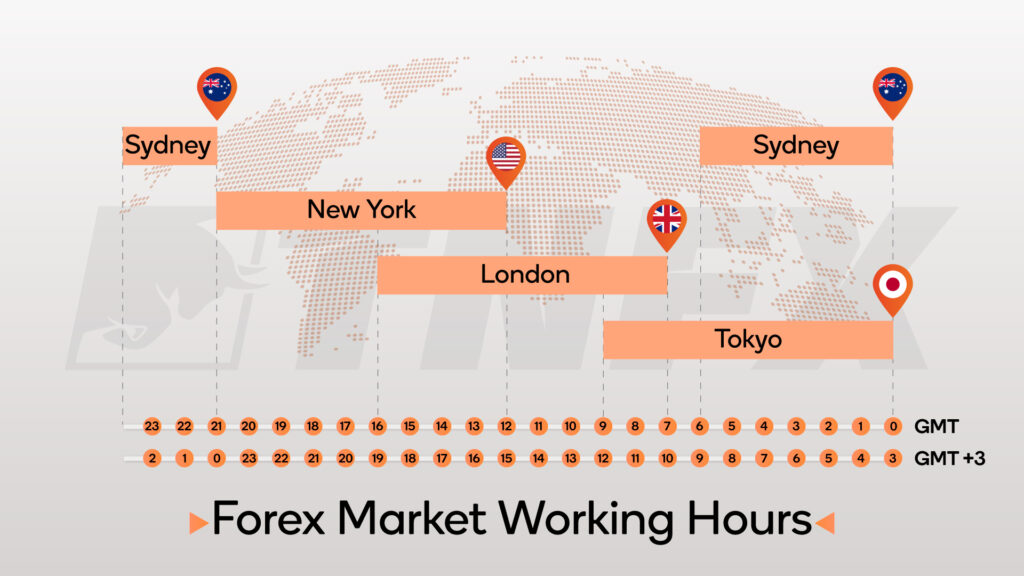
The Foreign Exchange (Forex) market is the largest and most liquid financial market in the world. Unlike stocks, it does not have a single centralized exchange. Instead, it is a global network of banks and brokers. Trading begins on Sunday evening (ET) as the Asian markets open and continues uninterrupted until Friday afternoon (ET). While there is no “closing time” during the week, the market effectively “closes” for the weekend, which can lead to “gaps” in price when it reopens on Sunday.
Cryptocurrency: The Market That Never Sleeps
In the realm of digital assets, the concept of a market close is non-existent. Bitcoin, Ethereum, and thousands of other cryptocurrencies trade 24 hours a day, 7 days a week, 365 days a year. This creates a unique challenge for financial tools and portfolio trackers, which must arbitrarily pick a time (usually Midnight UTC) to define a “daily close” for the purpose of charting and performance analysis.
Commodities and Futures
Futures markets, which include contracts for oil, gold, and agricultural products, have complex schedules. Most trade nearly 24 hours a day but have specific “settlement” times that act as a functional close. For example, CME Group gold futures might have a daily settlement at 1:30 PM ET, even though the electronic platform continues to trade.
Strategic Considerations for Different Investor Profiles
Knowing what time the market closes is only the first step; the second is knowing how to use that information to optimize your financial outcomes.
Day Traders vs. Swing Traders
For day traders, the market close is a hard deadline. To avoid the risks of overnight gaps, many day traders “flat” their positions (sell everything) before 4:00 PM. Conversely, swing traders—who hold positions for days or weeks—use the market close to analyze “daily candles” on technical charts. A stock that closes at the very top of its daily range is often seen as a sign of strength, suggesting further gains the following day.
The Impact of Economic Reports and Earnings
Most major economic data (like Inflation or Employment reports) are released at 8:30 AM ET, one hour before the market opens. Similarly, most major corporations release their earnings after 4:00 PM ET. This “out-of-market” timing is intentional; it gives investors time to digest the information without causing an immediate, chaotic panic on the exchange floor.
Successful investors use the time after the market closes to perform deep-dive research. The hours between 4:00 PM and the next morning’s open are when the most significant financial analysis happens, allowing for a more reasoned and less emotional approach to wealth management.
Conclusion: Mastering the Clock for Financial Success
In the world of money and investing, the “market close” is far more than a timestamp. It is a moment of convergence where institutional strategy, retail sentiment, and global economics collide. By understanding the specific hours of different exchanges, the mechanics of extended-hours trading, and the unique schedules of various asset classes, you can navigate the financial markets with greater confidence and precision.
Mastering the timing of the markets allows you to manage risk more effectively, capitalize on liquidity, and ensure that your investment decisions are made with a full understanding of the global financial cycle. Whether you are watching the clock for the final trade of the day or preparing your strategy for the Sunday evening open, remember that in finance, being in the right place at the right time is often the result of knowing exactly when the doors open and close.
aViewFromTheCave is a participant in the Amazon Services LLC Associates Program, an affiliate advertising program designed to provide a means for sites to earn advertising fees by advertising and linking to Amazon.com. Amazon, the Amazon logo, AmazonSupply, and the AmazonSupply logo are trademarks of Amazon.com, Inc. or its affiliates. As an Amazon Associate we earn affiliate commissions from qualifying purchases.