
In the world of finance, timing is often just as important as the asset itself. For seasoned investors and novice traders alike, the question “what time is market close?” is more than a logistical inquiry—it is a fundamental component of a successful trading strategy. While many assume the financial markets operate on a standard schedule, the reality is a complex web of time zones, extended sessions, and regional variations that can significantly impact liquidity, pricing, and portfolio performance.
Understanding the closing times of major exchanges is essential for managing risk, executing orders at optimal prices, and staying ahead of global economic shifts. This guide explores the intricate schedule of the global financial markets, the mechanics of the closing bell, and the strategic implications of trading during the final moments of the day.
Understanding Standard Trading Hours in the United States
For the majority of retail investors in North America, the primary focus remains on the two largest exchanges in the world: the New York Stock Exchange (NYSE) and the NASDAQ. Both are headquartered in New York City and operate under Eastern Time (ET).
The New York Stock Exchange (NYSE) and NASDAQ
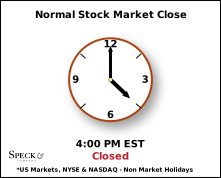
The standard trading session for both the NYSE and the NASDAQ begins at 9:30 AM ET and concludes at 4:00 PM ET, Monday through Friday. This six-and-a-half-hour window is known as “regular trading hours.” During this period, liquidity is at its highest, and bid-ask spreads—the difference between the price a buyer is willing to pay and a seller is willing to accept—are typically at their narrowest.
Why 4:00 PM Eastern Time Matters
The 4:00 PM ET close is a critical benchmark in the financial world. It marks the moment when the “closing price” is established for thousands of publicly traded companies. This price is used by mutual funds to calculate their Net Asset Value (NAV), by derivatives traders to settle contracts, and by analysts to evaluate daily performance.
The final minutes leading up to 4:00 PM, often referred to as the “closing auction,” involve a sophisticated process where the exchange matches buy and sell orders to find a single price that clears the maximum volume of shares. This ensures a stable and fair exit price for the day.
Early Closures and Market Holidays
It is important to note that the market does not always stick to the 4:00 PM schedule. Both the NYSE and NASDAQ observe several federal holidays, such as Christmas Day, New Year’s Day, and Independence Day, during which the markets are closed entirely. Furthermore, on certain days—most notably the day after Thanksgiving (Black Friday) and sometimes Christmas Eve—the markets observe an early close at 1:00 PM ET. Investors must keep a close eye on the annual exchange calendars to avoid being caught off guard by these shortened sessions.
The World of Extended-Hours Trading: Pre-Market and After-Hours
While the “official” close occurs at 4:00 PM ET, the digital nature of modern finance means that trading does not actually stop when the bell rings. Extended-hours trading allows participants to react to news that breaks outside of the standard window.
How After-Hours Trading Works
After-hours trading begins immediately following the 4:00 PM close and typically lasts until 8:00 PM ET. These sessions are conducted via Electronic Communication Networks (ECNs), which automatically match buy and sell orders. While after-hours trading offers flexibility, it is fundamentally different from the regular session. Because there are fewer participants, the volume of shares being traded is significantly lower.
Risks and Rewards of Post-Market Sessions
The primary advantage of after-hours trading is the ability to react to corporate earnings reports or major geopolitical news that occurs after the closing bell. If a company reports stellar earnings at 4:15 PM, investors can buy shares immediately rather than waiting for the next morning’s open.
However, the risks are substantial. Lower liquidity leads to higher volatility and wider bid-ask spreads. A stock might swing wildly on the news of a single large trade, and investors may find it difficult to execute orders at their desired prices. Professional financial advisors often caution retail investors against heavy involvement in after-hours sessions unless they are using limit orders to protect themselves from price spikes.
The Role of ECNs and Retail Access
Historically, extended-hours trading was the exclusive domain of institutional investors and high-net-worth individuals. Today, most major brokerage platforms provide retail traders with access to pre-market (starting as early as 4:00 AM ET) and after-hours sessions. While this democratizes access, it places the burden of risk management squarely on the individual investor, who must navigate a market environment devoid of the stabilizing influence of specialist market makers.
Global Market Perspectives: Closing Times Across the World
In an increasingly interconnected global economy, the close of the New York markets is often just one piece of the puzzle. For those involved in international investing or currency trading, the sun never truly sets on the financial markets.
The London Stock Exchange (LSE) and European Markets
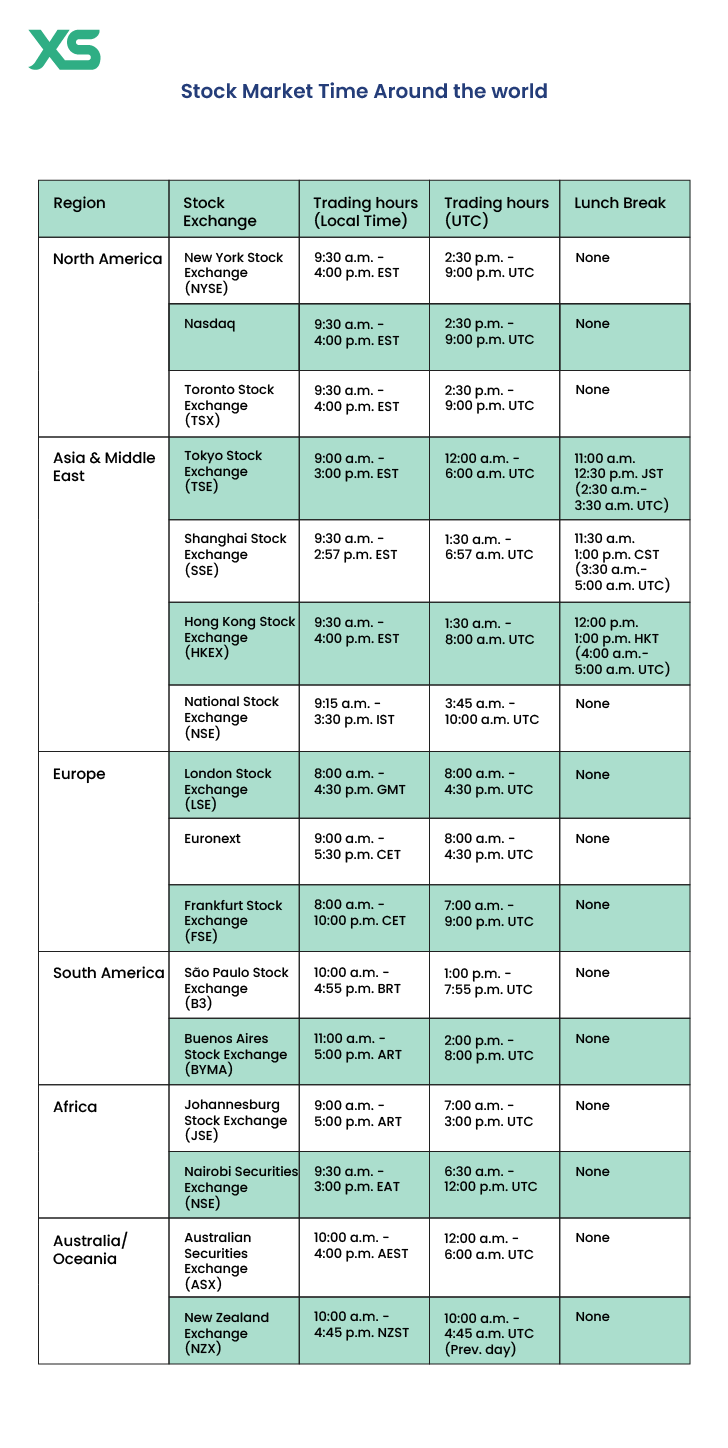
The European markets typically open while the U.S. is still asleep. The London Stock Exchange (LSE), one of the world’s oldest and most influential, operates from 8:00 AM to 4:30 PM Greenwich Mean Time (GMT). For a trader in New York, the LSE closes at 11:30 AM ET. This overlap between the European afternoon and the American morning is often the most volatile and liquid period of the global trading day, as news from both continents is processed simultaneously.
Asian Markets: Tokyo, Hong Kong, and Shanghai
The Asian trading session kicks off the global cycle. The Tokyo Stock Exchange (TSE) operates from 9:00 AM to 3:00 PM local time, but with a notable twist: a lunch break from 11:30 AM to 12:30 PM. The Hong Kong Stock Exchange (HKEX) follows a similar pattern. For U.S.-based investors, these markets operate during the late evening and early morning hours. Understanding the closing times in Asia is vital for those trading commodities or tech stocks, as developments in Shanghai or Tokyo often set the tone for the U.S. open several hours later.
Navigating Different Time Zones for International Investors
Managing a global portfolio requires a meticulous understanding of time zone conversions. Daylight Savings Time changes do not occur on the same dates globally; for instance, the U.S. and Europe switch their clocks weeks apart. This can shift the “overlap” periods and change the effective closing times of international markets relative to your local time. Utilizing world market clocks or professional financial software is a necessity for anyone operating across borders.
Strategic Implications of the “Closing Bell”
The time at which a market closes is not just a deadline—it is a strategic pivot point. The behavior of stocks in the final hour of trading, often called the “Power Hour,” can provide deep insights into market sentiment.
Market Volatility and Liquidity at the Close
As the clock ticks toward 4:00 PM ET, trading volume typically surges. Institutional investors, such as pension funds and hedge funds, often wait until the end of the day to execute large blocks of shares to ensure they receive a price close to the official daily benchmark. This influx of capital creates a period of high liquidity but also heightened volatility. Day traders often look for “breakout” patterns during this window, while long-term investors may use the liquidity to rebalance their portfolios with minimal price impact.
The Importance of the “Market-on-Close” (MOC) Order
A specialized tool used by many professionals is the Market-on-Close (MOC) order. This is an instruction to execute a trade as close to the closing price as possible. Exchanges have strict cut-off times for entering or cancelling MOC orders (usually around 3:50 PM ET for the NYSE). These orders are essential for passive index funds that aim to track an index as accurately as possible, as the index’s value is calculated based on those very closing prices.
How Closing Prices Impact Mutual Funds and ETFs
For the average personal finance enthusiast, the market close is the moment their wealth is recalculated. Mutual funds only price their shares once per day, based on the closing prices of the underlying assets. If you place an order to buy a mutual fund at 2:00 PM, you won’t know the exact price you paid until after the 4:00 PM close. Exchange-Traded Funds (ETFs), conversely, trade like stocks throughout the day, but their “tracking error”—how closely they follow their index—is often judged by their performance at the closing bell.

Conclusion: Mastering the Clock for Financial Success
While the question “what time is market close?” has a simple answer on the surface, its implications run deep through the veins of the financial system. For the retail investor, the 4:00 PM ET close represents a moment of reflection and valuation. For the active trader, it represents a period of intense opportunity and risk. For the global strategist, it is merely one coordinate in a 24-hour cycle of capital flow.
By mastering the schedule of the markets—including the nuances of early closures, the risks of after-hours sessions, and the mechanics of the global clock—investors can better position themselves to protect their capital and capitalize on opportunities. In the world of money, time is more than just a measurement; it is a resource that, when used wisely, can lead to long-term financial security. Whether you are checking your 401(k) or executing a high-frequency trade, remember that the closing bell is not the end of the story—it is simply the preparation for the next day’s opening.
aViewFromTheCave is a participant in the Amazon Services LLC Associates Program, an affiliate advertising program designed to provide a means for sites to earn advertising fees by advertising and linking to Amazon.com. Amazon, the Amazon logo, AmazonSupply, and the AmazonSupply logo are trademarks of Amazon.com, Inc. or its affiliates. As an Amazon Associate we earn affiliate commissions from qualifying purchases.