
Apple events are more than just product launches; they are pivotal moments that dictate the trajectory of the global technology landscape. For developers, enthusiasts, and casual users alike, the question of “what time is the Apple event” is often the first step in preparing for a wave of innovation that spans from mobile software to cutting-edge silicon.
These keynote presentations, typically held at the Steve Jobs Theater in Cupertino, California, serve as the stage for Apple to unveil its latest breakthroughs in hardware, software, and digital services. Understanding the timing, the technical specifications expected, and the underlying technological shifts is essential for anyone looking to stay ahead in the digital age.
Global Timing and Access: How to Watch the Latest Innovations
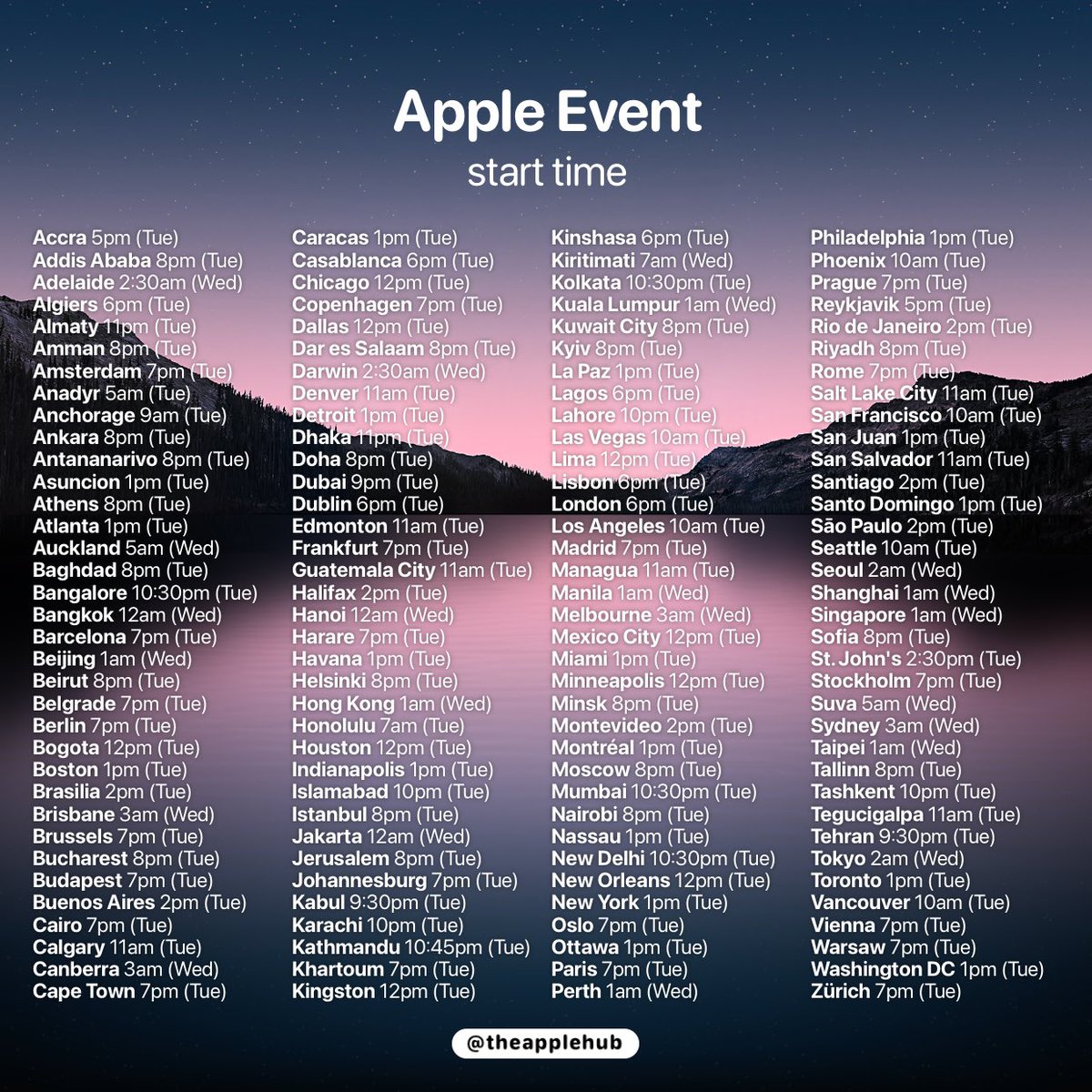
Apple has long maintained a tradition of consistency regarding its event timing. Historically, Apple keynotes begin at 10:00 AM Pacific Time (PT). For a global audience, this synchronization is crucial, as it allows tech hubs across the world—from London to Tokyo—to tune in simultaneously.
Decoding the Global Schedule
Because Apple is a global brand, the 10:00 AM PT start time translates to various time zones as follows:
- Eastern Time (ET): 1:00 PM
- Greenwich Mean Time (GMT/UTC): 6:00 PM
- Central European Time (CET): 7:00 PM
- India Standard Time (IST): 10:30 PM
- Japan Standard Time (JST): 2:00 AM (the following day)
Navigating these time zones is the first hurdle for those wishing to see the live demonstrations of new features. Apple typically streams these events across multiple digital platforms to ensure maximum accessibility.
The Streaming Infrastructure
The technological feat of streaming to millions of concurrent viewers requires a robust content delivery network (CDN). Users can watch the event via:
- Apple.com: The official website often provides the highest bitrate stream, optimized for Safari and other modern browsers.
- The Apple TV App: This is the preferred method for those wanting a 4K HDR experience on a large screen.
- YouTube: Apple’s official YouTube channel has become a primary hub for viewers, offering a reliable stream with integrated live chat and accessibility features like closed captioning.
The Dawn of Apple Intelligence: AI and the Future of iOS
In recent cycles, the most anticipated aspect of the Apple event hasn’t been just the hardware, but the integration of “Apple Intelligence.” This represents a fundamental shift in how the company approaches Artificial Intelligence, prioritizing on-device processing and user privacy over cloud-dependent models.
Generative AI and On-Device Processing
The core of the latest Apple events centers on the integration of Large Language Models (LLMs) into the core operating systems—iOS, iPadOS, and macOS. Unlike competitors who rely heavily on server-side computation, Apple’s tech strategy emphasizes the “Neural Engine” within its A-series and M-series chips. This allows for complex AI tasks—such as writing assistance, image generation, and advanced Siri interactions—to occur locally on the device.
This technical choice is significant for digital security. By keeping the data on the device, Apple mitigates the risks associated with data breaches in the cloud, maintaining its stance on user privacy as a fundamental human right.
The Evolution of Siri and System-Wide Integration
Technological advancements showcased during the event often highlight the total overhaul of Siri. Through the use of semantic indexing, the new Siri can understand context across various apps. If a user asks, “When is my mom’s flight landing?” Siri can pull information from Mail, Messages, and Calendar to provide a real-time answer. This level of app-to-app communication represents a significant leap in software interoperability.
Hardware Evolution: Next-Gen Devices and Silicon Advancements
While software defines the user experience, the hardware is the engine that drives it. Every Apple event is a showcase of the latest iterations in silicon technology, which continues to push the boundaries of performance per watt.
The Pro-Series iPhone and Display Technology
The centerpiece of the autumn Apple event is invariably the iPhone. From a tech perspective, the focus is on three areas: the SoC (System on a Chip), the camera system, and display technology.
- A-Series Silicon: We expect the introduction of the latest A-series chip, built on a 3-nanometer process. This smaller transistor size allows for more efficiency, better thermal management, and improved battery life despite higher performance demands.
- ProMotion and Always-On Displays: Advances in LTPO (Low-Temperature Polycrystalline Oxide) technology allow screens to vary refresh rates from 1Hz to 120Hz, balancing fluid motion with energy conservation.
- Optical Innovations: The camera systems are no longer just about megapixels. They are about “computational photography.” Features like spatial video recording—designed for playback on the Vision Pro—showcase the hardware’s ability to process massive amounts of depth data in real-time.
Apple Watch and Health Sensor Integration
The Apple Watch has evolved from a notification hub to a sophisticated medical device. Technicians and health enthusiasts look for updates in biometric sensors, such as EKG, blood oxygen monitoring, and potentially new non-invasive sensors. The integration of these sensors with the S-series chip allows for “Double Tap” gestures and advanced fall detection, proving that wearable tech is becoming increasingly intuitive.
The Expansion of the M-Series Ecosystem
If the event falls in the later months, the focus often shifts to the Mac. The transition from Intel to Apple Silicon (M1, M2, M3, and beyond) has been one of the most successful architectural shifts in computing history. The latest events focus on the “Pro” and “Max” variants of these chips, which offer unified memory architectures that are particularly beneficial for video editors, 3D developers, and AI researchers.
Digital Security and the Seamless Ecosystem
A recurring theme in every Apple event is the “Ecosystem”—the invisible thread that connects the iPhone, Mac, Watch, and iPad. From a technology standpoint, this is achieved through proprietary protocols and high-level encryption.
Privacy as a Technical Specification
Apple frequently uses its keynote time to explain technical security features. This includes “Private Cloud Compute,” which ensures that if an AI task must go to the cloud, it is handled by dedicated Apple silicon servers that do not store user data. For tech professionals, this transparency in data handling is a key differentiator.
Connectivity and Standards: USB-C and Beyond
The shift toward industry standards like USB-C across the entire lineup is a major technical milestone. This move not only simplifies the cable ecosystem for users but also enables faster data transfer speeds (up to 40Gbps on Pro models) and broader compatibility with external peripherals, such as high-resolution monitors and external storage.
The Role of VisionOS
As Apple enters the spatial computing era, the “Apple event” now includes updates on VisionOS. This software platform introduces a new paradigm of technical challenges: foveated rendering, ultra-low latency (less than 12 milliseconds), and sophisticated hand-eye tracking. These updates signal where the tech industry is headed—away from flat screens and toward immersive, 3D environments.
The Technological Impact: Setting the Industry Standard
Why do we care what time the Apple event starts? Because the technologies announced during these two-hour windows often become the industry standard for the next decade. When Apple introduces a feature—be it FaceID, the removal of the headphone jack, or the implementation of a Titanium chassis—the rest of the tech world often follows suit.
Influence on the Software Development Kit (SDK)
Following the event, Apple typically releases the “Release Candidate” versions of its software to developers. This allows the global dev community to update their apps to take advantage of new APIs (Application Programming Interfaces). For example, a new “Action Button” on the hardware leads to thousands of developers creating custom shortcuts, expanding the utility of the device far beyond its out-of-the-box capabilities.
Environmental Tech and Sustainability
Finally, Apple uses these events to report on its “Apple 2030” goal—to be carbon neutral across its entire supply chain and product life cycle. The tech involved here includes using 100% recycled cobalt in batteries and moving toward fiber-based packaging. While less “flashy” than a new iPhone, these logistical and material science innovations are critical components of modern technology management.
In conclusion, the question “what time is the Apple event” is the gateway to understanding the next wave of digital transformation. Whether it is the integration of generative AI through Apple Intelligence, the power of 3nm silicon, or the refinement of the world’s most popular mobile operating system, these events provide a comprehensive look at the state of technology today and a roadmap for where it is going tomorrow. To stay informed, tune in at 10:00 AM PT and witness the next chapter of the silicon revolution.
aViewFromTheCave is a participant in the Amazon Services LLC Associates Program, an affiliate advertising program designed to provide a means for sites to earn advertising fees by advertising and linking to Amazon.com. Amazon, the Amazon logo, AmazonSupply, and the AmazonSupply logo are trademarks of Amazon.com, Inc. or its affiliates. As an Amazon Associate we earn affiliate commissions from qualifying purchases.