
For investors, traders, and financial enthusiasts, the rhythm of Wall Street dictates the flow of global capital. Whether you are a retail investor managing a retirement portfolio or a day trader looking for high-frequency opportunities, knowing exactly when the “Opening Bell” rings is the fundamental starting point of your strategy. However, the answer to “what time does Wall Street open” involves more than just a single timestamp; it encompasses a complex ecosystem of pre-market sessions, after-hours trading, and holiday schedules that every participant must understand to navigate the markets effectively.

1. Understanding Standard Trading Hours: The Core Mechanics
The primary heartbeat of American finance is centered on two major exchanges: the New York Stock Exchange (NYSE) and the Nasdaq. While they operate differently—the NYSE historically utilizing a physical floor and the Nasdaq being the world’s first electronic exchange—they both adhere to a synchronized schedule.
The NYSE and Nasdaq Schedule
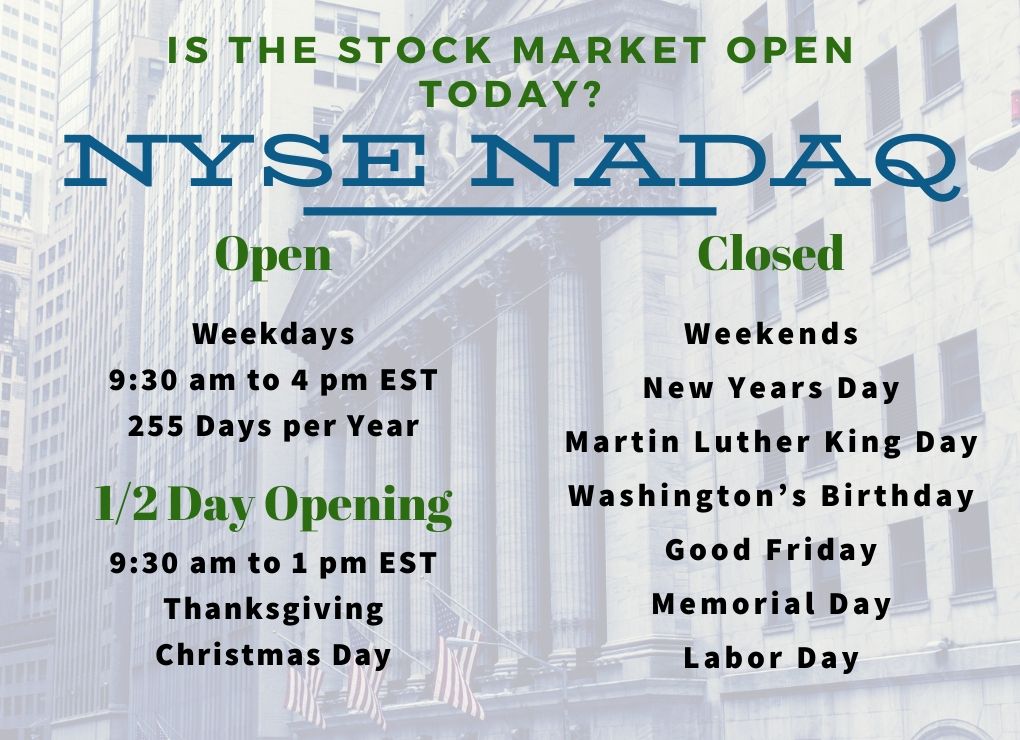
Standard trading hours for both the NYSE and the Nasdaq are 9:30 AM to 4:00 PM Eastern Time (ET), Monday through Friday. This 6.5-hour window is when the vast majority of trading volume occurs. During these hours, liquidity is at its peak, meaning that buy and sell orders are executed quickly with minimal price “slippage.” For the average investor, this is the safest and most efficient time to execute trades.
The Significance of the Opening Bell
The 9:30 AM ET opening is more than just a ceremonial event. It represents the “Opening Cross,” a process where the exchange’s computers calculate the optimal price for each stock based on the buy and sell orders that accumulated overnight. This initial price discovery phase is often characterized by high volatility. Prices can swing wildly in the first 15 to 30 minutes as the market reacts to news that broke while the exchange was closed.
Time Zone Conversions for Global Investors
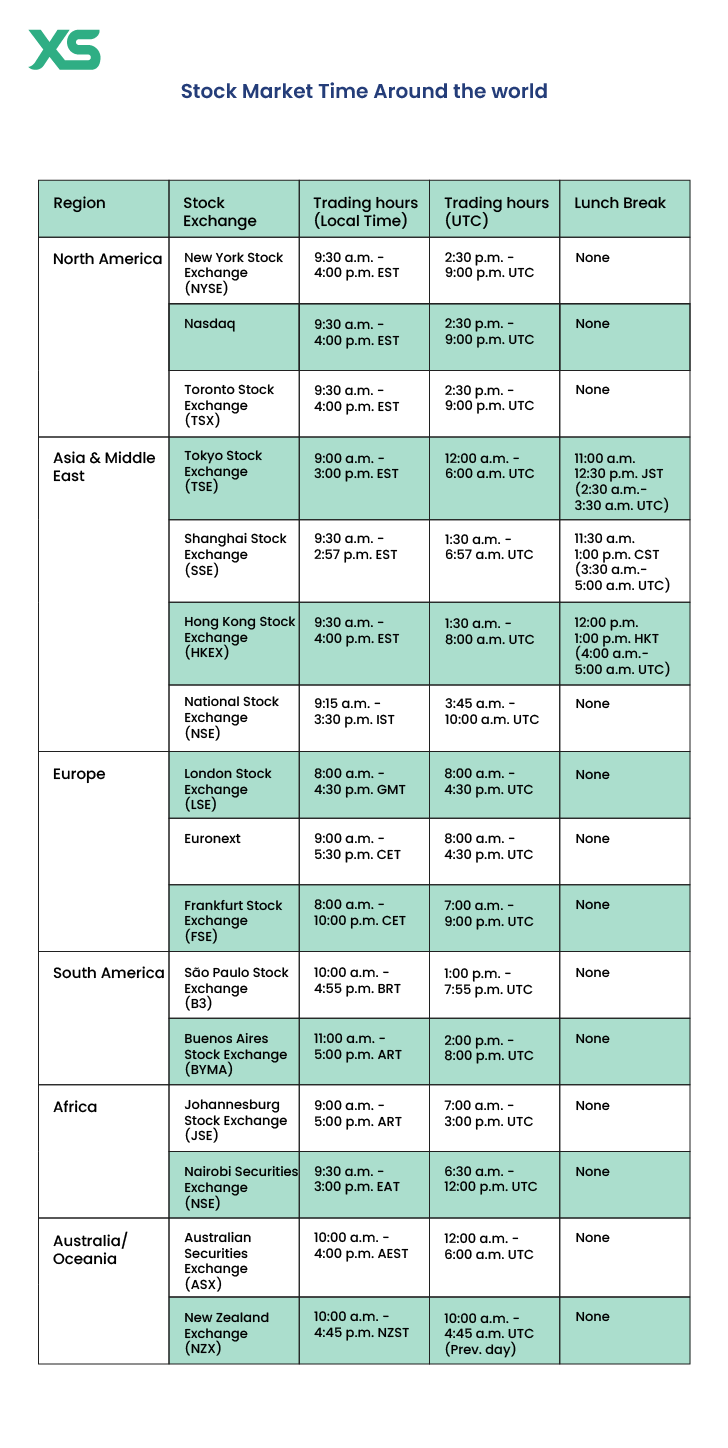
Because Wall Street operates on Eastern Time, investors living in different regions must adjust their clocks accordingly. For those on the West Coast of the United States, the market opens at 6:30 AM PT. For international investors in London, the market opens at 2:30 PM GMT, while traders in Tokyo or Hong Kong often find themselves monitoring Wall Street late into the night. Understanding these offsets is crucial for responding to economic data releases, such as the Jobs Report or CPI data, which are typically released at 8:30 AM ET, one hour before the opening bell.
2. Beyond the 9:30 AM Bell: Pre-Market and After-Hours Trading
In the modern era of electronic communication networks (ECNs), trading is no longer confined to the 9:30 AM to 4:00 PM window. Professional and retail investors alike now have access to “Extended-Hours Trading,” which allows for the buying and selling of securities before and after the official session.
How Pre-Market Trading Works
Pre-market trading typically begins as early as 4:00 AM ET and runs until the official open at 9:30 AM ET. This session is vital for reacting to overnight news, such as international geopolitical events or early-morning corporate earnings reports. However, liquidity during these hours is significantly lower than during the standard session. This means the “spread”—the difference between the bid and ask price—is wider, which can result in less favorable execution prices for the trader.
Risks and Rewards of After-Hours Sessions
After-hours trading begins immediately after the closing bell at 4:00 PM ET and can continue until 8:00 PM ET. This is perhaps the most volatile time for individual stocks, as many companies release their quarterly earnings reports shortly after 4:00 PM. While the ability to trade on this information immediately is an advantage, the low volume can lead to “flash” price movements that do not necessarily reflect the stock’s value once the broader market opens the following day.
Who Can Trade Outside Standard Hours?
Historically, extended-hours trading was reserved for institutional investors. Today, most major online brokerages allow retail investors to participate in pre-market and after-hours sessions. However, brokers often require users to agree to an “Electronic Trading Agreement” that acknowledges the risks of lower liquidity and higher volatility. It is generally recommended that only experienced investors engage in these sessions, and almost always using “limit orders” rather than “market orders” to ensure price protection.
3. Market Holidays and Early Closures
Wall Street does not operate every day. To manage your capital effectively, you must be aware of the NYSE and Nasdaq holiday calendar, as these closures can impact settlement dates and your ability to exit positions.
The Annual NYSE/Nasdaq Holiday Calendar
The U.S. stock markets are closed on several federal holidays. These typically include:
- New Year’s Day
- Martin Luther King, Jr. Day
- Washington’s Birthday (Presidents’ Day)
- Good Friday
- Memorial Day
- Juneteenth National Independence Day
- Independence Day (July 4th)
- Labor Day
- Thanksgiving Day
- Christmas Day
If a holiday falls on a Saturday, the market is usually closed on the preceding Friday. If it falls on a Sunday, the market is closed on the following Monday.
Early Closing Protocols
In addition to full closures, there are specific days where the market closes early—typically at 1:00 PM ET. This most commonly occurs on the day after Thanksgiving (Black Friday) and on Christmas Eve (December 24th), provided it falls on a business day. These half-days often see “thin” trading volume, as many institutional traders are away for the holidays, which can lead to unpredictable price action.
How Holidays Impact Liquidity and Volatility
In the days leading up to a major market holiday, trading volume often tapers off. This phenomenon, known as “pre-holiday drift,” can sometimes result in a slow upward trend in stock prices. Conversely, the “January Effect” or the “Santa Claus Rally” are seasonal trends that investors track surrounding these holiday periods. Being aware of the calendar allows you to adjust your risk—for instance, by reducing leverage before a three-day weekend when you cannot react to news events.
4. Why Timing Matters: The Psychology of Market Phases
Successful investing isn’t just about knowing when the market opens, but understanding the behavioral patterns that occur throughout the day. The 6.5-hour trading session is not a monolith; it has distinct phases that attract different types of participants.
The “Opening Cross” and Initial Volatility
The first 30 to 60 minutes of the trading day (9:30 AM – 10:30 AM) are often referred to as “Amateur Hour” by seasoned professionals. This is because the market is processing the pent-up demand from the previous night. Retail investors often rush to place orders at the open, leading to high volatility. Professional traders often wait for this initial “dust to settle” before committing significant capital, as the price trends established in the first hour are often more reliable.
The Mid-Day Lull
From roughly 11:30 AM to 2:00 PM ET, the market often experiences a “lunchtime lull.” Volume decreases as European markets close and North American traders take breaks. During this period, stock prices may move sideways or experience “drifting.” This is generally considered the most difficult time for day traders to find profitable opportunities, though it can be an excellent time for long-term investors to place orders with less interference from high-frequency trading algorithms.
The Closing Rush and Institutional Rebalancing
The final hour of trading, from 3:00 PM to 4:00 PM ET, is often the most intense. This is when institutional investors—pension funds, mutual funds, and ETFs—rebalance their portfolios. The “Closing Cross” at 4:00 PM determines the official closing price for the day, which is the benchmark used for valuing trillions of dollars in assets. This period often sees a massive surge in volume and can dictate the market’s momentum heading into the next day.
5. Strategic Advice for Individual Investors
Navigating Wall Street’s hours requires a blend of discipline and technical knowledge. To protect your personal finance interests and optimize your investing strategy, consider the following tactical approaches.
Avoiding the Risks of the Open
For most personal investors, placing a “market order” at exactly 9:30 AM is risky. Because the opening is so volatile, your order might be filled at a price significantly higher or lower than you intended. A more prudent strategy is to wait until 10:00 AM ET, once the initial price discovery phase has concluded and a clearer trend for the day has emerged.
Utilizing Limit Orders
Regardless of the time of day, using “limit orders” is a best practice in business finance. A limit order allows you to specify the maximum price you are willing to pay or the minimum price you are willing to accept. This is especially critical during the pre-market and after-hours sessions where the lack of liquidity can cause “gaps” in pricing. By using limit orders, you ensure that you never pay more—or receive less—than your predetermined threshold.
Tools to Track Real-Time Market Status
In the digital age, staying informed is easier than ever. Most reputable financial news websites and brokerage apps provide a “Market Status” indicator. Additionally, investors should keep a “Economic Calendar” bookmarked. Knowing that the Federal Reserve is releasing a statement at 2:00 PM ET is just as important as knowing the market opens at 9:30 AM, as such events can create “mini-opens” of extreme volatility in the middle of the trading day.
In conclusion, while the simple answer to “what time does Wall Street open” is 9:30 AM ET, the successful investor views this as part of a larger, continuous cycle. By understanding the nuances of extended hours, holiday schedules, and the intraday psychology of the market, you can move from being a reactive participant to a proactive strategist, ensuring your financial decisions are timed for maximum advantage.
aViewFromTheCave is a participant in the Amazon Services LLC Associates Program, an affiliate advertising program designed to provide a means for sites to earn advertising fees by advertising and linking to Amazon.com. Amazon, the Amazon logo, AmazonSupply, and the AmazonSupply logo are trademarks of Amazon.com, Inc. or its affiliates. As an Amazon Associate we earn affiliate commissions from qualifying purchases.