
In the fast-paced world of global finance, timing is more than just a logistical detail—it is a fundamental pillar of strategy. For the modern investor, knowing what time the stock market closes is merely the starting point. Understanding the nuances of trading sessions, the mechanics of the closing cross, and the implications of extended-hours trading can be the difference between a calculated success and a costly oversight.
For the majority of retail investors and institutional traders in the United States, the primary focus rests on the two largest exchanges in the world: the New York Stock Exchange (NYSE) and the Nasdaq. While the core hours are standardized, the ecosystem surrounding these hours is complex and multifaceted.
The Standard Trading Day: The Core of Public Equities
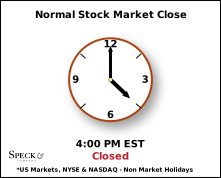
The standard trading session for the U.S. stock market begins at 9:30 AM Eastern Time (ET) and ends precisely at 4:00 PM ET. This six-and-a-half-hour window represents the period of highest liquidity, lowest spreads, and most significant price discovery.
The Mechanics of the Closing Bell
The 4:00 PM ET close is often marked by the symbolic ringing of the closing bell, but behind the scenes, a sophisticated technological process known as the “Closing Cross” takes place. In the final minutes of the trading day, the exchange aggregates all “Market-on-Close” (MOC) and “Limit-on-Close” (LOC) orders to determine a single price that clears the maximum number of shares. This process ensures a stable and fair price for the official daily close, which is the benchmark used by mutual funds to calculate their Net Asset Value (NAV).
Why the Final Hour is “Power Hour”
The final hour of trading, from 3:00 PM to 4:00 PM ET, is colloquially known among traders as “Power Hour.” During this period, volatility and volume typically surge. Institutional investors often rebalance their portfolios in the final hour to match benchmark indices, and day traders close out their intraday positions. For a strategic investor, this window offers a glimpse into the prevailing market sentiment that will likely carry over into the next trading day.
Time Zone Considerations for Global Investors
While the NYSE and Nasdaq operate on Eastern Time, the global nature of modern finance means investors are participating from every corner of the globe. It is vital for traders in London, Tokyo, or Los Angeles to synchronize their local clocks with the Eastern Time Zone. For example, a trader in California must be ready for the market open at 6:30 AM PT and the close at 1:00 PM PT. Missing these windows due to time zone confusion can lead to missed execution windows or exposure to overnight risk.
Beyond the Bell: The World of Extended-Hours Trading
Contrary to popular belief, the market does not simply go dark at 4:00 PM. Through Electronic Communication Networks (ECNs), trading continues long after the physical floor has cleared. Extended-hours trading is divided into two main segments: pre-market and after-hours.
The After-Hours Session (4:00 PM – 8:00 PM ET)
Most major brokerage firms allow their clients to trade from 4:00 PM until 8:00 PM ET. This session is particularly critical because most publicly traded companies release their quarterly earnings reports shortly after the 4:00 PM close. These reports can trigger massive price swings. Having the ability to trade in the after-hours session allows investors to react immediately to new financial data rather than waiting for the next morning’s open.
The Pre-Market Session (4:00 AM – 9:30 AM ET)
Early birds can begin trading as early as 4:00 AM ET, though most retail volume doesn’t pick up until 7:00 or 8:00 AM. Pre-market trading is often driven by international news, overseas market performance (such as the DAX in Germany or the FTSE in London), and early-morning economic data releases like the Jobs Report or Consumer Price Index (CPI).
Risks and Rewards of Extended Trading
While extended-hours trading provides flexibility, it comes with unique risks. Liquidity is significantly lower than during standard hours, which leads to wider “bid-ask spreads”—the difference between what a buyer is willing to pay and what a seller is willing to accept. Additionally, price movements in the after-hours can be deceptive; a stock may jump 5% on low volume after an earnings report, only to open flat the next morning when the broader market evaluates the news more critically.
Holiday Schedules and Modified Trading Windows

The U.S. stock market does not operate 365 days a year. It observes several federal holidays, and on certain occasions, it utilizes “early close” schedules to accommodate seasonal breaks.
Standard Market Holidays
The NYSE and Nasdaq are closed on the following major holidays:
- New Year’s Day
- Martin Luther King, Jr. Day
- Presidents’ Day
- Good Friday
- Memorial Day
- Juneteenth National Independence Day
- Independence Day (July 4th)
- Labor Day
- Thanksgiving Day
- Christmas Day
If a holiday falls on a Saturday, the market is typically closed on the preceding Friday. If it falls on a Sunday, the market is closed on the following Monday.
Early Closures and Seasonal Shifts
On the day after Thanksgiving (Black Friday) and sometimes on Christmas Eve (if it falls on a weekday), the stock market typically closes early at 1:00 PM ET. These sessions often see light volume as institutional traders take time off. For the retail investor, these half-days can be characterized by “drift,” where the market moves slowly in one direction due to a lack of significant participants.
The Impact of “Witching” Days
Four times a year—on the third Friday of March, June, September, and December—the market experiences “Quadruple Witching.” This is the simultaneous expiration of stock options, stock index options, stock index futures, and single-stock futures. While the closing time remains 4:00 PM, the volume and volatility in the final minutes of these days are among the highest of the year, often leading to unpredictable price action.
Global Markets: A 24-Hour Financial Cycle
For those interested in international diversification or currency trading, the “closing time” is a rotating concept. As one market closes, another is often preparing to open, creating a 24-hour cycle of global capital flow.
The European Session (LSE and Euronext)
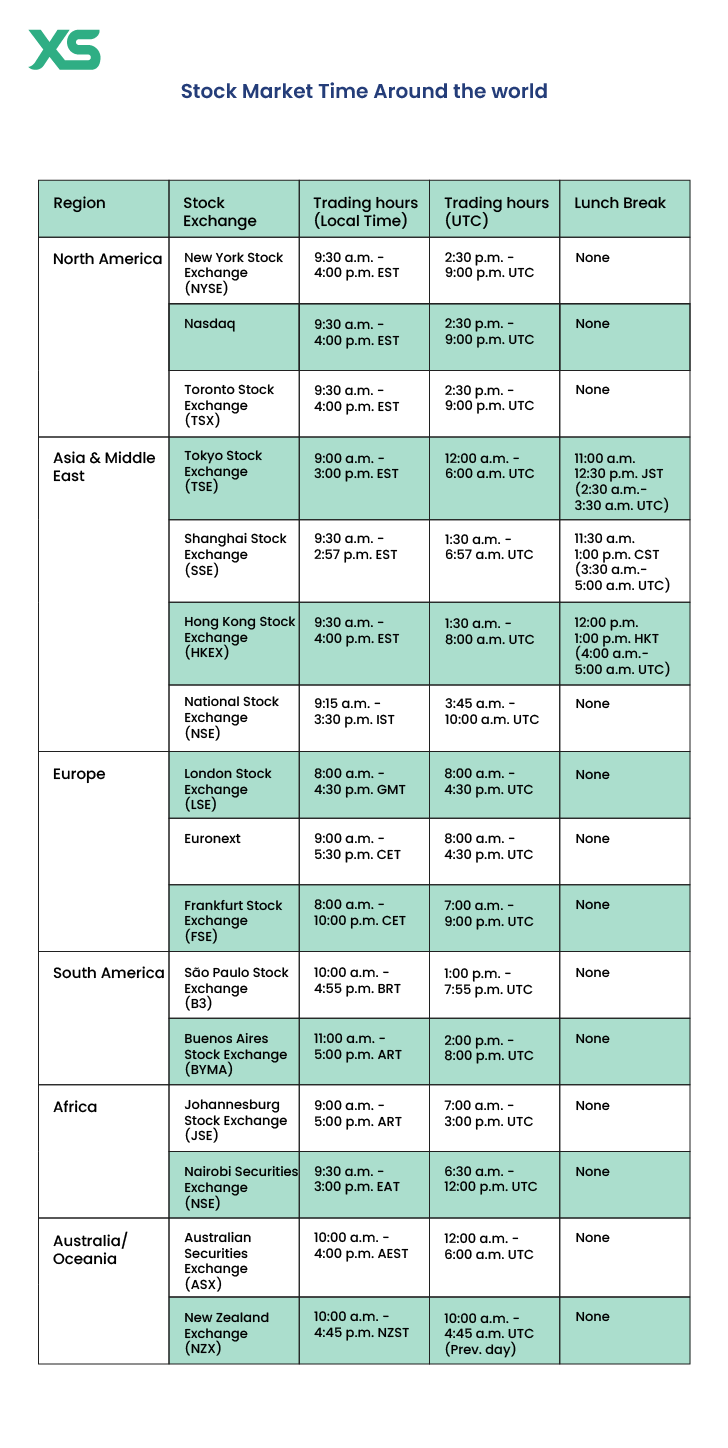
The London Stock Exchange (LSE) typically operates from 8:00 AM to 4:30 PM local time (GMT/BST). For U.S.-based investors, the European markets are open during the early morning hours, usually overlapping with the U.S. pre-market and the first few hours of the NYSE session. This overlap (roughly 8:00 AM to 11:30 AM ET) is often the most liquid period for global forex markets and large-cap multinational stocks.
The Asian Session (Tokyo, Hong Kong, Shanghai)
The Tokyo Stock Exchange (TSE) and the Hong Kong Stock Exchange (HKEX) represent the start of the global trading day. Tokyo opens at 9:00 AM local time, which is late evening in New York. Interestingly, many Asian markets still utilize a “lunch break”—a mid-day pause in trading that has largely been abandoned by Western exchanges. Understanding when these markets close is vital for predicting the “gap” at which the U.S. market might open the following morning.
Strategic Timing: How to Use Market Hours to Your Advantage
Knowing the clock is one thing; using it to enhance your investment returns is another. Professional traders often tailor their strategies based on the specific time of day.
Using Limit Orders for After-Hours Management
Because of the volatility and wide spreads in after-hours trading, professional investors almost never use “market orders” outside of standard hours. Instead, they use “limit orders,” which specify the maximum price they are willing to pay or the minimum they are willing to accept. This protects the investor from “slippage,” where a trade is executed at a much worse price than expected due to low liquidity.
Managing “Overnight Risk”
The period between the 4:00 PM close and the 9:30 AM open is known as the “overnight” period. Significant geopolitical events, natural disasters, or unexpected corporate scandals can happen while the market is closed. Investors must decide whether to hold positions overnight or “flat” (close their positions) to avoid the risk of the market “gapping” down the next morning. Long-term investors typically ignore this volatility, but for those managing tight margins or short-term swing trades, the 4:00 PM close is a critical decision point.
The Psychological Aspect of the Closing Bell
The close of the market often brings an emotional component to investing. There is a phenomenon known as “recency bias,” where investors weigh the final 30 minutes of trading more heavily than the rest of the day. A “strong close”—where the market ends at its daily highs—often fosters bullish sentiment for the following day. Conversely, a “weak close” can lead to anxiety and sell-offs in the after-hours. Recognizing these psychological patterns can help an investor remain objective and disciplined, regardless of the time on the clock.
In conclusion, while the answer to “what time does the stock market close” is a simple 4:00 PM ET, the reality is a sophisticated continuum of global finance. By mastering the nuances of the standard session, navigating the complexities of extended hours, and respecting the global nature of the 24-hour market, investors can better position themselves to protect their capital and capitalize on opportunities as they arise.
aViewFromTheCave is a participant in the Amazon Services LLC Associates Program, an affiliate advertising program designed to provide a means for sites to earn advertising fees by advertising and linking to Amazon.com. Amazon, the Amazon logo, AmazonSupply, and the AmazonSupply logo are trademarks of Amazon.com, Inc. or its affiliates. As an Amazon Associate we earn affiliate commissions from qualifying purchases.