
For any investor, from the casual retail trader to the high-frequency institutional firm, the operating hours of the New York Stock Exchange (NYSE) represent the heartbeat of global finance. Located at 11 Wall Street in Lower Manhattan, the NYSE is the world’s largest stock exchange by market capitalization. Understanding exactly when the “Opening Bell” rings—and what happens before and after that iconic sound—is fundamental to navigating the complexities of the financial markets.
This guide provides a comprehensive breakdown of the NYSE operating hours, the mechanics of extended trading sessions, and the strategic implications of timing your trades within the Money niche.
Understanding the Standard Operating Hours of the New York Stock Exchange
The standard trading session for the New York Stock Exchange is the primary window during which the majority of stock trading occurs. For decades, these hours have served as the benchmark for the American financial system.
The Opening Bell: 9:30 AM ET
The NYSE officially opens for regular trading at 9:30 AM Eastern Time (ET), Monday through Friday. The ringing of the opening bell is more than just a tradition; it signals the commencement of the “Core Trading Session.” At this exact moment, the exchange’s automated systems and Designated Market Makers (DMMs) begin matching buy and sell orders that have accumulated overnight.
The opening minutes are often characterized by high volatility. This is because the market is reacting to news, earnings reports, or geopolitical events that occurred while the exchange was closed. For many disciplined investors, the first 15 to 30 minutes of the opening are viewed as a period of “price discovery,” where the true value of a security is negotiated through intense volume.
The Closing Bell: 4:00 PM ET
The regular trading day concludes at 4:00 PM Eastern Time (ET). The closing bell is equally significant because it determines the “closing price” of a stock. This price is used as the official benchmark for mutual fund valuations, index calculations, and historical data tracking.
In the final minutes leading up to 4:00 PM, trading volume often surges—a phenomenon known as the “Closing Cross.” Institutional investors and index funds frequently execute large blocks of trades at this time to ensure they receive the official closing price, leading to a flurry of activity that can rival the market open in intensity.
Holiday Schedules and Early Closures
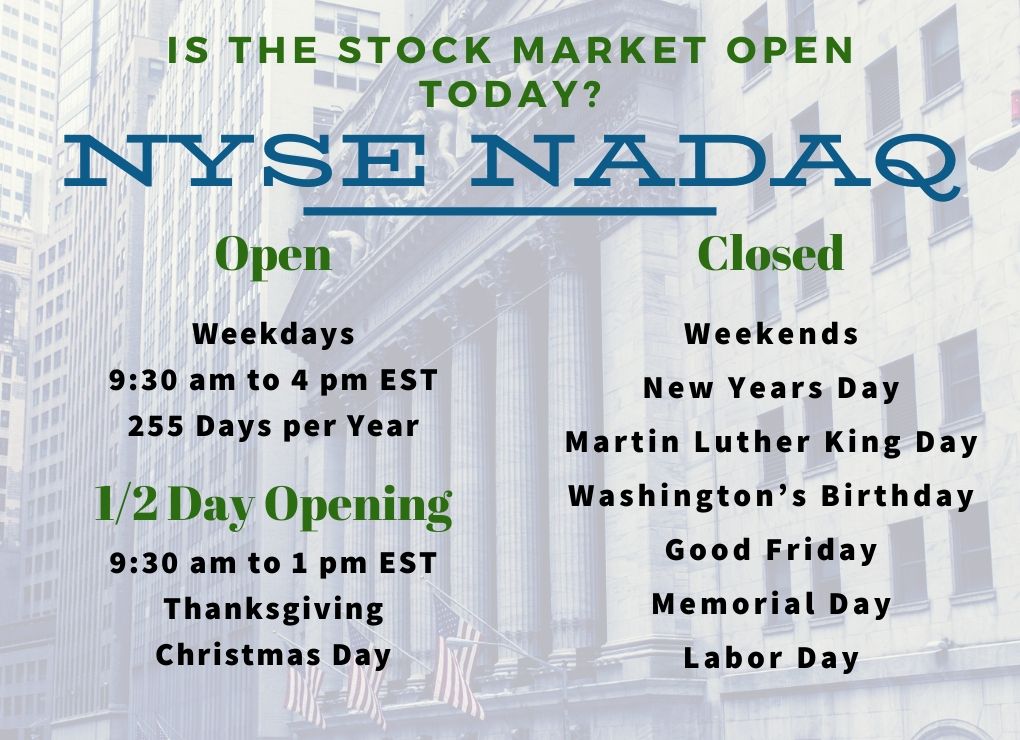
The NYSE does not operate 365 days a year. It observes nine major federal holidays in the United States, during which the exchange is completely closed:
- New Year’s Day
- Martin Luther King, Jr. Day
- Washington’s Birthday (Presidents’ Day)
- Good Friday
- Memorial Day
- Juneteenth National Independence Day
- Independence Day (July 4th)
- Labor Day
- Thanksgiving Day
- Christmas Day
Additionally, the NYSE occasionally observes “early closures,” typically on the day after Thanksgiving (Black Friday) and on Christmas Eve (if it falls on a business day). On these days, the market closes at 1:00 PM ET. Staying informed about the exchange calendar is vital for managing liquidity and ensuring that limit orders do not expire unexpectedly.
Beyond the Core: Pre-Market and After-Hours Trading
While 9:30 AM to 4:00 PM are the “official” hours, the digital age has extended the ability to trade far beyond these constraints. These extended-hours sessions allow investors to react to news outside of the standard window, though they come with unique characteristics.
How Pre-Market Sessions Function
The NYSE Arca (the exchange’s fully electronic platform) allows for pre-market trading to begin as early as 4:00 AM ET. However, most retail brokerages do not grant access to their clients until 7:00 AM or 8:00 AM ET.
Pre-market trading is primarily used by institutional investors and savvy traders to position themselves ahead of the 9:30 AM open. For example, if a major corporation releases a positive earnings report at 7:30 AM, the stock price will likely move immediately in the pre-market. Investors who wait until the official open may find they have missed the initial “gap up” in price.
The Risks and Rewards of After-Hours Trading
After-hours trading occurs from 4:00 PM to 8:00 PM ET. This session is crucial for reacting to “after-bell” news, such as quarterly earnings calls or unexpected CEO departures.

However, investors must exercise caution. The primary risk of after-hours trading is lower liquidity. Because there are fewer participants than during the core session, the “bid-ask spread”—the difference between the highest price a buyer will pay and the lowest price a seller will accept—tends to be much wider. This means you might pay a significantly higher price to buy a stock or receive a significantly lower price to sell it compared to the standard session. Additionally, price volatility is exacerbated in these thin markets, leading to dramatic swings that may not hold when the market reopens the following morning.
The Role of Electronic Communication Networks (ECNs)
Extended trading is made possible by Electronic Communication Networks (ECNs). Unlike the traditional floor-based model of the NYSE, ECNs are automated systems that match buy and sell orders directly. When you trade at 6:00 PM, your order isn’t going to a human specialist on the floor; it is being processed by a digital network that searches for a matching order from another participant. This technological infrastructure has effectively turned the stock market into a near-24-hour operation, even if the “official” NYSE floor maintains traditional hours.
Why Timing Matters for the Modern Investor
In the world of money and investing, when you trade can be just as important as what you trade. The behavior of the market changes throughout the day, influenced by participant psychology and institutional requirements.
Market Volatility at the Open and Close
The “power hours”—the first and last hours of the trading day—are when the highest volume of shares changes hands. For a retail investor, trading during the 9:30 AM open can be dangerous because of “whipsaw” price action, where a stock might spike up and then immediately crash as the market finds its equilibrium. Many professional traders suggest waiting until 10:00 AM or 10:30 AM for the “morning dust” to settle before entering a position. This allows the investor to see a clearer trend established by the day’s volume.
Liquidity Considerations for Retail Traders
Liquidity refers to the ease with which a security can be bought or sold without affecting its price. Between 12:00 PM and 2:00 PM ET, often referred to as the “lunchtime lull,” volume typically drops as floor traders and institutional desks take breaks. During this period, prices may drift aimlessly, and the lack of volume can make it harder to execute large orders at favorable prices. For those looking for stability, the mid-day period is often the quietest, whereas those looking for momentum prefer the open and close.
Global Market Overlap and Macroeconomic Impacts
The NYSE does not exist in a vacuum. Its hours overlap with other major global exchanges, which can trigger significant price movements. For instance, the London Stock Exchange (LSE) is open until 11:30 AM ET. The period between 9:30 AM and 11:30 AM ET is particularly active because both American and European traders are active simultaneously. Macroeconomic data, such as U.S. Employment Reports or Federal Reserve announcements, are usually released at 8:30 AM ET or 2:00 PM ET, specifically timed to fall within or just before these windows of high participation.
Time Zones and the Global Financial Clock
While the NYSE operates on Eastern Time, its influence is global. Investors from London to Tokyo must align their schedules with the New York clock to participate in the American markets.
Converting Eastern Time for International Investors
For international participants, the opening of the NYSE requires careful time zone management.
- Pacific Time (PT): The market opens at 6:30 AM and closes at 1:00 PM.
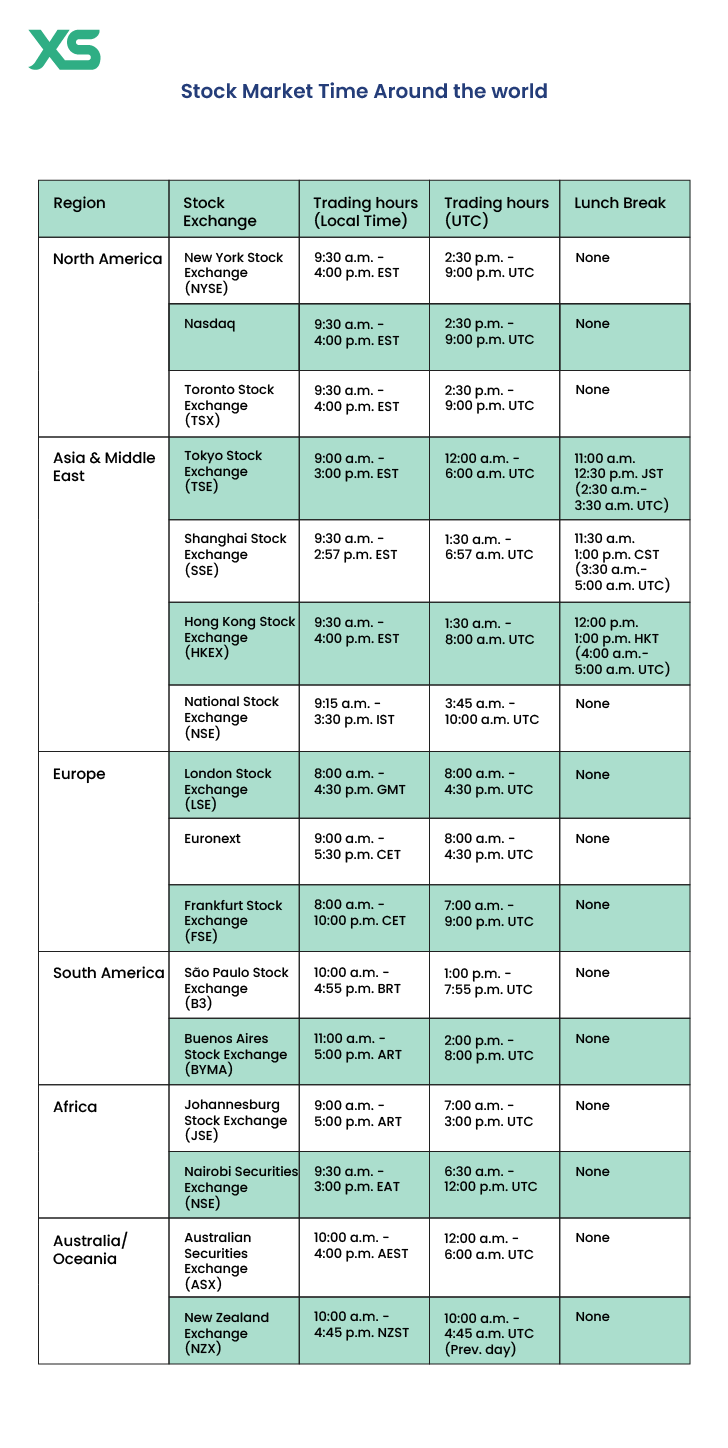
- Greenwich Mean Time (GMT/UTC): Depending on Daylight Saving Time, the market typically opens at 2:30 PM and closes at 9:00 PM.
- Hong Kong/Singapore (HKT/SGT): The market opens late at night (9:30 PM or 10:30 PM) and closes in the early morning.
This 24-hour global cycle means that news originating in Asia overnight can influence the NYSE opening, and NYSE closing prices often set the tone for the start of the next trading day in Sydney and Tokyo.
Comparing NYSE Hours with the Nasdaq and International Exchanges
It is a common misconception that all exchanges share the same hours. While the Nasdaq shares the identical 9:30 AM to 4:00 PM ET schedule with the NYSE, international exchanges vary:
- London Stock Exchange (LSE): 8:00 AM to 4:30 PM local time.
- Tokyo Stock Exchange (TSE): 9:00 AM to 3:00 PM local time, with a lunch break from 11:30 AM to 12:30 PM.
The NYSE is notable for not having a lunch break; it trades continuously for 6.5 hours during the core session.
Developing a Strategic Approach to Market Hours
To succeed in the Money niche, one must treat the clock as a tool. Successful investing requires a disciplined approach to the timing of executions.
Setting Alerts and Using Financial Tools
Most modern financial tools and brokerage apps allow users to set alerts based on the clock. You can set notifications for the market open, the “halfway mark,” or 15 minutes before the close. Since most major price movements occur at the open or close, these alerts ensure you aren’t caught off guard by a sudden shift in your portfolio’s value. Using “Limit Orders” instead of “Market Orders” is especially critical during the volatile opening and closing sessions to ensure you don’t execute at an unfavorable price.
Avoiding the “Amateur Hour” Traps
In trading circles, the first 30 minutes of the day are often called “Amateur Hour.” This is because retail investors often rush to place trades based on news they heard the night before, while institutional “smart money” often waits to see how that retail flow impacts the price before taking the opposite side of the trade.
By understanding that the NYSE opens at 9:30 AM ET, you gain the baseline knowledge needed to trade. However, by understanding the nuance of the opening auction, the risks of the 4:00 AM pre-market, and the importance of the 4:00 PM closing cross, you move from a casual observer to a strategic participant in the world’s most influential financial marketplace. Whether you are managing a retirement account or day trading for income, the clock is your most consistent partner on Wall Street.
aViewFromTheCave is a participant in the Amazon Services LLC Associates Program, an affiliate advertising program designed to provide a means for sites to earn advertising fees by advertising and linking to Amazon.com. Amazon, the Amazon logo, AmazonSupply, and the AmazonSupply logo are trademarks of Amazon.com, Inc. or its affiliates. As an Amazon Associate we earn affiliate commissions from qualifying purchases.