
The Bible, a foundational text for billions worldwide, offers a comprehensive and nuanced perspective on human sexuality, deeply intertwined with themes of creation, covenant, love, and redemption. Far from being a purely restrictive document, its pronouncements on sex are woven into a larger narrative of God’s design for humanity, emphasizing its sacredness, its purpose within specific relational contexts, and its potential for both profound joy and destructive misuse. Understanding these biblical teachings requires a careful examination of their historical context, their theological underpinnings, and their enduring relevance in shaping individual ethics and societal norms. This exploration delves into the multifaceted ways the Bible addresses sexual intimacy, from its origins in creation to its role in marriage, its condemnation of various transgressions, and its ultimate spiritual significance.

The Genesis of Sexuality: A Divine Design
The foundational narrative of human sexuality begins in the very first book of the Bible, Genesis, presenting it as an integral and good part of God’s creation. This early understanding sets the stage for all subsequent biblical discussions on the topic, framing sex not as an afterthought or a biological imperative devoid of meaning, but as a deliberate and purposeful aspect of human existence.
Creation’s Blessing and the Union of Two
Genesis 1 and 2 vividly describe the creation of humanity, male and female, as distinct yet complementary beings. The narrative culminates in the pronouncement, “God saw all that he had made, and it was very good” (Genesis 1:31). This affirmation extends to the creation of humanity in God’s image, implying that all aspects of human nature, including sexuality, were intended to reflect divine attributes and purposes.
The institution of marriage, established immediately after creation, is presented as the primary context for sexual union. Genesis 2:24 famously states, “That is why a man leaves his father and mother and is united to his wife, and they become one flesh.” This declaration is monumental; it signifies a profound spiritual, emotional, and physical bond that transcends individual identity, creating a new, unified entity. The concept of “one flesh” suggests a deep intimacy, a shared life, and a complete intertwining of two individuals. This union is not merely a biological act but a sacred covenant, intended for companionship, procreation, and mutual delight.
The Purpose of Procreation and Companionship
While the “one flesh” union encompasses profound intimacy, the Bible also explicitly links sexual expression within marriage to the mandate to “be fruitful and increase in number” (Genesis 1:28). Procreation is presented as a blessing, a way for humanity to participate in God’s creative work and to populate the earth. However, this purpose is not presented as the sole or even primary purpose of sex. The narrative of Adam and Eve’s creation also highlights the need for companionship, noting that “it is not good for the man to be alone” (Genesis 2:18). Therefore, sex within marriage serves a dual purpose: the joy of deep, intimate companionship and the potential for bringing new life into the world. This balanced perspective avoids reducing sexuality to mere biological function or solely to procreative duty.
Navigating the Nuances: Sexual Ethics and Boundaries
As the biblical narrative unfolds, a clear ethical framework emerges concerning sexual behavior. While celebrating the beauty and purpose of sex within marriage, the Bible also unequivocally condemns sexual activity outside of these divinely established boundaries. This condemnation is not arbitrary but rooted in the understanding that sexual fidelity and purity are essential for maintaining the sanctity of relationships, individual well-being, and the integrity of the community.
The Purity of Marriage: Fidelity and Exclusivity
The concept of fidelity within marriage is a recurring and prominent theme throughout the Old and New Testaments. The Ten Commandments include a clear prohibition against adultery: “You shall not commit adultery” (Exodus 20:14). This commandment underscores the exclusivity of the marital covenant. Adultery is depicted not only as a betrayal of a spouse but also as a violation of God’s design for marriage and a breach of trust that can have devastating consequences for individuals and families.

Proverbs, in particular, offers extensive wisdom literature on the dangers of sexual unfaithfulness. It warns of the seductive nature of illicit sexual encounters and the destruction they bring, both socially and personally. The imagery used often highlights the contrast between the secure pleasure found within marriage and the fleeting, destructive nature of forbidden sexual relationships. The New Testament continues this emphasis, with Jesus stating, “Anyone who divorces his wife and marries another commits adultery against her. And if she divorces her husband and marries another, she commits adultery” (Mark 10:11-12). Paul, in his letters, reinforces the sanctity of marital union and the importance of sexual purity for all believers.
Condemnation of Forbidden Sexual Practices
Beyond adultery, the Bible explicitly condemns a range of sexual behaviors deemed outside the bounds of God’s design, particularly those that involve exploitation, coercion, or that violate the created order as understood by the biblical authors. While interpretations of specific prohibitions can vary among denominations and scholars, several categories of behavior are consistently addressed.
In the Old Testament, laws in Leviticus address various sexual sins, including incest, homosexual acts, and bestiality. These prohibitions are often linked to the concept of “holiness” – setting apart the people of Israel to be distinct and pure. The reasoning behind these prohibitions is complex and subject to ongoing theological discussion, but they reflect a clear demarcation of sexual practices considered acceptable within the Israelite community and its relationship with God.
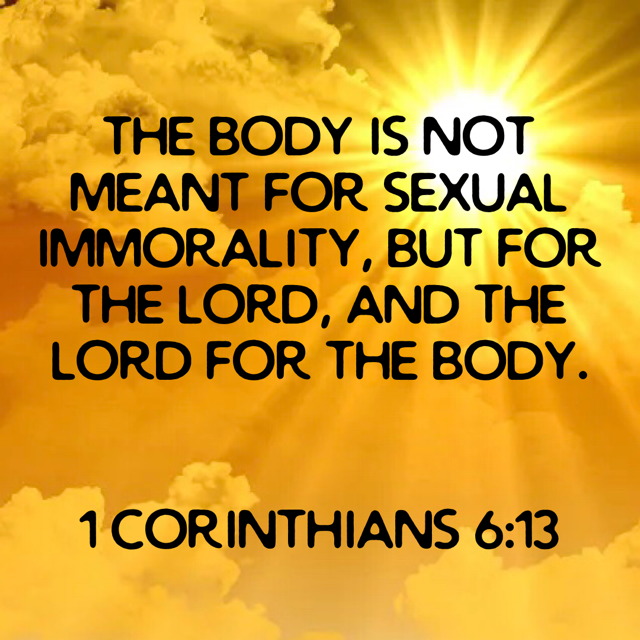
The New Testament continues to address sexual immorality, often using the Greek term porneia, which encompasses a broad range of sexual sins outside of marriage, including fornication, adultery, and potentially other forms of illicit sexual union. Paul’s epistles, particularly 1 Corinthians and Romans, contain passages that directly address these issues, often in the context of ethical instruction for the early Christian church. These passages emphasize that sexual immorality is a sin that grieves God and can have severe spiritual and communal consequences. The consistent condemnation of porneia highlights a persistent concern for sexual purity and the integrity of relationships.
The Spiritual Dimension: Sex as a Reflection of Divine Love
The Bible does not merely set rules and boundaries for sexual expression; it also imbues it with profound spiritual significance. Within the context of marriage, sexual intimacy is presented as a powerful metaphor for the relationship between Christ and the Church, and as an avenue for experiencing God’s grace and love.
Christ and the Church: A Marriage Metaphor
One of the most powerful theological interpretations of sex within marriage is its use as a metaphor for the relationship between Jesus Christ and the Church. Ephesians 5:22-33 is a seminal passage in this regard. It instructs wives to submit to their husbands as to the Lord, and husbands to love their wives as Christ loved the Church. Paul then elaborates on Christ’s sacrificial love for the Church, culminating in the declaration, “For this reason a man will leave his father and mother and be united to his wife, and the two will become one flesh.” He then adds, “This is a profound mystery—but I am talking about Christ and the church.”
This analogy elevates marital intimacy to a spiritual plane. The profound union of husband and wife, their self-giving love, and their mutual commitment are intended to mirror the loving, redemptive, and all-encompassing relationship between Christ and His people. Sexual intimacy, when experienced within the covenant of marriage, can therefore be seen as a physical manifestation of this spiritual reality, a tangible expression of deep spiritual union and divine love.
Experiencing God’s Grace and Intimacy
The Genesis narrative of Adam and Eve also suggests that sexual intimacy within marriage is intended to be a source of profound joy and pleasure, a reflection of God’s goodness and generosity. While the Fall introduced shame and brokenness into human experience, including sexuality, the pursuit of purity and fidelity within marriage allows for the rediscovery and experience of sexual intimacy as intended by God.
When viewed through a biblical lens, healthy sexual expression within marriage is not merely a biological act but an opportunity for experiencing deep emotional connection, vulnerability, and mutual affirmation. It is a space where partners can offer unconditional love, support, and acceptance, mirroring the grace that God extends to humanity. This intimate communion can foster a sense of oneness and shared life that is both deeply satisfying and spiritually enriching, pointing towards the ultimate intimacy that believers have with God. The biblical perspective, therefore, encourages a view of sex that is not only ethical but also deeply relational, spiritual, and ultimately, a gift to be cherished within its intended context.
aViewFromTheCave is a participant in the Amazon Services LLC Associates Program, an affiliate advertising program designed to provide a means for sites to earn advertising fees by advertising and linking to Amazon.com. Amazon, the Amazon logo, AmazonSupply, and the AmazonSupply logo are trademarks of Amazon.com, Inc. or its affiliates. As an Amazon Associate we earn affiliate commissions from qualifying purchases.